

Crabgrass has a way of sneaking into thin spots, driveways, and walkway cracks right when your lawn finally looks respectable. Choosing the right control depends on where the grass is growing, how much area you need to cover, and whether you want to stop seeds before they sprout or knock out what’s already taken hold. This list walks through pre-emergents, post-emergents, selective herbicides, and a couple of multi-purpose options so you can match the tool to your situation instead of guessing at the garden center.
The Leading Options At A Glance

Alligare Diuron 80 DF Herbicide
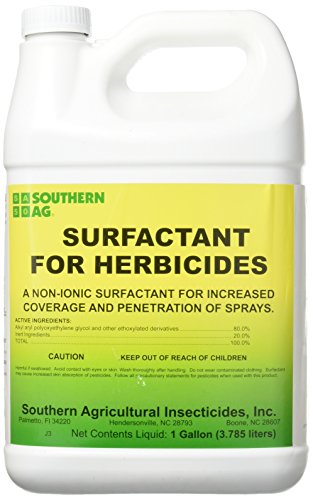
Southern Ag Surfactant for Herbicides Non-Ionic

Roundup Weed & Grass Killer4 Refill

Preen Extended Control Weed Preventer

Hi-Yield Triclopyr Ester 8 oz

Compare-N-Save 75324 Herbicide

Celcius WG Herbicide

Sunday Dandelion Doom Iron-Based Killer
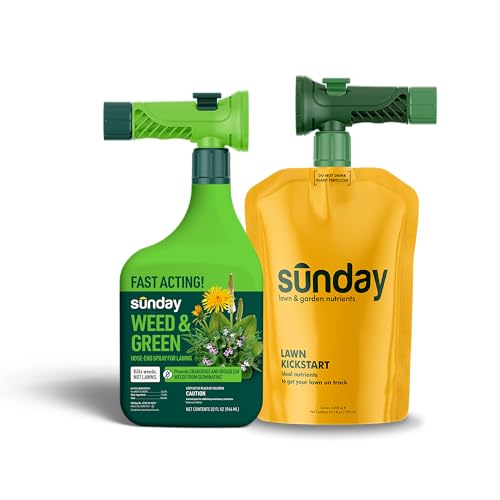
Sunday Liquid Weed & Feed Kit
What Each Pick Brings To The Table
This is the kind of product that earns its keep on acreage, fence rows, gravel lots, and the kind of edges where crabgrass and foxtail set up camp every summer. Diuron is the active ingredient, and it works both before seedlings emerge and on young weeds that have already broken through, which means a single dry-granule application can cover two timing windows in busy seasons.
The 25-pound bag is built for ground equipment, so spreaders and tractor-mounted rigs are the practical fit. It targets more than 15 hard-to-control species, including ryegrass and pigweed, and can be tank-mixed with other herbicides to broaden coverage or fight resistance. Land managers tend to reach for it on highways, industrial lots, and the kind of long sight lines that demand season-long control.
Where It Helps
- Dual pre- and post-emergent action in one formula
- Handles crabgrass alongside foxtail, ryegrass, and pigweed
- Dry granules spread easily with standard ground equipment
- Tank-mix compatible for custom weed programs
Practical Considerations
- Formulated for non-crop areas, not residential lawns
- Requires careful calibration and PPE during application
- Storage of a 25 lb bag needs a dry, secured spot
Feature Snapshot
Who It Suits Best
Property managers and rural landowners dealing with extensive non-crop zones that need reliable, season-spanning crabgrass control.
Consider Something Else When
Homeowners treating a single suburban lawn should reach for Sunday Liquid Weed & Feed Kit instead, since that option is tuned for residential turf.
Surfactants are the unsung step that turns a mediocre spray day into a satisfying one. Southern Ag’s non-ionic wetting agent lowers the surface tension of water so herbicide droplets spread across waxy or hairy leaf surfaces rather than beading up and rolling off. For crabgrass especially, where leaves are slick and angled, that extra cling time is the difference between partial control and a clean kill.
The 80% non-ionic formula comes in a 1-gallon jug, which covers dozens of tank fills for a typical homeowner sprayer. It mixes well with most broadleaf and grass herbicides, including the common trimec and 2,4-D amine products. Treat it as an upgrade to whatever you are already spraying rather than a standalone crabgrass solution.
Features That Help
- Improves spray coverage on hard-to-wet leaf surfaces
- Compatible with a wide range of herbicide concentrates
- Concentrated 80% non-ionic formula stretches a gallon across many tank mixes
- Reduces costly runoff on sloped or dense turf areas
Honest Caveats
- Does not kill crabgrass on its own, only enhances other sprays
- Requires basic sprayer know-how to mix ratios correctly
Best Suited To
Anyone already using a post-emergent herbicide who wants more even coverage and stronger uptake on crabgrass and broadleaf weeds.
A Better Fit Elsewhere
Shoppers who need a one-step standalone treatment will get more value from Roundup Weed & Grass Killer4 Refill instead.
Roundup is the name most homeowners reach for when crabgrass has already taken hold, and the refill format keeps the routine simple once you own a compatible sprayer. The formula targets crabgrass alongside dandelion, clover, poison ivy, and spotted spurge, working through the plant down to the root. Visible results show up in hours rather than days, which makes it easy to tell whether your spray pattern actually covered the patch you wanted to hit.
The 1.25-gallon refill size suits mid-size driveways, walkway cracks, and fence-line weeds where you don’t want any grass left standing. Rainfast timing matters in spring storms, and this formula sets quickly once it dries. As with any non-selective herbicide, you will want to shield nearby lawn and ornamentals during application.
A Favorable Mix
- Broad-spectrum control of crabgrass and tough broadleaf weeds
- Rapid visible results for confident follow-up sprays
- Refill format reduces plastic waste and per-use cost
- Compatible with standard pump sprayers and refill bottles
Points To Keep In Mind
- Non-selective, so drift can damage wanted grass and plants
- Replant interval means planning around new seeding
Quick Facts
Perfect Match For
Homeowners clearing crabgrass from hardscapes, driveways, and walkway edges where total vegetation control is the goal.
Reach For A Different Pick When
Anyone trying to kill crabgrass while preserving surrounding turf should look at Hi-Yield Triclopyr Ester 8 oz for selective control.
Preen takes a different angle: stop crabgrass before you ever see it. The granular formula creates a barrier at the soil surface that interrupts weed seed germination, so crabgrass seedlings never get the foothold they need to break through mulch or bark. For flower beds, shrub borders, and the edges of vegetable gardens, that prevention saves hours of hand-pulling later in the season.
The 4.93-pound bottle covers roughly 805 square feet, which lines up well with a small front-yard bed or a long border along a fence. One application keeps 125 grassy and broadleaf weeds from sprouting for up to six months. Think of it as a spring ritual that pays you back in tidy beds through Labor Day.
Benefits That Matter
- Six-month prevention window from a single application
- Blocks crabgrass and 125 other weed species from sprouting
- Granular format shakes easily from the bottle for even coverage
Room For Improvement
- Will not control weeds that have already germinated
- Requires a clear soil surface to form an effective barrier
Whose Shelf It Belongs On
Gardeners who want a low-maintenance spring routine for flower beds, shrub borders, and the mulch rings around trees.
Skip It When
Homeowners dealing with already-mature crabgrass patches will need Compare-N-Save 75324 Herbicide for post-emergent knockdown first.
Triclopyr is the selective herbicide behind many lawn-care programs, and this 8-ounce concentrate gives homeowners a way to tackle stubborn broadleaf weeds without harming desirable cool-season grass. Oxalis, wild violet, and similar weeds give up once the triclopyr moves through the plant, while perennial bluegrass, ryegrass, and tall fescue turf stay intact.
The bottle is small but concentrated, so a little goes a long way in a backpack or pump sprayer. It doubles as a bluegrass suppressor when used at stronger rates, which makes it handy if you want to thin out coarse bluegrass patches in a finer fescue lawn. Avoid using it on warm-season grasses like Bermuda, St. Augustine, or Zoysia, since it can damage those turf types.
What Stands Out
- Selective control that protects cool-season turf
- Targets hard-to-kill weeds like wild violet and oxalis
- Doubles as a bluegrass suppressor for lawn renovation
- Compact 8 oz bottle stores easily on a shelf
Worth Noting
- Not suitable for warm-season lawns like St. Augustine or Bermuda
- Small bottle requires accurate measuring for larger areas
Made For
Cool-climate homeowners managing fescue, ryegrass, or bluegrass lawns who want a selective broadleaf herbicide.
Swap It Out When
Southern lawn owners with St. Augustine or centipede turf should pick Celcius WG Herbicide, which is formulated for those grass types.
Compare-N-Save delivers glyphosate in a high-volume concentrate that makes sense once you have more than a few patches to treat. The 1-gallon container dilutes into a generous amount of ready-to-use spray, covering a sizable lawn or a long stretch of fence row. Crabgrass, dandelion, and other common lawn invaders respond to the active ingredient once foliage absorbs it.
Visible results show up within a couple of days, and the formula becomes rainfast after roughly two hours, which keeps spring storm windows from washing away your work. Storage is straightforward, but you will want a clearly labeled spot since this is a concentrate that demands careful handling around kids and pets.
Noteworthy Benefits
- Concentrated format stretches across many spray applications
- Covers substantial square footage per gallon
- Visible weed decline within a few days of application
- Rainfast window suits unpredictable spring weather
Soft Spots
- Non-selective, so it will damage any grass it touches
- Requires careful measuring to avoid over- or under-dilution
Technical Highlights
Right Fit For
Property owners with large lawns, field edges, or pasture-style spaces who prefer to buy concentrate and mix their own batches.
Where A Sibling Pick Shines
Apartment dwellers with one small weedy crack should grab Sunday Dandelion Doom Iron-Based Killer for a simpler ready-to-use approach.
Celcius WG is a post-emergent herbicide built for warm-season southern lawns, where many broadleaf herbicides risk burning sensitive turf. The water-dispersible granular formula controls more than 150 weed species, and importantly, it is labeled for use on St. Augustine and centipede grass. That makes it a rare find for homeowners in the deep South who want broad-spectrum control without sacrificing their lawn type.
There are no high-temperature application limits, so midsummer treatments remain on the table when crabgrass is at its worst. Pairing it with a quality surfactant improves performance on tougher weeds and helps the active ingredient penetrate waxy leaf surfaces. Expect to plan around reapplication intervals based on the weed spectrum you are fighting.
Points In Its Favor
- Labeled safe on St. Augustine and centipede grasses
- Controls 150+ weed species in a single product
- No temperature ceiling for summer applications
- Effective post-emergent option for warm-season turf
Trade Offs
- Best results typically require a surfactant additive
- May need multiple applications for persistent weed populations
Who Will Love This
Homeowners in the South with St. Augustine or centipede lawns who need post-emergent control without damaging their turf.
Look Elsewhere When
Northern homeowners with cool-season grass should pick Hi-Yield Triclopyr Ester 8 oz for turf-safe broadleaf control instead.
Sunday takes a different route with chelated iron, the same nutrient that gives grass its deep summer color. The iron-based formula targets dandelions, moss, algae, lichen, and other broadleaf weeds while leaving turfgrass unharmed, which makes it appealing for households with curious pets or small children. Spot-treat a dandelion clump and the weed blacks out while the lawn stays green around it.
The 32-ounce two-pack gives you enough ready-to-use spray for ongoing spot work through the season. Expect a quick visual response from the weeds, which simplifies the question of whether you hit your target. Store the bottles in a shaded spot between uses and shake well, since iron solutions can settle over time.
What Helps Most
- Iron-based formula targets weeds without synthetic herbicides
- Safe for use around established turfgrass
- Ready-to-use format requires no mixing or measuring
- Two-pack provides season-long coverage for spot work
Things To Weigh
- Spot-treat format is slower for large crabgrass invasions
- Iron can leave temporary dark marks on hardscape surfaces
Feature Card
Built With In Mind
Households with pets, kids, or anyone who wants to avoid synthetic herbicides while still knocking out weeds in the lawn.
Another Choice May Suit
Homeowners with bigger crabgrass outbreaks that need non-selective power should compare with Roundup Weed & Grass Killer4 Refill.
Most weed-and-feed products smush herbicide and fertilizer into a single granular pass, which forces a compromise on timing for both jobs. Sunday’s kit splits the routine: the Weed & Green component handles weeds first, then Lawn Kickstart delivers spring fertilizer in a separate pass. That sequencing tends to produce more reliable weed control while still giving your lawn the nutrients it needs to thicken up and crowd out future crabgrass invasions.
Treatment coverage runs roughly 4,000 square feet, with the product label noting support for lawns up to 5,000 square feet, which fits a typical suburban yard. The formula targets dandelions and crabgrass without harming the surrounding turf, and the split-application approach cuts down on the total amount of herbicide used. Expect to plan the two passes a week or so apart for best results.
The Good Stuff
- Two-step approach improves timing for both weed control and feeding
- Targets crabgrass and dandelion in residential lawns
- Covers up to 5,000 sq ft for a typical suburban yard
- Reduces total herbicide use compared to one-shot combinations
- Liquid format applies evenly with standard hose-end sprayers
Less Ideal Details
- Two-pass schedule takes more planning than a single application
- Coverage assumes a lightly thatched, well-maintained lawn
Who Should Grab It
Suburban homeowners who want spring weed control and fertilizer in one coordinated kit without buying two separate products.
Not Your Match When
Anyone managing large acreage or non-crop areas should turn to Alligare Diuron 80 DF Herbicide for heavier-duty coverage.
Choosing The Right Crabgrass Control For Your Yard
The label on the bottle matters more than the brand on the front. Pre-emergent herbicides stop crabgrass seeds from germinating, which makes them ideal for early spring application in lawns and beds where you can predict where crabgrass will show up. Post-emergent options handle weeds that have already broken through, and they fall into two camps: selective formulas that spare your lawn grass and non-selective ones that kill anything green they touch.
Turf type is the next gatekeeper. Cool-season grasses like fescue, ryegrass, and bluegrass tolerate a wide range of selective herbicides, while warm-season grasses such as St. Augustine, centipede, and Bermuda are sensitive and require specifically labeled products. Application timing also varies, since some products carry temperature limits while others stay effective through midsummer.
Consider coverage area as well. Concentrates make sense for large lots or recurring use, while ready-to-spray bottles suit smaller yards and one-off spot treatments. Safety factors like proximity to pets, kids, vegetable gardens, and wells can steer you toward iron-based or selective formulas over broader-spectrum options. Matching the herbicide to your grass, your area, and your tolerance for reapplication gives the cleanest results without wasted product.
Key Considerations Across These Picks
Pitfalls Shoppers Hit
Crabgrass control goes sideways fast when the wrong product meets the wrong turf. Picking a non-selective herbicide for a lawn you want to keep is the most common error, and it shows up as dead patches where spray drift or runoff reached desirable grass. Misreading warm-season versus cool-season labels causes similar damage on St. Augustine and centipede lawns. Skipping the pre-emergent window in early spring is another recurring miss, since once crabgrass is established, post-emergent products take longer and rarely clear a patch in one pass.
Where The Extra Money Goes
Higher-tier crabgrass products typically combine wider weed spectrums, longer residual control, or gentler active ingredients that protect specific turf types. Premium pricing often shows up in formulations that include built-in surfactants, weather-resistant coatings, or split-application kits that sequence weed control and feeding for better results. The upgrade pays off when you have a sensitive lawn type, a large area, or a recurring crabgrass problem that cheaper concentrates struggle to keep in check.
Frequently Asked Questions
When should crabgrass control be applied?
Pre-emergent herbicides go down in early spring before soil temperatures stay above 55 degrees Fahrenheit for several days, while post-emergent options work once weeds are visible through early fall.
Will crabgrass killer hurt regular lawn grass?
Selective herbicides are formulated to spare specific turf types, but non-selective products like glyphosate will damage any grass they contact, so always check the label for your lawn variety before spraying.
How long does it take to see results?
Post-emergent herbicides typically show visible yellowing or wilting within a few days, with full kill taking one to three weeks depending on the active ingredient and weed maturity.
Can crabgrass control be used around vegetable gardens?
Most lawn herbicides are not labeled for use near food crops, so consider physical barriers like mulch or targeted hand-pulling in vegetable beds rather than broadcast sprays.
Should a surfactant be added to the spray mix?
Surfactants improve herbicide coverage on waxy leaves and can boost effectiveness, especially on crabgrass, but always confirm compatibility with your specific herbicide label before mixing.
