

A big plot asks a lot of a tiller. You want enough bite to break compacted ground without dragging a back-breaking machine across a quarter acre. After looking at the current lineup, these ten options cover the realistic range for large beds, from manual tools for tight rows to cordless and gas units that chew through open ground. Each one earns its spot for a specific kind of gardener and a specific kind of work.
The Main Contenders
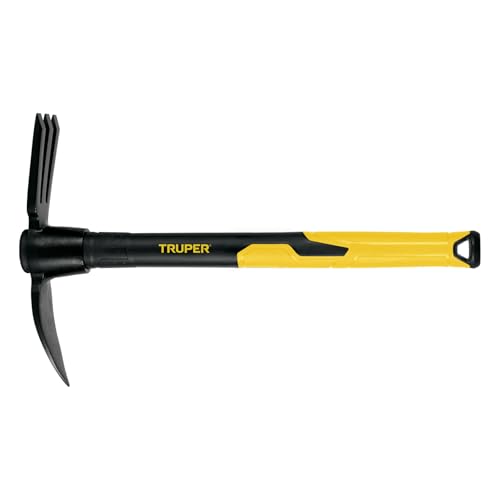
Truper Rapid Tiller Dual-Head Digging Tool

Ashman Garden Cultivator Hand Tiller

Garden Weasel Double-Sided Cultivator/Tiller

Mantis 4333 Power Tiller Kick Stand

Seesii 40V Cordless Tiller Cultivator
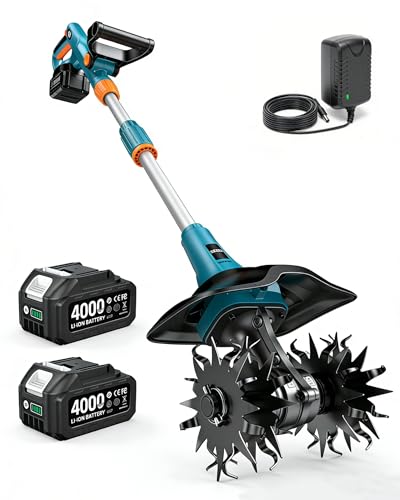
Seesii 20V Cordless Tiller Cultivator

Honda FG110 Mini Tiller Cultivator

BILT HARD 14-Inch Electric Tiller

FORDWALT 36V Brushless Cordless Tiller

Seesii Mini 20V Cordless Rototiller
Inside Each Recommended Option
The Truper Rapid Tiller is a manual tool, not a powered machine, and that distinction matters for the kind of gardener it serves. It pairs a sharpened digging blade on one end with three cultivator tines on the other, so you can switch between slicing into packed earth and raking through loose soil without grabbing a second tool.
For a large garden, you would not use this to break an entire bed by hand. It earns its place in targeted spots where a power tiller is overkill: around drip lines, between rows of established plants, or along the edges of beds. The fiberglass handle absorbs shock well and holds up against weather swings that warp wooden shafts over time.
Features That Help
- Dual-head design swaps from digging to cultivating without a tool change
- Forged steel head resists bending when working rocky or root-heavy ground
- Fiberglass handle stays stable through temperature changes and rough storage
- Comfort grip keeps hands steady during longer sessions of repetitive motion
Points To Keep In Mind
- Manual effort makes it impractical for tilling more than a few square feet at a time
- The 14-inch reach limits leverage for taller users working deep-rooted weeds
Feature Snapshot
Who It Suits Best
Gardeners with a large plot who still need a precise hand tool for tight spaces and detail work alongside a primary tiller.
Consider Something Else When
You want to break ground across a full bed without the workout, in which case the Seesii 40V Cordless Tiller Cultivator offers far more reach for the same effort.
Ashman’s hand tiller trades the Truper’s dual-head versatility for a single heavy-duty blade built for one job: getting under roots and pulling them out. The thick steel construction holds an edge through rocky soil, and the rust-resistant coating shrugs off the damp mornings common during spring prep.
The rubber grip is the unsung feature here. Long weeding sessions punish the hands, and a grip that holds without slipping keeps blisters from ending the workday early. For a large garden with established beds, this works as a follow-up tool to a powered tiller, clearing the edges and spot weeds the machine misses.
Useful Highlights
- Heavy-duty blade cuts through compacted soil and tough root systems
- Rubber handle provides confident grip even when hands are wet or muddy
- Rust-resistant finish extends service life in humid storage conditions
Small Caveats
- Single-purpose design means you’ll reach for a separate cultivator for surface work
- Manual labor adds up over large areas without mechanical assistance
- Blade benefits from occasional sharpening, a small but real maintenance task
Made For
Gardeners who already run a powered tiller and need a durable hand tool for detail weeding in mature beds.
Skip It When
You are starting a brand-new plot from lawn, where the Honda FG110 Mini Tiller Cultivator covers the heavy initial work more efficiently.
The Garden Weasel three-prong cultivator handles four core soil tasks in one tool: raking debris, aerating around plant bases, cultivating loose dirt, and light tilling. For a large garden that needs regular maintenance between major tilling sessions, this kind of multi-tasker cuts down on tool swaps.
Where the Ashman focuses on depth and the Truper splits between blade and tines, this design concentrates on the surface layer. It shines in mid-season work when soil has settled and weeds reappear. The double-sided head flips between configurations to match the task without dragging a second implement out of the shed.
Notable Gains
- Three-prong layout covers raking, aerating, cultivating, and light tilling
- Double-sided design flips between tasks without swapping tools
- Heavy-duty construction holds up to season-after-season use
- Hand-powered operation gives full control near delicate plants
Things To Weigh
- Not suited for breaking new ground or deeply compacted soil
- Works best on already-loose earth rather than tough sod
Right Fit For
Gardeners maintaining an established large plot who want one tool for multiple mid-season soil tasks.
Look Elsewhere When
Your plot includes rough or never-tilled sections, where the BILT HARD 14-Inch Electric Tiller delivers corded power for breaking ground.
This is not a tiller. The Mantis 4333 is an accessory, and that is the point. It attaches at the base of compatible Mantis tiller handles and flips up or down on demand, so your tiller stands upright on its own. For anyone who already runs a Mantis across a large garden, this addresses a real frustration.
Starting a small gas engine on a tiller that wants to tip sideways is awkward. So is stepping away mid-task to refill the tank. A kickstand solves both by giving the machine a stable resting position. Owners commonly report that this small add-on changes how often they actually use their tiller, because setup stops being a hassle.
Strengths Worth Knowing
- Attaches at the handle base for a clean, integrated look
- Flips up and down without removing the unit between uses
- Lets the tiller stand alone during engine start or refueling
Trade-Offs
- Only fits Mantis tiller models, not a universal upgrade
- Adds a small but real cost for a single-function accessory
Best Suited To
Existing Mantis tiller owners who want a more stable, hands-free setup during starts and refills.
Swap It Out When
You do not already own a Mantis tiller, in which case this accessory adds no value and you should look at the cordless and electric tillers below instead.
Stepping into cordless power, the Seesii 40V brings a 320W motor driving four steel tines across a 12-inch path. That combination gives it enough bite to work compacted soil and clay without dragging an extension cord through the yard. For a large garden, cordless freedom changes how you plan the day’s work.
Where the manual tools demand your body, this one lets you focus on steering. The 40V platform handles the rough initial pass on a neglected bed, then becomes your go-to for seasonal re-tilling. You give up unlimited runtime for the trade of quiet operation and zero fuel mixing.
What It Does Well
- 320W motor breaks hard soil and clay that defeats lighter cultivators
- Four steel tines cover a 12-inch path per pass, reducing repeat work
- Cordless design reaches corners and far beds without managing a power cable
- Quieter operation suits gardens close to neighbors
Possible Compromises
- Battery life sets a real ceiling on how much ground you cover per session
- Heavier than handheld cordless options, which matters for extended use
Feature Card
Whose Shelf It Belongs On
Mid-sized garden owners who want cordless convenience without giving up enough power to break up packed earth.
Another Choice May Suit
You already own Makita 18V batteries, in which case the FORDWALT 36V Brushless Cordless Tiller slots right into your existing tool ecosystem.
The 20V Seesii trades raw power for versatility. This is the tool you pull out to break a small patch, mix compost into a bed, loosen compacted soil, and aerate around plants. It handles all four tasks, which is rare at this size, and runs quiet enough to use without disrupting the household.
For a large garden, treat this as a secondary cultivator. The 40V model carries the heavy work, and this one steps in for the dozens of smaller jobs that follow. Raised beds, narrow borders, and prepped rows are where a 20V cordless unit earns its keep without burning through battery capacity.
Strong Points
- Functions as tiller, cultivator, and soil mixer in a single body
- 20V platform keeps weight manageable for most users
- Cordless operation suits scattered beds and tight layouts
- Compact size stores easily in a small shed or garage corner
Honest Caveats
- 20V motor will struggle in heavy clay or never-tilled ground
- Smaller battery means more frequent swaps on bigger projects
Perfect Match For
Gardeners with raised beds, kitchen gardens, and prepped rows who need a flexible cordless tool for varied soil work.
Reach For A Different Pick When
Your large garden includes long open stretches that need deep initial tilling, where the Seesii 40V Cordless Tiller Cultivator has the muscle to spare.
The Honda FG110 is the gas-powered choice in this list, and it stands apart for one reason: the Honda GX25 four-stroke engine. Four-stroke engines (which use oil for lubrication rather than mixing oil into the fuel) start reliably and run cleanly without the fuel-mixing chore that wears on smaller two-stroke units.
The hybrid tine design splits the work between digging and cultivating angles, which is a thoughtful touch. For a large garden where you want a tiller that lasts many seasons and starts on the first pull, the FG110 earns its place. It is heavier and louder than the cordless options, but the trade is years of dependable service.
The Good Stuff
- Honda GX25 4-stroke engine starts easily and runs without fuel mixing
- Hybrid tines handle both deep digging and surface cultivating
- Compact footprint works between rows and in tighter sections
- Durable build suits heavy seasonal use over many years
Worth Bearing In Mind
- Gas engine adds weight and noise compared to cordless models
- Requires routine engine maintenance like any small gas unit
- Higher up-front cost than most electric alternatives
Quick Facts
Who Should Grab It
Serious gardeners with a large plot who want a long-lasting gas tiller and are comfortable handling basic engine upkeep.
Look Elsewhere When
You want quiet, low-maintenance operation, in which case the BILT HARD 14-Inch Electric Tiller delivers plug-in power without gas or oil.
Plug-in power has one clear advantage: unlimited runtime. The BILT HARD runs a 10 amp AC motor at up to 17,000 RPM, with four rust-resistant tines that turn at 360 RPM each. You work until the job is done, and you never wait on a battery to charge.
The 14-inch width and 8.7-inch depth make this a serious garden tool, and the foldable handle cuts its storage footprint in half. Two adjustable wheel positions let you switch between rolling it to the plot and tilling without dragging the wheels. At roughly 18 pounds, it is light enough to maneuver around a large garden without exhausting you.
Everyday Perks
- 14-inch tilling width covers significant ground per pass on open plots
- Unlimited runtime from corded power suits long sessions
- Foldable handle saves space in a small shed or garage
- Two-position wheels simplify transport and active tilling
Where It May Fall Short
- Extension cord limits reach to within about 100 feet of an outlet
- Cord management adds a small hassle in gardens with many obstacles
Spec Overview
Built With In Mind
Large-garden owners with accessible outlets who want corded power and serious depth without managing batteries.
Not Your Match When
Your plot stretches far from any outlet, where the cordless flexibility of the Seesii 40V Cordless Tiller Cultivator fits the layout better.
This is the smart pick for tool-battery households. The FORDWALT runs on two Makita 18V batteries (sold separately), which means if you already own Makita tools, you skip the charger and battery cost entirely. The 36V brushless motor delivers up to 16,300 RPM with a working speed of 175 RPM, driving 16 steel tines across a 14.2-inch path.
Sixteen tines sounds like a lot, and on a large garden that translates to finer soil breakup per pass. A brushless motor (which uses electronic control rather than physical brushes to manage the motor) lasts longer and runs more efficiently than brushed designs, which is worth knowing if you compare this to cheaper cordless options.
Useful Touches
- Uses existing Makita 18V batteries, no new charger investment
- Brushless motor extends service life and efficiency over brushed units
- 14.2-inch width handles big beds without excessive passes
- Safety lock prevents accidental starts in storage
- 16 steel tines produce a finer soil texture than typical four-tine units
Factors To Consider
- Requires two batteries to operate, and batteries are not included
- Total cost climbs fast for shoppers starting fresh without Makita tools
Who Will Love This
Makita 18V owners who want a tiller that slots into an existing battery collection without extra charging gear.
A Better Fit Elsewhere
You do not already own those batteries, in which case the Seesii 40V Cordless Tiller Cultivator includes everything needed in the box.
At 2.6 pounds, this mini cultivator is the lightest entry on the list. You operate it one-handed, which sounds like a marketing line until you spend 30 minutes prepping a small bed and realize your arm is not tired. For a large garden, it earns a role as the touch-up tool, not the primary workhorse.
It runs on two 2.0Ah 20V batteries with no cord and no gas. Older gardeners and anyone who has put down heavy equipment and picked up aching wrists the next day will appreciate the form factor. Reach for this after the main tilling is done, for spot work between rows and around established plants.
The Value In It
- 2.6-pound body reduces arm fatigue during extended touch-up sessions
- One-handed operation simplifies work in tight corners
- Two included 20V batteries deliver cordless convenience out of the box
- Compact size suits raised beds, planters, and small border work
Things To Note
- Too small for breaking new ground or tilling large open plots
- Limited reach makes it a complement to, not a replacement for, a primary tiller
The Right Fit
Gardeners with a large plot who want a lightweight finishing tool for the spots that bigger machines cannot reach comfortably.
Where Another Pick Suits Better
You need a single tool for primary tilling on a large garden, where the BILT HARD 14-Inch Electric Tiller or Honda FG110 Mini Tiller Cultivator bring the size and motor needed.
What Matters Most Before Choosing Tillers For Large Garden
Matching Power To Soil Type
Soil type drives the tiller decision more than plot size. Clay-heavy ground needs a machine with enough torque to break hardpan, and that points toward gas power or a high-voltage cordless unit. Looser, sandy soil rewards smaller cultivators because the soil yields easily and you save weight and battery life. Before choosing, take a handful from the worst patch in your garden and squeeze it. If it holds a tight ball that does not crumble, plan for more power than you think you need.
Tilling Width And Depth In Practice
A wider tilling width covers more ground per pass but reduces maneuverability around curves and existing plants. For a large garden with mostly open rows, wider wins. For plots full of established perennials and narrow paths, a narrower unit or a secondary hand tool saves time you would otherwise spend wrestling the machine around obstacles. Tilling depth matters most for new beds; if you are maintaining established plots, 6 to 8 inches usually suffices.
Cordless, Corded, And Gas Trade-Offs
Cordless tillers run clean and quiet, with battery swaps as the main limitation. They suit medium plots where you finish within a battery cycle or two. Corded tillers offer unlimited runtime and lower cost, with reach limited by cord and outlet access. Gas tillers handle the toughest soil and longest sessions but require fuel, oil checks, and routine engine care. Choose based on how far you sit from an outlet and how much routine maintenance fits your style.
Ergonomics, Storage, And Long-Term Care
Weight, handle design, and storage footprint matter more than specs suggest. A foldable handle on a corded model saves space in a small shed. A two-wheel position system simplifies transport between the storage spot and the plot. Owners commonly report that a comfortable grip and balanced weight keep them using the tool regularly, while awkward ergonomics push a tiller to the back of the garage. Plan where it will live before you choose the model.
Key Considerations Across These Picks
Common Shopping Slip Ups
Many shoppers choose by tilling width alone and overlook whether the motor can actually drive those tines through their soil. A wide tiller with weak power bogs down in clay and frustrates more than it helps. Other common mistakes include ignoring cord length on electric models, forgetting that “tool only” means no battery or charger in the box, and underestimating the weight of gas units when planning storage and transport.
What The Higher Tier Buys
Premium models in this category buy you stronger motors, brushless efficiency, and wider working paths. The upgrade matters most for large gardens with heavy or rocky soil where a basic cultivator stalls every few feet. For lighter soils and smaller areas, the mid-tier delivers most of the practical benefit at a lower cost, and the savings often fund a useful hand tool like the Truper or Ashman for detail work that machines miss.
Frequently Asked Questions
What size tiller do I need for a large garden?
For plots over 1,500 square feet, look for a tiller with at least a 10 amp motor, a 12 to 14 inch working width, and tines rated for compacted soil. Smaller cultivators can still work, but expect more passes and longer sessions.
Are cordless tillers powerful enough for large gardens?
Modern 36V and 40V cordless tillers handle most large-garden tasks, including compacted soil and clay. They trade unlimited runtime for battery swaps, so plan for a spare battery if your plot runs over an hour of continuous tilling.
How deep should a garden tiller dig?
Most vegetables need 6 to 8 inches of loosened soil for healthy root growth. New beds may need a deeper first pass to break established ground, followed by shallower maintenance tilling in subsequent seasons.
Can I use a tiller in wet soil?
Working wet soil compacts it and damages soil structure, which reduces drainage and plant health. Wait until soil is moist but not sticky, and crumbles when squeezed rather than forming a wet ball.
Do I need a kickstand accessory for my tiller?
A kickstand matters most for gas tillers that you start and refuel in the yard. For cordless and corded models, you can generally lean them safely against a wall or set them on their wheels without an extra accessory.
The Takeaway
A large garden rewards a layered tool kit, not a single hero purchase. Pair a primary powered tiller suited to your soil with a hand tool for the spots machines cannot reach, and you will spend less effort per season. Match the power source to your layout, the tilling width to your bed geometry, and the maintenance level to your routine. The right combination makes a big plot feel manageable instead of overwhelming.
