

Spring and fall bring the same ritual: fresh mulch moving from bag or pile into the beds. The right hand tool makes that job disappear, while the wrong one leaves you with sore wrists and uneven coverage. The picks below cover tight flower beds, big open borders, soil prep, and clean-up work, so you can match the tool to the patch of ground in front of you.
A Quick View Of The Lineup

Garden Guru Hand Rake Soil Tiller Tool with Ergonomic Handle
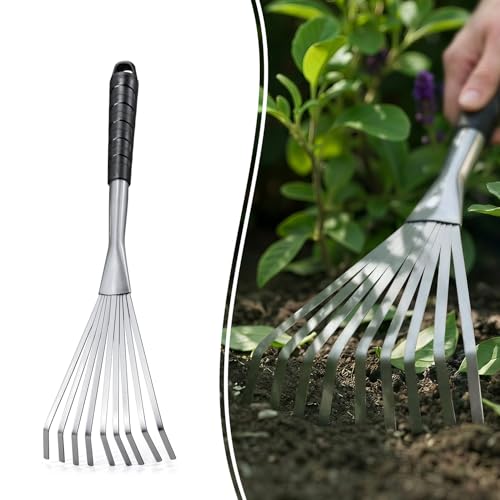
Colwelt Hand Rake 16.5″ with 9 Flat Tines
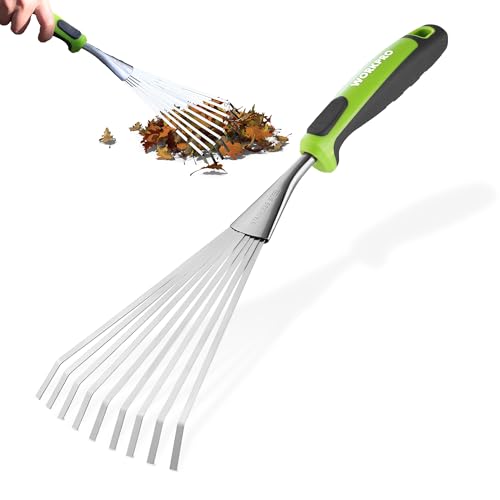
WORKPRO 16″ Hand Rake with Soft Handle

Lawn Leveling Rake 30×10 inch Professional-Grade

Bully Tools Bow Rake 16″ Tines Heavy Duty Steel

WORKPRO 11.5″ Dandelion Weeder with Soft Handle
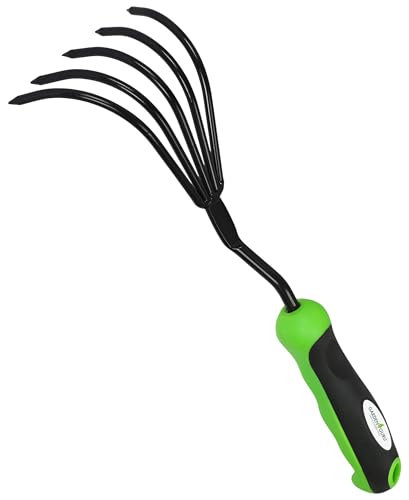
Garden Guru Hand Rake Cultivator Claw Soil Tiller

AMES 2827000 10-Tine Ensilage Fork with D-Grip

GARDEASE Leaf Scoops Ergonomic Hand Rakes (Pair)

Garden Guru Stainless Steel Hand Rake Soil Tiller
A Deeper Look At The Lineup
This carbon steel hand rake earns its place as a go-to for everyday bed work. The five-tine head slides through finished mulch without dragging the layer sideways, and the ergonomic handle keeps wrists comfortable during longer weeding sessions. For gardeners who treat the flower border like a second kitchen, the rust-resistant finish is the practical detail that keeps the tool looking decent after a wet spring.
It works best at close range, where the head can pivot around perennials and small shrubs. Compared with the wider WORKPRO 16″ Hand Rake that comes later in this list, this one feels nimbler but covers less ground per pass.
What It Does Well
- Five-tine carbon steel head resists warping when working through damp mulch or compacted soil.
- Rust-resistant coating extends usable life when tools get left out after a rain shower.
- Ergonomic handle shape reduces grip fatigue on longer Saturday sessions.
- Maneuvers around smaller stems without tearing mulch into the lawn.
Worth Noting
- Carbon steel can still spot-rust if stored wet, so wiping down after use is the practical habit owners tend to settle into.
- Not built for loosening heavy clay, where a stronger cultivator claw is the better match.
Key Specs
Whose Bed It Belongs On
Home gardeners with mixed flower beds who want one comfortable hand tool for both mulching and light cultivating.
Look Elsewhere When
You mainly work a large open yard where the Dremmt Lawn Leveling Rake 30×10 inch covers more ground per sweep.
The Colwelt hand rake is the kind of tool that earns its hanging hole by the back door. At 16.5 inches overall, it slips into tight spots where full-size bow rakes bounce off stems and disturb mulch. Nine flat tines flex just enough to skim the surface without gouging it, which matters around shallow-rooted plants like hydrangeas.
Where the Garden Guru carbon steel claw above is built for breaking ground, this Colwelt is built for finishing. You spread, smooth, and tuck mulch around perennials in one motion, then hang it back up.
Real-World Strengths
- Nine flat tines cover more surface than a five-tine claw, speeding up finishing work.
- Compact 16.5-inch length reaches under shrubs where longer tools simply do not fit.
- Hanging hole on the handle keeps it off the garage floor and easy to grab.
Honest Caveats
- Flat tines flex on heavy wet mulch, so you may find yourself making extra passes in spring.
- Not intended for breaking compacted soil, which is where a heavier cultivator makes more sense.
- Metal finish may show wear over time if routinely stored outdoors.
Right Fit For
Gardeners with densely planted beds and tight corners who want a nimble tool for spreading and smoothing.
Consider Something Else When
You mostly work large open borders, where the Bully Tools Bow Rake handles volume in fewer strokes.
WORKPRO leans into comfort with the soft-grip handle on this 16-inch hand rake. The polished stainless steel head sits between a claw and a fan rake, making it a versatile mid-size option for finishing mulch in raised beds and borders. The head resists corrosion well, which matters when tools get rinsed and put back in a damp shed.
Compared with the Colwelt 16.5-inch rake above, the WORKPRO trades some tine count for a softer grip and a slightly different spread pattern. For gardeners who feel standard handles by lunch, the soft grip is a small upgrade that pays off in longer sessions.
Why It Works Well
- Stainless steel head resists rust and holds shape during normal spreading work.
- Soft-grip handle reduces pressure points during longer weeding and mulching tasks.
- Flexible tines boost precision when working close to delicate plant stems.
Things To Consider
- Tines flex under heavy loads, so this is a finishing tool, not a soil-breaker.
Perfect Match For
Anyone with sensitive hands or arthritis who still wants to manage their own flower beds without fatigue.
Skip It When
You need to break new ground, where the Garden Guru Hand Rake Cultivator Claw Soil Tiller has heavier-duty tines built for the job.
The Dremmt leveling rake is a different breed than the hand tools above. At 30×10 inches, the head is designed to push and pull topdressing or fine mulch across wide lawn areas, not to finesse around individual plants. It is the right answer when you have a quarter-acre or more to cover and a wheelbarrow’s worth of material to spread.
Use it after aeration to work compost into the surface, or for leveling soil before laying sod. In a backyard setting with mature flower beds, the size becomes a hindrance, but on open lawn work it earns its keep fast.
Advantages To Know
- Wide 30×10-inch head covers a lot of ground per pass, cutting project time on large lawns.
- Stainless steel handle resists corrosion through wet seasons.
- Engineered to flatten soil clumps and fill low spots simultaneously.
Points To Keep In Mind
- Oversized for tight flower beds, where the Colwelt Hand Rake 16.5″ fits better.
- Requires two hands and a bit of space to swing, so storage is worth planning.
- Available in multiple lengths, so confirming overall handle length before ordering matters.
Quick Facts
Who Should Grab It
Homeowners with open lawns, pastures, or large landscape projects who spread material in bulk.
Not Your Match When
You mostly work narrow beds and borders, where the WORKPRO 16″ Hand Rake is a better fit.
The Bully Tools bow rake is the workhorse of the list. A 10-gauge steel head and a fiberglass handle put it on the heavy side, but that weight is exactly what makes it useful for breaking crusted soil and pulling mulch, gravel, or leaves into an even layer. Robotic welding at the head-to-handle joint keeps tines from popping loose when the going gets tough.
Assembly is minimal: a Phillips head screwdriver and under a minute of your time. For homeowners with larger beds, this is the rake that replaces three lighter tools.
Features That Help
- 10-gauge American steel head handles compacted soil and coarse mulch.
- Fiberglass handle with rubber grip reduces hand fatigue and resists splintering.
- Powder coat finish protects against rust across multiple seasons.
- Available in 58-inch or 66-inch overall length for different user heights.
- Tine spacing makes it equally useful for leaves, gravel, and mulch.
Less Ideal Details
- Heavier than hand rakes, so it is overkill for small patio pots.
- Steel head can scuff delicate stems if used carelessly in tight borders.
Feature Snapshot
Made For
Homeowners with mid-size to large yards who need a single rake for mulch, leaves, gravel, and soil work.
A Better Fit Elsewhere
Your space is mostly containers and small herb beds, where the Garden Guru Stainless Steel Hand Rake is the more useful scale.
This WORKPRO weeder earns its spot because spreading mulch over weeds is a short-term fix at best. The two-prong fork drives down beside taproots like dandelions and thistles, lifting them out cleanly. Pull weeds first, then mulch, and you get the full season of weed suppression the mulch is meant to provide.
It is small, light, and easy to toss in a garden tote alongside the rakes above. Think of it as the prep step before the mulch goes down.
Standout Benefits
- Stainless steel fork resists bending and corrosion in damp soil.
- Soft-grip PP and TPR handle is comfortable for repetitive spot work.
- Compact 11.5-inch size fits between established plants without damaging roots.
Where It May Fall Short
- Not a substitute for a rake, since it cannot move mulch on its own.
Best Suited To
Gardeners who want to prep beds properly before laying mulch, especially in lawns where weeds creep into bed edges.
Another Choice May Suit
You have very few weeds and only need a rake, in which case the Colwelt Hand Rake 16.5″ covers mulching alone.
The Ninja Claw is the rough-and-tumble sibling to the Garden Guru carbon steel rake that opened this list. Its five curved tines are forged from military-grade steel and built to dig into heavier clay and rocky soil. Where straight-tine rakes skate across crusted ground, this one bites in.
For gardeners breaking new ground in spring, the cultivator claw pulverizes the soil ahead of mulch. Use it once during prep, then switch to a flatter rake for the actual spreading.
A Favorable Mix
- Five durable steel tines break up clay and rocky patches without flexing.
- Rust-resistant finish holds up through repeated wet-soil use.
- Ergonomic handle supports a strong downward grip for harder digging.
- Maneuvers around smaller stems when working established beds.
Softer Spots
- Curved claws are overkill for finished beds that only need a light mulch refresh.
- Steel construction adds noticeable weight during extended use.
Who It Suits Best
Gardeners converting lawn to beds or reviving compacted soil who want tilling and mulching in one tool set.
Where Another Pick Suits Better
You mainly maintain existing beds with loose soil, in which case the lighter Garden Guru Stainless Steel Hand Rake is a more comfortable daily tool.
An ensilage fork is the unsung hero of mulch season when you have bulk material to move. The AMES 10-tine fork lifts loose mulch, compost, or manure without the tines bending apart the way a standard pitchfork can. At 52 inches overall with a poly D-grip, it gives you leverage for transferring wheelbarrow loads into the bed.
Think of this as the volume mover you pull out before the rakes above do their finishing work. It is not delicate, but it saves real time when bags or piles are involved.
Points In Its Favor
- Ten welded tines hold loose material without letting it slip through.
- Poly D-grip on a hardwood handle adds comfort and control.
- 52-inch length gives upright leverage for lifting heavy forkfuls.
- 1.5-inch tine spacing suits mulch, compost, and aged manure alike.
Practical Considerations
- Hardwood handle needs reasonable care to avoid drying or splitting over time.
- Too coarse for spreading mulch around delicate plants; pair with a finishing rake.
Built With In Mind
Homeowners who buy mulch by the cubic yard or maintain compost bins and need to move loose material in bulk.
Reach For A Different Pick When
You only spread a few bags at a time, where the WORKPRO 16″ Hand Rake is a more proportionate tool.
Leaf scoops are a category of their own, and GARDEASE leans into the simple, oversized design. Each scoop acts like an extension of your hand, grabbing leaves, grass clippings, or small mulch bits without bending a rake across the lawn. The closed front keeps debris from spilling as you walk it to the bag.
They also double as a barrier against thorns and nettles when clearing around rosebushes or pulling weeds from under shrubs. A niche tool, but a genuinely useful one.
The Practical Payoff
- Oversized scoops pick up large handfuls of leaves or mulch in a single grab.
- Closed-front design reduces spills while walking to a bag or bin.
- Hand protection from thorns and weeds during cleanup.
- Pair design fits together for compact storage on a hook or shelf.
A Few Limitations
- Not a substitute for a rake when spreading mulch evenly across a bed.
- Plastic construction can crack under heavy or sharp loads.
Feature Card
Who Will Love This
Anyone who handles leaves, mulch trimmings, or thorny cleanup work and wants to save their hands and knees.
Swap It Out When
You need a tool that spreads mulch rather than collects it, in which case the Colwelt Hand Rake 16.5″ is the right swap.
This Garden Guru stainless steel hand rake is the sensible starting point for new gardeners. The stainless tines are forgiving of wet storage, the ergonomic handle is comfortable for first-time users, and the price point keeps the commitment small. It handles mulching, light cultivating, and soil prep without demanding special technique.
Compared with the carbon steel Garden Guru at the top of this list, this version trades a touch of raw strength for better corrosion resistance. For most home flower beds, that trade is the right one.
Everyday Perks
- Stainless steel tines resist rust through damp sheds and rainy weekends.
- Ergonomic handle fits a wide range of grip sizes comfortably.
- Versatile head works for mulch, cultivation, and light turning of soil.
- Lightweight enough to toss in a tote or carry to a community garden plot.
Potential Drawbacks
- Stainless steel is softer than carbon, so very heavy clay will challenge the tines.
- Smaller head means more passes on wide borders compared with a bow rake.
Feature Card
Perfect Match For
New gardeners, renters, or anyone starting their first flower bed who wants a low-fuss first tool.
Not Your Match When
Your soil is heavy clay and you need real bite, in which case the Garden Guru Hand Rake Cultivator Claw Soil Tiller is the better choice.
What To Weigh Before Choosing Your Mulch Tool
The right tool comes down to bed size, soil condition, and how often you mulch. A 30-inch leveling rake sounds impressive until you try to swing it between foundation plantings. Match the tool to the patch of ground, not the other way around.
Bed Size And Reach
For tight borders and foundation plantings, hand rakes in the 11 to 16-inch range give you the control to spread mulch without burying plant crowns. For wide open beds and lawn-leveling work, a wider head covers more ground per pass and finishes the job in less time. Reach matters too: short tools let you get close to the soil, while long-handled rakes save your back on bigger projects.
Tine Shape And Spacing
Curved claws bite into compacted soil and pull weeds, while flat tines skim the surface and finish mulch evenly. Tine spacing affects how loose material behaves: tight spacing catches fine compost, while wider spacing lets bigger chunks of bark flow through. Match the shape to your most common task rather than trying to find one tine style that does everything.
Material And Finish
Carbon steel is strong and holds an edge under load, but it wants a dry shed. Stainless steel trades a bit of hardness for corrosion resistance, which is a real advantage if you leave tools outside or rinse them after use. Fiberglass handles outlast wood in wet conditions and feel lighter in the hand during longer sessions.
Comfort And Storage
Ergonomic grips and soft handles reduce fatigue on longer jobs and matter more than raw specs for gardeners with arthritis or smaller hands. Storage is easy to overlook: tools with hanging holes or nesting designs keep a small garage or shed tidy. Buy the tool you will actually pick up, not the one with the most impressive spec sheet.
Key Considerations Across These Picks
Pitfalls Shoppers Hit
A common trap is choosing the widest, most heavy-duty rake on the list and discovering it does not fit between your shrubs. Another is overlooking finish material: a carbon steel head stored in a damp shed will pit and stain within a season. Match the tool to the bed, not the brochure.
Where The Extra Money Goes
Spending more usually buys better steel, stronger welds, and ergonomic upgrades that add up across years of use. For gardeners who mulch two or three times a year on a modest bed, a mid-range stainless hand rake is plenty. For larger properties with bulk material and tough soil, premium steel and fiberglass handles pay back through longer tool life.
Frequently Asked Questions
What size rake works best for spreading mulch in flower beds?
Hand rakes between 11 and 16 inches give the best control around perennials, while wider heads suit open lawn work. Match the size to the density of your planting.
Do I need a separate tool for moving bulk mulch?
A 10-tine ensilage fork or similar volume mover makes quick work of pile-to-bed transfers. Smaller rakes handle the finishing and smoothing step afterward.
Is stainless steel better than carbon steel for garden rakes?
Stainless steel resists rust in damp storage, while carbon steel is stronger under heavy load. For most home flower beds, stainless is the easier-care choice.
Should I weed before spreading mulch?
Yes. A short dandelion weeder removes taproots so mulch can do its job suppressing new growth for the whole season rather than weeks.
How do I keep hand rake tines from bending?
Avoid prying against rocks or frozen ground, store tools dry, and choose heavier-gauge steel or fiberglass handles for tougher soil conditions.
