

Your weekend trees don’t care how fancy your gloves are. Branches snap in storms, roses grow sideways, and that old maple drops limbs right over the walkway every spring. The right cutting tool turns a long, sore-armed afternoon into a tidy 30 minutes.
This lineup mixes hand pruners, loppers, a felling axe, and a tall pole saw, so you can match the tool to the size of the branch, your grip strength, and how high you need to reach. Each pick earns its place for a specific kind of cleanup, not for filling a kit with the same shape of blade in different colors.
A Fast Comparison Of The Options
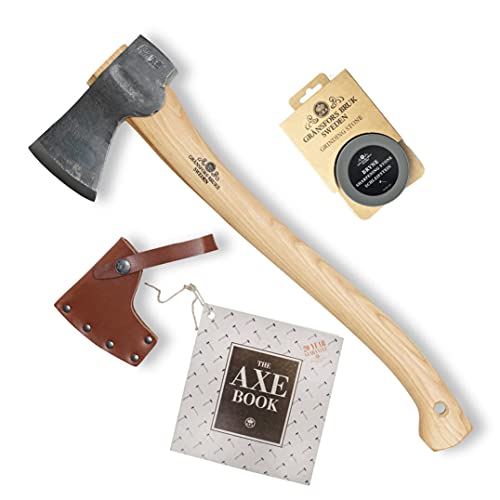
Gränsfors Bruk Small Forest Axe with Sharpening Stone Bundle

DECERK Bypass Pruning Shears with Foam Grips

DECERK Bypass Pruners and Precision Snips Set

Fiskars 28-Inch Bypass Loppers
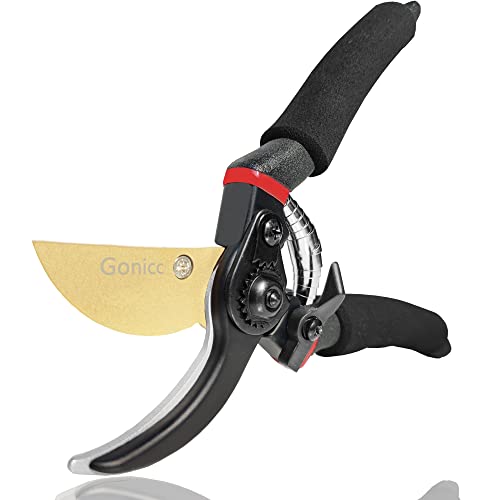
gonicc 8-Inch Titanium Bypass Pruning Shears
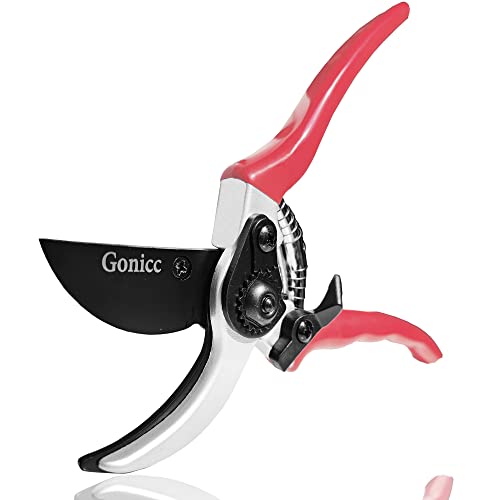
gonicc 8-Inch High-Carbon Bypass Pruning Shears

DECERK 8.5-Inch Professional Pruning Shears

DECERK 8.5-Inch Wood-Grain Bypass Pruners

Karveden 26-Foot Telescoping Pole Saw

DECERK 8.5-Inch Lightweight Pruning Shears
A Deeper Look At The Lineup
Branch work occasionally crosses into small-tree territory, where bypass pruners stop feeling useful. The Gränsfors Bruk Small Forest Axe is built for that crossover: a 19-inch handle, a 1½-pound head, and a total weight of about two pounds, which is light enough to carry into the woods but heavy enough to drive through limbs a few inches thick.
The bundle pairs the axe with a ceramic grinding stone featuring a 180-grit side for repairing chips and a 600-grit side for finishing, so you can keep the edge tuned in the field. Owners of hand-forged Swedish tools commonly treat the leather sheath as part of the value, since it protects both the edge and your pack. This is not a hedge trimmer replacement; it’s the option you reach for when branches have crossed into log-sized territory.
Key Advantages
- Hand-forged head from a Swedish workshop with a long reputation for outdoor axes.
- Compact 19-inch profile fits a backpack for trail clearing or remote properties.
- Paired sharpening stone with coarse and fine sides handles damage and finishing.
- Long enough to swing with power, short enough to control around tight brush.
Honest Caveats
- A steel axe head needs regular oiling to prevent surface rust, especially in damp climates.
- Overkill for anything under one inch thick; that’s pruner territory.
- The included stone is small, so it’s a touch-up tool rather than a full regrind solution.
Right Fit For
Homesteaders and property owners who manage small trees, splitting kindling, and clearing brush where a heavier axe would tire you out fast.
Where Another Pick Suits Better
For routine shrub and rose pruning under one inch, the Fiskars 28-Inch Bypass Loppers handle the volume with far less effort.
Grip fatigue turns a short pruning session into a chore for anyone with sore knuckles or arthritic hands. These DECERK bypass pruners wrap the handles in 5mm foam padding designed to spread pressure across the palm, and the marketing claims the build has cleared thousands of wear and slip tests for that specific reason. The geometry is angled to give you leverage on stems up to roughly ¾ inch across, which covers most rose canes and young fruitwood.
Compared with the bare-aluminum gonicc pair reviewed later, the difference is in the cushion layer rather than the blade. You trade a touch of handle firmness for noticeably softer feedback during long sessions, and for many gardeners that trade is worth it. The clean bypass cut also matters: it crushes less cambium (the living tissue just under the bark) on live wood, so healing is faster than with an anvil-style blade.
The Good Stuff
- Foam handles reduce pressure points during long pruning stretches.
- Bypass geometry delivers cleaner cuts on live stems.
- Targets a realistic ¾-inch capacity for typical garden work.
- Good choice if standard hard-handle shears aggravate your hands.
Points To Keep In Mind
- Foam padding can absorb sap and dirt over time, so plan on occasional wipe-downs.
- Larger limbs will push past the ¾-inch comfort zone quickly.
- Not the right pick if you prefer a thin, firm grip for precise cuts.
Feature Snapshot
Made For
Older gardeners and anyone managing joint sensitivity who still wants to keep roses, blueberries, and ornamentals tidy without wincing at the end of the row.
Look Elsewhere When
If you spend equal time in the soil and need an ultralight carry, the DECERK 8.5-Inch Lightweight Pruning Shears may suit smaller hands better.
Most gardens don’t have just one pruning job. You’ll start with the big bypass cut on a wayward cane, then end up snipping herbs or deadheading petunias five minutes later. This DECERK set pairs an 8.5-inch bypass pruner rated for cuts up to about one inch with a 6.5-inch precision snip for the smaller, more delicate work.
Compared with the single-tool picks earlier in this list, the value here is in covering two ends of the spectrum at once. The snips give you control around bonsai, herb clusters, and seed heads, while the larger pruner handles the structural cuts. The trade-off shows up in the box itself: two tools means two edges to keep sharp and two handles to clean, which adds a small amount of upkeep.
What Makes Sense
- Two sizes address both structural pruning and fine trimming.
- Larger pruner handles up to one-inch branches, beyond most compact shears.
- Useful across hedges, roses, vegetables, and houseplants.
- One order covers a wider range of weekend tasks.
Trade Offs
- Two blades means two tools to sharpen and wipe down after each session.
- The snips are not heavy enough for woody stems.
- No foam or arthritic-grip design here, so it’s a standard-handle feel.
Best Suited To
Gardeners with mixed beds of roses, herbs, vegetables, and ornamentals who want one combo to handle structure and detail.
Skip It When
Heavy limbing on overhead branches is the goal, in which case the Fiskars 28-Inch Bypass Loppers cover thicker wood more easily.
Hand pruners hit a wall around one inch of stem thickness, and that’s exactly where loppers take over. Fiskars builds this 28-inch bypass model with steel blades rated for up to 1½-inch cuts, so it covers mature shrub branches and small tree limbs without forcing you to drag out a saw.
The long handles give you two useful things: reach into the middle of a thorny shrub without getting scratched, and mechanical advantage on the cut. A low-friction coating helps the blades glide through wood without binding, and that same coating resists rust and sap buildup, which matters for storage in a damp shed. Owners commonly report the grip holding up well across seasons, though the pivot bolt will need occasional tightening to keep the action tight.
Real-World Strengths
- 28-inch handles extend reach and multiply leverage on thick branches.
- Cuts up to 1½ inches, well beyond most hand pruners.
- Low-friction blade coating reduces gumming and rust.
- Bypass design is gentler on live wood than anvil-style blades.
Things To Weigh Up
- Long handles are awkward in tight spaces between closely planted shrubs.
- Pivot hardware may loosen after repeated heavy use.
- Heavier than hand shears, so it tires out smaller-framed gardeners faster.
Spec Overview
Whose Shelf It Belongs On
Homeowners with mature shrubs, young trees, or a yard full of storm cleanup where hand pruners simply aren’t enough.
Consider Something Else When
For overhead work above fifteen feet, the Karveden 26-Foot Telescoping Pole Saw reaches where loppers physically cannot.
If your Saturday involves an hour or more of clipping, hand fatigue starts to dictate which tool stays in your hand. gonicc outfits this 8-inch pruner with an SK5 high-carbon steel blade and a titanium coating, paired with aluminum handles wrapped in PVC for grip. The drop-forged construction is the part that matters most: it gives the body rigidity so the cut feels solid rather than flexy.
The titanium layer is more than a finish color. It reduces friction as the blade closes, which means slightly less effort per cut and less sap sticking where the two blades meet. A small sap groove along the blade channels sticky residue away from the cutting edge, so the tool keeps working through long sessions without you needing to stop and wipe it down.
Where It Helps
- Titanium-coated blade reduces friction and resists corrosion.
- Drop-forged body holds up under heavy seasonal workloads.
- Sap groove keeps residue from gumming up the cut.
- PVC-wrapped aluminum handles balance weight and grip comfort.
Honest Caveats
- No foam cushion layer, so it’s firmer in the palm than the DECERK foam-grip model.
- Cutting capacity tops out near standard hand-pruner territory.
- PVC wrap can harden after years of UV exposure, depending on storage.
The Right Fit
Active gardeners pruning fruit trees, roses, and ornamentals on a regular schedule who want a tool that survives years of clipping.
Reach For A Different Pick When
Hand strength or arthritis is a daily concern, in which case the DECERK Bypass Pruning Shears with Foam Grips will be easier on sore hands.
This is the more traditional sibling in the gonicc lineup. Instead of the titanium coating found on the GPPS-1003 reviewed above, this GPPS-1002 relies on high-carbon steel with an ultra-fine polish to keep the edge sharp. The drop-forged body and handles give it the same backbone, and the ergonomics are familiar to anyone who has used a well-worn pair of hand pruners before.
The shape of the cuts is the practical question. This is a workhorse for deadheading annuals, shaping roses, light bonsai work, and trimming vegetable ties. The sap groove keeps the action honest through sticky summer cuts, and the polished surface wipes clean with a dry rag. Where it loses points is in corrosion resistance: without the titanium layer, you’ll want to dry it off before storage.
Where It Excels
- Drop-forged construction gives a solid, durable feel.
- High-carbon steel holds a sharp working edge.
- Versatile across roses, annuals, vegetables, and bonsai.
- Lightweight aluminum handles reduce fatigue over a session.
A Few Limitations
- No titanium coating, so wiping it dry after use helps prevent rust.
- Standard comfort level, not designed for arthritic grip issues.
- Capacity tops out around typical hand-pruner thickness.
Built With In Mind
Everyday gardeners who want a familiar, no-fuss pruner that performs well on standard trimming and shaping jobs.
Swap It Out When
You regularly cut stems thicker than three-quarters of an inch, where the DECERK 8.5-Inch Professional Pruning Shears take over more comfortably.
Some pruners feel like they were made for daisies. This one targets the thicker end of the hand-pruner range. DECERK fits it with a Japanese SK5 steel blade dressed in a three-layer titanium coating, and the brand’s published testing claims up to 5,000 cuts before significant edge wear. Anodized aluminum handles and high-hardness screws aim at the kind of gardener who treats tools roughly and expects them to come back for more.
The marketing claims a 3/4-inch capacity, which is the realistic ceiling for green wood rather than dried-out winter prunings. Compared to the foam-cushioned DECERK pair earlier in this list, the difference is build rather than comfort: this one trades cushioning for rigidity. It’s the choice for someone who wants a sturdy daily driver and doesn’t mind a firmer grip in the palm.
Well-Handled Touches
- Three-layer titanium coating for stronger wear resistance.
- Anodized aluminum body holds up under heavy use.
- Targets ¾-inch green wood, beyond most light-duty pruners.
- Engineered for repeated cutting without rapid edge loss.
Worth Bearing In Mind
- No foam cushioning, so it feels firmer than the comfort-focused DECERK pair.
- Heavier than lighter pruners, which may tire smaller hands.
- Specialty coatings and screws make field sharpening more involved.
Quick Facts
Who Will Love This
Heavy-use gardeners pruning established shrubs and woody ornamentals who want a tougher tool than entry-level pruners.
Not Your Match When
Comfort is the priority due to arthritis or hand fatigue, in which case the DECERK Foam-Grip Bypass Pruning Shears offer a softer hold.
Most pruners look like the same basic shape in slightly different colors. DECERK took a swing at the aesthetic with this model, dressing the SK5 steel blade in a gold titanium coating and pairing it with handles styled to look like wood grain. The visual upgrade isn’t the only story: the gold coating is reported by the brand to reduce cutting friction by up to twenty percent, which has a practical effect on how smoothly the blade closes.
Like the earlier DECERK professional pruner, this one shares the anodized aluminum body and three-layer coating build. The gold finish resists sap and corrosion better than bare steel, which simplifies cleanup. The honest read is that the coating is the standout feature, not the grain pattern; if you don’t care about the visual side, the standard DECERK professional pruner does the same job for the same workload.
Good Reasons To Consider
- Gold titanium coating reduces cutting friction noticeably.
- Distinctive wood-grain handle styling stands out in a tool rack.
- SK5 blade core holds an edge through frequent use.
- Three-layer coating supports durability over multiple seasons.
A Few Points To Note
- Premium finish commands a higher price than plainer DECERK models.
- The styling is purely cosmetic, not a performance upgrade.
- Same hand-feel as the standard 8.5-inch DECERK pruner.
Perfect Match For
Style-conscious gardeners and gift shoppers who want a pruner that looks as sharp as it cuts.
A Better Fit Elsewhere
If you care more about durability than finish, the DECERK 8.5-Inch Professional Pruning Shears offer the same blade at a lower cost.
Some branches grow beyond what a ladder should reach, and that’s where a manual pole saw earns its slot. Karveden’s telescoping pole extends from roughly five feet up to twenty feet, and the included 19-inch detachable saw blade mounts at the top with a three-sided cutting edge. It’s a hand-powered tool, so you’re sawing from the ground rather than firing a motor.
The value shows up in safety. Climbers take the worst falls in yard work, and a long reach keeps your boots on flat ground. The anti-slip handle helps when the pole is fully extended and torque gets twitchy. The catch is that long-reach cuts require patience and a sharp blade; this isn’t a fast tool, but it gets the job done without anyone leaving the ground.
Reasons It Performs
- Extends up to twenty feet for high branch access.
- Detachable saw blade simplifies storage and replacement.
- Anti-slip handle improves control at full extension.
- Manual design means no fuel, batteries, or extension cords.
Practical Considerations
- Slower than power pole saws on thicker limbs.
- Long extension makes maneuvering in tight canopies tricky.
- Saw blade needs occasional sharpening to stay effective.
Who Should Grab It
Homeowners with tall trees and anyone who avoids ladders for safety reasons but still needs to manage overhead branches.
Consider Something Else When
The work is mostly within arm’s reach, where the Fiskars 28-Inch Bypass Loppers handle branches faster and with less setup.
Tool weight adds up faster than most people expect, and an eight-ounce pruner changes the math on long sessions. DECERK builds this model with anodized aluminum handles that the brand reports as roughly fifteen percent lighter than standard steel pruners, finished in a pink color that some shoppers prefer for visibility in the grass. The bypass geometry and cushioned grips borrow from the comfort-focused model earlier in this list.
The intended audience is anyone who finds a full-size pruner heavy or awkward, whether due to hand size, grip strength, or just the fatigue that builds across a busy weekend. The lighter body makes the snipping action feel quicker, which helps with deadheading, rose work, and herb harvesting. Where it gives ground is in raw cutting capacity; this is a finesse tool rather than a thick-wood beast.
What Pays Off
- Lightweight aluminum body reduces hand fatigue over long sessions.
- Cushioned grips soften pressure points during repetitive cuts.
- Good fit for smaller hands and lighter gardening tasks.
- Easy to control for deadheading and detail work.
Where It May Fall Short
- Lower cutting capacity than the heavier DECERK professional model.
- Aluminum handles feel less rigid when pushing through tough wood.
- Pink finish, while easy to spot, isn’t to every shopper’s taste.
Made For
Gardeners with smaller hands, lighter builds, or anyone who wants a nimble pruner for daily trimming without the bulk.
Another Choice May Suit
For thicker branches beyond ¾ inch, the DECERK 8.5-Inch Professional Pruning Shears deliver more strength for similar handling.
How To Choose The Right Cutting Tool For Your Yard
Start with the thickest branch you realistically expect to cut. Anything under three-quarters of an inch belongs to hand pruners, the one- to one-and-a-half-inch range belongs to loppers, and anything bigger calls for a saw or axe. Buying above your workload means carrying extra weight; buying below means wrestling branches that should have been cut with a longer tool.
Blade geometry matters more than marketing copy. A bypass blade works like scissors, with two curved edges that pass each other, which makes clean cuts on live wood and helps the cambium heal. An anvil blade has one straight edge that closes onto a flat surface, which is fine for dead wood but crushes live stems. For most home gardeners, bypass is the safer default for roses, fruit trees, and ornamentals.
Comfort features pay off faster than people expect. Foam grips, lighter aluminum handles, and angled geometries all reduce the strain of repeated cuts, especially across long weekends. If you already deal with hand fatigue or arthritis, prioritize ergonomics over steel grade. The smartest pick is the one your hands will still want to use by the end of the afternoon.
Storage and care deserve a thought before you buy. Coated blades resist rust but still benefit from a quick wipe before being put away. Ceramic sharpening stones (the kind included with the Gränsfors Bruk bundle) keep an edge without oil, which simplifies field touch-ups. A dry shed or garage extends the life of any tool in this category.
What To Watch For Before You Buy
Mistakes Worth Dodging
A common slip is choosing a tool rated for a branch size you’ll rarely encounter. A pole saw that reaches twenty feet sounds appealing, but if most of your work happens at chest height, you’ll wrestle the long shaft for no benefit. Match the tool to the most frequent cut, not the rarest one.
Another trap is overlooking grip fit. A tool that feels fine in the store can cause blisters across a full afternoon, especially with hard plastic or bare aluminum handles. Reading owner feedback on long-session comfort saves a frustrating return later. If possible, try a similar grip style in person before committing.
When Paying More Pays Off
Premium options like the Gränsfors Bruk axe and DECERK’s titanium-coated pruners cost more for tangible reasons. The axe uses hand-forged Swedish steel, which holds an edge longer than generic drop-forged alternatives. Titanium coatings reduce friction during cuts and resist corrosion, which translates to years rather than seasons of regular use.
The upgrade pays off for gardeners who prune weekly, manage established landscapes, or simply value keeping an edge through years of work. For occasional seasonal trimming, a mid-range pruner often makes more sense, and the savings can go toward better storage or sharpening gear.
Frequently Asked Questions
What is the difference between bypass and anvil pruners?
Bypass pruners use two curved blades that pass each other like scissors, making clean cuts on live stems and helping plants heal faster. Anvil pruners use one straight blade that closes onto a flat surface, which works for dead wood but crushes live tissue.
How often should pruning blades be sharpened?
Most home gardeners benefit from a light touch-up after every few hours of cutting, with a full sharpening once or twice per season depending on use. Ceramic stones make quick field work easy without oil.
Can a pole saw replace a ladder entirely?
For branches within twenty feet and small enough for a hand-powered saw, yes. For heavier limbs or higher reach, a professional arborist with proper climbing gear remains the safer choice.
What blade material lasts longest?
High-carbon steels like SK5 hold a sharp edge well, and titanium or other coatings add corrosion resistance. Stainless steel resists rust but generally loses its edge faster than coated high-carbon options.
How thick a branch can hand pruners actually cut?
Most quality bypass shears cleanly handle green wood up to about three-quarters of an inch. Larger diameters either require loppers or risk damaging the blade and the cut.
Closing Thoughts
The best cutting tool is the one that matches the job and your hands. Start with the most common branch size in your yard, pick a tool that handles it comfortably, and let the rest of your kit grow from real experience rather than guesswork.
