

Mowing frequency depends on two main factors: the season and the type of grass you have. In spring, your lawn may need more attention than in winter. Understanding these factors helps you know how often to mow your lawn for a healthy, lush appearance.
Here’s a quick look at recommended mowing frequencies for different grass types:
Grass Type | Recommended Mowing Frequency |
|---|---|
Tall Fescue | Every 5 to 7 days in late spring, typically once a week. |
Kentucky Bluegrass | Twice a week in spring and fall, once a week in summer. |
Key Takeaways
Mow your lawn weekly in spring and fall. Adjust frequency based on grass type and season.
Keep grass at the right height: 2.5 to 3.5 inches for cool-season grasses and 1 to 2 inches for warm-season grasses.
Leave grass clippings on the lawn to recycle nutrients. This helps your grass grow healthier and reduces the need for fertilizers.
Seasonal Mowing
Spring Frequency
In spring, your lawn comes alive after the winter dormancy. This is when you should pay extra attention to mowing. As temperatures rise, grass growth accelerates, especially for cool-season grasses. You might find yourself mowing every 5 to 10 days during peak growth.
Early Spring: Mow your lawn every two weeks until the grass turns green.
Late Spring: Once the grass is lush, aim for weekly mowing.
During this time, keep in mind that grass growth is influenced by nitrogen availability in the soil. In fact, about 30% of the yearly growth occurs in the first three months of the year. The ideal temperature range for cool-season grasses is between 60°F and 75°F, which promotes vigorous growth.
Summer Frequency
As summer rolls in, your mowing frequency may change. Warm-season grasses thrive in the heat, so you’ll need to adjust your mowing schedule accordingly.
Weekly Mowing: When the grass is green and actively growing, mow your lawn weekly. This helps maintain a healthy appearance and prevents the grass from becoming too tall.
During this season, remember that warm-season grasses require more frequent mowing compared to cool-season varieties. Keeping your lawn at the right height also helps it withstand the summer heat.
Fall Frequency
In fall, grass growth begins to slow down as temperatures drop and daylight hours decrease. However, you should continue mowing as long as the grass is actively growing.
Weekly Mowing: For cool-season grasses, continue mowing weekly or more during peak growth.
Warm-Season Grasses: You can reduce mowing frequency as temperatures consistently drop below 50°F.
If you notice minimal growth after your last cut, it’s a sign to stop mowing. For cool-season grasses like Kentucky bluegrass, the ideal growing temperatures are between 60°F and 75°F, making fall a crucial time for lawn care.
Winter Frequency
Winter brings a different set of challenges for your lawn. In many regions, grass growth slows significantly, leading to less frequent mowing.
Mowing Schedule: You might only need to mow every three to six weeks, or not at all, depending on your climate.
If you live in a milder climate, keep the grass around 2 inches tall to prevent mold and matting under snow. Raising your mower height during winter promotes deeper root growth and moisture retention.
Grass Types and Mowing
Cool-Season Grasses
Cool-season grasses, like Kentucky bluegrass and fescue, thrive in the cooler months of spring and fall. You should mow your lawn at least once a week during their peak growing periods. In fact, you might need to mow twice weekly when growth is most active. This helps maintain the grass at an ideal height and promotes a healthy lawn.
For these grasses, the recommended mowing height is between 2 to 4 inches. Keeping your grass at this height encourages deeper root growth and improves drought resistance. Here’s a quick look at the ideal mowing heights for some common cool-season grasses:
Grass Type | Recommended Mowing Height |
|---|---|
Fine fescue | 2 to 4 inches |
Kentucky bluegrass | 2 to 4 inches |
Warm-Season Grasses
Warm-season grasses, such as Bermuda and Zoysia, flourish in the heat of summer. These grasses have a vigorous growth phase in late spring and summer, which means you’ll need to adjust your mowing schedule accordingly. During this time, you should mow your lawn every 7 to 14 days, depending on how quickly the grass grows.
The ideal mowing height for warm-season grasses is typically between 1 to 3 inches. Here’s a breakdown of the recommended heights for specific types:
Grass Type | Mowing Height |
|---|---|
Bermuda Grass | 1 to 3 inches |
Zoysia Grass | 1 to 3 inches |
As temperatures drop in the fall, you can reduce your mowing frequency. This is because warm-season grasses slow down their growth, allowing you to enjoy a more relaxed mowing schedule.
Specialty Grasses
Specialty grasses, like St. Augustine and centipede grass, have unique mowing requirements. For St. Augustinegrass, maintain a normal mowing height until the fall cooling begins. When nighttime temperatures drop below 70°F, increase the mower height by ½ to 1 inch. This helps the grass acclimate before frost sets in.
Centipedegrass should be mowed at a height of approximately 2.5 inches. You’ll want to mow every 7 to 14 days, ensuring you remove no more than one-third of the grass blade at a time. Avoid mowing too short or infrequently, as this can stress the grass and lead to poor health.
Mowing height plays a crucial role in the health and appearance of specialty grasses. Maintaining a taller mowing height, ideally between 3 to 4 inches, promotes deeper root growth and enhances drought tolerance. Taller grass blades allow for better photosynthesis, leading to stronger root systems that can access water and nutrients more effectively. Additionally, taller grass shades the soil, reducing evaporation and suppressing weed germination, which contributes to a denser and healthier lawn.
By understanding the specific needs of your grass type, you can create an effective mowing schedule that keeps your lawn looking its best.
Mowing Tips for Lawn Health
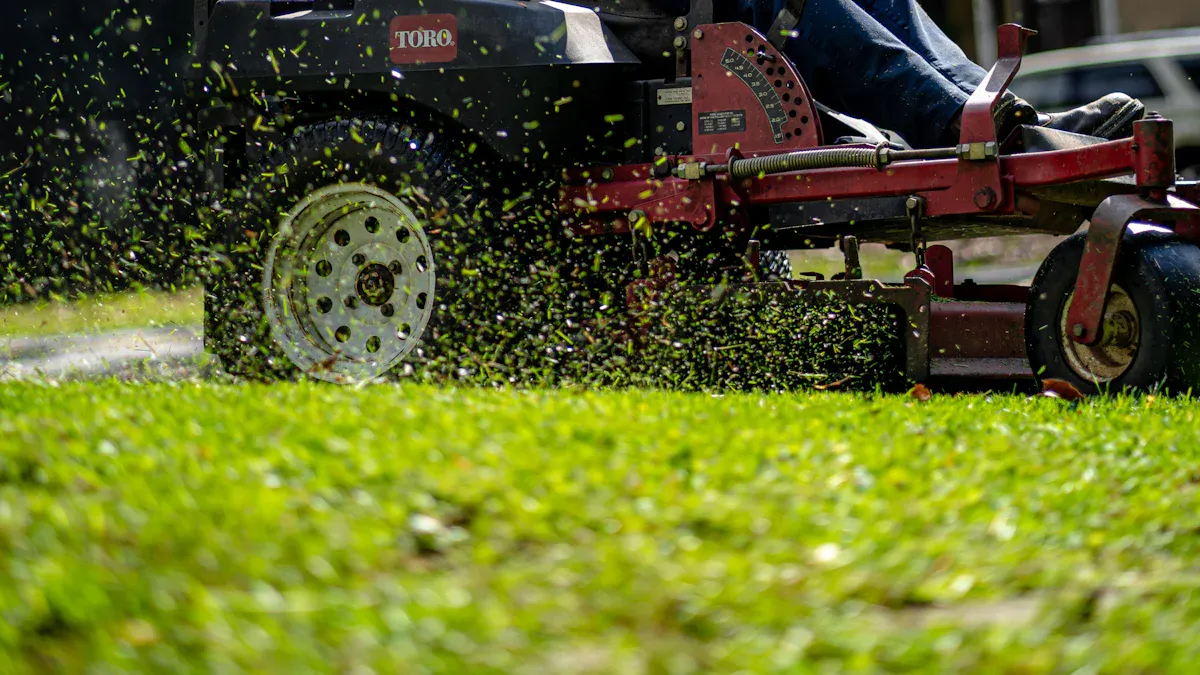
Ideal Mowing Height
Maintaining the right mowing height is crucial for a healthy lawn. Here are some key points to remember:
Cool-season grasses should be kept at 2.5 to 3.5 inches.
Warm-season grasses thrive at 1 to 2 inches.
Keeping your grass at the ideal height reduces stress and helps prevent diseases. When you follow the one-third rule—never cutting more than one-third of the grass blade—you promote healthier growth and resilience against pests.
Mowing Patterns
Changing your mowing patterns can significantly improve your lawn’s health. Here’s why you should consider it:
Prevents ruts and soil compaction: Alternating your mowing direction helps distribute pressure evenly.
Encourages upright growth: Changing directions allows grass to stand taller, enhancing its appearance.
Controls weeds: A denser lawn shades the soil, reducing weed growth.
By varying your mowing patterns, you not only improve the look of your lawn but also promote stronger roots.
Equipment Maintenance
Your mower plays a vital role in lawn care. Here are some essential maintenance tips:
Keep blades sharp: Sharp blades make cleaner cuts, which help your grass heal faster and reduce infection risks.
Sharpen blades every 25 hours of use or at least twice per season for optimal performance.
Use the right tools: Choosing an appropriate mower for your lawn type enhances overall health.
By following these mowing tips, you can ensure your lawn stays healthy and vibrant throughout the growing season.
Managing Grass Clippings
Leaving Clippings
Leaving grass clippings on your lawn can be a game-changer for your yard. When you mow, those clippings act as a natural fertilizer, returning essential nutrients like nitrogen, phosphorus, and potassium back to the soil. This helps your grass grow healthier and greener. Plus, clippings decompose quickly, enhancing soil fertility and reducing the need for chemical fertilizers. Just remember to mow frequently—about once a week—to keep clippings small and ensure they break down quickly.
Tip: Avoid piling clippings too thickly. A layer of no more than 1 inch prevents moisture and oxygen blockage, allowing your lawn to breathe.
Bagging Clippings
While bagging clippings might seem tidy, it can actually lower nutrient levels in your soil. Research shows that bagging leads to lower levels of iron and manganese compared to mulching. If you choose to bag, consider the environmental impact. It increases waste in landfills and removes valuable nutrients from your lawn. Instead, think about mulching to recycle those nutrients effectively.
Nutrient | Bagging Level | Mulching Level | Comparison |
|---|---|---|---|
Iron | Lower | Optimal | Bagging leads to lower iron levels |
Manganese | Lower | Optimal | Bagging leads to lower manganese levels |
Phosphorus | N/A | Higher | Mulching recycles phosphorus better |
Potassium | N/A | Higher | Mulching recycles potassium better |
Composting Clippings
Composting your grass clippings is a fantastic way to reduce waste and create nutrient-rich soil. Grass clippings are high in nitrogen, which helps speed up the composting process. By adding them to your compost pile, you not only enhance soil fertility but also improve aeration and water retention in your garden. This leads to stronger plants that can withstand drought and other challenges. Plus, composting cuts down on the need for fertilizers, saving you money while promoting a healthier garden.
Did You Know? Composting grass clippings helps lower air and water pollution, contributing to a healthier environment.
By managing your grass clippings wisely, you can boost your lawn’s health and contribute to a more sustainable gardening practice.
To keep your lawn healthy, remember these key points:
Mow based on the season: weekly in spring and fall, less often in summer and winter.
Adjust for grass type: cool-season grasses need more frequent mowing than warm-season ones.
Apply these tips for a vibrant, thriving lawn! 🌱
FAQ
How can I tell if my lawn needs mowing?
Look for grass that grows taller than 3 inches. If it’s time to mow, you’ll notice uneven patches and a less vibrant color.
What happens if I mow too short?
Mowing too short stresses your grass. It can lead to weak roots, increased weed growth, and a brown, unhealthy lawn.
Can I mow when the grass is wet?
It’s best to avoid mowing wet grass. Wet conditions can lead to uneven cuts and clumping, which may harm your lawn’s health.