Are you worried about your indoor plant’s health? Light plays a vital role in their growth and overall well-being. Without adequate light, you might notice signs like smaller leaves or uneven growth. Let’s dive into how you can tell if your plant needs more light!
Key Takeaways
Yellowing leaves often signal that your plant needs more light. Check its location and adjust accordingly.
Leggy growth indicates your plant is stretching for light. Move it closer to a window or use supplemental lighting.
Slow growth or small leaves can mean insufficient light. Increase light exposure to encourage healthy development.
Signs of Light Need
Yellowing Leaves
If you notice your indoor plant’s leaves turning yellow, it’s a clear sign that it might not be getting enough light. Yellowing leaves often indicate insufficient light, which leads to poor photosynthesis and nutrient deficiencies. When plants lack light, they struggle to produce chlorophyll, the green pigment essential for photosynthesis. As a result, you may see leaves that look washed out or pale. To prevent this, consider adjusting the light levels for your plant.
Tip: If you see yellowing leaves, check if your plant is in a spot that receives enough sunlight.
Leggy Growth
Leggy growth is another common sign that your indoor plant is reaching for more light. This condition occurs when plants stretch towards their light source, resulting in long, weak stems with few leaves. You might notice that your plant looks spindly or elongated. This happens because the plant is trying to optimize its exposure to light. If you observe leggy growth, it’s time to move your plant closer to a window or provide supplemental lighting.
Leggy growth is characterized by:
Long stems with few leaves.
Weak and spindly appearance.
Leaning Towards Light
Have you seen your plant leaning towards a window or light source? This behavior is a physical response to insufficient light. When plants don’t get enough light, they exhibit leggy growth and stretch towards the light, indicating their effort to maximize light absorption. If you notice this leaning, it’s a strong signal that your plant needs more light.
Small or Stunted Leaves
If your indoor plants have small or stunted leaves, it’s likely due to inadequate light. Insufficient light can cause plants to produce smaller, lighter leaves. You may also notice that new leaves seem smaller than usual. This stunted growth reflects the plant’s struggle to thrive in low-light conditions. To encourage healthy leaf development, consider increasing the light exposure.
Slow or No Growth
When your indoor plants show slow or no growth, it could be a sign of light deficiency. Plants may conserve energy and stop new leaf development when light is insufficient. If you find that your plant isn’t growing as it should, check the light levels. Increasing the intensity or duration of light exposure can help stimulate growth.
Browning Leaves and Tips
Browning leaves and tips can also indicate that your plant is not receiving enough light. Chronic low light weakens the chloroplast structure, reducing photosynthetic efficiency. This makes leaves more susceptible to oxidative browning. If you see browning, it’s essential to assess the light conditions. However, be cautious, as browning can also result from other issues like overwatering or nutrient deficiencies.
Soil Moisture Issues
Insufficient light can lead to soil moisture problems. When plants don’t get enough light, they may not use water efficiently, leading to yellowing leaves and spindly growth. You might notice that the soil stays wet longer than usual, which can cause root rot. To maintain a healthy balance, ensure your plant receives adequate light and adjust your watering schedule accordingly.
Leaf Drop
Leaf drop can occur when your plant is not getting enough light. This is often marked by yellowing leaves and leggy growth. When plants experience low light conditions, they may shed leaves to conserve energy. If you notice leaf drop, it’s crucial to evaluate the light levels and make necessary adjustments.
Flowering Problems
If your indoor plants are not flowering, it could be due to insufficient light. Many plants need bright, indirect sunlight to bloom. Weak, slow, or spindly growth can also accompany this issue. For flowering plants like peace lilies, low light can inhibit blooming. While they can survive in dim conditions, providing them with brighter light can encourage more frequent and vibrant flowers.
Improving Light for Houseplants
Relocating Indoor Plants
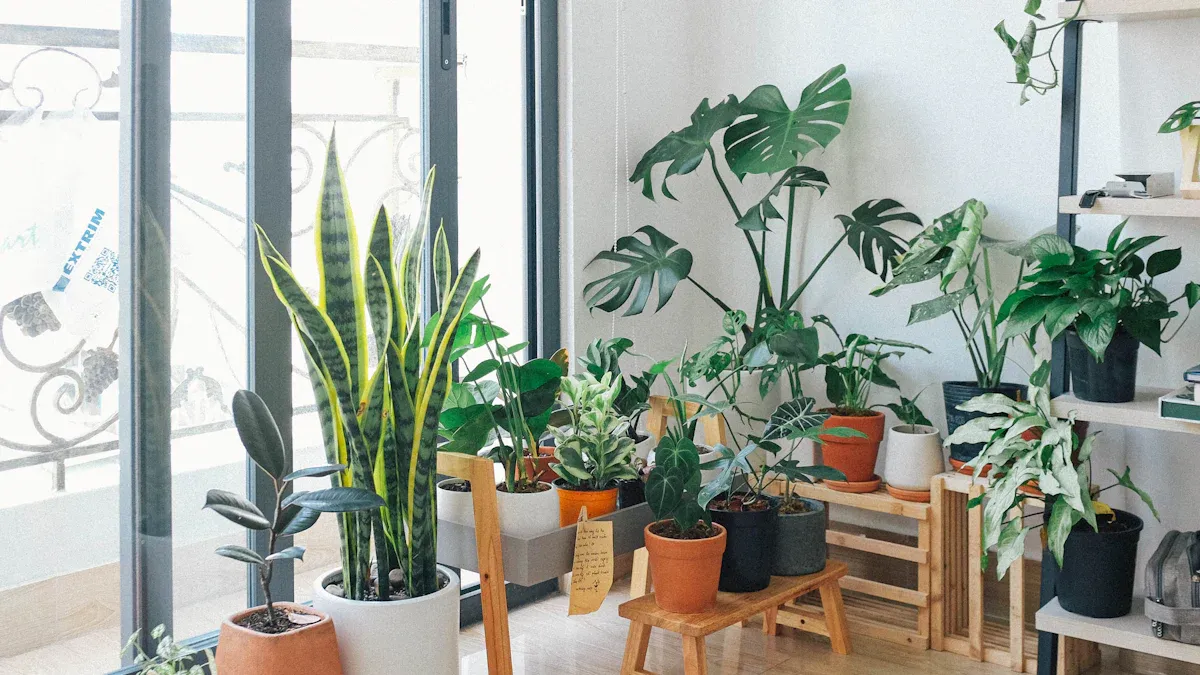
To help your houseplants thrive, consider relocating them to brighter spots. Here are some tips:
Place your plants near south- or west-facing windows for maximum sunlight.
Hang plants in front of windows that don’t get direct sunlight to avoid scorching.
Use open shelving to allow light to reach all sides of your plants.
Rotate your plants regularly to ensure even growth and light distribution.
Using Grow Lights
If natural light is too little, grow lights can be a game-changer. They provide the right spectrum for photosynthesis. Here’s how to use them effectively:
Choose LED grow lights for energy efficiency and a broad light spectrum.
Position the lights close to your plants without causing heat damage.
Use a timer to balance duration and intensity, mimicking natural sunlight.
Adjusting Window Treatments
Your window treatments can significantly affect how much light your plants receive. Consider these adjustments:
Use sheer curtains to filter light without blocking it completely.
Install reflective films to enhance light transmission while reducing heat.
Avoid heavy drapes that can block essential sunlight.
By making these changes, you can ensure your indoor plants get the light they need to flourish. Remember, getting the light right is crucial for healthy growth!
In summary, watch for signs like yellowing leaves, leggy growth, and leaf drop. These indicate your indoor plant may suffer from light deficiency. Monitoring light conditions is crucial for keeping your plants healthy. If you notice any of these signs, take action! Adjust their light exposure to ensure they receive sufficient light for thriving growth.
FAQ
What type of light do indoor plants need?
Most indoor plants thrive in bright, indirect sunlight. Some may require direct sunlight, while others prefer low-light conditions.
How often should I move my plants for better light?
You should rotate your plants every few weeks to ensure even light exposure and promote balanced growth.
Can I use regular bulbs instead of grow lights?
Regular bulbs can work, but grow lights provide the specific spectrum plants need for optimal growth and health.