

Healthy trees don’t happen by accident. The right fertilizer turns a struggling sapling into a shade-giver, and a quiet backyard into a small orchard. This roundup covers ten of the most useful tree foods on the market right now, from broad granular blends to targeted citrus boosters and deep-feeding spikes, so you can match the formula to the species and the soil you actually have.
The Picks In Brief
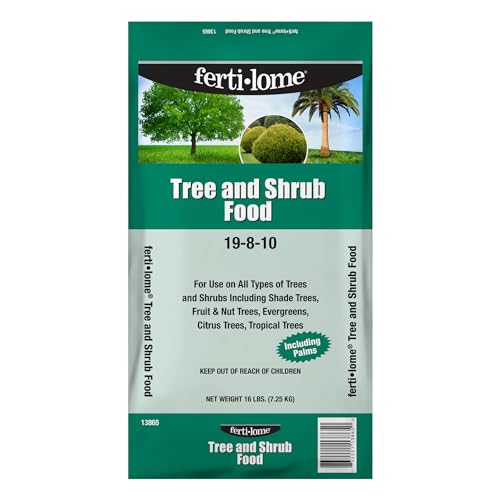
Fertilome Tree & Shrub Food 19-8-10, 16 lbs

Humboldts Secret Tree Trunk Silicate Additive, 32 oz

Ironite Plus Shrubs & Trees Plant Food 12-10-10, 3 lb

TPS Nutrients Arborvitae Liquid Fertilizer, 32 oz

Farmer’s Secret Citrus Tree Booster, 8 oz

Espoma Organic Citrus-Tone 5-2-6, 4 lb Bag
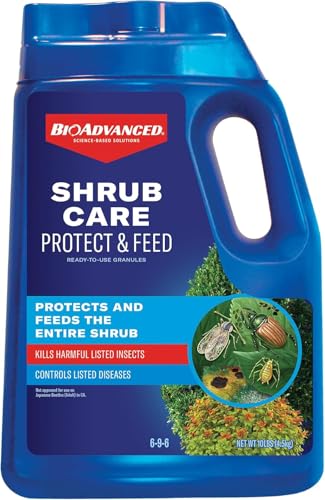
BioAdvanced Shrub Care Protect and Feed, 10 lb

TPS Nutrients Tree Liquid Plant Food, 8 oz

Old Farmer’s Almanac Tree & Shrub Spikes, 24-Count

Espoma Organic Evergreen-Tone 4-3-4, 18 lb Bag
The Picks, Examined More Closely
If your yard holds a mix of maples, oaks, junipers, and ornamentals, a single bag that covers them all saves a lot of guesswork. The 19-8-10 ratio leans into nitrogen for leafy growth while still feeding roots, and the 16-pound size handles several mature trees or a long run of shrubs without constant refills.
You sprinkle it along the drip line (the area directly under the outer branches where feeder roots live), water it in, and move on. No digging, no mixing, no special equipment. It’s the kind of dependable, broadly compatible formula that quietly becomes the default for homeowners managing a varied landscape.
What Earns Its Place
- High nitrogen ratio drives vigorous leaf and shoot growth in spring.
- Works across shade trees, evergreens, and most flowering shrubs without swapping products.
- Granular form means no measuring liquids or risking root burn from over-concentrated doses.
- 16-pound bag covers a full property for one feeding cycle, lowering how often you restock.
- Surface application keeps the routine simple for gardeners without specialized tools.
Things To Consider
- Not a specialized citrus formula, so lemon and orange trees in the same yard may need a separate boost.
- Granular feed needs watering in to activate, so dry-soil yards without irrigation will see slower uptake.
Made For
Homeowners with mixed tree and shrub plantings who want one product for routine seasonal feeding.
Consider Something Else When
Citrus-heavy yards will get a better fit from the Farmer’s Secret Citrus Tree Booster further down this list.
Tree Trunk isn’t a fertilizer in the traditional N-P-K (nitrogen-phosphorus-potassium) sense. It’s a potassium silicate supplement, meaning it delivers silicon and potassium, two elements that strengthen cell walls in branches, trunks, and stalks. For fruit-laden trees that bow under their own weight, that added rigidity can matter more than a nitrogen boost.
You add it to your regular feeding routine as a complement rather than a replacement, mixing it into your watering can or reservoir. It’s a more technical pick than the Fertilome above, suited to growers who already understand the basics and want to push tree structure, not just leaf color.
A Strong Showing
- Silica fortification reduces lodging (bending or breaking) in heavy fruit and flower clusters.
- Liquid format blends easily into existing watering and feeding schedules.
- Targets structural strength, a benefit most standard tree foods don’t address directly.
- Concentrated 32-ounce bottle stretches across many feedings for a single tree.
Worth Noting
- Not a complete fertilizer, so pairing it with a primary feed like Fertilome 19-8-10 is the realistic approach.
- Requires a basic understanding of supplement-style feeding, which can overwhelm first-timers.
Best Suited To
Growers focused on heavy-fruit or flowering trees who already feed on a regular schedule.
Look Elsewhere When
Beginners looking for a one-bottle solution should start with the Espoma Citrus-Tone for a more straightforward routine.
Yellowing leaves with green veins is the classic sign of iron chlorosis (an iron deficiency that starves leaves of chlorophyll), and Ironite’s 2% iron formula targets exactly that. The 12-10-10 base provides a balanced feed, but the iron is the headline act, and it’s what makes this product a go-to for acid-loving plants in alkaline soil.
The 3-pound jug is a smaller commitment than the Fertilome bag, handy for spot-treating a struggling specimen rather than feeding an entire property. If your oaks, azaleas, or pin oaks look pale despite regular watering, this is the kind of targeted fix worth trying before assuming the tree is doomed.
Where It Helps
- Iron content addresses chlorosis directly, restoring green color in foliage that’s lost its punch.
- Balanced 12-10-10 supports overall growth while correcting the deficiency.
- Granular format scatters easily around the drip line of individual trees.
Trade Offs
- Smaller 3-pound size is less economical for yards with many trees needing the same treatment.
- Iron supplements work best in slightly acidic soil, so very alkaline sites may need a longer correction plan.
Key Specs
Right Fit For
Trees and shrubs showing yellowing leaves from iron deficiency, especially in alkaline-soil regions.
A Better Fit Elsewhere
Owners looking to build a year-round feeding plan will find the Fertilome Tree & Shrub Food a more versatile first step.
Arborvitae aren’t like most trees. They grow as a dense, columnar hedge and need steady, gentle feeding rather than the heavy nitrogen pushes that work for maples. This liquid is tuned specifically for that growth pattern, supporting the deep green foliage that makes these evergreens useful as privacy screens.
You dilute and pour it along the base, which is faster than wrestling granular feed under the dense canopy where it tends to bounce off and roll away. For a long hedge line, the convenience adds up over a season.
Features That Help
- Formulation matches arborvitae’s preference for balanced, steady nutrition over aggressive nitrogen pushes.
- Liquid delivery reaches feeder roots tucked under dense canopy where granular feed struggles to settle.
- Targets foliage color, which is the main reason most people grow arborvitae in the first place.
- 32-ounce bottle treats a long hedge line through a full growing season.
Points To Note
- Narrow specialization means it’s not a useful all-rounder for mixed tree plantings.
- Liquids require consistent application scheduling, which is harder to maintain than occasional granular feedings.
Who Should Grab It
Homeowners with a long arborvitae hedge or privacy screen that needs steady, color-focused feeding.
Skip It When
Mixed-tree yards will get more mileage from the broader Fertilome 19-8-10 at the top of the list.
Citrus trees are hungry in a particular way, and general tree foods miss the mark. This super-concentrated liquid dilutes at roughly one teaspoon per gallon, so the 8-ounce bottle goes a long way, often through a full growing season for one or two small trees.
It’s formulated for lemons, limes, oranges, and other citrus, including container-grown trees on a patio. You feed weekly along the drip line during the active season, which is more frequent than granular products but matches how citrus actually takes up nutrients.
The Case For It
- Super-concentrated formula means a small bottle lasts an entire season.
- Targets citrus-specific nutrient needs that general tree foods often miss.
- Works for both in-ground and container-grown citrus, giving indoor-overwintering trees the same care as yard trees.
- Liquid format is simple to measure and apply without specialized equipment.
Room For Improvement
- Weekly application schedule is more demanding than granular feedings every few months.
- Specialized focus means it’s not useful for non-citrus trees in the same yard.
Whose Shelf It Belongs On
Anyone with a Meyer lemon in a patio pot or a small in-ground citrus collection that needs targeted nutrition.
Another Choice May Suit
Larger orchards or multi-tree setups may prefer the granular convenience of Espoma Citrus-Tone.
Citrus-Tone takes a different route from the Farmer’s Secret liquid above. The 5-2-6 organic blend is lower in nitrogen but includes calcium, which supports fruit quality and rind integrity. It’s the slower, steadier option for growers who prefer organic ingredients and don’t mind a less concentrated feed.
The 4-pound bag suits a small backyard orchard or a few established trees. Espoma adds its Bio-tone blend of beneficial microbes, which helps nutrients become available to roots over time, the kind of long-game feeding that suits citrus’s naturally measured growth pace.
Useful Strengths
- Organic ingredient list appeals to gardeners avoiding synthetic fertilizers.
- 5% calcium supports fruit quality, especially in heavy-cropping seasons.
- Bio-tone microbial blend improves nutrient availability over time.
- Granular form means fewer applications per season than liquid concentrates.
Softer Spots
- Lower nitrogen than some competitors, so leaf push in spring may be less dramatic.
- Organic breakdown relies on soil microbial activity, which slows in cool or dormant months.
Built With In Mind
Organic-focused gardeners with established citrus, avocado, or nut trees who want a slow-release seasonal feed.
Not Your Match When
Those wanting faster, more frequent feeding should look at the liquid Farmer’s Secret Citrus Tree Booster.
When shrubs face both hungry insects and hungry roots, splitting your attention between a fertilizer and a pesticide gets old fast. BioAdvanced combines both jobs into one granular application, feeding the plant while building in systemic (absorbed into the plant’s tissues) protection against listed pests and diseases for several weeks.
The 10-pound bottle is sized for a long hedge row or a property with several shrub beds. For gardeners tired of juggling separate products, the dual-action format is a real convenience, though it’s worth noting the insect-and-disease coverage is limited to the specific pests listed on the label.
Useful Touches
- Combines fertilizer with systemic insect and disease protection in one application.
- Targets common shrub pests like aphids, Japanese beetles, and leafhoppers.
- 10-pound size handles large shrub borders without constant repurchasing.
- Granular format scatters easily and waters in without special equipment.
Honest Caveats
- Pest coverage is limited to the specific species listed on the label, not a broad-spectrum solution.
- Dual-action products cost more upfront than standalone fertilizer, so budget matters.
Key Specs
Who Will Love This
Garden owners managing shrub borders who want to combine feeding and pest control into one routine.
Where A Sibling Pick Shines
Yards without significant pest pressure will get cleaner value from the Espoma Evergreen-Tone down the list.
Newly planted trees need a gentle hand. Heavy nitrogen pushes top growth before roots have settled in, which is the opposite of what you want. This 8-ounce liquid focuses on root development, supporting the underground structure that determines whether a young tree thrives or struggles through its first few summers.
The compact bottle is sized for a small yard or a few saplings rather than a full property. Think of it as a starter formula: a few seasons of root-focused feeding, then transition to a broader fertilizer once the tree is established.
A Few Highlights
- Root-focused formulation supports establishment of young and newly planted trees.
- Small 8-ounce bottle is right-sized for a single tree or a small planting.
- Liquid format absorbs quickly without waiting for granular breakdown.
- Lower concentration reduces the risk of root burn in sensitive young trees.
Small Caveats
- Small bottle is impractical for properties with many trees needing the same treatment.
- Specialized for establishment, so mature trees need a broader feed like the Fertilome above.
The Right Fit
Homeowners with a newly planted shade or ornamental tree that needs gentle root support through its first years.
Swap It Out When
Mature established trees will benefit more from the broad-spectrum Fertilome 19-8-10 at the top of this list.
Spikes are the lazy-gardener approach to tree feeding, and that’s a compliment. You hammer a few into the ground around the drip line, and they release nutrients slowly over time. No measuring, no spreading, no runoff, and no remembering to mix liquids on a schedule.
The 24-count box covers several mature trees through one full season. For gardeners who want the benefits of feeding without the routine of it, spikes trade a slightly higher cost for a much lower time commitment.
Strengths Worth Knowing
- Spike format eliminates measuring, mixing, and spreading fertilizer.
- Slow-release delivery matches tree uptake patterns without surge feeding.
- 24-count box covers multiple mature trees across one season.
- Capless design simplifies installation and reduces breakage during application.
A Few Limitations
- Nutrients concentrate near each spike rather than spreading evenly across the root zone.
- Spikes cost more per feeding than bulk granular, so large properties add up.
Key Specs
Perfect Match For
Busy or first-time gardeners who want effective feeding without juggling schedules and measuring tools.
Reach For A Different Pick When
Large properties with many trees will find the Fertilome bag more cost-efficient for the same job.
Evergreens like pines, spruces, junipers, and yews have their own feeding rhythm, and Evergreen-Tone is built for it. The 4-3-4 analysis is mild by design: evergreens don’t love a strong nitrogen push, and the formula includes 5% sulfur to support color in needle-leaf species.
The 18-pound bag is the largest in this roundup, sized for a property with a long windbreak, a hedge of foundation plantings, or several mature evergreens. The organic ingredient list and Bio-tone microbial blend keep it in the same slow-and-steady lane as Espoma’s Citrus-Tone, but tuned for a completely different plant family.
The Value In It
- Tailored 4-3-4 ratio matches evergreens’ lower-nitrogen preference.
- 5% sulfur supports deep green color in needle-leaf and broadleaf evergreens.
- 18-pound bag handles large evergreen plantings across multiple feedings.
- Organic formula with Bio-tone microbes supports long-term soil health.
Things To Weigh
- Mild analysis means visible results take longer than higher-nitrogen synthetic alternatives.
- Large bag is more than most small yards need for a single season.
Made For
Homeowners with a long evergreen hedge, windbreak, or several mature conifers on the property.
Consider Something Else When
Smaller yards with just a few shrubs will do better with the lighter 3-pound Ironite for spot treatment.
What To Match Before Picking a Tree Food
Tree food is not one-size-fits-all, and the right choice depends on what you’re actually growing. The N-P-K ratio on the bag tells a real story: nitrogen drives leafy growth, phosphorus supports roots and flowers, and potassium strengthens overall function. For shade trees and ornamentals, a higher first number like the 19-8-10 in Fertilome works well. For fruit trees, the middle number matters more, and for evergreens, a gentler balance like Espoma’s 4-3-4 prevents the leggy, weak growth that over-fed conifers develop.
Form matters as much as ratio. Granular feeds like the Fertilome and Espoma Evergreen-Tone release slowly and only need a few applications per season. Liquids like the Farmer’s Secret and TPS Arborvitae offer faster uptake and easier measurement, at the cost of more frequent applications. Spikes split the difference: low effort, slow release, and a higher per-application cost.
Finally, think about species. Citrus needs targeted nutrition, arborvitae prefers steady balanced feeding, and young trees need root support rather than aggressive top growth. A yard with five different plant types may justify keeping two products on hand: a broad granular for general feeding and a specialized formula for the species that need extra attention. That combination is what most experienced gardeners settle into after a few seasons of trial and error.
Mistakes Worth Dodging and Where The Extra Money Goes
Mistakes Worth Dodging
Feeding the wrong species with the wrong formula is the most common slip-up. A general lawn fertilizer dumped on a young citrus tree delivers too much nitrogen and not enough of what citrus actually wants, leaving you with lush leaves and no fruit. Always match the formula to the plant family, not just the plant itself.
Overfeeding ranks a close second. More is not better with tree food, and excess nitrogen in particular can push top growth that roots can’t support, leaving young trees wobbly and stressed. Following the label rate is rarely the wrong call, even for impatient gardeners eager to see results.
Where The Extra Money Goes
Higher-tier tree foods earn their keep through precision. The Farmer’s Secret citrus booster costs more per ounce than a general fertilizer, but you use far less, and the formulation addresses citrus-specific deficiencies that broader products miss. Specialty feeds also tend to include micronutrients, beneficial microbes, and slow-release technology that cheaper alternatives skip.
The upgrade makes sense when you have a specific plant with specific needs, like a potted Meyer lemon or a long arborvitae hedge. For general shade trees, a quality broad-spectrum feed covers the bases without the premium. Spending more only pays off when the formula matches what you’re actually growing.
Frequently Asked Questions
How often should you feed established trees?
Most established trees do well with one to two feedings per year, typically in early spring and again in early fall. Younger trees benefit from lighter, more frequent applications, since their root systems are still developing. Always defer to the label on your specific product for timing.
Can you use the same fertilizer for trees and shrubs?
In many cases, yes. General tree and shrub foods like the Fertilome 19-8-10 are formulated to cover both, and that’s part of their appeal. Specialty products, including the citrus boosters and arborvitae feeds in this roundup, are tuned for specific plant families and shouldn’t be used as general all-purpose replacements.
Is organic tree food actually better than synthetic?
Organic feeds release nutrients more slowly and improve soil health over time, but the visible difference from synthetic options is often modest in a single season. The honest read is that organic makes more sense for gardeners focused on long-term soil biology, while synthetic options offer faster visible results for impatient growers.
Do fertilizer spikes really work for trees?
Spikes work, but they feed roots unevenly because nutrients concentrate near each spike rather than spreading across the whole root zone. For mature trees with a wide root spread, this matters less. For younger trees, a granular broadcast gives more uniform coverage. Spikes are convenient, not magical.
When is the worst time to fertilize a tree?
Late summer and early fall feedings can push new growth that doesn’t harden off before winter, leaving tender shoots vulnerable to cold damage. In most climates, stop feeding about six to eight weeks before your average first frost to give trees time to slow down naturally.
