

Shopping for trees that actually thrive in direct, all-day sunlight means filtering through hundreds of options, and most guidance glosses over the trade-offs that matter. A tree planted in full sun needs heat tolerance, deep roots, and a mature size that fits your space, not just a sunny label on the tag. This roundup focuses on live plants and cuttings that hold up under open-sky conditions, with attention to growth rate, hardiness range, and what each one really delivers once it’s in the ground. The picks below span shade, fruit, flowers, and fast privacy, so you can match the tree to the spot rather than the other way around.
A Fast Comparison Of The Options

CZ Grain White Willow Tree Cutting
10 Hybrid Poplar Tree Cuttings

Illinois Everbearing Mulberry Tree Potted Plant

Contender Peach Tree by DAS Farms
Red Flowering Crape Myrtle Trees 6-Pack

Live Blue Jacaranda Tree Seedling Plug
Perfect Plants Jane Magnolia Tree 1 Gallon

Hybrid Willow Tree Plants 10-Pack
Meet The Standout Selections
You get a single, rooted cutting rather than a potted sapling, which keeps the upfront cost low and the shipping weight light. White willow (Salix alba) is a European native known for narrow, silvery leaves that flash in even the slightest breeze, a detail you tend to notice first when neighbours walk by. The species handles a wide hardiness range and tolerates moist soils, so it suits a low spot in the yard where other trees sulk.
For most suburban lots, one cutting is enough to start a screening row, and you can add more over time without redesigning the bed. Compared with the Hybrid Poplar Cuttings below, white willow runs a touch slower in its first season but offers more ornamental leaf colour. Space the cuttings where mature spread will not crowd a fence.
A Strong Showing
- Hardy across zones 3-10, so it tolerates both cold winters and hot southern summers.
- Silver-backed leaves create a shimmering, almost metallic effect in direct sun.
- Low-maintenance once rooted, with no special pruning schedule.
- Cuttings are forgiving to plant, even for first-time tree starters.
Things To Consider
- Single cutting means slower fill-in than a multi-pack for an instant screen.
- Mature spread runs wide, so plan spacing away from foundations and septic lines.
- Willows prefer consistent moisture and may struggle in dry, sandy soil without supplemental watering during the first year.
Who It Suits Best
Homeowners with a damp corner of the yard who want one ornamental specimen rather than a full hedge.
Where Another Pick Suits Better
Shoppers wanting a ready-made privacy wall in a single season should reach for the Hybrid Willow Tree Plants 10-Pack, which fills a row much faster.
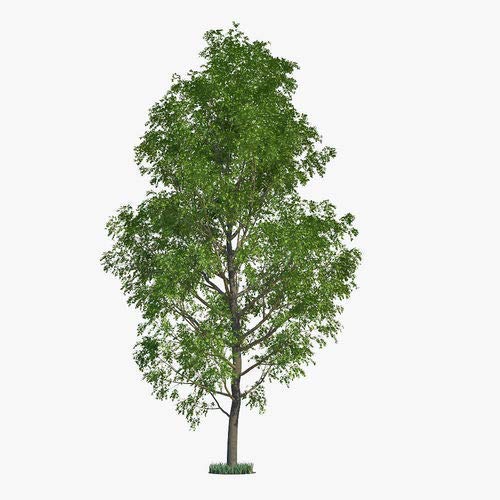
Ten cuttings give you enough material to run a real windbreak, a property-line screen, or a patch of shade trees across an open lawn. Hybrid poplars (Populus deltoides × nigra) are bred for speed, often pushing several feet of vertical growth in a single season under full sun. The package ships with growing instructions and links to video guides, which helps if this is your first time starting trees from cuttings rather than potted plants.
You may find the bare-cutting format less reassuring than a leafy starter, but success rates tend to run high when the cuttings go into prepared soil quickly. Unlike the single White Willow Cutting above, this pack is built for coverage, not ornament. Plant in a staggered row for a denser visual block.
Features That Help
- Ten cuttings support a substantial screen or windbreak on a single order.
- No seeds or cotton fluff, keeping the surrounding patio and pool area cleaner.
- Helps with erosion control on slopes and can dry out boggy patches over time.
- Deer-resistant foliage, useful in rural and semi-rural settings.
Worth Noting
- Bare cuttings need prompt planting and consistent moisture during the rooting phase.
- Mature height can overwhelm small urban lots without a long-term pruning plan.
- Fast growth means weaker wood, so expect occasional limb drop in heavy storms.
Quick Facts
Made For
Owners of large, open, sun-baked lots who need a real visual or wind barrier on a tight timeline.
Skip It When
You want a single ornamental specimen, in which case the CZ Grain White Willow Cutting is a calmer, more decorative choice.
You receive a live, potted starter roughly 6 to 10 inches tall, so you skip the germination step and start with a real, leafy plant. Illinois Everbearing is a named mulberry cultivar prized for producing sweet, dark fruit over an extended window, rather than a single short harvest. The species handles full sun and tolerates a wide hardiness span, which makes it forgiving for new orchard keepers.
For most home growers, the appeal is fruit without spraying schedules or complex pruning. Unlike the Hybrid Willow Cuttings, this one rewards patience with food instead of fast shade. Expect a small harvest in year two and meaningful production by year four or five.
A Favorable Mix
- Long, extended fruiting season, with berries ripening across multiple waves.
- Adapts to part-to-full sun, so you can place it along a south-facing fence.
- Hardy across zones 3-10, covering nearly the entire continental range.
- Reaches 25-35 feet at maturity, offering both shade and a real fruit crop.
Trade Offs
- Small starter size means a multi-year wait before meaningful harvests.
- Ripe berries drop and can stain patios, walkways, and parked cars.
- Birds often reach the fruit before you do, so netting may become part of the routine.
Best Suited To
Home orchardists and edible-landscape gardeners who want a productive tree without complicated care.
Look Elsewhere When
You want fruit much sooner with less waiting, in which case the Contender Peach Tree by DAS Farms ships larger and fruits on a tighter timeline.
You get a 2 to 3 foot live tree in a one-gallon pot, double-boxed for transit, which gives you a real head start over a seedling. Contender is a self-pollinating peach variety, so you do not need a second tree to set fruit, a relief for small yards. It is bred for hardiness across zones 5 through 8, making it a dependable choice across much of the eastern and midwestern United States.
For most first-time fruit growers, the appeal is that peaches do not need pollination partners, and the cultivar handles late frosts better than many traditional varieties. The listing specifies in-ground planting only, so plan a yard bed rather than a patio container. Same idea as the Illinois Everbearing Mulberry, but with a smaller mature size and earlier payback.
Good Reasons To Consider
- Self-pollinating, so a single tree can produce a full crop on its own.
- Ships at 2-3 feet, skipping the fragile seedling stage.
- Double-boxed packaging reduces transit stress and broken branches on arrival.
- Performs well in full sun across zones 5-8.
Points To Keep In Mind
- Container planting is not recommended, so you need actual ground space.
- Deciduous, so it arrives and overwinters without leaves, which can confuse new planters expecting a leafy tree.
- California-bound orders ship bare root under state rules, so the packaging differs from other states.
Feature Snapshot
Perfect Match For
New fruit-tree planters with a sunny yard bed in zones 5-8 who want peaches without juggling pollinators.
Swap It Out When
You live in zones 3-4 or 9-10, where the Illinois Everbearing Mulberry Tree is the safer long-term bet.
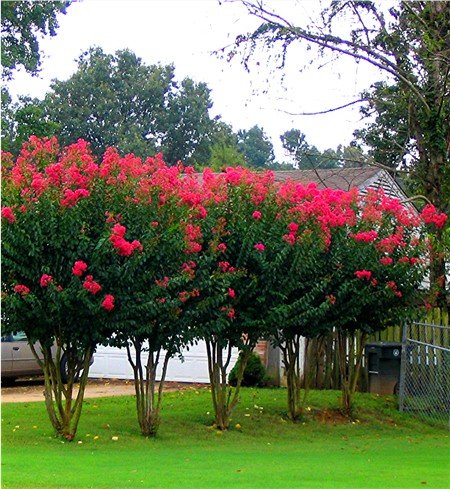
You get six small quart-container trees, all the same red-flowering Lagerstroemia, ready to plant as a matched row or cluster. Crape myrtles thrive in heat and full sun, and this cultivar is specifically marketed toward southern U.S. growing conditions. The extended bloom window means months of colour rather than a single peak week.
For most warm-climate yards, the appeal is ornamental value with relatively low maintenance once established. Unlike the fruit trees above, you are planting for flowers and form, not harvest. Six trees are enough to line a driveway or anchor a bed without buying in dribs and drabs.
Positive Points
- Vivid red blooms run through the entire summer season.
- Six-pack format suits matching hedges, borders, or accent clusters.
- Quart-container size keeps shipping manageable while still offering a real starter plant.
- Mature trees reach 20+ feet, giving long-term scale for a young yard.
Some Limits To Know
- Best suited to southern U.S. climates, so northern gardeners may see weak performance.
- Quart-container plants arrive small, so expect a couple of seasons before real bloom impact.
- Crape myrtles can be prone to powdery mildew in humid, poorly ventilated spots.
Whose Shelf It Belongs On
Southern homeowners and landscapers wanting a matched row of red-blooming accent trees without buying single specimens.
A Better Fit Elsewhere
Gardeners in cooler zones should pick the Perfect Plants Jane Magnolia, which handles cold winters far more reliably.
You get a live starter plug, 3 to 6 inches tall, with the root ball wrapped in a 2 by 3 inch grow medium. Blue Jacaranda (Jacaranda mimosifolia) is the iconic purple-flowering tree you see across Mediterranean and subtropical climates, with fern-like compound leaves up to 20 inches long. The species needs heat and full sun, so it fits only the warmest parts of the country, zones 9 through 11.
For most gardeners outside those zones, this is a patio container plant rather than a yard tree. The mature spread of 45 to 60 feet makes it a serious landscape statement, so think carefully about overhead space. The payoff is the spring bloom display, which can last roughly two months under ideal conditions.
The Case For It
- Long-lasting purple-blue flower clusters in spring and early summer.
- Distinctive fern-like foliage adds texture even when out of bloom.
- Medium-to-fast growth rate in the right climate speeds up the visual payoff.
- Mature height of 25-40 feet offers meaningful shade in subtropical yards.
Where It May Fall Short
- Hardy only in zones 9-11, so most of the continental U.S. is out of range for in-ground planting.
- Starter plugs are small and need careful watering during the establishment phase.
- Deciduous or semi-evergreen behaviour shifts by climate, so expect bare branches in cooler winters.
Spec Overview
Right Fit For
Subtropical gardeners in zones 9-11 who want a statement tree with a long bloom window.
Reach For A Different Pick When
You live anywhere with regular frost, where the Crape Myrtle 6-Pack handles cold snaps much more gracefully.
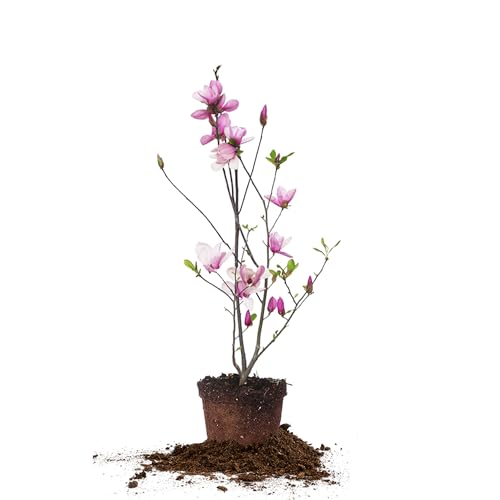
You get a one-gallon potted live tree, plus a portion of specially blended magnolia food mixed into the soil at shipping. Jane Magnolia is a hybrid bred for cold tolerance, so it handles northern climates where traditional southern magnolias struggle. Flowers range from light reddish-purple and open from March through April, before many other trees have even leafed out.
For most northern gardeners, the appeal is early spring colour on a manageable, low-maintenance tree. The dense branching pattern also makes it useful as a soft privacy screen, similar in role to the Hybrid Willow Cuttings but with flowers instead of pure foliage. Plan for moist, well-drained soil and a sunny exposure.
What It Does Well
- Cold-hardy magnolia that handles northern winters better than most flowering alternatives.
- Early March-April bloom window brings colour when the rest of the garden is still waking up.
- Shipped with blended magnolia food to support the first growing season.
- Low-maintenance once established, with no heavy pruning required.
Practical Considerations
- Does not ship to California or Arizona, so check regional restrictions before ordering.
- Prefers moist but well-drained soil, and struggles in compacted or soggy ground.
- Aromatic blooms are short-lived, so the show lasts only a few weeks each spring.
Who Should Grab It
Northern gardeners who want a flowering focal point that survives cold winters without coddling.
Not Your Match When
You want a fruit-producing tree instead of flowers, in which case the Contender Peach Tree by DAS Farms fits the bill.
You get ten live hybrid willow cuttings, which is the densest starter pack on this roundup and the one most often used for serious property-line work. Hybrid willow (often sold as Austree) is bred for extremely fast vertical growth, often described in the high single digits to low double digits per year under good conditions. The package includes a recommendation to backfill with quality garden soil past the root line, which is a meaningful detail for first-time planters.
For most rural or suburban lots, the appeal is functional rather than ornamental. Think wind block, noise reduction, erosion control, and a fast hedge. Compared with the 10 Hybrid Poplar Cuttings above, willows tend to be slightly slower in raw height but offer denser lower branching for screening.
What Stands Out
- Ten live cuttings let you build a full hedge or windbreak in a single planting session.
- Rapid vertical growth fills a property line much faster than most ornamentals.
- Helps with noise reduction, erosion control, and dust along a road or field edge.
- Healthy, non-invasive root system supports fast growth without spreading into neighbouring beds.
Honest Caveats
- Bare cuttings need prompt planting and consistent watering during the rooting phase.
- Mature trees grow tall, so watch for interference with overhead utility lines.
- Fast growth means softer wood, so plan for occasional storm damage and routine cleanup.
Built With In Mind
Property owners with a long fence line, exposed field edge, or rural lot needing a real wind and noise barrier.
Where A Sibling Pick Shines
Urban gardeners with limited space may prefer the 10 Hybrid Poplar Cuttings, which are slightly easier to manage in tighter footprints.
How To Pick The Right Full Sun Tree For Your Yard
Full sun is a useful starting point, but it is only one slice of what makes a tree thrive in your yard. Soil type, mature size, and your reason for planting (shade, fruit, flowers, privacy) all matter just as much as sun exposure.
Match The Hardiness Zone First
A tree labelled “full sun” still dies in the wrong climate. Check the listed hardiness range against your USDA zone before anything else, and remember that zone 6 in the Pacific Northwest behaves very differently from zone 6 in the Midwest. A live plant rated outside your zone usually means leaf scorch, dieback, or outright loss by the second winter.
Think About Mature Size, Not Starter Size
The biggest mistake with full-sun trees is reading the shipping height and assuming the tree stays that small. A 6-inch Jacaranda plug becomes a 40-foot tree in a decade, and a 2-foot Contender Peach becomes a 15-foot orchard tree. Map the spread and height against your roofline, fence, and septic field before you plant.
Decide What The Tree Is For
Privacy, fruit, flowers, and shade all pull you toward different species. Hybrid willows and poplars are privacy and wind workhorses, the Contender Peach and Illinois Everbearing Mulberry deliver food, and the Jane Magnolia and Crape Myrtle exist for the bloom. Picking the right category up front saves a lot of transplanting later.
Plan For Maintenance And Watering
Bare-root cuttings and live potted starters both demand a year of careful watering. Soil quality matters too: clay holds water around the roots, while sandy soil drains fast and may need amendments. The easier the species fits your existing soil, the less you fight it later.
Smart Shopping Notes For Full Sun Tree Shoppers
Common Buying Slip Ups
The most common mistake is ordering by shipping height rather than by mature size, which leads to trees planted too close to a structure or a property line. Another pitfall is ignoring the hardiness range: a “full sun” label is meaningless if the tree cannot handle your winter lows. Finally, do not skip the watering commitment during year one, since that is when most new trees are lost.
When Paying More Pays Off
Spending more on a fuller pot size, like a one-gallon pot versus a quart container, generally buys you a year or two of head start on growth and bloom. Higher-tier live plants also tend to ship with richer root systems, which improves survival rates. The trade-off shows up when you try to plant a large block of trees, where the per-tree cost adds up quickly, so weigh coverage against maturity speed.
Frequently Asked Questions
How Many Hours Of Sun Counts As “Full Sun”?
Full sun generally means six or more hours of direct, unfiltered sunlight per day. Anything less shifts a plant into the “part sun” or “part shade” category, which is worth checking before you commit.
Can Bare-Root Cuttings Catch Up To Potted Trees?
Cuttings and potted trees usually reach similar mature sizes, but cuttings often take an extra season to put on real growth. Starting with a one-gallon pot skips that establishment lag, while bare cuttings cost less up front.
Do I Need Two Trees For Fruit Production?
It depends on the cultivar. The Contender Peach is self-pollinating and fruits on its own, while many fruit trees need a pollination partner nearby. The mulberry in this roundup is also self-fertile, so both work as standalone plantings.
When Is The Best Time To Plant Full Sun Trees?
Early spring and early fall are the safest windows in most zones, since the tree gets cool, moist conditions without summer heat stress. Summer planting is possible with careful watering, but it raises the establishment risk.
Will A Fast-Growing Tree Damage My Foundation Or Pipes?
Fast growers like hybrid willow and hybrid poplar develop wide, water-seeking root systems, so plant them well away from septic lines, water mains, and shallow foundations. A safe rule is to keep large trees at least 15 to 20 feet from any structure.
The Takeaway
The right full sun tree comes down to your climate, your space, and what you actually want from the plant. Fruit growers should start with the Contender Peach or Illinois Everbearing Mulberry, while shoppers chasing privacy will get the fastest payoff from the Hybrid Willow or Hybrid Poplar cuttings. Match the tree to the spot, give it a year of patient watering, and the rest is mostly waiting.
