

A tidy hedge starts with the right tool, and the wrong pair of shears turns a Saturday morning into an arm-day workout. Manual hedge shears still earn their place in 2026 for shaping boxwood, touching up privet, and keeping ornamental grasses in line, especially when you want quiet, cordless control without dragging out a power trimmer. This lineup covers ten solid options across budgets, blade types, and handle setups so you can match the tool to the work in front of you.
The Main Contenders

Kimura Pro Heavy Duty Hedge Shears, 22″ with SK5 Blades

GARTOL 23″ Heavy Duty Hedge Shears, Wavy Blade

YRTSH 3-Piece Hedge Clippers and Pruners Combo

Garden Guru 15″ Hedge Shears for Borders and Shrubs

Fiskars 23″ Power-Lever Hedge Shears, Self-Sharpening

YRTSH 3-Piece Hedge Clippers and Pruners Combo
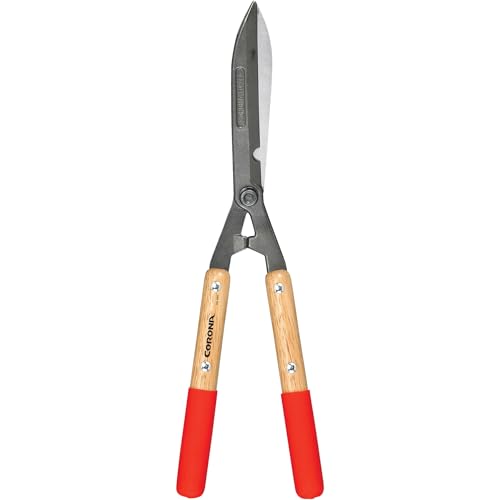
Corona HS 3911 Forged Hedge Shear, 8-1/4″ Blade
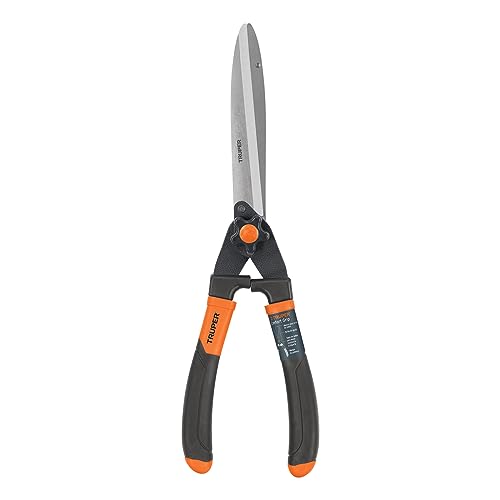
Truper T-18 Poly Handle Hedge Shears, Carbon Steel

Gardenwork Hedge Clippers with Teflon-Coated Blades

Sunchers 2-in-1 Cordless Hedge Trimmer, 7.2V
More Details On Our Top Picks
The Kimura Pro lands at the top of the list because it balances weight, geometry, and edge retention in a way most hedge shears at this size struggle to match. The 22-inch overall length gives enough reach to flatten the top of a six-foot privet without a ladder, and the gearing setup multiplies hand force at the blade so each squeeze feels lighter than it looks. Compared to the longer 23-inch Fiskars and GARTOL picks below, this one is a touch shorter but noticeably easier to control for fine shaping on a long afternoon.
For most home gardeners, the honest read is that the soft TPR (thermoplastic rubber) grips and even weight distribution take real fatigue out of a long session, and SK5 steel (a high-carbon tool steel widely used in Japanese blades) holds an edge well through seasonal shaping. You may find the geared pivot a little stiff right out of the box, and SK5 needs a quick wipe-down after sappy cuts to prevent surface staining.
Benefits That Matter
- Geared pivot multiplies hand force, so a light squeeze still moves thicker growth
- Aluminium handles with TPR grips keep the tool balanced end-to-end, reducing wrist strain over a long hedge row
- SK5 steel blades hold a sharp edge across many trimming sessions, which matters for anyone with a long border
- 22-inch length reaches across a typical residential hedge without forcing you into a ladder
- Even weight split between the blades and handles makes the shears approachable for smaller-framed users
Things To Consider
- Geared pivot can feel stiff until it is worked in
- SK5 steel benefits from a dry wipe after sappy cuts to avoid surface marks
Key Advantages
Best Suited To
Home gardeners with medium-to-tall hedges who want a light, balanced tool for long Saturday shaping sessions.
Look Elsewhere When
You mostly work on tight topiary shapes and need the shorter 15-inch reach of the Garden Guru hedge shears instead.
Where the Kimura leans on gearing for clean cuts, the GARTOL leans on its wavy 9-inch blade to physically trap twigs before the cut lands. That subtle scallop between the two cutting edges keeps thin branches from shooting forward, which is the usual reason hedge work ends in ragged tips. Boxwood, privet, and decorative shrubs respond well to the hold-and-cut motion.
The 23-inch length gives a longer sweep than the Kimura, helpful for flattening the top of a wider hedge in fewer passes. The trade-off is a heavier overall feel, and wavy blades can take a little more effort to sharpen since the curve has to be followed. For most yards, this is a strong recovery tool for the start of the season when growth has gotten away from you.
Points In Its Favor
- Wavy blade profile holds branches in place mid-cut, reducing slipped twigs and ragged tips
- 23-inch reach flattens a wide hedge top in fewer passes
- Forged high-carbon steel construction aims at long service life
Worth Noting
- Wavy edge takes more care when sharpening to follow the scallop
- Heavier in hand than the Kimura, which may tire smaller users
Who It Suits Best
Gardeners reclaiming an overgrown hedge who want every branch held firmly through the cut.
Consider Something Else When
You prefer lever-assisted cutting and want the Fiskars 23″ Power-Lever instead.
This YRTSH combo answers a different question than the standalone shears above: what if you need hedge shears, loppers, and hand pruners all at once? You get a 26-inch compound-action lopper (compound-action means a multi-pivot mechanism that boosts cutting force), a 23-inch hedge shear, and an 8-inch bypass pruner, all built around alloy steel blades with a low-friction coating. For a new homeowner outfitting a shed from scratch, that single purchase covers most routine pruning.
The hedge shears in the kit are competent, though not as refined as the Kimura or GARTOL. The low-friction coating helps sap and debris slide off, but a quick dry rub after each session is still wise. You may find the included pruners best for small clean-up work rather than thick branches.
What Works In Its Favor
- Three coordinated tools in one purchase simplifies a fresh tool kit
- Compound-action lopper handles branches too thick for hedge shears
- Low-friction coating resists sap build-up on the blade
Trade Offs
- Hedge shears are solid but less refined than dedicated single-purpose options like the Kimura
- Three tools take up more shed space than one pair of shears
Made For
New gardeners outfitting a shed who want loppers, shears, and pruners in one purchase.
Not Your Match When
You only need a single high-quality shear and would rather invest in the Kimura Pro for daily use.
The Garden Guru is the shortest tool in the lineup, and that is exactly why it earns its spot. At 15 inches, it lives in the tight spaces the longer picks cannot reach cleanly: along a low boxwood border, around a small rose, in front of a decorative grass clump. High-carbon steel blades handle typical garden cutting, and the comfort-grip handles stay friendly during detail work where the shears never leave your hands.
The honest read is that this is a precision tool, not a workhorse. You will not want to flatten a six-foot hedge with it, but for the close shaping the bigger shears cannot manage well, it is hard to beat. Owners commonly report that the smaller handle spread fits smaller hands comfortably, while users with very large hands may want to try a grip first.
Real Benefits
- Short 15-inch blade gives precise control for topiary and border shaping
- High-carbon steel holds an edge through frequent detail cuts
- Comfort-grip handles reduce fatigue during close, repetitive trimming
Room For Improvement
- Too short for efficient work on tall or wide hedges
- Smaller handle spread may feel cramped for users with very large hands
Right Fit For
Detail-oriented gardeners shaping low borders, boxwood edging, and small ornamental shrubs.
A Better Fit Elsewhere
You mostly maintain tall hedges and want the longer reach of the GARTOL 23″ wavy-blade shears instead.
Fiskars has been in the hedge shear game long enough to know what fails first: the pivot gets loose, the blades drift, and the handles creak. The 23-inch Power-Lever model attacks that with a compound lever that multiplies the force you put in, and the self-sharpening design keeps the cutting edge working as the blades wear. One blade carries a serrated edge that grips the branch while the other slices, which is helpful for cleaner cuts through slightly woody growth.
You may find the lever mechanism adds a touch of weight compared to a simple pivot like the Kimura, and serrated blades can grab on the way out if you are not careful. For anyone with thicker shrubs who has fought underpowered shears before, that trade is usually worth it.
Key Advantages
- Compound lever technology multiplies hand force, easing cuts through thicker wood
- Self-sharpening blade design helps the tool stay effective over time
- Serrated edge on one blade grips branches to prevent push-out during the cut
Honest Caveats
- Lever mechanism adds a little weight compared with simple-pivot designs
- Serrated edge can catch on the way out if you cut too aggressively
Feature Snapshot
Who Will Love This
Gardeners with mature, slightly woody hedges who want extra cutting power from a manual tool.
Reach For A Different Pick When
Your hedges are mostly young, soft growth and you would rather use a lighter geared tool like the Kimura Pro.
The second YRTSH set on the list trims the loppers down to 19 inches, which makes the kit a little more compact than the 26-inch version above. You still get a 19-inch hedge clipper and an 8-inch pruner, all using steel blades with a non-stick coating. For gardeners who want a coordinated set without the long-reach lopper, this is a more shed-friendly pick.
Compared to the larger YRTSH combo, the shorter lopper trades cutting capacity for easier storage. You may find the smaller lopper struggles on branches that the 26-inch model handled with no effort, so the value math depends on what you actually need to cut.
Everyday Perks
- Compact 19-inch lopper fits in tighter shed spaces than longer alternatives
- Non-stick blade coating reduces sap build-up during evergreen work
- Coordinated set keeps the look consistent across all three tools
Points To Note
- Shorter lopper has less leverage on thicker branches
- Build quality is a step below dedicated single-purpose picks like the Fiskars
Perfect Match For
Budget-focused gardeners who want a matched set with smaller, easier-to-store tools.
Skip It When
You regularly cut thick branches and need the longer-reach compound lopper from the other YRTSH 3-piece combo instead.
Corona is a name that comes up whenever landscapers talk about long-lasting hand tools, and the HS 3911 shows why. The forged steel alloy blades (forging compresses the steel grain for a tougher, longer-lasting edge) are fully heat-treated for strength, and a small limb notch near the base of the blade gives you a place to step in and cut something a touch thicker than typical hedge growth. The 8-1/4-inch blade length sits between the Garden Guru’s compact build and the longer 22- and 23-inch picks.
For most homeowners, this is a hedge shear you buy once and keep on the wall for years. The forged construction makes it heavier than stamped-steel alternatives, and a small amount of rust-prevention care goes a long way if you store it in a damp shed.
Noteworthy Benefits
- Forged steel alloy blades are built for long-term professional use
- Limb notch at the blade base handles occasional thicker branches
- Resharpenable edge extends the working life of the tool
Where It May Fall Short
- Heavier than stamped-steel alternatives like the Fiskars
- Blade length falls between compact and full-size, so it is not the best at either extreme
Who Should Grab It
Homeowners and serious gardeners who want a hedge shear that lasts many seasons with proper care.
Another Choice May Suit
You want a lighter, longer tool for big flat-top hedges and should consider the Kimura Pro instead.
Truper leans on American-style scissor geometry, with carbon steel blades and high-impact polypropylene handles that take rough storage without cracking. The branch notch at the blade base and the nylon buffer stop (a small nylon bumper that cushions the handle at full closure) show that the design was thought through for repeated seasonal work. At roughly 18-1/2 inches overall, the tool is medium-sized, smaller than the 22- and 23-inch picks but longer than the 15-inch Garden Guru.
For gardeners who keep tools in an unheated shed or garage, the polymer handles shrug off temperature swings better than many rubber-gripped alternatives. The trade is a slightly heavier feel than aluminium-handled options like the Kimura.
The Value In It
- Polypropylene handles resist cracking in cold or damp storage
- Carbon steel blades hold a working edge with basic maintenance
- Branch notch at the base widens the tool’s effective cutting range
Some Limits To Know
- Heavier in hand than aluminium-handled shears like the Kimura
- Mid-size length is less specialized than the longer or shorter alternatives on this list
Built With In Mind
Gardeners who store tools in tough conditions and want a workhorse that shrugs off rough handling.
Swap It Out When
You want the lightest possible build and should look at the Kimura Pro with its aluminium handles instead.
Gardenwork focuses on the small detail that makes hedge work cleaner: a Teflon coating over SK5 high-carbon steel. The coating is the same non-stick idea used on cookware, and it helps sap, leaf debris, and resin slide off the blade instead of building up. The blade is processed through quenching and forging, which tightens the steel grain for better edge stability.
For most gardeners with sappy evergreens like juniper, yew, or laurel, the non-stick surface pays off quickly. The coating can wear at the cutting edge with heavy sharpening, so expect to use a lighter touch on the stone over time.
Strong Points
- Teflon coating resists sap and resin build-up on the blade
- SK5 carbon steel core holds a sharp working edge
- Forged and quenched blade construction supports long service life
A Few Limitations
- Coating wears faster than the steel underneath if you sharpen aggressively
- Coated surface needs a light touch when honing
Feature Card
Whose Shelf It Belongs On
Gardeners who regularly cut sappy evergreens and want the blade to stay clean through the job.
Where A Sibling Pick Shines
You do more general-purpose trimming and want the geared pivot of the Kimura Pro instead.
The Sunchers closes the list because it answers a different question than the other nine picks: what if you would rather not squeeze at all? It is a 7.2V cordless tool with two interchangeable heads, a hedge trimmer blade and a grass shear blade, and recharges through a Type-C cable. For tight topiary touch-ups, grass edge clean-up, and small shrub work around a patio, the convenience is real.
You may find the cutting capacity limited compared to a 22-inch manual shear, and a small 7.2V battery is not the right tool for a long privet run. Used as intended, on small detailed jobs, it is a useful second tool rather than a hedge shear replacement.
A Few Strong Suits
- Two-in-one head system swaps between hedge and grass shear modes
- Cordless 7.2V design removes arm strain from repetitive trimming
- Type-C charging uses the same cable as many modern phones
Practical Considerations
- Small battery and short blade limit use on long hedge runs
- Does not replace a full-size manual shear for big jobs
The Right Fit
Homeowners with small yards, patio gardens, or quick touch-up jobs who want a lightweight powered option.
Where Another Pick Suits Better
You have a long established hedge and need the manual leverage of the Fiskars 23″ Power-Lever shears instead.
What To Weigh Before Choosing Garden Hedge Shears
Picking hedge shears is mostly about matching the tool to the work in front of you. The three numbers that matter most are total length, blade length, and blade material, and each one changes the cutting experience in a concrete way.
Length, Weight, and Reach
Longer shears, the 22- and 23-inch Kimura, Fiskars, and GARTOL picks, give you more reach across the top of a tall hedge in fewer passes, but they also feel heavier at arm’s length during a long session. Shorter tools, like the 15-inch Garden Guru, give precision over reach and work well in tight borders. For most home gardeners with a mix of hedge heights, a 22- to 23-inch tool balances reach and control, while shorter picks earn their place as a second tool for detail work.
Blade Steel and Edge Care
SK5 and other high-carbon steels (steels with a higher carbon content, which makes them harder and better at holding an edge) cut cleanly and resharpen well, but they benefit from a wipe-down after sappy cuts to prevent surface staining. Teflon or other non-stick coatings, like on the Gardenwork, reduce sap adhesion during the cut, which keeps the blade working through longer jobs. Coated blades still need sharpening eventually, so expect a light touch on the stone to preserve the surface.
Handles and Pivot Feel
Aluminium handles, as on the Kimura, keep weight down for long sessions, while polypropylene handles, as on the Truper, shrug off rough shed storage. Pivot design matters just as much: a geared or compound lever pivot multiplies your hand force, which is what makes the Kimura and Fiskars cuts feel easier than their weight suggests. A simple pivot on a shorter tool like the Garden Guru keeps things light and predictable for detail work.
Smart Angles Before You Commit
A few quick checks at the buying stage save a lot of frustration later, especially in a category where two tools can look almost identical on a listing.
Where Shoppers Go Wrong
The most common mistake is choosing a long-blade tool for tight topiary or a short-blade tool for a tall hedge, then blaming the tool instead of the fit. Blade material is another trap: a low-friction coating helps on sappy evergreens but is not essential on dry ornamental grasses. Finally, ignoring handle spread leaves many users with cramping during long sessions, so any tool that allows a quick grip check before purchase is worth the effort.
Where The Extra Money Goes
Higher-tier manual shears usually earn their premium through better steel, forged construction, and a pivot mechanism that multiplies force, all of which show up in how the tool feels after twenty minutes of work. The Corona HS 3911 and Fiskars Power-Lever are good examples: they cost more because they cut more cleanly with less effort and last longer under real use. The upgrade is worth it for anyone trimming hedges every few weeks through the season, while a casual seasonal user can get by with a more modest pick.
Frequently Asked Questions
How often should hedge shear blades be sharpened?
Most home gardeners get a full season of clean cuts from a quality blade before sharpening, though sappy evergreens may need a light honing sooner. A quick pass with a fine sharpening stone at the end of the season keeps the edge ready for spring.
Can hedge shears cut woody branches?
Manual hedge shears handle soft green growth and thin woody twigs best. For anything thicker than about a finger’s width, a lopper or pruning saw, like the 26-inch YRTSH compound lopper in the combo set above, makes cleaner cuts with less effort.
What is the difference between straight and wavy blades?
Straight blades glide quickly across flat hedge faces and are easier to sharpen. Wavy blades, like those on the GARTOL, physically grip thin branches to stop them from slipping forward mid-cut, which is helpful for overgrown or twiggy shrubs.
Are non-stick coated blades worth it?
For gardeners with sappy evergreens like yew, juniper, or laurel, a Teflon or non-stick coating, like the Gardenwork, keeps sap from building up during a long session. For dry ornamental grasses or boxwood, a plain high-carbon blade performs just as well.
Should I store hedge shears indoors or in a shed?
Storing any hedge shear indoors or in a dry location extends blade life, especially for high-carbon and forged steel picks like the Corona and Kimura. A light oil wipe on the blades before long-term storage helps prevent surface rust.
Wrap Up
The right hedge shears come down to the shape of the work in front of you: long tools for tall hedges, short tools for tight borders, geared pivots for thicker growth, and coated blades for sappy evergreens. Pick the geometry that matches your yard, and the rest of the cutting day tends to take care of itself.
