

Tap water carries more than you think. Chlorine, sediment, rust flakes, and mineral traces all travel through a standard garden hose and end up on your tomatoes, in your inflatable pool, or inside your pressure washer pump. Garden hose filters solve a problem most people don’t realize they have until they see the residue on a leaf or the clogged nozzle.
This list rounds up inline carbon filters for organic gardening and hydroponics, sediment screens for tool protection, and heavy metal–reducing units for hot tub fills. Every pick works with a standard 3/4″ garden hose thread, and several are tuned for specific jobs: high flow, fine sediment capture, or RV/camping setups. If you’ve been filling a kiddie pool, watering raised beds, or running well water through a pressure washer, there’s something here for your exact situation.
A Side-By-Side Look

Camco GardenPURE Carbon Water Filter – Inline Garden Hose Water Filter (40691)

Camco Tastepure RV Water Filter with GAC & KDF Filtration (40043)

Camco Tastepure XL RV Water Filter with Flexible Hose Protector
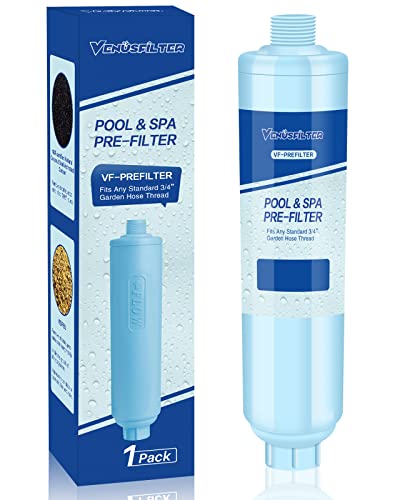
VENUSFILTER Garden Hose Filter for Hot Tub, Pool, Spa (1 Pack)

VENUSFILTER Garden Hose Filter for Hot Tub, Pool, Spa (2 Pack)

POOLPURE Garden Hose End Pre Filter for Pool, Hot Tub, Spa, 2 Pack
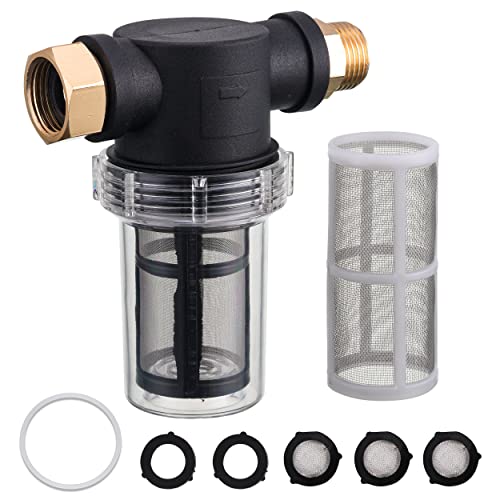
JOEJET Garden Hose Filter, Sediment Filter Attachment

CREEXEON Sediment Filter Attachment with 100 Mesh Stainless Screen
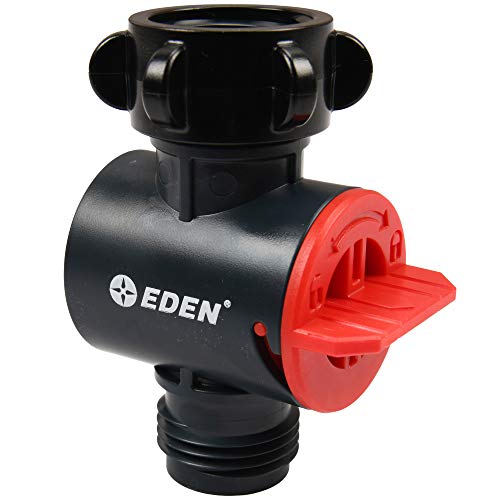
Eden 20138 Inline Water Filter for Garden Hoses and Tools

FS-TFC Garden Hose Filter with Replaceable Cartridge, 1-Micron
More On The Choices That Made The List
Municipal tap water is fine for people, but the chlorine and chloramine that keep it safe to drink also wipe out the beneficial microbes in soil and hydroponic reservoirs. The Camco GardenPURE Carbon Water Filter sits inline on a standard garden hose and uses a granular activated carbon stage to strip those disinfectants before water reaches your beds or trays.
For organic gardeners running a small hydro or aeroponic system, the appeal is targeted chemistry. Carbon filtration doesn’t promise mineral removal, but for chlorine and chloramine specifically, it does the job it sets out to do. Pair it with a separate sediment screen on a spigot with sandy well water, and you’ve covered the two most common water-quality complaints on a suburban lot.
Everyday Wins
- Inline carbon stage targets chlorine and chloramine, which is exactly what organic soil and hydro reservoirs struggle with
- Standard 3/4″ garden hose thread on both ends means no adapters in a typical yard setup
- Compact body tucks behind a rain barrel or under a spigot without crowding the workspace
- For most home gardeners, the swap-in, swap-out design keeps seasonal rotation painless
Things To Consider
- Carbon cartridges lose effectiveness over a season, so budgeting for replacements matters
- On well water with high sediment, owners commonly pair this with a pre-filter screen
- Flow rate is adequate for hand-watering but can feel slow when filling large stock tanks
Key Product Details
Made For
Organic gardeners and small-scale hydro growers who water from a municipal spigot and want a low-fuss chlorine scrubber.
Consider Something Else When
You need heavy metal reduction for a hot tub fill; the VENUSFILTER 1 Pack adds KDF media for that broader chemistry.
The Camco Tastepure has earned its reputation on campground water spigots across North America. It combines granular activated carbon (GAC) with KDF media, a copper-zinc alloy stage that tackles chlorine and reduces some heavy metals. The flexible hose protector at the outlet keeps the connection from kinking at the camper inlet.
For weekend campers and full-time RVers, the design is built around high flow. You can run a sink and shower without the pressure collapse you get from cheaper carbon sticks. Compared to the GardenPURE above, this unit handles broader water chemistry and pairs that with RV-ready fittings, which is why it crosses over from the gardening aisle into the campsite.
The Upside
- Two-stage GAC plus KDF media covers a wider range of contaminants than carbon alone
- High-flow design keeps shower and sink pressure comfortable at a campsite
- Flexible hose protector prevents the stress cracks that ruin plastic threads
- Made in the USA, which matters for some road-trip logistics
Trade Offs
- Filter life is measured in months rather than gallons by most owners, so mark a calendar
- Bulkier than a plain carbon stick and takes up storage space in tight RVs
Best Suited To
RV owners and campers who hook up to unfamiliar spigots and want broad-spectrum water treatment in one inline unit.
Look Elsewhere When
You camp in large groups and need longer filter life between swaps; the Camco Tastepure XL below doubles the capacity.
The Tastepure XL takes everything the standard Tastepure does well and stretches it. You get roughly double the filter media and capacity, which on a long trip means fewer mid-journey cartridge swaps. For full-timers and family campers running two sinks plus a shower, that capacity bump matters more than any spec sheet number.
Like its smaller sibling, it uses GAC and KDF media with a flexible hose protector. The trade-off is size; in a compact camper galley, you may find the larger housing crowds a storage bay. For stationary seasonal sites or trailers with dedicated outdoor hookups, that bulk is a fair exchange for the longer service life.
Standout Benefits
- Double the filtration capacity of the standard Tastepure, so longer trips mean fewer swaps
- Same GAC and KDF media combination handles chlorine and some heavy metals
- Flexible hose protector at the outlet prevents the stress fractures common on plastic threads
- Flow rate stays high enough for two fixtures running at once
Honest Caveats
- Larger housing takes up more storage space than the standard model
- For a quick weekend trip, the extra capacity is overkill
Feature Snapshot
Right Fit For
Full-time RVers, large family campers, and seasonal site residents who want fewer cartridge swaps and broader chemistry coverage.
Swap It Out When
You only camp a few weekends a year; the standard Camco Tastepure is the better cost-per-trip match.
Filling a 300-gallon hot tub from a chlorinated spigot is a frustrating exercise in chemistry. Chlorine off-gasses for days, heavy metals tint the water, and the filter works overtime. The VENUSFILTER Garden Hose Filter tackles that pre-fill problem with two media layers: coconut shell activated carbon for chlorine, taste, and odor, paired with KDF (Kinetic Degradation Fluxion) media that addresses heavy metals through a redox reaction.
Compared to a basic carbon stick, the KDF stage broadens what gets reduced. KDF is a high-purity copper-zinc alloy that uses electrochemical reactions to neutralize contaminants, which is why it shows up in premium pre-filters. Standard 3/4″ garden hose threads on both ends keep installation to a simple twist-on at the spigot before your fill hose.
Notable Gains
- Dual media with coconut carbon and KDF covers chlorine, sediment, and heavy metals
- Standard 3/4″ garden hose thread fits a typical outdoor spigot
- Reduces the time you spend shocking and balancing the tub after a fresh fill
Softer Spots
- Single unit, so during a cartridge change you have no backup filter on hand
- For very hard water, you may still want a separate scale reducer downstream
Perfect Match For
Hot tub and spa owners who want to cut the chemical balancing time after each fresh water fill.
Where Another Pick Suits Better
You maintain multiple pools or spas and want a ready-to-swap spare; the VENUSFILTER 2 Pack covers that rotation.
Same filter media, two units in the box. The VENUSFILTER 2 Pack solves a real ownership problem: filters wear out, and a 300-gallon hot tub fill with a half-spent cartridge means chlorine breakthrough mid-fill. Having a fresh filter staged means you can swap without a trip to the store mid-project.
For households with both a pool and a spa, or a rental property that gets rotated between guests, the second unit pulls weight immediately. Coconut shell carbon plus KDF media handles the same chemistry as the single pack, so you don’t sacrifice filtration quality for the backup convenience.
Notable Upsides
- Two filters included, so a depleted cartridge never leaves you mid-fill
- Coconut carbon and KDF media pair addresses chlorine, sediment, odor, and heavy metals
- Standard 3/4″ hose threads on both units for direct spigot attachment
A Few Limitations
- Higher upfront shelf cost than the single pack
- Bulk storage of unused filters takes space in a small utility closet
Who It Suits Best
Multi-pool households, vacation rental owners, and anyone who learned the hard way that filters always wear out at the worst time.
Not Your Match When
You only need one filter for a single seasonal hot tub; the VENUSFILTER 1 Pack keeps the budget tighter.
The POOLPURE Garden Hose End Pre Filter takes a different mounting approach. Rather than sitting inline mid-hose, it attaches at the hose end, right at the pool or spa inlet. That positioning puts the filter at the final point of use, so any sediment picked up from a long hose run still gets caught before it reaches the water.
The 2-pack format is a familiar play for pool and spa owners. The end-mount design also means you can leave your existing hose layout untouched and just add the filter at the end. Compared to the VENUSFILTER units above, the design philosophy is the same chemistry in a different housing, and the choice between them often comes down to where you want the filter in your hose run.
Practical Pluses
- Hose-end mounting captures sediment that loosens inside the hose itself
- Two units included for rotation through a pool season
- Position at the inlet lets you monitor filter condition visually during the fill
- Standard garden hose thread fits common pool fill hoses
Possible Compromises
- End-mount placement means the filter is in the water near the pool edge during fills
- Heavier than a small inline stick and may need support on long horizontal hose runs
Spec Overview
Whose Shelf It Belongs On
Pool and spa owners who prefer end-of-hose mounting and want a visible filter they can check during a long fill.
Reach For A Different Pick When
You’d rather filter at the spigot and run clean water through the entire hose; the VENUSFILTER 1 Pack is the inline-style alternative.
Pressure washer owners know the pain of a clogged inlet screen. The JOEJET Garden Hose Filter is a straightforward sediment attachment, 3/4 inch GHT on both ends, rated to 80 PSI working pressure. That pressure rating makes it a fit for residential electric pressure washers, where the inlet side can see meaningful pressure during long runs.
It doesn’t try to do carbon filtration. Its job is sediment, period. Sand, rust flakes, and small debris get caught before they reach the washer pump or nozzle. For a workshop or driveway setup on well water, it’s the cheapest insurance against the kind of pump repair that costs more than a small filter every time.
Everyday Advantages
- 80 PSI working pressure suits typical residential electric pressure washers
- 3/4 inch GHT male and female threads on each end for universal hose compatibility
- Sediment-only focus means simple cleaning without cartridge replacements
- Compact size adds minimal bulk to a pressure washer inlet line
Points To Note
- Sediment-only, so chlorine and chemical contaminants pass through unchanged
- On extremely dirty well water, the screen may need frequent rinsing during a job
Who Should Grab It
Pressure washer owners on well water or older municipal lines who want to protect a pump from sediment damage.
A Better Fit Elsewhere
You need broader chemistry plus sediment; the Camco Tastepure RV Water Filter adds carbon and KDF media in one unit.
The CREEXEON Sediment Filter Attachment brings a 100-mesh stainless steel screen to the same job the JOEJET handles, with one practical difference: it ships with two O-rings and two gaskets, so the first service call doesn’t end with a hardware store run. Mesh count matters in sediment filtration, and 100 mesh sits in a sweet spot for catching visible debris without choking flow.
For a shop, garage, or car wash bay, the included spares make this a low-fuss option. You unscrew the housing, rinse the screen, replace the seal, and you’re back in business. Compared to the JOEJET above, the build leans slightly more service-friendly, and the extra gasket set suggests the manufacturer expects owners to maintain the unit rather than throw it away.
A Favorable Mix
- 100-mesh stainless screen catches visible sediment without serious flow loss
- Two spare O-rings and two gaskets included for the first service
- Stainless construction resists corrosion on outdoor spigots
- Threads onto a standard garden hose or pressure washer inlet
Where It Is Less Suited
- Sediment only, no carbon or KDF media for chemical reduction
- Stainless mesh needs manual rinsing and is not a disposable cartridge
Feature Rundown
Built With In Mind
Garage, shop, and car wash owners who maintain their own equipment and want a serviceable filter rather than a disposable cartridge.
Another Choice May Suit When
You want set-and-forget cartridge replacement; the Eden 20138 below has a similar sediment role with a different housing style.
The Eden 20138 is a workhorse inline filter with the kind of specs that matter for daily yard work: 11 gallons per minute flow, 120 PSI maximum pressure, and a 50-mesh stainless steel screen. The anti-rust housing is built for permanent outdoor mounting, which matters if the filter lives on a spigot through summer storms.
Where the CREEXEON catches finer debris with its 100-mesh screen, the Eden trades some capture fineness for higher throughput. For sprinkler systems, wands, and oscillating heads that need steady pressure, that trade-off pays off. The 50-mesh size blocks the dirt that clogs nozzles without choking flow the way a finer screen would.
Where It Delivers
- 11 GPM flow rate keeps sprinkler systems and multi-head wands running at full pressure
- 120 PSI max pressure rating handles residential main-line pressure with margin
- 50-mesh stainless screen blocks dirt that clogs nozzles and sprinkler heads
- Anti-rust housing holds up to permanent outdoor mounting
Details To Watch
- 50-mesh is coarser than the CREEXEON’s 100-mesh, so very fine sediment passes through
- Sediment-only design means no chemical or chlorine reduction
Who Will Love This
Homeowners with sprinkler systems or multi-zone irrigation who prioritize flow rate over fine sediment capture.
Skip It When
You have well water with very fine sand; the CREEXEON 100-mesh screen catches a tighter particle range.
Micron rating is the spec that separates serious filtration from basic sediment screens. The FS-TFC Garden Hose Filter is built around 1-micron capture, which is roughly twenty times finer than the common 20-micron hose filters in this category. For washing machines, RVs, and pet bathing, that fine capture matters because the damage from sediment isn’t always a clogged nozzle; it’s the slow abrasion inside a water heater or the grit that collects in a washing machine drum.
The replaceable cartridge design is the other headline feature. Rather than throwing the whole unit away when the media is spent, you swap a cartridge. Anti-corrosion construction handles outdoor spigot life, and 3/4″ GHT threads fit a standard hose bib. For households routing hose water into a washing machine, the fine capture extends appliance life in ways a basic screen can’t.
Noteworthy Benefits
- 1-micron capture is roughly twenty times finer than common 20-micron hose filters
- Replaceable cartridge design lowers long-term cost compared to disposable housings
- Anti-corrosion construction handles permanent outdoor spigot mounting
- Standard 3/4″ GHT threads for universal hose and appliance connections
Things That May Matter
- 1-micron capture reduces flow noticeably compared to coarser screens
- Replacement cartridges add a recurring cost line to the budget
Who It Suits Best
Households routing hose water into washing machines, RVs, or pet bathing stations who want fine sediment capture and a serviceable cartridge path.
Where A Sibling Pick Shines
You only need basic sediment protection for sprinkler nozzles; the Eden 20138 keeps flow much higher for irrigation use.
What To Weigh Before Choosing a Garden Hose Filter
Filtration chemistry drives most of the decision. Carbon media, which is what the Camco GardenPURE, Tastepure, Tastepure XL, and the VENUSFILTER units use, targets chlorine, taste, and odor. KDF media is a copper-zinc alloy that adds heavy metal reduction through a redox reaction where electrons transfer between the media and the contaminant. Pairing carbon and KDF, as the Camco RV filters and the VENUSFILTER models do, gives you the broadest chemistry in this category.
Sediment screens are a separate problem with a separate solution. The JOEJET, CREEXEON, and Eden units all use stainless steel mesh, where the mesh count number tells you the capture size. A 50-mesh screen (about 297 microns) catches larger debris, while 100-mesh (about 149 microns) goes finer. The FS-TFC takes filtration down to 1 micron, which is a completely different category and trades flow rate for capture fineness.
Connection standard matters more than people expect. Every pick on this list uses a standard 3/4″ garden hose thread, but the placement differs. Inline filters sit between the spigot and your hose, while hose-end filters attach at the final outlet near the pool or tool. Inline placement catches spigot sediment before it enters the hose; hose-end placement catches sediment that loosens inside the hose itself.
Flow rate is the trade-off nobody talks about until they hit it. A 1-micron filter will noticeably slow your fill compared to a 50-mesh screen, and high GPM ratings matter when you’re running multi-zone sprinklers or filling a 300-gallon hot tub.
Key Considerations Across These Picks
Mistakes Worth Dodging
Buying a carbon filter for a well-water sediment problem is the most common mismatch. Carbon media clogs fast when sediment loads are high, so the filter spends its life full of dirt before it can do any chemistry. On well water with visible sediment, start with a screen-style filter, and consider adding carbon only after the sediment is under control.
The second slip is ignoring flow rate. A 1-micron filter sounds appealing until you try to fill a kiddie pool through it. For high-volume tasks like pool fills or stock tank fills, a coarser screen or a high-flow carbon unit is the better match.
What The Higher Tier Buys
Premium picks in this category buy you media diversity and longer service life. A unit with both carbon and KDF stages handles more contaminant categories than a carbon-only stick, which is why the Camco Tastepure and VENUSFILTER models cost more than basic carbon filters. Replaceable cartridge designs, like the FS-TFC, also factor in: the housing is a one-time cost, and the cartridge replacements are cheaper than replacing the entire filter.
Frequently Asked Questions
Do garden hose filters actually reduce chlorine?
Carbon-based filters reduce chlorine reliably through adsorption, where the chlorine molecules bond to the carbon surface. KDF media goes further by addressing chloramine as well, which is the more stable disinfectant some municipalities use. Standard carbon filters may struggle with chloramine, so KDF stage matters if your water utility uses it.
How often should you replace a garden hose filter?
Replacement timing depends on usage volume and water quality. A typical carbon filter under normal residential use lasts a full gardening season. On well water with high sediment, the screen may need rinsing every few weeks. Replaceable cartridge designs signal wear through a drop in flow rate.
Can you use a garden hose filter for drinking water?
Filters in this category target chlorine, sediment, and some heavy metals, but they are not certified for drinking water treatment. Pathogen removal requires finer filtration or UV treatment. For drinking water in an RV or at a campsite, use a dedicated drinking water system.
Will a hose filter slow down my water pressure?
Flow reduction depends on the filter’s micron rating and mesh count. Coarse screens (50-mesh) cause minimal pressure loss, while 1-micron filters create noticeable flow reduction. For tasks that demand full pressure, like sprinkler systems, a high-flow screen-style filter is the better match.
What’s the difference between mesh and microns in hose filters?
Mesh count measures the number of openings per linear inch, while microns measure the actual size of the openings. A 100-mesh screen has openings around 149 microns, while a 1-micron filter captures particles roughly 150 times smaller. Lower micron ratings mean finer filtration and typically lower flow rates.
Closing Remarks
The right garden hose filter depends entirely on what’s in your water and where the water is going. For organic gardens and hydro systems, a carbon-focused unit like the Camco GardenPURE addresses chlorine at the root level. For hot tub fills, the VENUSFILTER 2 Pack brings carbon and KDF media together, with a backup ready when the first cartridge gives out. For protecting pressure washers and sprinkler systems, a sediment screen like the JOEJET, CREEXEON, or Eden handles the job without choking flow. Match the filter to the water, and the rest of your watering routine gets easier.
