

Aphids chewing through your roses, flea beetles skeletonising the eggplant, a sudden aphid swarm on the milkweed, that moment in midsummer when a quick stroll through the vegetable patch turns into a pest inventory. The right spray, dust, or granule makes the difference between a thriving bed and a season of triage. These ten options cover the full spectrum: organic botanical oils for edible gardens, broad-spectrum synthetics for stubborn infestations, granular perimeter barriers, and concentrated refills for larger plots.
A Snapshot Of The Selections

Earth’s Ally 3-in-1 Plant Spray (32 oz)

Garden Safe Fungicide3 with Neem Oil (1 Gal)

BioAdvanced 3-in-1 Insect, Disease & Mite Spray (24 oz)

Agrisel Bifenthrin Pro 7.9 (1 Gallon)

Garden Safe Multi-Purpose Garden Insect Killer (32 oz)

Sevin Garden Perimeter Insect Killer Granules II
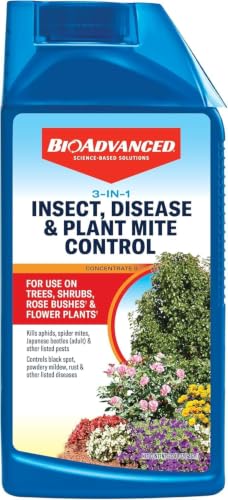
BioAdvanced 3-in-1 Insect, Disease & Mite Concentrate (32 oz)

Bonide Captain Jack’s Neem Max (16 oz)

Atticus Spliven Organic Spinosad Concentrate (32 oz)
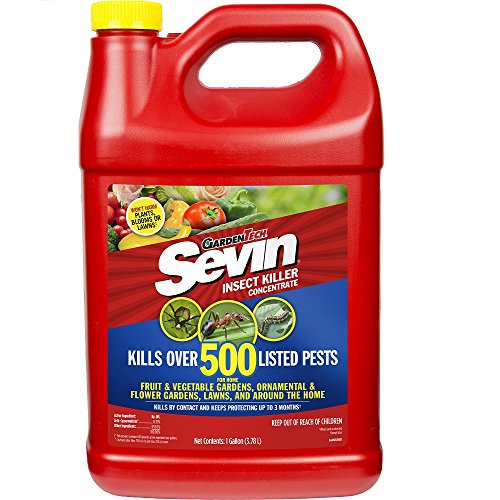
Sevin GardenTech Insect Killer Concentrate (1 gal)
Earth’s Ally 3-in-1 Plant Spray lands first because it solves a common problem without forcing you to choose between indoor and outdoor use. The 32 oz ready-to-use bottle mixes a blend of essential oils (botanical oils distilled from plants rather than lab-synthesised chemicals) and targets soft-bodied insects along with common fungal issues. For anyone raising a windowsill herb garden alongside a tomato bed, that cross-environment flexibility removes a layer of mental overhead.
It works as a contact treatment: the oils smother aphids, mites, and whitefly rather than lingering in plant tissue. Depending on your local pest pressure, you may find yourself spraying more frequently than a synthetic residual, but the trade-off is suitability for edibles and houseplants. Compared to the Garden Safe multi-purpose pick below, this one is gentler on tender foliage.
Real Benefits
- Ready-to-use bottle means no measuring or mixing before spraying.
- Formulated for both indoor houseplants and outdoor beds in one product.
- Botanical oil base suits growers who avoid synthetic chemistries on edibles.
- Three-in-one design handles insects and common fungal issues together.
Points To Note
- Contact action requires thorough coverage of leaf undersides to reach hiding pests.
- Strong oil scent lingers for a short while after application in enclosed rooms.
- Sprayer head can clog if the bottle sits unused for several weeks; a quick rinse helps.
Right Fit For
Houseplant owners and small edible gardeners who want one bottle that handles both windowsill and patio use.
Consider Something Else When
You battle heavy aphid swarms across a large vegetable plot, where the Agrisel Bifenthrin Pro 7.9 offers broader reach per refill.
Garden Safe Brand Fungicide3 stacks three garden jobs into one gallon: fungicide, insecticide, and miticide. The active ingredient, clarified hydrophobic extract of neem oil, controls aphids and whiteflies while suppressing black spot, rust, and powdery mildew on roses, vegetables, and ornamentals. For organic-leaning gardeners managing a mixed bed, that scope matters; you can stop juggling separate bottles for bugs and fungus.
The gallon size suits mid-sized properties where a 32 oz spray runs out in a few rounds. Neem oil works by disrupting insect feeding and reproduction rather than killing on contact, so the visible results lag a day or two behind application. Compared to the smaller Bonide Captain Jack’s Neem Max below, this is the value play for anyone spraying weekly through the season.
Everyday Wins
- Three-mode action (fungicide, insecticide, miticide) reduces the bottle count in the shed.
- Approved for organic gardening, suitable around edibles and ornamentals.
- One-gallon refill covers more frequent applications without mid-season restocking.
- Effective on powdery mildew and rust, two problems that often travel with aphid infestations.
Trade-Offs
- Neem oil has a noticeable garlic-sulphur smell that drifts during application.
- Should be applied in cooler hours to avoid leaf burn in strong midday sun.
Feature Card
Who It Suits Best
Organic-leaning growers with mixed rose, vegetable, and shrub beds who want one product for both bugs and fungal pressure.
A Better Fit Elsewhere
You need fast knockdown on a heavy caterpillar outbreak, where the Atticus Spliven Spinosad Concentrate is a stronger match.
BioAdvanced 3-in-1 Insect, Disease, and Plant Mite Control Spray skips the measuring cup entirely. The 24 oz ready-to-spray bottle handles listed insects, common fungal diseases (black spot, powdery mildew, rust), and plant mites in a single pass. It is built for the gardener who notices a problem on a Saturday morning and wants a solution in hand without driving to the store.
Use it on flowering plants, trees, and shrubs where Japanese beetles, aphids, and whiteflies cluster. Because this is a synthetic formula, it carries a longer residual effect on treated surfaces than the botanical oils in the Earth’s Ally pick above. In our view, that persistence suits shrubs and ornamentals more than daily-harvested herbs, where you may want a shorter pre-harvest interval.
Key Advantages
- No mixing, no measuring, no separate sprayer to clean between applications.
- Treats insects, listed fungal diseases, and mites in one bottle.
- Built for shrubs, trees, and flowering plants where residual protection helps.
Honest Caveats
- Synthetic chemistry, so it is less suitable for edibles picked the same day.
- 24 oz size runs out quickly on larger properties; the concentrate version below scales better.
Made For
Ornamental gardeners with established shrubs and roses who want a grab-and-spray routine on weekends.
Not Your Match When
You grow a steady stream of leafy greens and herbs, where the Garden Safe Multi-Purpose Garden Insect Killer keeps the edible path cleaner.
Agrisel Bifenthrin Pro 7.9 is the workhorse on this list, a one-gallon concentrate built for broad-spectrum insect control. Bifenthrin is a synthetic pyrethroid (a class of insecticides modelled on natural pyrethrum from chrysanthemums) that targets a long list of pests: spiders, ants, fleas, mole crickets, stink bugs, and many more. It carries the strongest residual of any product here, so it suits lawn and perimeter use where you want weeks of protection between applications.
This is a concentrate, which means you measure, mix, and apply with a dedicated sprayer. For most homeowners, that extra setup is a fair trade for the coverage. Compared to the Sevin GardenTech concentrate below, Agrisel leans into perimeter and lawn applications with a stronger focus on crawling pests. The label calls out pet-safe use once the product has dried, so timing matters if you have dogs that run the yard.
Strong Points
- One-gallon concentrate stretches across larger lawn and perimeter treatments.
- Targets both surface insects and soil-dwelling pests like mole crickets.
- Long residual cuts the number of repeat applications through the season.
- Suitable across lawn, ornamental, and agricultural settings.
Less-Strong Areas
- Synthetic pyrethroid chemistry demands careful label reading around pets and pollinators.
- Concentrate format requires a pump sprayer and accurate measuring before use.
Feature Card
Best Suited To
Property owners managing larger lawns, fence lines, and ornamental beds who want long residual control with fewer spray days.
Skip It When
You want a botanical option for an organic vegetable bed, where the Atticus Spliven Spinosad Concentrate stays in the organic playbook.
Garden Safe Multi-Purpose Garden Insect Killer is the kind of bottle you keep by the back door all summer. The 32 oz ready-to-use formula works as an insecticidal soap, smothering over 100 listed insects on contact. It is approved for organic gardening, so it fits homes, home gardens, and home greenhouses without a chemistry lecture every time you harvest.
The pre-harvest interval (the wait time between spraying and picking) is short enough that you can spray in the morning and pick by evening, which is a genuine quality-of-life feature for daily-harvested crops like tomatoes and basil. Soap-based sprays need direct contact to work, so coverage is everything. Versus the Botanical Earth Ally pick earlier, this one is harsher on soft-bodied pests but lighter on fungal coverage.
What Stands Out
- Kills listed insects on contact, including aphids, whiteflies, and mites.
- Organic gardening approval keeps it in play around edibles and herbs.
- Short pre-harvest window suits daily-harvest crops.
- Ready-to-use bottle cuts setup time to zero.
Possible Compromises
- Soap-based formula needs thorough coverage, including leaf undersides, to reach hiding pests.
- Has no fungicide action, so for mildew you would need a separate bottle.
Feature Card
Who Will Love This
Edible garden growers who want an organic insecticidal soap they can rotate through the season on tomatoes, peppers, and leafy greens.
Look Elsewhere When
You also need fungal control, where the Garden Safe Fungicide3 with Neem Oil covers both insects and mildew in one bottle.
Sevin Garden Perimeter Insect Killer Granules II is the only granular entry on this list, and that format changes the use case. Instead of spraying leaves, you spread the granules around the perimeter of your garden, foundation lines, and yard edges. The product is described as targeting beneficial insects on contact while building a barrier that lasts up to three months from a single application.
This is preventive maintenance rather than a rescue treatment. You spread it before the ants start their march or the crickets move toward the back door. Compared to the spray concentrates above, granules trade targeted leaf coverage for a low-effort, set-and-forget perimeter defence. They are a sensible pair to a foliar spray: spray the bed, defend the border.
The Value In It
- Granular format spreads easily with a standard broadcast or shaker applicator.
- Long residual window reduces the number of repeat applications through the season.
- Perimeter use keeps treatment away from the garden interior, where pollinators feed.
Small Caveats
- Granules need watering in or rain to activate the contact action.
- Not a foliar rescue product, so you will still want a spray for active leaf damage.
Perfect Match For
Homeowners building a defensive perimeter around a foundation, fence line, or garden border before the heavy bug season.
Another Choice May Suit
You need to treat an active outbreak on plant foliage, where the Sevin GardenTech Insect Killer Concentrate is the better match.
BioAdvanced 3-in-1 Insect, Disease, and Mite Control Concentrate is the dilutable sibling of the ready-to-spray version above. The 32 oz bottle mixes into a larger volume of finished spray, so you cover more beds per refill at a lower cost per application. It targets listed insects like aphids, Japanese beetles, and whiteflies, controls black spot, powdery mildew, rust, and scab, and prevents spider mites.
This is the right call for a property with established flowering plants, trees, and shrubs that get treated on a recurring schedule. The trade-off is the measuring step and the dedicated pump sprayer, which adds cleanup. If you already keep a sprayer in the shed, the concentrate format makes sense; if not, the ready-to-spray version above saves the setup.
Notable Upsides
- Dilutable format lowers the per-application cost across a full season.
- Three-in-one coverage (insects, listed diseases, mites) replaces multiple bottles.
- Designed for flowering plants, trees, and shrubs at varied scales.
Points To Keep In Mind
- Requires accurate measuring and a separate sprayer to mix and apply.
- Synthetic chemistry is less suitable for daily-harvested edibles than the organic options.
Built With In Mind
Repeat-treatment gardeners with established ornamental plantings who already own a pump sprayer and want lower cost per round.
Swap It Out When
You only need occasional spot treatment, where the BioAdvanced Ready-To-Spray bottle is the simpler match.
Bonide Captain Jack’s Neem Max is the friendliest entry on this list for someone new to garden spraying. The 16 oz ready-to-spray bottle hooks onto a standard garden hose and dilutes at the nozzle, which removes every mixing step. The active ingredient, cold-pressed neem oil, is plant-derived and works as an insecticide, fungicide, miticide, and nematicide (a treatment that targets nematodes, the microscopic roundworms that attack plant roots).
For a small mixed bed with vegetables, flowers, and a few shrubs, that four-in-one scope is appealing. Compared to the larger Garden Safe Fungicide3 gallon above, this is a smaller bottle suited to lighter seasonal use. The catch with neem, true across all the neem options here, is that you spray in cooler hours to avoid leaf scorch.
The Upside
- Hook-and-spray bottle removes measuring and pre-mixing entirely.
- Four-in-one mode (insecticide, fungicide, miticide, nematicide) suits diverse beds.
- Cold-pressed neem oil stays inside organic gardening programs.
Trade-Offs
- Smaller 16 oz size means more frequent refills on a busy property.
- Neem sprays should be applied outside of peak sun to prevent leaf burn.
Feature Card
Whose Shelf It Belongs On
New gardeners who want a no-mix, hose-end spray they can use confidently across vegetables, flowers, and shrubs.
Reach For A Different Pick When
You manage a one-gallon refill routine and want fewer bottle swaps, where the Garden Safe Fungicide3 gallon scale fits better.
Atticus Spliven Organic Insecticide brings a different active ingredient to the organic category: spinosad, a soil-derived bacterium byproduct that controls caterpillars, thrips, leafminers, and other chewing pests. The 0.5% spinosad formulation is OMRI-listed, meaning it has been reviewed by the Organic Materials Review Institute and approved for use in organic gardening, so it fits edible programs without compromising the organic plan.
It is a concentrate, so you measure and mix before spraying. Spinosad works by ingestion and contact, so thorough coverage matters, and the residual is short, which is helpful for pollinators once the spray dries. Compared to the neem options earlier, this one is the stronger match when caterpillars or thrips are the dominant problem rather than aphids or fungal disease.
Positive Points
- OMRI-listed for organic gardening, so it fits certified organic programs.
- Spinosad is highly effective against caterpillars, thrips, and leafminers.
- 32 oz concentrate offers flexibility in dilution and coverage.
Worth Noting
- Toxic to bees while wet, so timing applications outside foraging hours matters.
- Concentrate format requires a sprayer and accurate measuring.
Feature Card
The Right Fit
Organic vegetable growers battling caterpillar outbreaks on brassicas, tomatoes, and leafy greens who want a strong, certified-organic tool.
Where A Sibling Pick Shines
Your main issue is aphid and mildew pressure on ornamentals, where the Garden Safe Fungicide3 with Neem Oil covers a wider symptom list.
Sevin GardenTech Insect Killer Concentrate closes the list with a long-standing, broad-spectrum option in a one-gallon concentrate. The label covers a long list of insects across vegetables, fruits, ornamentals, lawns, and the home perimeter. For homeowners who treat a large property on a recurring schedule, the concentrate format and one-gallon size match the workload without monthly restocking.
The trade-off is a longer pre-harvest interval than the organic picks, so it suits dedicated treatment days more than daily-harvest routines. Compared to the Agrisel Bifenthrin Pro above, the Sevin concentrate leans toward foliar coverage on a wider variety of plants. The honest read is that this is a flexible, broad-list product for someone who already has a sprayer routine and wants one jug to refill it from.
Noteworthy Benefits
- One-gallon concentrate covers a full season of treatment rounds.
- Broad insect list, including beetles, caterpillars, and common lawn pests.
- Useful across vegetables, fruits, ornamentals, and perimeter zones.
A Few Limitations
- Longer pre-harvest interval than the organic options, so it is not ideal for daily-picked crops.
- Concentrate format requires a dedicated sprayer and label-driven dilution.
Who Should Grab It
Property owners with large mixed plantings who already run a sprayer and want one refill jug for the whole season.
Consider Something Else When
You mainly need a perimeter barrier rather than foliar coverage, where the Sevin Perimeter Granules do the job with less sprayer time.
## What To Weigh Before Picking A Garden Insecticide ### Match The Product To The Pest First Start by identifying the pest you actually see. Chewing damage (holes, skeletonised leaves) points toward caterpillars, beetles, or weevils, which respond well to spinosad and Sevin-class products. Sticky residue and curled leaves usually mean aphids, whiteflies, or mites, which a horticultural oil or insecticidal soap handles. The wrong product for the pest wastes a treatment round and can stress the plant. ### Decide Between Organic And Synthetic Organic options (Earth’s Ally, Garden Safe, Bonide Neem Max, Atticus Spliven) use botanical oils, soaps, or naturally derived spinosad. They fit edible gardens and pollinator-friendly yards but often need more frequent application. Synthetic options (BioAdvanced, Agrisel, Sevin) deliver longer residual control and broader pest lists, which suits large properties and ornamental-only zones. Your edible plan should drive the choice more than brand familiarity. ### Think About Format And Effort Ready-to-spray bottles (Earth’s Ally, BioAdvanced RTU, Bonide Neem Max) work for occasional spot treatments. Concentrates (Garden Safe gallon, BioAdvanced concentrate, Agrisel, Spliven, Sevin GardenTech) make sense for repeat use across larger areas. Granules (Sevin Perimeter) are preventive perimeter tools rather than foliar rescue treatments. Picking the format that matches your routine prevents bottles from sitting half-used in the shed. ## Key Considerations Across These Picks ### Common Buying Slip Ups Choosing a product for the pest you fear rather than the one in front of you is the most common slip. A second is buying a concentrate without owning a sprayer, then leaving the bottle on a shelf. A third is ignoring pollinator timing; even organic options can harm bees while wet, so evening application during low foraging is a useful habit. Reading the label for the specific pest, the specific plant, and the harvest window avoids most wasted rounds. ### Why Premium Insecticides Cost More Higher-tier products in this category generally cost more for three reasons: longer residual activity, broader pest lists, and larger container formats. A one-gallon concentrate lowers your cost per application but raises the upfront spend, and a synthetic broad-spectrum product carries more label restrictions, which is part of the price. The upgrade pays off when your property is large, your pest pressure is high, and your time for repeat spraying is limited. For a small edible bed with light aphid traffic, the lower-tier organic bottle is the smarter spend. ## Frequently Asked Questions ### How Often Should I Reapply A Garden Insecticide? Most contact insecticides need reapplication every 7 to 14 days, especially after rain or overhead watering. Residual synthetic products stretch further, while organic oils and soaps break down faster and need closer follow-up. ### Can I Use These Products On Edible Vegetables? Several picks here, including the Garden Safe options, Bonide Neem Max, Atticus Spliven, and Earth’s Ally, are designed for use around edibles. Always check the label for the pre-harvest interval before spraying and picking. ### Do Organic Insecticides Actually Work? Yes, though they generally work by contact or by disrupting feeding rather than delivering fast knockdown. Coverage is critical; spraying leaf undersides and reapplying on schedule is what separates success from a frustrating season. ### Is It Safe To Spray Around Pollinators? Most products are less harmful to bees once dry, so applying in the evening when bees are not foraging is a widely recommended habit. Avoid spraying open blossoms whenever possible, and read each product’s pollinator guidance on its label. ### Should I Rotate Between Different Products? Rotating between active ingredients (for example, alternating a neem product with a spinosad product) helps prevent pest resistance over a long season. It also lets you match the chemistry to the pest showing up that week. ## Wrap Up The right garden insecticide depends on your pest, your plant list, and how often you want to spray. For a small edible bed, the organic picks here cover most situations with a sensible spray routine. For a larger property or a stubborn outbreak, the broad-spectrum concentrates and perimeter granules pick up the heavier work. Match the product to the actual problem in front of you, follow the label, and rotate active ingredients across the season to keep the garden productive.