

A clean border between lawn and walkway pulls a yard together, but the wrong tool turns a quick Saturday job into a back-breaking one. Whether you wrestle with compacted clay, soft topsoil, or thick spreading roots, the right grass edging tool matches the soil and the gardener, not just the spec sheet. This roundup covers ten solid options across manual half-moon styles, adjustable-handle variants, and a cordless power edger for larger properties.
A Quick View Of The Lineup
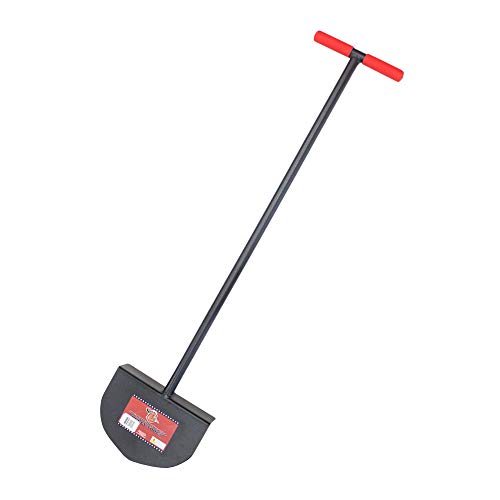
BULLY TOOLS 12-Gauge Manual Lawn Edger (38″ T-Style Grip)

Byhagern Heavy Duty Steel Half Moon & Saw-Tooth Edger
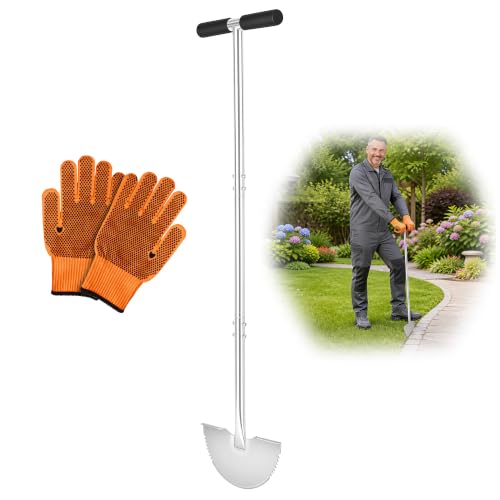
KYEEN-TOOLS Serrated Half Moon Edger with T-Handle (38″)

Oliynedy 36″ Manual Saw-Tooth Half Moon Edger
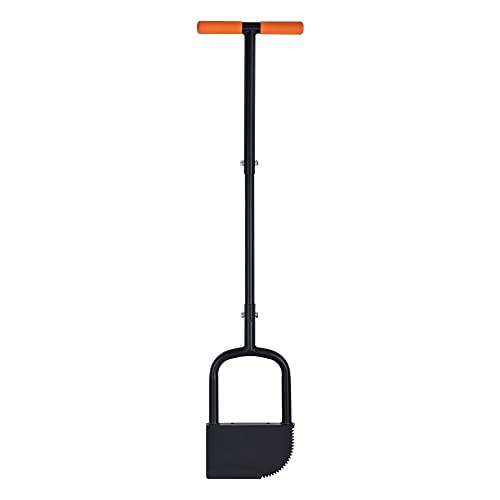
BARAYSTUS Height-Adjustable Saw-Tooth Half Moon Edger

WORX WG898 20V Cordless Lawn Edger (7″ Blade)

Suchtale 11″ Flat Shovel Floor Scraper
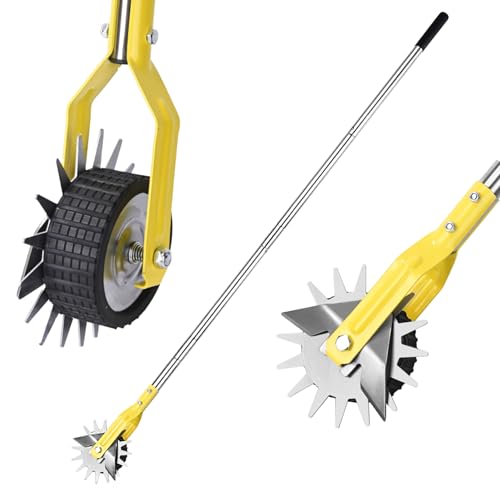
YEELOR Wheel Rotary Edger

Colwelt Half Moon Edger Lawn Tool (38″)

HANGMAICOME Heavy-Duty Saw-Tooth Edger (38″–49″ Adjustable)
More Details On Our Top Picks
The Bully Tools edger feels closer to a contractor’s trenching spade than a typical homeowner tool. Its 12-gauge steel head stands up to compacted soil, gravelly edges, and the kind of neglected borders that make other half-moon edgers fold. The 38-inch shaft gives most users enough reach to work standing upright, and the T-style grip accepts two-handed pressure without twisting.
For properties with established lawn edges that need refreshing only a few times a year, this is a sensible long-haul pick. It cuts cleanly into existing turf lines and handles shallow trenching for low-voltage cable runs or paver borders. Where a saw-tooth model chews through fresh roots, this one relies on weight and direct force, so softer topsoil users may want something lighter.
Everyday Wins
- Thick 12-gauge steel head resists bending in hard-packed ground.
- 38-inch shaft keeps you mostly upright during long sessions.
- T-style grip supports two-handed leverage for deeper cuts.
- Works as both an edger and a light trenching spade for cables or pavers.
Things To Consider
- Heavier than stamped-steel half-moon edgers, which can tire out smaller users.
- Smooth blade works best on established edges, less so on root-choked new borders.
- No built-in foot ledge, so depth depends on how hard you can stomp.
Who It Suits Best
Homeowners with tough, established lawn borders and gardeners who want one tool that doubles as a shallow trencher.
Where Another Pick Suits Better
Choose the Byhagern half-moon edger instead if your priority is sawing through spreading roots with less upper-body effort.
Where the Bully Tools model leans on brute weight, the Byhagern edger attacks the soil with teeth. The half-moon blade carries a serrated bottom edge that grips turf and bites through small roots rather than just compressing the ground. A long handle and a wide footplate work together to reduce bending, and the non-slip grip helps when the morning dew is still on the grass.
For irregular garden borders with old root systems, this design tends to feel more productive per step than a smooth blade. The trade-off shows up in sandy or rocky soil, where the teeth can clog or chip if you hit buried debris.
Noteworthy Benefits
- Saw-tooth blade cuts through stubborn grass runners and shallow roots.
- Long handle plus wide footplate keeps posture more upright.
- Non-slip grip stays secure with damp or muddy hands.
Worth Noting
- Teeth may clog in wet clay; cleaning between passes is part of the routine.
- Stepping force is on the user; very compacted ground still demands effort.
Key Product Details
Made For
Gardeners who wrestle with root-bound borders and want a tool that slices rather than smashes.
Consider Something Else When
Step up to the WORX WG898 if you have long continuous edges and would rather walk than push a manual blade.
The KYEEN-TOOLS edger is a clear cousin to the Byhagern, but the priorities shift toward hand comfort. A softer T-handle absorbs torque better than a bare steel crossbar, and the 38-inch shaft lets you stand mostly upright. The serrated steel blade gives the same root-chewing behavior that saw-tooth users tend to appreciate.
This is a thoughtful pick for weekend edging sessions that stretch past an hour. Gardeners with arthritic hands or smaller grips usually find the cushioned T easier to live with. The 38-inch length, on the other hand, may feel short for users over six feet tall.
What Pays Off
- Soft T-handle reduces pressure points during long sessions.
- Serrated blade handles roots and dense turf without constant stomping.
- Rust-proof construction suits humid or coastal climates.
Trade Offs
- Fixed 38-inch length does not adapt to very tall users.
- Wide footrest is helpful but smaller than some competing models.
Best Suited To
Anyone prioritizing hand comfort and a softer grip while still wanting the bite of a serrated blade.
Skip It When
Switch to the BARAYSTUS height-adjustable edger if multiple household members of different heights share the tool.
The Oliynedy keeps things simple. A 36-inch shaft, a padded T-grip, a saw-tooth half-moon blade, and a wide foot pedal. Nothing fancy, but the geometry works well for the most common edging job: cutting a clean 4-inch-deep line along a sidewalk or a planting bed.
For homeowners who edge the lawn a few times per season and want predictable results, the lighter feel here is a quiet advantage over heavier contractor-grade tools. The shorter shaft, however, is a real constraint for anyone tall enough to want more reach.
The Upside
- Padded T-grip is comfortable without feeling bulky.
- Saw-tooth edge handles modest roots and thick grass runners.
- 36-inch length suits users around 5’4″ to 5’10” particularly well.
Room For Improvement
- No height adjustment, so taller users will feel hunched.
- Foot pedal is solid but narrower than the Byhagern’s wider stance.
Spec Overview
Who Will Love This
Average-height homeowners maintaining neat sidewalk and bed edges on a routine schedule.
Look Elsewhere When
Pick the HANGMAICOME adjustable model if you want a tool that grows with the household.
The BARAYSTUS is the first pick here with a true two-position height adjustment, 37 inches and 41 inches, that lets shorter and taller gardeners share the same tool without stooping. A non-slip T-grip and a saw-tooth steel head round out the package, and the wide 7.9-inch head covers more ground with each step.
For multi-user households, that adjustability alone is worth considering. The combined smooth and serrated edge also means you can switch between slicing soft turf and biting through roots without swapping tools.
Strong Points
- Two height settings (37″ and 41″) suit a range of user heights.
- 7.9-inch head width trims more edge per pass than narrower blades.
- Hybrid smooth and serrated edge handles varied soil conditions.
Points To Note
- Adjustment mechanism adds moving parts that can loosen over time.
- Head weight is noticeable when fully extended at the 41-inch setting.
Feature Snapshot
The Right Fit
Households where more than one person handles the edging and a flexible tool height matters.
A Better Fit Elsewhere
Reach for the Bully Tools edger if your edges are short and your soil is genuinely tough, and you would rather skip the adjustable hardware.
The WG898 breaks the manual pattern entirely. A brushless 20V motor drives a small trenching blade, so the tool does the cutting while you guide it along the edge. A three-position depth adjustment lets you decide between a shallow refresh and a deeper cut for hardier borders. For larger properties, this trades a step-on workout for a steady walking pace.
The shift in ownership is meaningful: batteries, charging, and blade wear all enter the picture. In return, edging a long driveway or a wide lawn border takes minutes instead of a sweaty afternoon.
Everyday Advantages
- Brushless motor delivers efficient, consistent cutting power.
- Three depth settings cover refreshes and deeper trenching jobs.
- 7-inch blade suits sidewalks, driveways, and patio borders.
Things To Keep In Mind
- Battery runtime is the new limiting factor on big yards.
- Replacement blades and battery care are ongoing ownership costs.
Key Product Details
Perfect Match For
Homeowners with long driveways, big lawn borders, or anyone whose body prefers walking to stomping.
Another Choice May Suit
Stick with the Bully Tools edger for small one-time jobs where charging and storing a power tool feels like overkill.
The Suchtale is a different animal. Rather than a half-moon edger, it is an 11-inch flat scraper built for clearing weeds, moss, and dried mud from the seams of patios, driveways, and walkways. The wide alloy steel edge shears off surface growth in long passes, and the foot-step design gives you leverage without a heavy head.
For hardscape owners, this earns its place as a companion tool to a half-moon edger. It will not carve a fresh turf line, but it cleans up the edges that mowing leaves behind. Most users pair it with a stiff brush for a full hardscape refresh.
Features That Help
- 11-inch blade clears wide seams in fewer passes.
- Foot-step leverage keeps your back out of the work.
- Six rivets and two screws support a durable blade connection.
Practical Considerations
- Not designed to cut a new lawn edge, so it supplements rather than replaces an edger.
- Edge can dull over time on concrete and stone surfaces.
Built With In Mind
Homeowners with patios, pavers, or concrete walkways who want a clean surface without kneeling or chemicals.
Reach For A Different Pick When
Pick the Colwelt half-moon edger for actual turf lines; the Suchtale is for hardscape, not lawn.
The YEELOR takes a rolling approach. A stainless steel handle, a non-slip grip, a sharp cutting disc, and a wear-resistant rubber wheel combine into a tool you push along the edge rather than stomp into the ground. For already-defined borders that just need a clean-up pass, the rolling action is easier on knees and lower back than any half-moon design.
Where rotary edgers tend to fall short is creating a new edge from scratch. The disc trims existing growth well but does not bite into compacted soil the way a stepped blade does. Think of this as a maintenance tool, not an installer.
Practical Advantages
- Rolling design reduces bending and stomping.
- Stainless steel handle holds up to weather and storage.
- Rust-proof cutting disc stays sharp through regular touch-ups.
Honest Caveats
- Less effective at establishing new edges in hard or compacted soil.
- Wheel alignment may need occasional checking on rough ground.
Whose Shelf It Belongs On
Anyone with established lawn borders who wants a quick mid-season touch-up without a workout.
Swap It Out When
Choose the Bully Tools edger for that first cut of the season, then bring out the YEELOR for follow-ups.
The Colwelt is a straightforward half-moon edger with a 38-inch shaft and a T-handle that cushions the grip. It trims grass cleanly, cuts narrow trenches, and handles the kind of maintenance work that defines most residential lawn care. There are no extra gimmicks, which is part of its appeal.
For new homeowners learning the rhythm of lawn care, this is a low-pressure starting point. It will not outperform a saw-tooth blade in root-heavy soil, but for typical turf and soft ground, it does the job without a steep learning curve.
A Strong Showing
- 38-inch shaft keeps posture mostly upright.
- Cushioned T-handle is comfortable for first-time users.
- Simple half-moon design is easy to sharpen and maintain.
Some Limits To Know
- No serrated edge, so root-heavy borders take more effort.
- Fixed length does not accommodate very tall users comfortably.
Feature Rundown
Who Should Grab It
New homeowners and casual gardeners who want a dependable, no-fuss first edger.
A Better Fit Elsewhere
Move to the WORX WG898 if you outgrow manual edging and want to cover ground faster.
The HANGMAICOME combines the two features taller gardeners ask about most: an adjustable handle that runs from 38 to 49 inches, and a wide footplate that delivers serious downward force. A saw-tooth stainless steel blade handles dense turf, compacted dirt, and stubborn roots without complaint.
It is the heaviest-duty manual option in this roundup, and it feels like it. The wider reach is a real benefit for tall users; the trade-off is weight and a slightly bulkier stance for shorter gardeners.
Notable Gains
- Adjustable 38″–49″ reach suits users from average to tall.
- Wide footplate provides solid leverage for tough soil.
- Saw-tooth blade cuts through dense turf and roots cleanly.
Where It May Fall Short
- Heavier overall feel may fatigue smaller users.
- Adjustment hardware adds a maintenance point over fixed-length designs.
Key Attributes
The Right Fit
Tall gardeners and households with dense, compacted borders who want a tool that adjusts rather than fights them.
Reach For A Different Pick When
Choose the Oliynedy 36″ for a lighter, simpler option suited to average-height users and softer soil.
What To Weigh Before Choosing Grass Edging Tools
Matching The Tool To Your Soil
Soil type drives more of the decision than people expect. Soft, loamy ground plays well with any half-moon edger, while compacted clay rewards serrated teeth and wide footplates that translate body weight into downward force. Rocky or root-heavy soil benefits most from saw-tooth designs like the Byhagern or HANGMAICOME, where teeth grip and slice rather than slide off hard obstacles. For sandy or amendment-rich beds, lighter half-moons or rotary edgers work fine without overkill.
Handle Length And Posture
A 36-inch shaft favors users around 5’4″ to 5’8″, while 38 inches suits a wider average range. Tools in the 40-plus-inch range, including adjustable models like the BARAYSTUS and HANGMAICOME, give taller gardeners a chance to stay upright. If more than one person in the household handles the edging, height adjustment earns its keep fast.
Manual Vs Cordless Power
Manual edgers cost less, weigh less, and ask only for muscle and a few minutes of cleanup. Cordless options like the WORX WG898 cover more ground with less effort but introduce battery management, charging habits, and blade replacement into the routine. The honest read: manual tools are right for occasional maintenance on small-to-medium lawns, while cordless makes sense when edging is a multi-hour task or part of regular weekly upkeep.
Blade Geometry And Edge Type
Smooth half-moon blades cut cleanly into established turf, while serrated edges saw through roots and runners. Some models, like the BARAYSTUS, blend both on a single head. Wider heads, such as the BARAYSTUS at 7.9 inches, cover more ground per step; narrower heads give finer control around curved bed borders.
Smart Considerations Before You Commit
Where Shoppers Go Wrong
Chasing the heaviest tool on the shelf is a familiar slip. For most residential lawns, a lighter 12-gauge half-moon is plenty, and a heavy contractor-grade edger only earns its weight in compacted or rocky soil. Another common miss is ignoring handle length: an edger that’s too short turns a quick job into a posture problem. Match the shaft to your height first, then look at blade design.
When Paying More Pays Off
The jump to a higher-tier edger usually buys three things: better corrosion resistance, a more refined handle mechanism, and a blade that holds an edge longer. For homes near the coast, in regions with high humidity, or for households that store tools in an unheated shed, those upgrades earn their keep over several seasons rather than months. The cordless WORX sits in a different category entirely: the premium there pays for time savings and reduced physical effort on bigger properties, not just better materials.
Frequently Asked Questions
How Often Should You Edge A Lawn?
Most lawns benefit from edging two to four times per growing season, with light touch-ups as needed. Cool-season grasses may need slightly more frequent edging during peak growth in spring and fall.
What’s The Difference Between A Half-Moon Edger And A Rotary Edger?
A half-moon edger is a stepped blade you press into the soil to cut a fresh line. A rotary edger rolls along an existing edge with a spinning disc, cleaning up overgrowth without carving new lines. Use a half-moon to install or refresh, and a rotary for maintenance between sessions.
Can Manual Edgers Handle Thick Roots?
Saw-tooth designs handle small to medium roots well, especially in moist soil. For large, woody roots, a manual edger struggles and a powered trencher or pruning saw is the better tool.
Do Cordless Edgers Need Special Batteries?
Most cordless edgers run on the manufacturer’s own battery platform. Stick with the matching battery and charger, and store batteries indoors during extreme cold to preserve capacity.
How Do You Keep A Manual Edger From Rusting?
Wipe the blade dry after use, store it indoors or in a sheltered spot, and a light coat of oil on the steel once a season goes a long way. Stainless steel heads resist rust better than plain carbon steel, but a quick wipe-down never hurts.
Closing Remarks
The right grass edging tool depends less on specs and more on your soil, your height, and how often you actually edge. Start with the shape of your yard and the depth of cut you want, then narrow down by handle length and blade style. Any of the ten picks here will earn its space in the shed if it matches those three things.
