

A mixed lawn, part sun, part shade, part stubborn bare patch, is the most common yard in suburbia. Most homeowners don’t want a turfgrass science degree; they want grass that survives both the south-facing strip by the driveway and the dim patch under the maple. The ten grass seeds for shade and sun below split into two clear groups: blends built for transitional light and heat, and mixes aimed at repair or tougher microclimates. Pick by your worst-case area, not your best one.
A Fast Comparison Of The Options

Jonathan Green Black Beauty Sun & Shade Grass Seed (7 lb)

Jonathan Green Black Beauty Heat & Drought Resistant Grass Seed (3 lb)

Jonathan Green Black Beauty Ultra Grass Seed (7 lb)

Jonathan Green Black Beauty Tall Fescue Blend (15 lb)

Scotts Turf Builder All-Purpose Mix (20 lb)

Scotts Drought Tolerant Mix (4 lb)

GreenView Turf Type Tall Fescue Sun & Shade (7 lb)
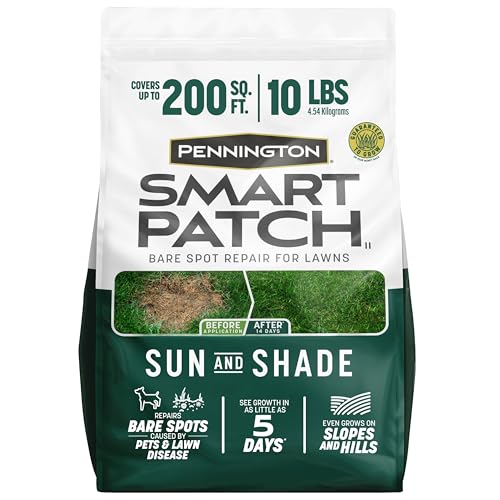
Pennington Smart Patch Sun & Shade Repair (10 lb)

GreenView Pure Grass Seed Sun & Shade (3 lb)

Scotts Kentucky 31 Grass Seed Mix (7 lb)
Meet The Standout Selections
The 7-pound bag of Jonathan Green Black Beauty Sun & Shade is the workhorse pick in this roundup. It’s designed for yards that swing from a sunny front strip to a shaded side yard, which describes most homes with even one mature tree. The mix leans on cool-season species that germinate in the middle of the planting window, so overseeding and patch repair feel like the same job.
For most backyards with average light variation, this bag is the path of least resistance. It’s a sensible starting point before stepping up to the Ultra or the larger 15-pound tall fescue bag later in the list.
What Makes Sense
- Handles the messy middle: full sun to partial shade without needing a second bag
- Dark-green color that holds up through the season, not just at first germination
- Thickens existing turf when used for overseeding, so the whole lawn reads as one consistent surface
- 7-pound size covers a typical small-to-medium suburban lot for one pass
Things To Consider
- Watering discipline matters in the first two weeks; letting the bed dry out stalls establishment
- Not engineered for extreme heat like the heat-and-drought sibling further down the list
Who It Suits Best
Homeowners with a mixed-light yard who want one bag to cover both the sunny front and the shaded side without buying two specialty products.
Where Another Pick Suits Better
For full sun and heat-stressed southern lawns, the Jonathan Green Black Beauty Heat & Drought Resistant Grass Seed handles triple-digit temperatures more reliably.
The Heat & Drought Resistant bag mixes tall fescue with Texas bluegrass, a pairing that earns its keep in southern and transition-zone lawns. The seed produces a waxy leaf coating that limits evaporation, which is the kind of detail that actually shows up in a dry August. The mix tolerates heat up to 100°F, so exposed strips along pavement and fence lines stop being a guaranteed loss.
At 3 pounds, this is the smaller bag in the family and a smart pick for targeted overseeding rather than a full re-seed. The Black Beauty Sun & Shade in the first slot covers a wider light range, but for a hot microclimate this one is the better tool.
Positive Takeaways
- Waxy leaf coating helps grass hold moisture during dry stretches
- Stays green longer into heat waves compared to a generic sun mix
- Tolerates full sun to light shade without bailing out
- Compact 3-pound bag fits tight storage and small repair jobs
Worth Noting
- Not a heavy shade performer; deep shade under evergreens will still struggle
- Texas bluegrass can feel coarser in texture than a fine fescue blend
Made For
Homeowners in southern or transition-zone climates with hot, exposed lawn areas that bake in summer afternoon sun.
Consider Something Else When
For deep shade under dense tree canopies, the Scotts Turf Builder All-Purpose Mix handles low light with a more flexible blend.
The Ultra bag steps the Black Beauty line up with a three-species blend, tall fescue, Kentucky bluegrass, and perennial rye, which together fill in faster and produce a denser, darker turf. It’s the pick when you’re starting a new lawn from scratch, not just patching what’s there. Quick germination is the real selling point, because a bare dirt yard invites weeds the moment you walk away.
Compared to the standard Sun & Shade in the first slot, this one trades a little shade tolerance for thickness and color depth. Where the Sun & Shade is about coverage, the Ultra is about building a showpiece lawn.
Good Reasons To Consider
- Three species in one bag, so the lawn adapts across light and traffic zones
- Fast establishment window that reduces the weed-pressure window
- Dark-green color that holds once the lawn matures
- Works for both new lawns and thicker overseeding on tired turf
Trade Offs
- Heavier on the wallet per pound than the standard Sun & Shade bag
- Needs consistent watering during the first two weeks to justify the premium
Right Fit For
Homeowners starting a new lawn or doing a full renovation who want a thick, dark-green turf and don’t mind a stricter watering schedule at the start.
Not Your Match When
For a quick patch repair on a budget, the GreenView Pure Grass Seed Sun & Shade Mixture in the 3-pound bag covers a small area at lower cost.
The 15-pound Tall Fescue Blend is the bag for serious overseeding jobs and larger properties. The pitch is straightforward: 100% turf-type tall fescue with roots that reach up to 4 feet deep, which is what gives the lawn its drought tolerance. The waxy leaf coating is the same moisture-saving trick used in the heat-and-drought mix from slot two, just scaled up to a single-species bag.
This one trades the multi-species flexibility of the Sun & Shade or Ultra for root depth and bag size. It thrives in cool-season climates, and the planting window lines up with mid-August through mid-October or mid-March through mid-May.
A Favorable Mix
- Deep roots handle dry spells without daily irrigation
- 15-pound bag covers a meaningful area for full-lawn overseeding
- Uniform leaf texture, so the lawn doesn’t read as a patchwork
- Holds up under mowing without shredding the blade tips
Room For Improvement
- Single-species bag has less built-in flexibility across light conditions
- Bigger bag means a longer germination window that needs steady watering
Best Suited To
Homeowners with bigger lots or full-lawn overseeding projects who want one bag to do most of the work and value root depth over species variety.
Look Elsewhere When
For a smaller repair on a tight budget, the Pennington Smart Patch in slot eight targets specific bare areas more efficiently than a 15-pound bag.
The 20-pound Scotts Turf Builder All-Purpose Mix is the volume play on this list. Each seed is coated to absorb twice the water of an uncoated seed, which is a real advantage during the first critical week. The mix is built for northern-region lawns and produces a coarse-bladed turf with medium drought resistance, fitting the typical sun-and-shade split that defines most homes from the Midwest into the Northeast.
It’s not as refined in species selection as the Jonathan Green Ultra in slot three, but it covers more ground for the money. For big reseeding jobs, that math tends to win.
Notable Upsides
- Water-absorbing coating speeds germination in dry spells
- 20-pound bag handles large bare or thin areas in one pass
- Listed as 99.9% weed-free, so the bag isn’t half filler
- Formulated for northern region timing and soil conditions
Honest Caveats
- Coarse blade texture reads thicker underfoot than a fine fescue blend
- Not the strongest shade performer in deeply shaded corners
Feature Snapshot
Who Should Grab It
Homeowners with larger northern-region lawns who need to seed or overseed a wide area without buying multiple bags.
A Better Fit Elsewhere
For a small, precisely-targeted patch repair, the Pennington Smart Patch in slot eight is more efficient than spreading a 20-pound all-purpose mix.
Scotts positions this 4-pound mix for tougher conditions, and the species blend explains why. Tall fescue and Kentucky bluegrass both put down deep roots, and the self-repairing habit of bluegrass helps fill in bare spots over time. It’s designed for application when air temperatures sit between 65°F and 85°F, which lines up with the shoulder seasons.
This is a smaller, more focused bag than the 20-pound Turf Builder in slot five. It overlaps with the Jonathan Green Heat & Drought Resistant in slot two, and the choice between them usually comes down to bag size and brand loyalty.
Practical Pluses
- Deep-rooted fescue and bluegrass reach water lower in the soil profile
- Self-repairing bluegrass component fills in thinning areas over time
- Listed as 99.99% weed-free, leaving little room for filler seed
- Clean fit with spring and fall seeding windows
Points To Note
- 4-pound bag covers a smaller area than it looks like on paper
- Kentucky bluegrass spreads slowly, so the lawn takes a season to fill in fully
The Right Fit
Homeowners facing watering restrictions or sandy soil who need a drought-tolerant lawn and can seed during the cooler shoulder months.
Skip It When
For a small lawn in mild conditions, the GreenView Pure Grass Seed Sun & Shade in slot nine is a more flexible everyday pick.
GreenView’s 7-pound Turf Type Tall Fescue is a single-species bag that germinates in 10 to 14 days, which is faster than most cool-season blends in this roundup. The seed mix contains only top-performing fescue varieties with no fillers, and the 99.9% weed-free claim keeps the bag honest. If you want a fast visual win in the lawn, this one delivers it.
It’s the closest competitor to the Jonathan Green Sun & Shade in slot one, with a slightly faster start but a less varied species profile. For overseeding an existing lawn, the quick germination often tips the scale.
The Good Stuff
- 10 to 14 day germination window, faster than most cool-season blends
- Single-species bag produces a uniform look across the lawn
- 99.9% weed-free formula, so you get seed rather than filler
- Works in both sun and shade without a separate bag
A Few Limitations
- Single-species blend has less built-in resilience to weather swings
- Storage matters: a leftover bag past the season loses viability quickly
Who Will Love This
Homeowners who want a fast visual result from overseeding and prefer a single-species look over a multi-species blend.
Another Choice May Suit
For a more resilient multi-species blend, the Jonathan Green Black Beauty Ultra in slot three produces a denser, more weather-tolerant turf over time.
Pennington Smart Patch is a repair product, not a full-lawn seed. The 10-pound bag targets bare spots, dog damage, and patchy areas rather than a full reseed, and the formula includes microbials aimed at disease resistance and overall lawn health. It also feeds the new seedlings, so you’re seeding and fertilizing in one pass.
This is the bag to keep on the shelf for spot repairs across the year, not the one to spread across the whole yard. The coverage area, up to 600 square feet, suits a handful of problem spots rather than a full reno.
The Upside
- Combines seed and starter fertilizer in one product
- Microbial component supports disease resistance in new growth
- Targets dog spots, which most blends treat as an afterthought
- Up to 600 square feet of patch coverage in a single bag
Softer Spots
- Not a cost-effective choice for full-lawn reseeding
- Works best on small patches, not on large renovation projects
Perfect Match For
Pet owners and homeowners with a few persistent bare spots who want one product to seed and feed at the same time.
Reach For A Different Pick When
For whole-lawn overseeding, the Jonathan Green Black Beauty Tall Fescue Blend in slot four covers a much larger area more economically.
The 3-pound GreenView Sun & Shade is the smaller, lighter version of slot seven, with a multi-species mix designed for soil flexibility and faster germination. The seed is uncoated, which means each seed is dense and stores longer, and the 99.9% weed-free testing keeps filler out. Once established, the lawn is rated for heat, insects, disease, and brown patch resistance, which is the kind of durability list that pays off across multiple seasons.
At 3 pounds, this bag handles modest patch repairs or thickening jobs on a smaller lawn. It’s a useful counterpart to keep on hand alongside a full-lawn bag for follow-up spot work.
What Stands Out
- Adapts to common soil types, so it works across varied yards
- 10 to 14 day germination gives a quick visual result
- Established lawn resists heat, insects, disease, and brown patch
- Uncoated seed stores well for follow-up seeding later in the season
Where It May Fall Short
- Smaller bag isn’t suited to a full-lawn reseeding project
- Pre-seeding weed control matters; the bag is weed-free but the soil may not be
Built With In Mind
Homeowners with a smaller lawn or mixed-soil yard who want a flexible mix for both sun and moderate shade in a manageable bag size.
Where A Sibling Pick Shines
For larger or rougher yards, the Scotts Turf Builder All-Purpose Mix in slot five covers a much bigger area with a similar species profile.
The Kentucky 31 mix from Scotts is built around the classic Kentucky 31 tall fescue, the durable, lower-maintenance fescue that has covered lawns and pastures for decades. The mix adds other seeds on top of that base to thicken the result and broaden the resilience, so it isn’t a single-species bag in practice.
It’s the durable, low-fuss option in the roundup, the kind of bag you pick when you’d rather mow than baby a lawn. For high-traffic backyards and rental properties, that durability matters more than refined texture.
What It Does Well
- Kentucky 31 base is a tough, time-tested fescue
- Works for new lawns and overseeding existing turf
- Lower-maintenance profile once established
- Handles wear from kids, pets, and foot traffic
Less Ideal Details
- Coarser blade texture than a fine fescue or bluegrass blend
- Color leans lighter green than the Black Beauty line
Whose Shelf It Belongs On
Homeowners with high-traffic yards, rental properties, or anyone who prefers a low-maintenance lawn over a manicured one.
Swap It Out When
For a darker, denser showpiece lawn, the Jonathan Green Black Beauty Ultra in slot three is the more refined upgrade.
Factors Worth Weighing Before Choosing Grass Seeds For Shade And Sun
Reading Your Light Conditions Honestly
The single biggest mistake is buying a sun mix for a yard that has more shade than you think. Walk the lawn at three times of day: morning, midday, and late afternoon, and flag the spots that get less than four hours of direct sun. Those are your shade zones, and the mix you pick needs to handle them, even if the rest of the lawn is wide open. For transitional light, a multi-species blend tends to outperform a single-species bag because each species finds its own niche.
Sun Tolerance And Drought Resistance, Side By Side
Sun tolerance and drought resistance sound similar but answer different questions. Sun tolerance is about a grass’s ability to handle intense light and heat without thinning out, while drought resistance is about how long the lawn survives on stored soil moisture between waterings. Waxy leaf coatings and deep root systems are the two most common ways blends deliver drought resistance, and both show up in the Jonathan Green heat-and-drought pick and the Black Beauty Tall Fescue. For southern or transition-zone lawns, both matter; for northern lawns with regular rainfall, sun tolerance often matters more.
Bag Size And Coverage Reality
Bag weight doesn’t translate directly to coverage the way most people assume. A 3-pound bag of one blend can cover more square feet than a 7-pound bag of another, depending on seed size and whether the seed is coated. Check the bag’s coverage chart against your actual lawn size before ordering, and round up by about 10% to cover overseeding gaps and bare spots. Buying two smaller bags sometimes costs less than one oversized bag with shipping factored in.
Timing The Seeding Window
Cool-season grass seed germinates best when soil temperatures sit between 50°F and 65°F, which means mid-August through mid-October for fall seeding and mid-March through mid-May for spring. Planting outside that window usually means slow germination and more weed competition. Plan your bag purchase around the calendar, not the other way around.
Key Considerations Across These Picks
Common Shopping Slip Ups
The most frequent error is matching the bag to the best-looking part of the lawn instead of the worst. The bare patch under the maple or the heat-baked strip along the driveway sets the constraint, not the lush middle of the yard. Another common slip is over-seeding at well above the recommended rate, which produces a thick stand at first but creates competition that thins the lawn by midsummer. Stick to the bag’s coverage chart and resist the urge to “add a little extra.”
Where The Extra Money Goes
Premium blends in this category, like the Jonathan Green Ultra and the Black Beauty Heat & Drought Resistant, spend their budget on multi-species variety and treated seed coatings. Those features buy faster germination, deeper roots, and broader light tolerance, which is most valuable on problem lawns. For a small, well-tended yard with even light, a mid-tier bag like the GreenView Sun & Shade delivers nearly all the practical benefit at a lower cost. The upgrade earns its keep when conditions are tough, not when they’re already easy.
Frequently Asked Questions
How Long Does Grass Seed Take To Germinate In Mixed Sun And Shade?
Most cool-season grass seed for sun and shade germinates in 7 to 21 days, with coated blends often showing green in 10 to 14 days. Shaded areas typically lag behind sunny spots, so don’t read a slow start as a failure.
Can I Seed In Spring Or Is Fall Better?
Fall is generally the better window because warm soil speeds germination while cooler air reduces stress on new seedlings. Spring seeding works but means the young lawn faces summer heat before its roots are fully developed.
How Much Water Does New Grass Seed Need?
New seed needs light, frequent watering, two to three times daily for the first two weeks, then a gradual shift to deeper, less frequent sessions. Letting the seedbed dry out during germination is the most common reason for a patchy result.
Do I Need To Remove Old Turf Before Overseeding?
For light overseeding, mowing short and raking out thatch is enough. For full renovation, removing the old turf with a sod cutter or herbicide gives the new seed direct soil contact and a much cleaner result.
Will One Bag Cover Both Sunny And Shady Areas?
Yes, the multi-species blends in this roundup are designed to handle both light conditions in a single bag, though deep shade under evergreens may still need a separate shade-specific seed. Match the bag to your yard’s worst light zone for the most reliable result.
Wrap Up
The best grass seed for your lawn depends on the conditions you actually have, not the conditions you wish you had. Start with a light audit, pick a blend that matches your toughest spot, and seed during the right window. Your lawn will tell you within a few weeks whether the match worked.
