

Texas lawns rarely make things easy. Between live oaks that block the sun, fences that throw long afternoon shadows, and soil that swings from clay to sand within a single yard, growing grass under low light here is its own puzzle. The right seed blend matters more in shaded Texas yards than in almost any other region, and the wrong one simply thins out by August.
This list compares nine seed blends built to handle shade, heat, and the patchy transition zones where full sun only reaches a few hours a day. Each pick is rated for the kind of conditions Texas yards actually face, from deep shade under post oaks to lightly filtered light along north-facing fences.
The Choices Worth Comparing
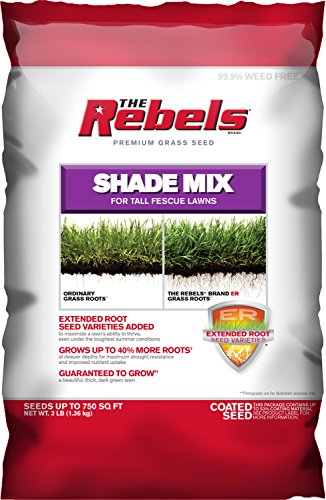
Pennington Rebel Shade Tall Fescue Mix 3 lb.

Jonathan Green Black Beauty Sun & Shade 7 lb.

Jonathan Green Black Beauty Shady Nooks 3 lb.

Jonathan Green Fast Grow Grass Seed 7 lb.

Jonathan Green Black Beauty Dense Shade 1 lb.

Jonathan Green Black Beauty Heat & Drought 3 lb.

Jonathan Green Blue Panther Bermudagrass 4 lb.

Jonathan Green Black Beauty Ultra 25 lb.
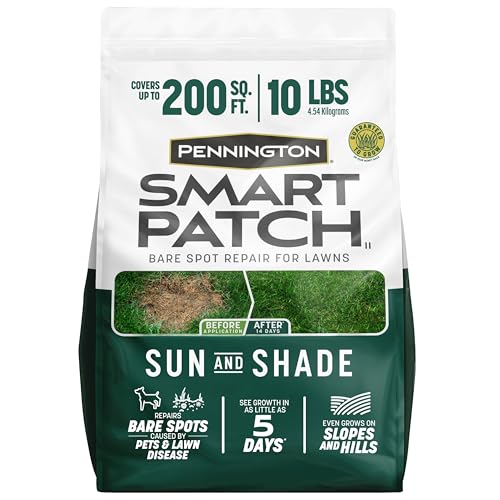
Pennington Smart Patch Sun and Shade 10 lb.
Meet The Standout Selections
Tall fescue has long been a go-to for Texas lawns that sit under partial tree cover, and Pennington’s Rebel blend leans into that history. The mix combines tall fescue with fine fescue varieties, giving you a wider comfort range for low-light spots than a single-species bag typically offers. Powder-coated seed (a fine layer that improves handling and germination consistency) makes spreading easier on bare patches and helps each seed grip the soil.
For most yards along the I-35 corridor with two or three hours of filtered light, this blend tends to hold color through summer better than standard Kentucky-31. The trade-off shows up under live oaks where root competition is heavy, and you may find watering needs climb during July and August. Compared with the more shade-specialized Jonathan Green picks later in the list, this is a balanced all-rounder rather than a deep-shade specialist.
Practical Advantages
- Blends tall and fine fescue for broader shade tolerance than single-species fescue bags
- Powder-coated seed improves spreadability and seedling establishment
- Delivers a darker green color than Kentucky-31 once established
- Works across a range of Texas soil types, from sandy loam to heavier clay
- A manageable 3 lb. bag suits small patching jobs without major waste
Honest Caveats
- Not optimized for full sun, where Bermuda or Zoysia will usually outperform it in Texas heat
- Establishment requires steady moisture, so watering logistics matter in dry weeks
Who It Suits Best
Texas homeowners with a partly shaded lawn and no desire to baby a specialty blend will find this the most forgiving option on the list.
Where Another Pick Suits Better
Yards sitting under dense tree canopies get better results from Jonathan Green Black Beauty Shady Nooks, which is built specifically for those conditions.
Most Texas lawns don’t fit neatly into “shade” or “sun” because trees, fences, and structures carve the yard into a patchwork. Jonathan Green’s Sun & Shade blend is built for exactly that reality, performing from full sun through partial shade without forcing you to buy two separate products. The 7 lb. bag covers a meaningful repair area or a small full reseed, which suits homeowners trying to refresh a tired yard in one pass.
You can expect a dark green color and reasonably dense turf once the seed establishes, with the flexibility to spread it across light conditions in a single afternoon. For yards with mature trees that throw both deep and dappled shade, the mix tends to bridge those zones more gracefully than a pure shade product. Compared with the Pennington Rebel reviewed above, this option trades a bit of pure-shade strength for broader adaptability.
Points In Its Favor
- Handles full sun and partial shade in one bag, simplifying mixed-light yards
- Produces a dark green, dense turf that holds visual appeal through the season
- Useful for overseeding thin spots without buying a separate sun or shade product
- Well-suited to overseeding and gap-filling in established Texas lawns
Points To Keep In Mind
- Not the strongest pick for the deepest shade pockets under heavy tree cover
- A 7 lb. bag may run out before large yard projects finish, depending on coverage needs
Made For
Homeowners managing a yard where sunlight shifts dramatically across the day, from open lawn to filtered shade under a tree line.
Look Elsewhere When
A lawn dominated by deep, year-round shade under oaks or pecans will benefit more from Jonathan Green Black Beauty Shady Nooks, which is engineered for that specific challenge.
Shady Nooks is the most shade-focused blend in Jonathan Green’s Black Beauty lineup, designed for the tough spots where other seed mixtures tend to give up. The cool-season mix combines tall fescue, perennial rye, and fine fescue varieties, allowing the lawn to stretch right up to the base of trees where light rarely reaches. For the dense shade under post oaks and pecans, this is the closest thing to a purpose-built answer.
It also asks less of you in terms of fertilizer and water than many competing blends, which matters during Texas water restrictions. The mid-August to mid-October and mid-March to mid-May planting windows align well with the state’s two strongest cool-season establishment periods. Versus the Sun & Shade blend, Shady Nooks trades sun flexibility for stronger performance in those stubborn low-light zones.
Everyday Perks
- Multi-species cool-season mix handles both wet and dry shade conditions
- Grows close to tree trunks, where most seed blends thin out
- Lower fertilizer and water requirements than many competing shade mixes
- Produces a dark green, dense turf that holds visual weight in low light
Worth Noting
- Not a great match for open, sun-baked areas of the same yard
- Cool-season profile means it can struggle in the harshest mid-summer Texas heat without irrigation
Right Fit For
Homeowners whose biggest lawn challenge is the area beneath a heavy tree canopy rather than the open middle of the yard.
Consider Something Else When
Yards that lean heavily toward hot, sunny exposures with only thin shade strips get better results from Jonathan Green Black Beauty Heat & Drought Resistant.
Fast Grow earns its name by germinating in 7 to 10 days, which makes it a useful tool when you need visible progress quickly. The mix leans on annual ryegrasses, tall fescues, and fine fescues, giving it the flexibility to handle full sun through medium shade. That speed matters for Texas homeowners repairing damage after summer heat or filling in bare patches ahead of a season.
The catch shows up in longevity: this is a one-season solution, so the label recommends overseeding with a Black Beauty blend afterward for a lawn that persists. Think of it as a fast first layer rather than a long-term stand-alone. In a shaded yard, pair it with a slower-establishing shade mix to get both quick coverage and staying power.
What Pays Off
- Germinates in 7 to 10 days, far quicker than most cool-season blends
- Covers full sun to medium shade in the same bag
- Useful for repairing problem areas or jump-starting a new lawn
- Produces a dark green color during its active season
Trade-Offs To Consider
- Acts as a temporary lawn, requiring a follow-up overseed with a Black Beauty blend for long-term results
- Not designed for the deepest shade pockets where Shady Nooks excels
Best Suited To
Homeowners tackling thin spots or bare patches who want quick cover before transitioning to a more permanent shade-tolerant seed.
A Better Fit Elsewhere
For long-term deep-shade performance, Jonathan Green Black Beauty Shady Nooks is the more durable choice once the fast-establishing layer is in place.
Dense Shade handles the stubborn problem spots where sunlight rarely reaches the soil, including the shadow lines thrown by mature trees, large shrubs, and the north side of the house. The mix includes shade-tolerant varieties designed for limited light penetration, plus beneficial endophytes, which are natural fungi that live inside the grass and help it resist pests and environmental stress. A 14 to 21 day germination window is reasonable given the challenging conditions it targets.
The 1 lb. bag is sized for spot repairs rather than full-yard coverage, which fits how most homeowners actually use a deep-shade product. For most backyards, the small format lets you target only the trouble areas without overspending. Versus the Shady Nooks blend, this is a more targeted, smaller-quantity option for isolated shaded trouble spots.
Why It Works Well
- Shade-tolerant varieties built for limited sunlight under trees and structures
- Contains beneficial endophytes that support pest and stress resistance
- Produces a dark green, dense turf in low-light conditions
- Small bag size suits targeted spot repairs without waste
Small Limitations
- The 1 lb. bag is too small for full-yard projects or large coverage areas
- Germination takes 14 to 21 days, slower than Fast Grow and similar quick-establishment blends
Who Will Love This
Homeowners with a small but persistent shaded patch, such as under a single tree or along a north-facing wall, who need a targeted fix rather than a full reseed.
Not Your Match When
Larger shaded zones benefit from Jonathan Green Black Beauty Shady Nooks, which is formulated for the same conditions in a more generous bag size.
Heat & Drought takes the cool-season fescue family and pushes it further into Texas territory by blending tall fescue with Texas bluegrass. The mix is rated to tolerate temperatures up to 100°F, which makes it relevant for yards that get hot afternoon sun alongside lighter shade. The grass produces a waxy leaf coating (a natural moisture-locking layer similar to an apple’s skin) that limits evaporation during dry stretches.
It performs best in full sun to lightly shaded conditions, so it fits a yard that has more sun exposure than the pure shade picks earlier in this list. For homeowners along the southern parts of the state where summer heat and humidity are relentless, this blend offers a middle ground between cool-season shade tolerance and warm-season resilience. Pairing it with a deep-shade product is wise for yards that include both conditions.
Useful Touches
- Combines tall fescue with Texas bluegrass for better heat tolerance than standard fescue
- Waxy leaf coating helps the grass hold moisture through dry spells
- Rated to handle temperatures up to 100°F
- Performs in full sun to lightly shaded conditions, covering more of a mixed yard
Practical Considerations
- Not designed for the deepest shade, so it underperforms in the darkest corners of a yard
- May still go semi-dormant in extreme Texas heat without supplemental irrigation
Built With In Mind
Texas homeowners dealing with hot, partially shaded yards who want a cool-season grass that holds up better in summer than standard fescue blends.
Swap It Out When
Yards that lean strongly toward open sun with minimal shade may get better results from Jonathan Green Blue Panther Bermudagrass, a true warm-season performer.
Blue Panther is a Bermudagrass, and Bermudagrass is the warm-season workhorse of the southern United States. Strong vertical and lateral rooting helps this seed establish a dense, durable lawn quickly, and the formulation is built for southern climates. Compared to traditional Bermudagrass varieties, it reduces the need for winter overseeding, which means less reseeding work each year.
It is critical to set expectations correctly: Bermudagrass needs substantial sun and does not handle shade well. Including it in a “shade in Texas” lineup makes sense only as the warm-season complement to a cool-season shade product, useful for the open sun portions of an otherwise partially shaded yard. For most backyards, plan to use a shade-tolerant fescue or rye in the low-light zones and reserve Bermudagrass for the open areas.
Positive Points
- Formulated specifically for southern U.S. climates and warm-season conditions
- Strong vertical and lateral rooting supports quick, dense establishment
- Reduces the need for winter overseeding compared to traditional Bermudagrass
- Aggressive growth helps crowd out weeds in open, sunny areas
Where It May Fall Short
- Does not tolerate shade, so it underperforms in low-light zones
- Goes dormant and browns during cooler Texas winters without overseeding
Whose Shelf It Belongs On
Texas homeowners with large, mostly sunny lawns who want a low-maintenance warm-season turf for the open areas of the yard.
Another Choice May Suit
Yards with significant shade should look at Jonathan Green Black Beauty Shady Nooks for the low-light areas instead of trying to stretch Bermudagrass into them.
Black Beauty Ultra is the largest-format option in the Jonathan Green lineup, sized for homeowners who want to reseed an entire lawn or tackle a major renovation in one purchase. The blend covers new yard establishment and bare-spot repair with fast germination, and the mix produces a dark green, attractive turf once it matures. Tall fescues anchor the blend, with additional species contributing density and color.
The 25 lb. bag is overkill for a small repair but extremely practical when you have a substantial yard to seed. For mixed-light Texas properties, this gives you enough volume to handle both shaded and sun-exposed areas from a single product, then spot-treat the deepest shade with a specialty blend afterward. Compared with the smaller repair-focused bags earlier in this list, the value per pound is the main reason to step up.
Reasons It Performs
- Large 25 lb. bag covers significant area, ideal for full-lawn reseeding
- Germinates quickly, supporting both new establishment and patch repair
- Produces a dark green, dense turf once mature
- Blends multiple grass types for a balanced look across sun and shade areas
Honest Caveats
- Storage of an opened 25 lb. bag requires a cool, dry location to preserve seed viability
- Too much product for homeowners with small or spot-repair needs
Perfect Match For
Texas homeowners planning a full-lawn renovation or overseeding project who want a single, high-volume bag to cover the work.
Reach For A Different Pick When
A small repair job under a single tree is more economically handled by Jonathan Green Black Beauty Dense Shade in its 1 lb. format.
Smart Patch is a combined seed and fertilizer product, which simplifies repair projects by removing the need to buy and apply starter fertilizer separately. The bag contains microbials, which are beneficial microorganisms added to support soil and plant health, that help prevent disease and improve the overall health of the lawn as the new grass establishes. Coverage extends up to roughly 600 square feet, which fits a wide range of patch projects.
The mix is well-suited to yards that see sun in some areas and moderate shade in others, and it works for dog spot repair, traffic wear, and general thin areas. For Texas homeowners who want one product to handle multiple repair situations in a single purchase, Smart Patch is a practical choice. Compared with the Jonathan Green Sun & Shade blend, it trades pure seed volume for the added fertilizer and microbial package.
Where It Helps
- Combines seed and fertilizer in a single product, simplifying repair projects
- Contains microbials that support disease resistance and overall lawn health
- Covers up to approximately 600 square feet, suited to mid-sized patch projects
- Effective for dog spot repair and general thin-area recovery
Less Ideal Details
- The added fertilizer means you cannot fine-tune the nutrient program for specific soil conditions
- Not specialized for the deepest shade zones, where Shady Nooks or Dense Shade perform better
Who Should Grab It
Texas homeowners looking for a single-bag solution to patch repair that handles both sunny and moderately shaded areas without buying separate products.
Where A Sibling Pick Shines
For dedicated deep-shade repair under tree canopies, Jonathan Green Black Beauty Dense Shade delivers more targeted performance.
What To Weigh Before Buying Grass Seeds For Texas Shade
Light Exposure Across The Yard
Shade in Texas rarely means uniform low light. Map the yard by hours of direct sun: a tree-covered back corner, a fence-shaded side yard, and a sunlit front lawn all need different seed strategies. For patches that get fewer than four hours of direct sun, prioritize blends with strong fine-fescue content. For areas that see more sun exposure, broader-purpose mixes perform adequately.
Cool-Season Versus Warm-Season Match
Texas sits in a transition zone where both cool-season and warm-season grasses are viable. Tall fescue and rye blends handle winter and early spring well but struggle in mid-summer without irrigation. Bermudagrass thrives in summer heat but goes dormant in winter and tolerates little shade. The honest read is that mixed yards often benefit from using both types in their respective zones rather than forcing one to do everything.
Climate Stress Factors
Heat tolerance, drought resistance, and disease pressure all matter in Texas lawns. Waxy leaf coatings and endophyte-enhanced varieties provide meaningful advantages during dry stretches. Microbial additives, which are beneficial bacteria or fungi included in some seed coatings, can support seedling health, especially during establishment. Matching the seed’s strengths to your yard’s specific stress profile pays off more than chasing a single “best” blend.
Coverage And Application Practicalities
Bag size, coverage area, and whether the product includes starter fertilizer all affect the actual cost and effort of a project. Small repair jobs do not need a 25 lb. bag, and full-lawn renovations waste money on tiny spot-repair sizes. Buying the right format for the job avoids both overpaying and running short mid-project.
What These Picks Reveal About The Category
Where Shoppers Go Wrong
A common mistake is buying a single “shade” blend and spreading it across a yard that includes sunny areas, then wondering why the open zones struggle. The reverse mistake is choosing a heat-loving Bermudagrass for a shaded yard and watching it thin out within a season. Soil preparation, watering consistency during establishment, and proper seeding windows matter as much as the seed itself. Skipping a soil test before purchasing often leads to mismatched blends and wasted seed.
Where The Extra Money Goes
Premium blends typically include endophyte-enhanced varieties, multiple species for broader adaptability, and microbial or coating treatments that improve germination and seedling health. Larger bag sizes also offer better value per pound for big projects. The honest read is that paying more makes sense when the yard has multiple stress factors at once, but a simple repair in average shade conditions rarely requires the top tier. Stepping up pays off most when establishment conditions are tough or coverage is substantial.
Frequently Asked Questions
Can Any Grass Seed Grow In Full Shade In Texas?
No grass thrives in deep, full shade with no direct sunlight. Fescue blends, including Shady Nooks and Dense Shade, come closest by tolerating limited light, but even those benefit from at least a few hours of filtered or partial sun per day. In the darkest spots, consider shade-loving groundcovers instead of forcing grass to perform where it cannot.
When Is The Best Time To Seed Shaded Lawns In Texas?
The strongest windows are mid-August through mid-October and mid-March through mid-May, when soil temperatures support cool-season establishment without peak summer stress. Fall seeding is generally preferred because it gives grass months to root before summer heat returns. Avoid seeding during June and July, when heat and dry conditions reduce germination success.
How Long Does Shade-Tolerant Grass Take To Establish?
Most cool-season shade blends germinate in 7 to 21 days, depending on the mix, and reach a usable stand within 6 to 8 weeks with consistent watering. Deep-shade blends tend to germinate more slowly than quick-establishment options. Full density often takes a full growing season, so patience matters during the early months.
Will Shade Grass Survive Texas Summer Heat?
Cool-season shade blends can struggle in peak summer without supplemental irrigation, especially in the southern part of the state. Waxy leaf coatings, endophyte-enhanced varieties, and Texas bluegrass blends all improve summer resilience. For most backyards, light afternoon watering during July and August keeps the lawn from going fully dormant.
Do I Need To Overseed Shaded Lawns Every Year?
Overseeding every fall is common in Texas shaded lawns because cool-season grasses naturally thin under summer stress. Annual overseeding in mid-September to mid-October helps maintain density heading into the next year. Skipping overseeding usually results in visible thinning by the second or third season.
The Takeaway
Shaded Texas yards reward seed choices that respect both the low light and the regional heat, and the right blend depends on how much sun each zone actually receives. A tall fescue mix handles most moderate-shade situations, while dedicated deep-shade products tackle stubborn pockets under tree canopies. The most resilient lawns typically pair a shade-tolerant cool-season seed in low-light areas with a warm-season grass in open sun, matched to the yard’s specific conditions rather than a one-size-fits-all approach.
