

Creeping Charlie earns its nickname for a reason, and once it roots into a shady patch of bluegrass or fescue, hand pulling becomes an exercise in frustration. The right herbicide turns a multi-season battle into a single fall application, sparing the surrounding turf and reclaiming ground in weeks.
This list rounds up eight options spanning selective concentrates, surfactants that boost whatever you spray, and total-kill formulas for non-lawn areas. Each pick is matched to a specific lawn type, infestation severity, and tolerance for extra steps. Browse the table, then jump into the detailed reviews.
A Side-By-Side Look

Hi-Yield (35261) Triclopyr Ester, 8 oz
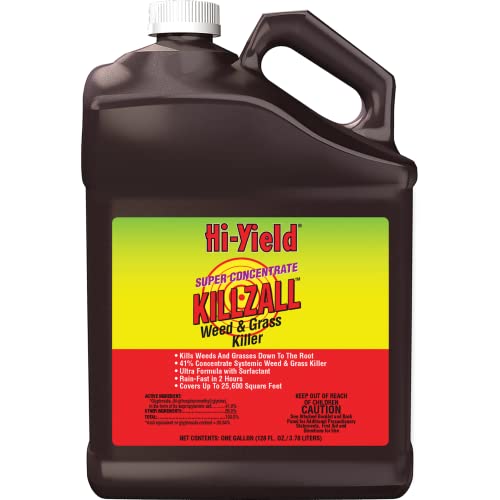
Hi-Yield (33693) Super Concentrate Killzall, 1 gal
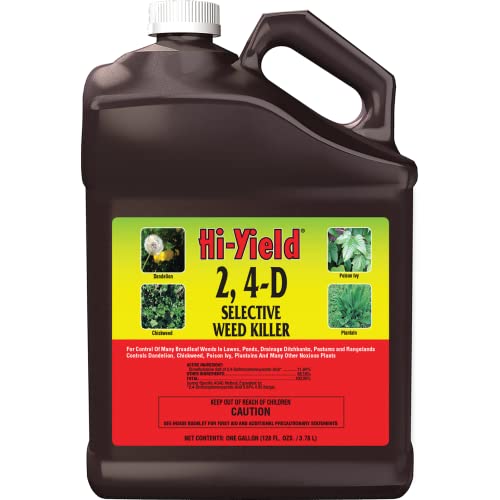
Hi-Yield (21416) 2,4-D Selective Weed Killer, 1 gal

Spectracide Weed Stop For Lawns Plus Crabgrass, 32 oz
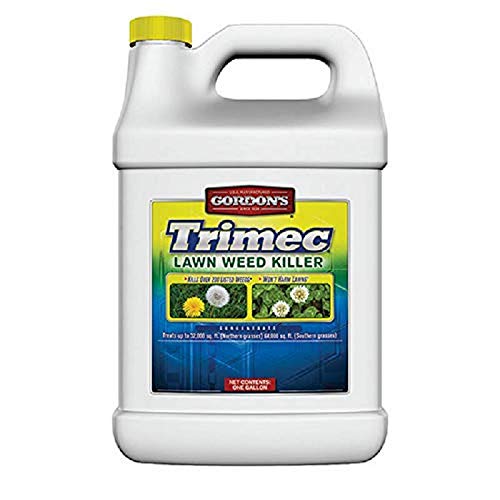
PBI/GORDON Trimec Lawn Weed Killer, one gallon
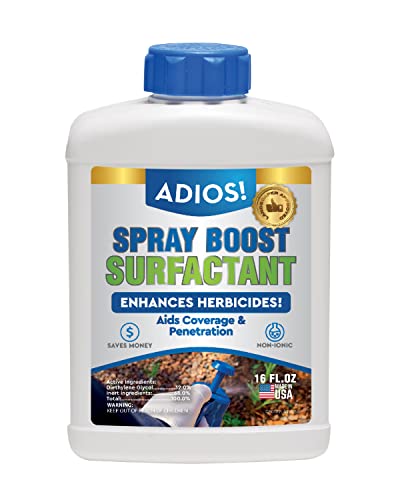
ADIOS! Non Ionic Surfactant, 16 oz, 50 gal

Roundup for Lawns2 Concentrate, 32 fl. oz.

Agrisel GlyPhoSel Pro Weed Killer, 320 oz
Taking A Closer Look At The Options
Triclopyr is one of the few active ingredients that bites into Creeping Charlie without torching the surrounding turf, and this little 8 oz bottle from Hi-Yield concentrates that power into a small package. The liquid concentrate mixes with water and a surfactant for spot spraying, which suits homeowners with localized invasions rather than yard-wide carpets of ground ivy.
For cool-season lawns of perennial bluegrass, perennial ryegrass, or tall fescue, the label gives clear permission to spray. The same bottle doubles as a bluegrass suppressor in mixed stands, giving you flexibility beyond the obvious Creeping Charlie use. Compared with the broader-spectrum PBI/GORDON Trimec, this formula targets stubborn perennial broadleaf weeds like oxalis and wild violet more aggressively, with a narrower safety net.
A Favorable Mix
- Targeted triclopyr formula designed for hard-to-kill perennial broadleaf weeds including Creeping Charlie, oxalis, and wild violet.
- Approved for use on perennial bluegrass, ryegrass, and tall fescue, the three most common cool-season turf types.
- 8 oz liquid concentrate mixes on demand, so you mix only what you need and store the rest without pre-diluted spoilage.
- Versatile label use as a bluegrass suppressor in mixed stands, adding a second use beyond spot spraying.
Trade Offs To Consider
- Restricted lawn list: do not apply to Bahiagrass, Bentgrass, bermudagrass, Centipedegrass, St. Augustine, or Zoysiagrass, so warm-climate owners need a different pick.
- Spot treatment scale only, meaning wide infestations will require many refill cycles of the small bottle.
Key Specs
Whose Lawn It Belongs On
Northern homeowners with cool-season turf and stubborn patches of Creeping Charlie hiding under trees or along fence lines will get the cleanest results from this formula.
Skip It When
Anyone with warm-season grass like Bermuda or St. Augustine should reach for Spectracide Weed Stop or another product specifically labeled for southern turf.
Killzall takes the opposite approach from the triclopyr pick above. This is a non-selective herbicide, meaning it kills whatever green tissue it touches, including your lawn. Its job is total vegetation removal, not selective cleanup, so it earns its place when Creeping Charlie has colonized a gravel path, patio crack, or fence line where grass is not welcome.
The double-surfactant formulation is the quiet feature here. Surfactants are wetting agents that help spray droplets spread and stick to waxy leaves rather than beading up and rolling off. Faster drying on the plant means faster uptake, which matters for creeping perennials that shrug off weaker doses.
The Helpful Details
- Covers a wide range of grasses, broadleaf weeds, and woody brush species, making it useful well beyond Creeping Charlie.
- Double-surfactant blend helps the mix spread evenly across waxy ground-ivy leaves and absorb quickly.
- One gallon of concentrate treats large non-lawn areas, ideal for driveways, fence rows, and patio edges.
Worth Noting
- Cannot be used on lawns, so accidental overspray means dead turf alongside dead weeds.
- Without grass to fill the void, expect re-growth from Creeping Charlie rhizomes (the underground stems that regrow the plant) over the following season.
Made For
Property owners renovating an overrun area or maintaining hardscape borders where every plant is the wrong plant.
Where Another Pick Suits Better
If Creeping Charlie is threaded through desirable turf, the Hi-Yield Triclopyr Ester concentrate will protect the grass while still clearing the ivy.
2,4-D is the workhorse broadleaf herbicide that has backed agricultural spraying programs for decades, and Hi-Yield’s gallon concentrate brings that field-tested chemistry to the residential sprayer. 2,4-D is a synthetic auxin, the same hormone-disrupting class as triclopyr, so it tackles Creeping Charlie by overloading the weed’s growth signals until it curls and dies.
Where this jug separates itself is range of use. The label covers lawns, ponds, drainage ditches, pastures, and rangelands, so the same container handles a suburban yard in spring and a pasture edge in fall. Pairing it with Hi-Yield’s separate Spreader Sticker surfactant improves leaf coverage, which is the difference between a decent kill and a clean sweep on waxy ground-ivy leaves.
Standout Benefits
- Targets many broadleaf weeds including dandelion, aster, goatsbeard, and Creeping Charlie, replacing several single-purpose products with one jug.
- Approved for use on lawns, ponds, drainage ditches, pastures, and rangelands, giving you one concentrate for the whole property.
- One gallon covers generous acreage, lowering the per-application cost for large properties.
- Compatible with Spreader Sticker surfactant, which improves sticking and spreading on difficult leaf surfaces.
Possible Compromises
- 2,4-D alone may not be the strongest option on Creeping Charlie compared with triclopyr, so a follow-up application is commonly needed in stubborn patches.
- Without a paired surfactant, users often see reduced effectiveness on waxy or hairy-leaved weeds.
Feature Snapshot
Best Suited To
Owners of large rural or semi-rural properties who want a single concentrate for lawn, pasture, and ditch-bank weed control.
Not Your Match When
Homeowners with smaller yards and Creeping Charlie as the main target will find the Hi-Yield Triclopyr Ester more targeted and easier to mix in smaller volumes.
Suburban yards rarely host just one troublemaker. Spectracide’s Weed Stop concentrate aims at a long roster of broadleaf weeds and adds crabgrass to the kill list, so a single bottle handles dandelions, clover, oxalis, and Creeping Charlie without rotating products. The 32 oz size is the friendliest jug for a homeowner-owned pump sprayer, and it dilutes to cover typical residential lots without the bulk of a one-gallon jug.
The trade-off compared with the Hi-Yield Triclopyr pick is selectivity range. Spectracide’s formula is calibrated for common warm- and cool-season turf types, but you should still cross-check the label against your specific grass. Used as directed, it tends to clear visible weeds within a couple of weeks and continue working on roots afterward.
The Practical Payoff
- Multi-weed concentrate targets broadleaf invaders and crabgrass in a single mix, simplifying routine lawn care.
- 32 oz bottle strikes a balance between coverage and storage, fitting neatly on a garage shelf.
- Compatible with most standard pump or backpack sprayers already on hand.
A Few Limitations
- Application timing matters: spraying during peak summer heat can stress both weeds and turf at the same time.
- Repeated applications per season are common on Creeping Charlie specifically, since ground ivy pushes back from rhizomes.
Quick Facts
Who Should Grab It
Homeowners managing mixed broadleaf and grassy weeds on a typical residential lawn will appreciate the simplified one-jug routine.
Look Elsewhere When
Specialists chasing Creeping Charlie as the single, stubborn invader may get cleaner results from the Hi-Yield Triclopyr Ester concentrate or the PBI/GORDON Trimec blend.
Trimec is the name many lawn-care professionals reach for first, and PBI/Gordon’s blend is the original three-way broadleaf formula: 2,4-D, mecoprop, and dicamba working together. The three-way combination is meaningful because different weeds respond to different auxin chemistries, and combining them widens the kill list without raising the rate of any single ingredient. Creeping Charlie is squarely inside the broadleaf weeds Trimec is built to handle.
For cool-season lawns, Kentucky bluegrass, fescues, and perennial rye, the label approves broad-spectrum use. Coverage lands in the 32,000 to 64,000 square foot range per gallon, which is enough for several treatments of a typical half-acre yard. The catch is that the formula is not suited to warm-season grasses, so southern lawns should default elsewhere.
Advantages To Know
- Three-way broadleaf blend expands control to a wide range of hard-to-kill lawn weeds beyond Creeping Charlie.
- Designed for cool-season grasses, including Kentucky bluegrass, perennial rye, and fescue.
- Large one-gallon size supports multi-treatment programs across bigger properties.
Points To Note
- Not labeled for warm-season turf, so Bermuda, St. Augustine, and Centipede lawns are off the table.
- Dicamba in the blend requires care with drift, since it can damage nearby ornamental shrubs and trees on breezy days.
Right Fit For
Cool-season lawn owners managing half an acre or more who want professional-grade control across a wide range of broadleaf weeds in one jug.
Swap It Out When
Anyone in a transition-zone or southern climate should consider Spectracide Weed Stop or another product specifically labeled for their turf type.
ADIOS! is not a herbicide on its own. It is a non-ionic surfactant, an additive that lowers the surface tension of your spray mix so droplets spread out and stick to leaves instead of beading up. Creeping Charlie has waxy, scalloped foliage that repels water-based sprays, and that is the exact situation a surfactant was designed to fix.
The 16 oz bottle makes 50 gallons of finished spray, which is a generous ratio for a homeowner with a pump sprayer. Pair it with any of the herbicide concentrates in this roundup, and you will likely see faster browning and better root kill on the second pass. Storage is the practical concern: surfactant bottles last multiple seasons when capped, but you should label your sprayer to avoid mistaking the mix for plain water.
Points In Its Favor
- One 16 oz bottle treats up to 50 gallons of spray mix, giving you a long shelf-life helper at low cost per use.
- Boosts the performance of any partner herbicide, especially on waxy or hairy leaves that resist plain water-based sprays.
- Useful across fungicides, insecticides, and defoliants, so the same bottle earns its keep year-round.
Honest Caveats
- Not a standalone weed killer, so you will still need a herbicide concentrate from this list (or your own) to do the work.
- Surfactant residue tends to be harder to fully rinse from sprayers, so a dedicated tank for herbicide mixes is wise.
Who It Helps Most
Homeowners already using a concentrate like the Hi-Yield 2,4-D or PBI/GORDON Trimec who want to squeeze better coverage out of every pass.
Reach For A Different Pick When
Anyone wanting a one-step solution should look at a pre-mixed selective product like the Roundup for Lawns2 concentrate instead.
The “for Lawns” version of Roundup is a different beast from the famous total-kill original. This selective concentrate is calibrated for Northern grasses, killing listed weeds down to the roots while leaving your turf alive. The 32 fl. oz. bottle mixes to cover substantial lawn area, and the label lists hundreds of controllable weeds including Creeping Charlie, dandelion, clover, and oxalis.
The appeal here is simplicity. First-time applicators get a single bottle with a clear, broad-spectrum label and step-by-step instructions. Compared with triclopyr-only products, the broader ingredient list means slightly less potency on the most stubborn Creeping Charlie patches, but the trade-off is fewer worries about grass type and tank mixing.
Good Reasons To Consider
- Targets a wide list of common lawn weeds, so one bottle covers most of what homeowners fight each season.
- Designed for Northern grasses, taking the guesswork out of compatibility for cool-season lawns.
- Beginner-friendly mixing ratio and label instructions lower the chance of application error.
Small Caveats
- Strongly skewed toward Northern cool-season turf, so southern lawn types may not be on the approved list.
- Per-application results can be slower on entrenched Creeping Charlie, so plan on a follow-up pass in stubborn zones.
Feature Rundown
Built With In Mind
First-time sprayers in northern climates who want a single jug that handles the most common lawn weeds without a steep learning curve.
Consider Something Else When
Experienced homeowners chasing ground ivy in cool-season bluegrass specifically may get faster results with the Hi-Yield Triclopyr Ester concentrate.
Agrisel’s GlyPhoSel Pro is a high-concentrate glyphosate product, the same active ingredient category as the original Roundup total-kill formula, but in a 320 oz bulk container aimed at serious property work. Glyphosate is a systemic herbicide, meaning the plant absorbs it and the chemistry travels down to the roots, which is what makes it so effective on rhizome-driven weeds like Creeping Charlie.
Use it anywhere you want total vegetation removal: driveways, fence lines, patio cracks, gravel pads, or areas being prepped for re-sodding. The catch, and it is a meaningful one, is that glyphosate will kill grass along with weeds, so overspray on a lawn is a costly mistake. Spot treatment with a shielded sprayer is the safe play.
Practical Advantages
- Systemic action travels from leaves down to roots and rhizomes, clearing stubborn perennial weeds that resprout from underground stems.
- Large 320 oz container supports multi-season use across a whole property’s hardscape and non-lawn areas.
- Spot-treatment friendly for Creeping Charlie colonies in rock beds or under decks where turf is absent.
Where It Is Less Suited
- Total vegetation killer, so any drift onto lawn or ornamentals will damage or kill those plants.
- Re-seeding or sodding the cleared area typically requires a waiting period, so plan lawn renovation timelines accordingly.
Who Will Love This
Owners prepping a yard for renovation or maintaining hardscape borders where every plant needs to go.
A Better Fit Elsewhere
Homeowners who want to keep their lawn intact while clearing Creeping Charlie should default to a selective formula like the Hi-Yield Triclopyr Ester or PBI/GORDON Trimec.
Matching The Right Product To Your Lawn
Creeping Charlie is unusually persistent because it spreads by rhizome, the underground stem network that lets the plant regenerate from any missed fragment. That biology is the single most important thing to internalize before choosing a product, because it shapes timing, surfactant use, and how many applications you should expect.
Identify your grass first. Warm-season turf like Bermuda, St. Augustine, Centipede, and Zoysiagrass has a much shorter list of safe selective herbicides. The Hi-Yield Triclopyr concentrate and PBI/GORDON Trimec are off the table for these lawns, while products like Spectracide Weed Stop and Roundup for Lawns2 are designed with wider grass-type compatibility. Match the bottle to the grass before you match it to the weed.
Fall is the best window. Creeping Charlie moves sugars down to its rhizomes in autumn to prepare for winter, which is the same window when systemic herbicides hitch a ride into the root system. Spring applications work too, but expect slower root kill and more regrowth pressure through summer. For most regions, a late-September to mid-October spray delivers the cleanest year-over-year results.
Spot spray first, broadcast second. Walking the lawn with a pump sprayer and treating individual Creeping Charlie patches cuts chemical use, protects the surrounding turf, and lets you confirm the product is working before committing to a whole-yard application. Once you have a kill pattern, scale up to a broadcast pass on the worst zones.
Pitfalls Worth Dodging And When To Spend Up
Wrong Turns To Avoid
Skipping the grass-type check is the single most expensive mistake. Spraying a 2,4-D or triclopyr product on a sensitive warm-season lawn can wipe out far more than the intended weeds, and recovery often means resodding the damaged zone. A two-minute label read before mixing saves a season of repair.
Another common slip is spraying during the wrong weather. Hot afternoon sun breaks down herbicide before it absorbs, while windy days push drift into flower beds and shrubs. The reliable window is a calm morning with temperatures in the 60s, when leaves are open and the spray stays where you put it.
What Separates Premium From Basic
Higher-tier products in this category typically mean broader weed spectrum, three-way ingredient blends like Trimec, or higher-concentrate glyphosate for big jobs. The premium tax earns you flexibility across more weed types, more turf types, and more acreage per bottle. The honest read is that for a small residential yard with a single dominant weed, a single-active-ingredient concentrate is plenty. The upgrade pays off when the lawn hosts a rotating cast of invaders or you manage multiple acres across lawn, pasture, and hardscape.
Frequently Asked Questions
What time of year should I spray Creeping Charlie?
Late spring through mid-fall works, but the most reliable window is autumn when the plant moves sugars into its roots. A fall application gets the herbicide deeper into the rhizome system than a summer pass.
Will one application fully kill Creeping Charlie?
Often no. A single pass usually browns the leaves and weakens the rhizome network, but a follow-up treatment two to four weeks later is commonly needed for full eradication, especially on older infestations.
Can I mix a surfactant directly into a ready-to-spray product?
Most pre-mixed products already include surfactant in the formula, so adding more is unnecessary. For concentrate mixes, follow the herbicide label’s surfactant recommendations and use a non-ionic option like ADIOS! for the broadest compatibility.
Is Creeping Charlie safe for pets after spraying?
Most selective herbicides recommend keeping pets off treated areas until the spray dries completely, typically a few hours. Always check the specific product label for any extended re-entry intervals.
How do I keep Creeping Charlie from coming back next year?
Healthy, dense turf is the best long-term defense. Overseed thin patches in fall, mow at the higher end of the recommended height for your grass type, and address shade or drainage issues that give Creeping Charlie its edge over your lawn.
Closing Remarks
Creeping Charlie rewards a deliberate, label-respecting approach, and the right herbicide turns a multi-year struggle into a single autumn project. Match the product to your grass type, plan a fall application, and budget for a follow-up pass. Treat the rhizome network, not just the leaves, and your lawn will reclaim the ground by next spring.
