

Tree of heaven spreads fast, and cutting it back only makes the roots push harder. The right herbicide hits the leaves, the stump, or both, depending on how persistent the infestation is. This roundup sorts eight concentrate options by active ingredient, coverage, and treatment style, so you can match a formula to the size of the job in front of you.
The Choices Worth Comparing
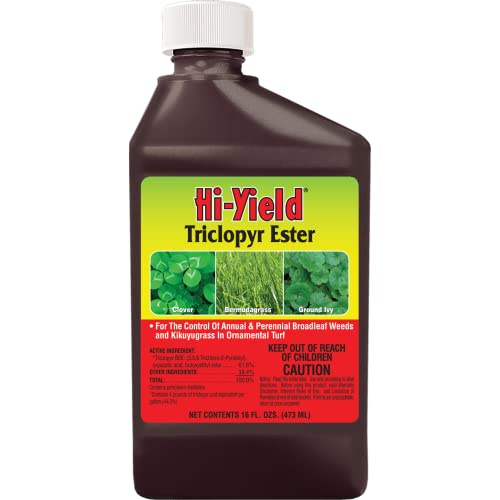
Hi-Yield 35262 Triclopyr Ester, 16 oz

Hi-Yield 35261 Triclopyr Ester, 8 oz
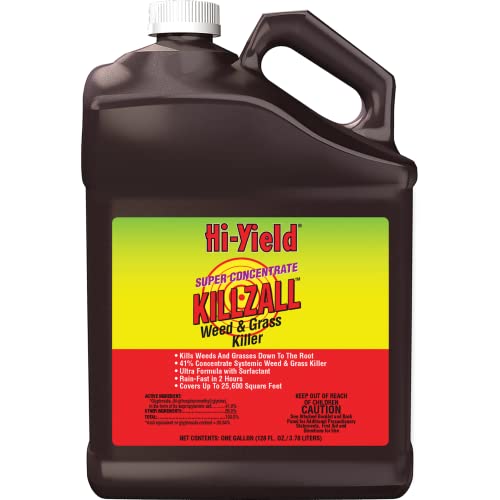
Hi-Yield 33693 Killzall Super Concentrate, 1 gal
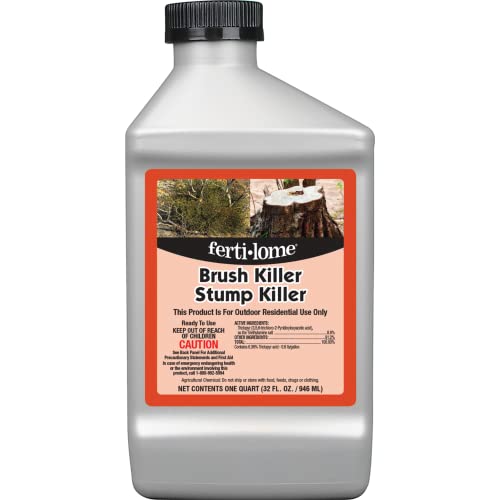
Fertilome 11485 Brush Killer & Stump Killer, 32 oz

Fertilome 11254 Weed-Out Nutsedge Control, 16 oz

Southern AG 01113 Brush Weed Killer, 32 oz

Roundup Poison Ivy Plus Tough Brush Killer2, 32 fl. oz.
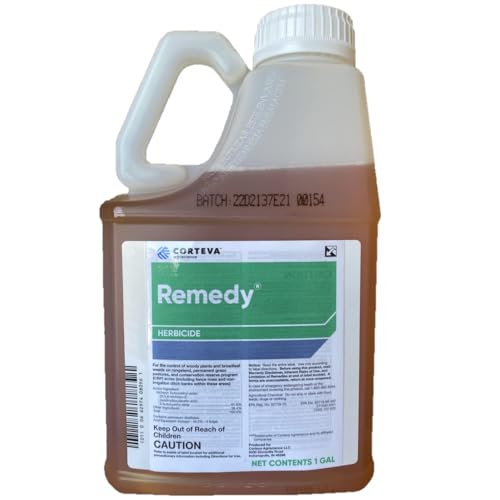
Remedy Specialty Herbicide Brush Control, 1 Gallon
The Details Behind The Selections
Triclopyr is the active ingredient that forestry and range managers reach for when woody invasives like tree of heaven need to back down. Hi-Yield’s 16-ounce ester concentrate sits in the middle of the brand’s lineup: larger than the 8-ounce sibling, smaller than a one-gallon jug, and easy to meter for a single backyard project.
The label targets actively growing broadleaf weeds, including stubborn perennials, and also lists oxalis and wild violet among the controlled species. Homeowners with cool-season turfgrass such as perennial bluegrass, perennial ryegrass, or tall fescue can integrate it into selective spraying routines without tearing up the lawn. South-of-the-border lots planted in bahiagrass, bermudagrass, centipedegrass, St. Augustine, or zoysiagrass need to stay clear of this formula.
The Helpful Details
- Triclopyr ester targets woody plants, which is the chemical family tree of heaven responds to.
- The 16-ounce size gives enough concentrate for several foliar passes on medium-sized sprouts.
- Doubles as a bluegrass suppressor, useful when a lawn is shifting toward coarse bluegrass.
- Compatible with perennial ryegrass and tall fescue turf for spot treatments.
Things To Consider
- Ester formulations are sensitive to temperature drift and volatilization, so hot, still afternoons are not the right window.
- You need a dedicated sprayer, since ester solvents can linger in tanks and damage desirable plants later.
Made For
Backyard property owners dealing with scattered tree of heaven saplings in cool-season turf who want a triclopyr concentrate they can actually finish in one season.
Look Elsewhere When
Warm-season lawns like St. Augustine or centipede need a different active ingredient, and the Southern AG 01113 Brush Weed Killer is the better-stocked pick in that situation.
An 8-ounce bottle is the smallest practical size for triclopyr work, and that is exactly the point of this concentrate. For homeowners staring down a handful of tree of heaven sprouts rather than a thicket, the smaller format keeps leftover concentrate from aging past its useful window in the garage.
The active ingredient and label restrictions mirror the larger Hi-Yield 16-ounce sibling, which means the same broadleaf targets and the same turfgrass warnings apply. You get the same bluegrass suppressor capability, just at a volume suited to a backpack sprayer and a couple of afternoons of spot work.
Notable Upsides
- Small format means you can use the bottle in a single season without storing half-used concentrate.
- Same triclopyr ester chemistry as the larger Hi-Yield jugs, so coverage expectations stay consistent.
- Liquid concentrate mixes readily into standard pump sprayers for foliar application.
- Reasonable entry cost for first-time herbicide shoppers testing a woody-plant strategy.
Worth Noting
- Coverage tops out fast, and you may run out before clearing a mature root system.
- Same turfgrass exclusions as the larger size, which limits where you can broadcast it.
Right Fit For
First-timers tackling a few young tree of heaven shoots who want to test triclopyr without committing to a larger concentrate jug.
Skip It When
An established root colony across a half-acre lot will outpace this 8-ounce bottle, and the Hi-Yield 35262 Triclopyr Ester, 16 oz is the smarter step up.
Killzall steps away from the triclopyr family and lands in glyphosate territory. The product page frames it as a non-selective weed and grass killer with a double-surfactant blend that dries onto foliage quickly, so a freshly sprayed leaf doesn’t sit around waiting for rain to wash it off. A single one-gallon jug is built to stretch across a meaningful chunk of land.
The label scope here is broader than the triclopyr picks: grassy weeds, broadleaf weeds, and woody brush all sit inside the controlled list. For tree of heaven, that means the herbicide is well-suited to foliar work where surrounding vegetation is already gone or is being sacrificed.
Points In Its Favor
- One-gallon format covers very large areas without constant refilling.
- Double-surfactant formulation helps the spray stick to waxy leaf surfaces common in woody plants.
- Targets both grasses and broadleaf weeds, so fence lines and edges get cleared in one pass.
- Foliar application suits both sprout regrowth and mature foliage.
Trade Offs
- Not lawn-safe anywhere, which rules out broadcast spraying in any turfgrass you want to keep.
- Glyphosate is a non-selective herbicide, so a shielded wand is critical near desirable shrubs and trees.
Key Specs
Best Suited To
Owners of large rural lots, abandoned edges, or overgrown fence rows who plan a full vegetation reset rather than selective treatment.
Where Another Pick Suits Better
Anyone protecting a living lawn or garden bed should reach for the Fertilome 11485 Brush Killer & Stump Killer instead, since it lets you target woody growth without nuking everything green.
This concentrate covers two jobs that often come as a pair: brush control on standing growth and stump treatment on freshly cut wood. Tree of heaven sends up root suckers the moment you chop it, so a product that handles both the canopy and the cut surface is a real advantage.
The label specifies two use modes. For stump work, you brush the undiluted product directly onto a cut stump shortly after felling. For brush work, you mix 8 ounces into a gallon of water and spray onto foliage. The timing on stumps is tight, so reading the label ahead of time pays off.
What Pays Off
- Handles both foliar brush treatment and cut-stump application from one bottle.
- Targets woody vines and brush species, which covers tree of heaven’s growth habit.
- 32-ounce size is enough for several stump treatments and a foliar pass.
- Lets you skip a separate stump-treatment product on the shelf.
Room For Improvement
- Cut-stump timing window is narrow, so scheduling matters more than with foliar-only products.
- Brush applications need a separate sprayer kept away from lawn and garden equipment.
Feature Snapshot
Whose Shelf It Belongs On
Homeowners planning to fell tree of heaven saplings and follow up with a chemical root treatment in the same weekend.
A Better Fit Elsewhere
Pasture owners clearing acres of brush should reach for the Remedy Specialty Herbicide Brush Control jug, since it carries the volume and active ingredient strength for range-scale work.
The label here is the outlier in this roundup, because Weed-Out Nutsedge Control is technically a sedge-and-broadleaf herbicide rather than a brush killer. Tree of heaven seedlings do behave like aggressive broadleaf weeds in their first year, though, and many lawn-focused shoppers land on this product when their warm- and cool-season turf starts sprouting tree of heaven volunteers.
The label lists broadleaf weeds, annual grasses, and sedges among its targets, with clover, dandelion, crabgrass, ground ivy, nutsedge, and spurge called out by name. Coverage from a single pint runs around 5,800 square feet, which fits a typical suburban lawn.
What Makes Sense
- Selective pre- and post-emergent action, useful when tree of heaven seeds into an established lawn.
- Compatible with both warm-season and cool-season turf types, including bermuda and fescue.
- Single-pint size fits a standard suburban lawn without leftovers.
- Targets multiple weed species at once, useful when nutsedge or crabgrass tags along.
Some Limits To Know
- Not formulated for mature, woody tree of heaven trunks or thick brush regrowth.
- Best reserved for seedling and young-sprout stages in a lawn, not full-canopy infestations.
Right Fit For
Lawn owners with young tree of heaven seedlings popping up in the turf who want to stay selective and keep the surrounding grass alive.
Consider Something Else When
Mature trees with thick stems call for the triclopyr-based picks like the Hi-Yield 35262 Triclopyr Ester, 16 oz for a meaningful knockdown.
Southern AG’s brush killer lists 8.8 percent triclopyr on the label, which puts it in the same active-ingredient family as the forestry-grade herbicides many rangeland managers rely on. The product page frames the use sites as non-crop areas such as road rights-of-way, rangeland, pastures, and fence rows, with Brazilian pepper, trees, vines, and stump treatments among the controlled targets.
For tree of heaven on rural acreage, that profile lands exactly where you need it: brush that’s encroaching into pasture edges or climbing the inside of a fence line. The mix rate is roughly 4 to 8 ounces per gallon of water for foliar spray, which is straightforward to dial in.
What Helps Most
- Pasture-grade triclopyr at 8.8 percent, the same active ingredient family used on rangeland.
- Targets trees, vines, and stump regrowth in a single product.
- One-quart size suits several fence-line passes or a small pasture edge.
- Simple foliar mix rate around 4 to 8 ounces per gallon of water.
A Few Limitations
- Not intended for use in lawns or residential turf, so misapplication can damage grass.
- Concentrate should be stored away from heat, since ester formulations are sensitive to temperature swings.
Built With In Mind
Rural property owners clearing tree of heaven off fence lines, pasture edges, or road frontage where non-crop use is appropriate.
Reach For A Different Pick When
Homeowners spraying around lawn and landscape beds should look at the Hi-Yield 35262 Triclopyr Ester, 16 oz for a more residential-friendly footprint.
Roundup’s Tough Brush Killer2 carries a household-name recognition that smaller concentrate brands don’t, and the formula is built to chase down a wide range of stubborn brush. The product listing highlights control of poison ivy, poison oak, poison sumac, wild blackberry, kudzu, and tough weeds down to the root, which is the kind of aggressive brush portfolio tree of heaven fits into.
For homeowners who want one concentrate that handles multiple woody invaders, this 32-fluid-ounce bottle covers a meaningful yard. Read the label for replant intervals, since the listing mentions a window between application and replanting that varies by site.
Well-Handled Touches
- Brand-name recognition makes the bottle easy to find on retailer shelves.
- Built to tackle mixed brush including vines, woody weeds, and tree-of-heaven-class species.
- 32-fluid-ounce size covers a mid-sized yard without a refill.
- Works as a single product across several tough-brush species in one yard.
Possible Compromises
- Replant interval after application may keep you out of treated beds for weeks.
- Non-selective, so a shielded wand matters around any grass or ornamentals you want to keep.
Feature Rundown
Who Will Love This
Households that want a recognizable concentrate on the shelf for tree of heaven and other tough brush without researching specialty actives.
Not Your Match When
Grazing pastures and rangeland are off-limits for this formulation, and the Remedy Specialty Herbicide Brush Control jug is the right tool for that scale.
Remedy is the rangeland-grade entry in this roundup, formulated around triclopyr and sized for serious acreage. The product page positions it for range and pasture restoration, encroaching brush, fence row maintenance, and general brush control, with flexible tank-mix compatibility for adjacent products.
For property owners managing several acres of brush regrowth, the one-gallon format is a working volume rather than a sample. Low-odor formulation also helps when neighbors, livestock areas, or family spaces are nearby.
Bright Spots
- Triclopyr-based concentrate rated for range, pasture, and fence-line work.
- One-gallon jug covers acreage that smaller concentrate bottles cannot.
- Low-odor profile reduces smell complaints near homes or livestock.
- Tank-mix flexibility supports integration with broader pasture-restoration programs.
Details To Watch
- One gallon is overkill for a quarter-acre lot, so unused concentrate means proper long-term storage.
- Pasture-oriented label requires reading the full product label before spraying near livestock or hay fields.
Feature Card
Who Should Grab It
Ranchers, homestead owners, and acreage managers clearing brush across several acres of pasture and fence line.
Where A Sibling Pick Shines
A residential lawn with just a few sprouts is a poor match for a one-gallon jug, and the Fertilome 11254 Weed-Out Nutsedge Control is the more proportionate pick.
Choosing The Right Herbicide For Tree Of Heaven
Match The Active Ingredient To The Growth Stage
Tree of heaven behaves differently depending on its age. Seedlings and first-year shoots respond to selective broadleaf herbicides like the Fertilome 11254 Weed-Out Nutsedge Control, while mature trees with woody stems need a triclopyr-based concentrate such as the Hi-Yield 35262 Triclopyr Ester, 16 oz or the Southern AG 01113 Brush Weed Killer. Glyphosate concentrates like the Hi-Yield 33693 Killzall Super Concentrate handle total lot resets where the surrounding vegetation can be sacrificed.
Decide Between Foliar Spray And Cut Stump
Foliar sprays work on standing leaves, which is the easy route when the canopy is reachable with a pump sprayer. Cut-stump treatments are the smarter play when you fell a tree of heaven, because the root system pushes new shoots within weeks. The Fertilome 11485 Brush Killer & Stump Killer handles both modes from one bottle, which is why it earns its place for homeowners planning a felling project.
Mind The Turfgrass Compatibility
Triclopyr is selective against broadleaf plants but is unforgiving on certain warm-season turf types like St. Augustine, centipedegrass, and bahiagrass. If your lawn sits in one of those grass families, the lawn-safe option is selective control at the seedling stage rather than broadcast spraying. Cool-season lawns like bluegrass, ryegrass, and tall fescue are more forgiving of triclopyr at spot rates.
Scale The Container To The Job
A quart or pint fits a typical suburban lot. A one-gallon jug is a working volume for pasture edges, fence lines, and multi-acre brush. Buying more concentrate than you can use in two seasons risks storage degradation, and buying too little means reordering mid-project. Match the container size to your estimated coverage rather than reaching for the biggest jug on the shelf.
Key Considerations Across These Picks
Mistakes Worth Dodging
Reaching for a non-selective herbicide like the Hi-Yield 33693 Killzall Super Concentrate around a lawn you want to keep is the most common misstep. Tree of heaven seedlings popping up in turfgrass need a selective product like the Fertilome 11254 Weed-Out Nutsedge Control, not a total vegetation killer. Skimping on the cut-stump window after felling a mature tree is the second trap, since untreated stumps resprout aggressively and undo the work of the foliar pass.
When Paying More Pays Off
Pasture-grade triclopyr concentrates like the Remedy Specialty Herbicide Brush Control carry a higher upfront cost, but the one-gallon volume and tank-mix flexibility save repeat purchases across multi-acre projects. Brush-and-stump dual formulas like the Fertilome 11485 Brush Killer & Stump Killer consolidate two products into one bottle, which pays off when you are already planning a felling day alongside foliar spraying.
Frequently Asked Questions
What Is The Best Herbicide For Tree of Heaven?
Triclopyr-based concentrates are the most consistent performers on mature tree of heaven, with foliar sprays for standing growth and cut-stump treatments for fresh cuts.
Can I Spray Tree of Heaven In My Lawn?
Only selective herbicides rated for your turf type should touch a lawn, and tree of heaven seedlings may respond to products like the Fertilome 11254 Weed-Out Nutsedge Control.
How Long Does It Take For Tree of Heaven Herbicide To Work?
Foliar sprays usually show leaf dieback within weeks, but root kill often requires repeat applications across one or two growing seasons.
Do I Need To Cut The Tree Before Spraying?
Cutting first lets you treat the stump with a brush-and-stump product and reduces the height you have to spray, which improves coverage.
Is Glyphosate Or Triclopyr Better For Tree of Heaven?
Triclopyr is selective against woody plants and is the standard recommendation, while glyphosate works when you are clearing a non-lawn area and can sacrifice other vegetation.
Wrap Up
The right herbicide depends on whether you are protecting a lawn, clearing a fence line, or restoring a pasture. Match the active ingredient to the growth stage, read the label before you mix, and give the root system more than one season to die back. With the right concentrate in hand and a patient plan, tree of heaven stops being the yard’s boss.
