

Tall branches have a way of showing up exactly where your ladder can’t. Manual pole saws solve that problem with leverage, a sharp blade, and your own two arms. If you’re tired of overreaching with a step stool or hiring out a crew for a ten-minute trim, the right pole saw turns that chore into a Saturday morning project. This roundup covers eight solid options across reach, weight, and price, so you can match the tool to the trees you actually own.
A Side-By-Side Look
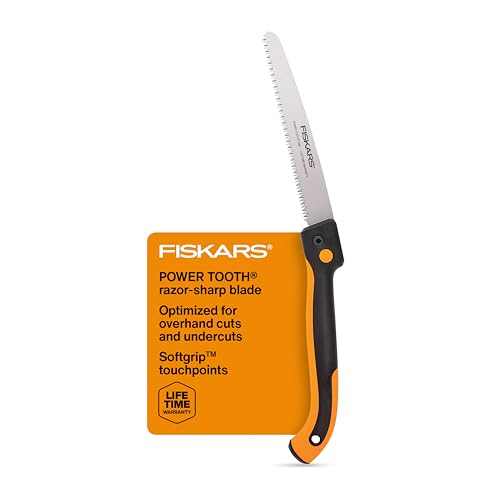
Fiskars 10″ Folding Pruning Saw with Dual Position Locking Blade
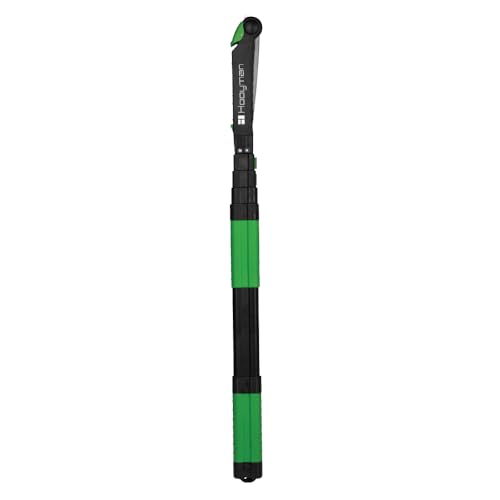
Hooyman Extendable Tree Saw with Telescoping Pole

Buyplus 26FT Reach Pole Saw with 5-20FT Telescoping Pole

Jameson PS-3FPS1 Tri-Cut Pole Saw Head Kit, 13-Inch Barracuda Blade
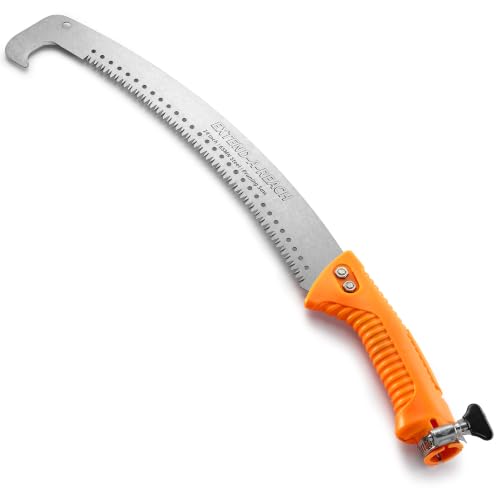
Pruning Manual Hand Saw for Tree Trimming (Pole Sold Separately)

Manual Pole Saw 27 FT with Saw Blade and Scissor

Manual Pole Saw and Pruner, 7.3–27 ft Extendable Tree Trimmer
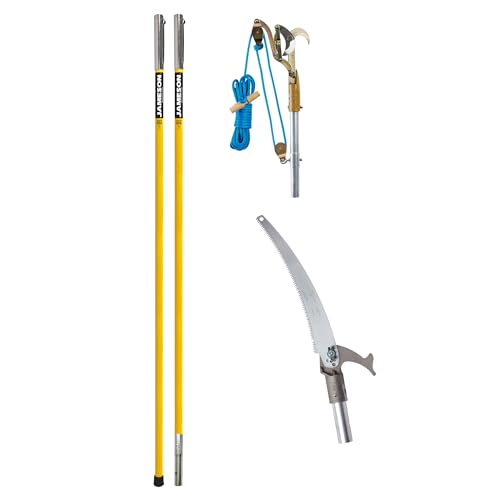
Jameson FG-Series Manual Pole Saw and Tree Pruner with Two 6-Foot Fiberglass Poles
A Closer Look At Each Pick
Before you reach for a full-sized pole setup, consider whether a folding hand saw does the job. The Fiskars 10-inch folding saw pairs a triple-ground Power Tooth blade with a two-position lock, letting you angle the cut for overhand or undercut work without a separate tool.
That locking pivot is the real story here. It transforms a pocket-sized saw into something that behaves almost like a fixed-blade pruner when the branch fights back. Owners commonly reach for it on limbs within arm’s reach where hauling out a pole feels like overkill.
Benefits That Matter
- Two lock positions let you match blade angle to cut direction, which helps in awkward spots
- Triple-ground teeth bite aggressively, so thinner branches clear quickly
- Folding frame slides into a tool drawer or backpack without a sheath
- Non-slip handle stays planted when your hands are sticky with sap
Things To Consider
- No pole mounting, so any reach past arm’s length means climbing or using a ladder
- Smaller blade chews through thick hardwood slower than full-length pole saws
Feature Snapshot
Who It Suits Best
Homeowners with low-hanging branches, dense shrubs, and tight spots where a folding saw is easier to wield than a long pole.
Look Elsewhere When
You need actual height reach, since the Fiskars folding saw has no pole mount.
If you want one tool that travels and trims, the Hooyman extendable saw earns its spot. It telescopes out to roughly 10 feet and collapses down to about 28 inches, weighing in around 4 lbs. The hand saw detaches, so it doubles as a camp saw or trail tool.
The I-beam aluminum handle gives you a stiffer backbone than tubular poles of similar weight. For homeowners clearing saplings before they shade out the garden, this is a thoughtful middle ground between a pocket folder and a long-reach pruner.
Practical Advantages
- Collapses to 28 inches, so it fits in a trunk or RV storage without disassembly
- Detachable saw head lets you drop the pole and work at ground level
- Impulse-hardened SK5 steel teeth resist dulling across many cutting sessions
- Wrist lanyard keeps the saw tethered when you swap hands mid-cut
Trade Offs
- At 10 feet of reach, tall oaks and mature maples will still feel out of range
- H-Grip design is comfortable but can feel narrow for users with larger hands
- Aluminum shaft can dent if dropped on hard ground, so a storage sleeve helps
Quick Facts
Made For
Backyard gardeners and weekend campers who want one tool that bridges pruning and trail clearing.
A Better Fit Elsewhere
Tall palm owners chasing 20-foot fronds should consider the Buyplus 26FT Reach Pole Saw for the extra vertical.
Tall palms and overgrown orchard canopies call for real vertical reach. The Buyplus telescoping pole saw telescopes between 5 and 20 feet, and with the saw head plus the user’s height, you can target roughly 26 feet of working height. The 19-inch blade detaches so the same tool works as a hand saw.
Where the Hooyman favors portability, Buyplus leans into modular reach. Sections add on rather than telescope only, which gives you a stiffer connection at full extension. You may find the extra length wobbles more than a one-piece pole when fully extended, so go slow on the first cuts.
A Few Highlights
- Modular pole sections allow repair or replacement of a single segment instead of the whole shaft
- 19-inch blade clears thicker limbs in fewer strokes than shorter saw heads
- Non-slip handle gives you a planted grip when the blade catches mid-cut
- Doubles as a handheld pruning saw once you detach the head
Points To Note
- Multiple connection points can introduce flex at full extension
- Longer setup time compared to a one-piece telescoping design
- Carbon steel blade benefits from a light oil wipe-down after each session to prevent surface rust
Best Suited To
Homeowners with mature palms, fruit trees, or tall shade trees where ten feet of reach simply isn’t enough.
Reach For A Different Pick When
You mostly trim shrubs and low branches, where the Hooyman Extendable Tree Saw covers the job with less setup.
If you already own compatible Jameson extension poles, the PS-3FPS1 head kit turns them into a serious pruning rig. The 13-inch Barracuda Tri-Cut blade cuts on three sides of the tooth profile, which keeps the kerf cleaner than a standard tooth pattern.
For homeowners who already own Jameson or compatible poles, this is the upgrade path. For everyone else, it works as a saw head to mount on standard threads. Either way, the low-profile head weighs less than bulkier universal heads, so fatigue shows up later in long sessions.
A Favorable Mix
- Tri-Cut tooth geometry reduces binding in green wood
- Low-profile head fits into tighter branch crotches than chunky universal heads
- Compatible with most standard Jameson pole systems for easy upgrades
- 13-inch blade lands in the sweet spot for fast cuts without excessive flex
A Few Limitations
- Head only; pole sold separately unless you already own a compatible one
- Tri-Cut teeth resharpen differently than standard raker teeth, which can complicate touch-ups
Spec Overview
Who Should Grab It
Arborists, line-clearance crews, and serious DIYers who already run a compatible pole system and want a better saw head.
Swap It Out When
You need an all-in-one package right out of the box, since the Jameson FG-Series Manual Pole Saw and Tree Pruner ships with two fiberglass poles included.
Some tool owners already have a stack of extension poles in the garage. The EXTEND-A-REACH pruning saw uses a standard US Acme thread, so it mounts on the pole you already own. The 14-inch blade splits the difference between pocket folders and full pole saw heads.
The dual-use design works equally well as a hand saw for shrubs and ground-level brush. Without a pole in the box, the value depends on whether you already own something compatible. You may find the Acme thread system clicks on and off faster than proprietary fittings, which speeds up quick jobs.
Notable Gains
- Standard Acme thread fits most off-the-shelf extension poles, no adapter required
- 14-inch blade gives you a comfortable stroke length for medium branches
- Doubles as a hand saw when the pole stays in the truck
Honest Caveats
- Pole is not included, so first-time tool owners pay extra to get up and running
- Steel construction is sturdy but heavier than aluminum competitors in this size class
The Right Fit
DIYers with a pole collection already on hand who just need a sharp, well-threaded saw head.
Consider Something Else When
You want a full package out of the box, in which case the Fiskars 10-inch Folding Pruning Saw is more affordable as a starter.
Long-reach pruning gets complicated when you need both a saw for thick limbs and a scissor for palm fronds. The Dremmt pole saw tackles that by splicing up to eight pole sections together, scaling from 7.3 feet to about 27 feet of working height. A thickened saw blade sits next to a bypass scissor head for two-stage work.
The saw-and-scissor pairing makes this a strong pick for palm-heavy yards. The bypass scissors handle the fronds without tearing, while the thicker saw blade chews through the woody fruit-cluster stalks. Setup takes longer because of the section count, but the flexibility pays off in mixed trimming.
Notable Upsides
- Two cutting tools on one pole eliminate ladder trips for different limb types
- Modular sections scale to exactly the height you need
- Bypass scissor design handles palm fronds and green twigs without crushing them
- Thickened blade resists flex on heavy cuts at long extension
Soft Spots
- Eight-piece setup takes longer than a telescoping design
- Higher section count adds weight compared to a single-shaft pole
- Bypass scissors work best on green growth and may struggle on dry hardwood
Whose Shelf It Belongs On
Yard owners with tall palms and mixed canopy trees where one tool needs to handle multiple cutting styles.
Not Your Match When
You mostly cut small-diameter branches and don’t need the scissor attachment, since the 9TH SHOP Manual Pole Saw and Pruner offers a similar two-tool combo at a shorter ceiling.
Where the Dremmt goes modular, the 9TH SHOP pole saw swings toward a 65Mn steel bypass scissor and razor saw blade combo that switches between tools without climbing down. Working height scales from about 7.3 to 27 feet depending on section count.
The 65Mn steel (a manganese alloy known for toughness) on the scissors gives the cutting head a longer working life than softer stamped steel. Owners commonly report the blade handles up to three-inch branches cleanly, which covers most home pruning situations.
Real Benefits
- Bypass scissors handle palm fronds and fruit-tree twigs without crushing the cut
- Razor saw blade manages branches up to about three inches in diameter
- Section-based scaling lets you choose a working height instead of locking into one length
- Two-tool design reduces trips up and down the ladder
Where It May Fall Short
- Section count adds storage bulk compared to a single telescoping shaft
- At full 27-foot reach, the long lever arm makes precision cuts harder for new users
Feature Rundown
Built With In Mind
Mixed-use homeowners trimming fruit trees, ornamental shrubs, and the occasional tall palm in a single afternoon.
Skip It When
You prune utility lines or work around energized conductors, where the Jameson FG-Series fiberglass kit adds the dielectric protection you need.
Working near utility lines calls for fiberglass, not aluminum. The Jameson FG-Series kit ships two 6-foot fiberglass poles, a 16-inch Barracuda Tri-Cut saw blade, and a Big Mouth bypass pruner with a 20-foot pull cord and double-pulley system. The double pulley reduces the pulling force needed for a clean cut.
Fiberglass is dielectric, meaning it resists electrical conduction when properly maintained, which is exactly why line crews lean on Jameson. Each pole is batch tested to 100 KV per foot for five minutes to meet OSHA (Occupational Safety and Health Administration) requirements. For homeowners, that simply translates to a tougher, stiffer pole that won’t kink the way aluminum can over years of use.
Standout Benefits
- Fiberglass poles resist bending and weathering better than standard aluminum shafts
- Double-pulley pruner reduces hand fatigue during long bypass-cutting sessions
- Two-piece design reaches 12 feet fully extended or 6 feet as a base pole for tight spots
- 16-inch Tri-Cut blade handles thick limbs that smaller saws stall on
- Dielectric rating adds safety margin around overhead conductors
Practical Considerations
- Fiberglass adds weight compared to aluminum setups of similar length
- Higher cost than consumer-grade pole saws, reflecting the pro-grade testing and materials
- Pull-cord pruner takes practice to thread cleanly through the pulley before each session
Perfect Match For
Utility crews, arborists, and homeowners near overhead lines who want a rugged, dielectric-rated pole system.
Where A Sibling Pick Shines
Casual backyard users on a tighter budget will find the Hooyman Extendable Tree Saw covers typical home pruning without the pro markup.
Matching the Right Pole Saw to Your Trees
Reach matters most when branches hang above head height. For most suburban lots, a 10-foot reach covers the canopy, but anything approaching two-story eaves needs 15 to 20 feet of working height. Add your shoulder-to-ground measurement to the pole’s rated reach and you’ll know whether you’ll be looking up at the cut or working comfortably below it.
Blade style changes how the saw feels in the cut. Triple-ground or tri-cut teeth slice on every stroke, which speeds up green wood but demands more effort on dry hardwood. Raker teeth cut slower but are easier to touch up with a basic file. For mixed pruning, a mid-length 13 to 16-inch blade balances reach with control.
Weight and stiffness trade off against each other. Aluminum poles stay light but flex at full extension, which makes precision cuts harder. Fiberglass poles weigh more but track straighter and last longer under heavy use. If your sessions run under thirty minutes, aluminum is fine. For longer afternoons or frequent use, fiberglass earns its extra weight.
Head compatibility opens upgrade paths later. Pole saws with standard Acme threads let you swap in a better head later, while proprietary fittings lock you into one brand. If you anticipate upgrading the head before the pole wears out, look for thread-compatible designs first.
Smart Spending: Where the Extra Money Goes
Pitfalls Shoppers Hit
The most common slip is buying for maximum reach when the typical cut is closer to the ground. Ten extra feet of pole adds weight, sections, and flex that you carry on every cut, even the close ones. Measure your tallest target branch and add two feet of buffer before paying for a longer pole.
Another trap is assuming all saw blades are interchangeable between brands. Thread patterns, ferrule shapes, and ferrule diameters vary widely. Buying a head from one maker for a pole from another often ends in adapters or returns. Stick with a matched system or confirm compatibility before you commit.
When Paying More Pays Off
Premium pole saws spend the extra money on fiberglass shafts, impulse-hardened teeth, and dielectric testing. For occasional home use, those upgrades don’t move the needle much. For pros, arborists, and homeowners near power lines, the dielectric rating and stiffer pole justify the cost in fewer mid-cut surprises and a longer working life. The honest read is that casual users see diminishing returns past a solid mid-range model.
