Turning a patch of compacted ground into a workable bed is one of those jobs that feels twice as long when you’re using the wrong tool. Walk into any garden center and you’ll see everything from hand-twisted claws to battery-driven cultivators, and the labels all start to blur after the second aisle. The lineup below sorts eight solid manual tillers and their powered cousins by what they actually do well, so you can match the tool to your soil, your back, and the size of the job waiting at home.
A Closer Look At The Lineup
PickWhy We Picked ItBest ForAction

Heavy Duty Pick
IncwBo 12″ 10.5AMP Corded Electric Roto Tiller
Wide 12-inch tilling reach
Mid-sized backyard beds
Beginner Friendly
Altdorff Hand Tiller Garden Claw Cultivator
Twist-action hand tool
Raised beds and planters

Compact Choice
YEELOR Rotary Cultivator with Aluminum Gears
Star-roller soil breaker
Small flower beds

Adjustable Standout
BARAYSTUS Rotary Cultivator Adjustable Hand Tiller
Telescoping shaft length
Taller gardeners on foot

Cordless Favorite
SOARFLY Cordless Tiller Cultivator with Dual Batteries
Dual battery runtime
Outlets-free lawn work

Low-Fuss Pick
BARAYSTUS Hand Tiller Twist Garden Claw
Simple manual claw design
Quick aerating sessions
Wide-Cut Pick
21V Cordless Tiller 11.8″ Width Dual Batteries
11.8-inch cordless cut
Larger tilling sessions

Built To Last
CKLT 66in Rotary Cultivator with Spring Steel Tines
Tempered spring steel tines
Tough compacted ground
More Details On Our Top Picks
Start with the workhorse at the top of the list. The IncwBo corded electric tiller delivers a 10.5-amp motor through a 12-inch swath, which means a mid-size kitchen garden can be turned in a single pass rather than three or four overlapping ones. Four steel tines work down to roughly 8 inches, plenty for annual vegetable plots that get reworked each spring.
You trade portability for power here, since a cord always dictates where the tool can roam. A 50-foot outdoor extension handles most backyard beds without trouble, and the steel tines hold up to rocky patches better than the plastic rollers on smaller cultivators.
Well-Handled Touches
- ✓Wide 12-inch cutting path covers a raised bed in one slow pass.
- ✓10.5-amp motor has the torque for hard clay that stalls smaller cultivators.
- ✓8-inch working depth suits most annual vegetable root systems.
- ✓Four-blade steel design churns compost and cover crops back into the soil cleanly.
Things To Consider
- •The cord forces you to work outward from the outlet, which gets awkward on larger plots.
- •Heavier than a handheld claw, so storage in a small shed takes planning.
Quick Facts
| | Feature | Specification | Why It Matters |
|---|
| Motor | 10.5 amps | Enough torque for compacted clay |
| Tilling width | 12 inches | Covers a raised bed in one pass |
| Working depth | 8 inches | Reaches typical vegetable root zones |
| Tines | Four steel blades | Resist bending in stony ground |
Who It Suits Best
Home gardeners with a flat backyard plot who want powered performance without gas-engine maintenance.
Skip It When
The Altdorff Hand Tiller is a quieter fit for anyone working on a balcony garden or raised bed where a 12-inch corded tiller is overkill.
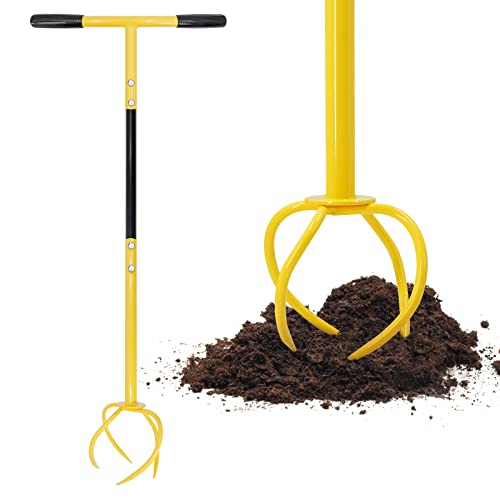
Step down from powered tillage and you land on the Altdorff Hand Tiller, a twist-style claw designed for folks who’d rather skip the cord and the noise. The 17.7-inch arched handle uses your body weight as leverage, so the work comes from your hips rather than your wrists. Four arrow-tipped tines bite into loose or moderately packed soil without a motor in sight.
It shines in tight spaces that a full-size tiller can’t reach, like between tomato cages or inside a wooden planter box. Compared with the IncwBo’s 12-inch swath, this claw works one footprint at a time, which is slower but lets you be more deliberate around existing plants.
Everyday Advantages
- ✓No fuel, no battery, no cord, so it works anywhere a hose can reach.
- ✓Compact size stores on a wall hook in a one-car garage.
- ✓Steel tines hold an edge through seasonal use.
Worth Noting
- •Hard, dry clay will wear out your shins before the tines break through.
- •Treating a full vegetable row takes longer than a powered pass.
- •Owners commonly report needing to file burrs off the weld points early on.
Made For
New gardeners tending raised beds or flower boxes who want a no-fuss way to loosen the top few inches of soil.
Look Elsewhere When
Reach for the SOARFLY Cordless Tiller Cultivator if your plot is bigger than about 50 square feet and your knees can’t take a long manual session.
Compact is the headline here. The YEELOR Rotary Cultivator keeps the aluminum gear housing light in the hand while the star-shaped rollers do the heavy breaking on the ground. You push it forward and the angled wheels slice through clods, mixing amendments into the top layer without flipping the whole profile upside down.
It fills a niche the IncwBo and Altdorff don’t quite cover: a small flower bed that’s already loose but needs fluffing before a fresh round of mulch. The aluminum gears won’t rust if you leave the tool leaning against the fence between sessions.
Useful Highlights
- ✓Light aluminum build makes long sessions less tiring.
- ✓Star rollers create fine tilth ideal for direct-sowing seeds.
- ✓Compact frame reaches between established perennials.
Trade Offs
- •Not built for first-pass breaking on hard ground.
- •Aluminum gears can deform if you lean your full weight on the handle in tough soil.
At A Glance
| | Feature | Specification | Why It Matters |
|---|
| Gear housing | Aluminum | Lightweight and rust resistant |
| Working head | Star-shaped rollers | Crumble clods into fine soil |
| Best fit | Loose to medium soil | Skip it for hard virgin beds |
Right Fit For
Backyard gardeners who want a quick touch-up tool between deep seasonal tilling sessions.
A Better Fit Elsewhere
The BARAYSTUS Rotary Cultivator Adjustable Hand Tiller is the better pick if you’re tall, since it telescopes to match your stride.
The BARAYSTUS Rotary Cultivator solves a complaint that comes up constantly with handheld tillers: a fixed-length shaft that bends shorter gardeners double and leaves tall gardeners stooping. The telescoping shaft adjusts from 29.7 to 57 inches, so two household members of very different heights can share the same tool without trading back pain.
Four aluminum star rollers handle the same finishing work as the YEELOR model above, but the length adjustment gives it more reach into the center of a wide bed. The build leans toward longevity rather than raw power.
A Favorable Mix
- ✓Telescoping shaft adapts to your height and stride.
- ✓Stainless components resist rust through wet springs.
- ✓Roller design is gentler around young seedlings than digging tines.
Small Caveats
- •Locking collars can loosen mid-pass in dense soil, so a quick check helps.
- •Not intended for breaking new ground from scratch.
Best Suited To
Multi-user households where gardeners of different heights share a single tool.
Not Your Match When
The POGGT 21V Cordless Tiller suits you better if you’d rather let a motor do the pushing on a larger plot.
The first cordless entry in the lineup solves the IncwBo’s main limitation: the trailing cord. Two 4.0Ah batteries ship in the box, so you can run one while the other cools on the charger, which extends the working window into longer sessions without tethering yourself to an outlet.
The 9-inch width is narrower than the corded 12-inch option, so you’ll make more passes on a wide bed, but the freedom to roam pays off in irregularly shaped gardens. Compare that to the POGGT entry below, which trades a slightly wider cut for similar cordless convenience.
Reasons It Performs
- ✓Dual 4.0Ah batteries cover most backyard sessions without a recharge.
- ✓Adjustable auxiliary handle keeps posture comfortable across heights.
- ✓9-inch tilling width reaches between rows of established plantings.
Points To Keep In Mind
- •Battery runtime shortens noticeably in dense or wet soil.
- •Spare batteries add to the overall storage footprint.
Feature Snapshot
| | Feature | Specification | Why It Matters |
|---|
| Tilling width | 9 inches | Good for narrow beds and rows |
| Working depth | 6.6 inches | Suits most annual crops |
| Batteries | Two 4.0Ah packs | Run one while the other charges |
Who Will Love This
Suburban gardeners with medium plots who don’t want to wrestle an extension cord through the tomato rows.
Consider Something Else When
The Altdorff Hand Tiller is the simpler answer for a small herb bed where cordless power isn’t worth the charging routine.
Second BARAYSTUS entry, and a different animal from the rotary cultivator above. This one is a pure twist claw, no shaft to extend, no gears to worry about. You stick it in the ground, grip the side handles, and rotate your wrists. The wider, longer tines are the selling point: they bite deeper with less downward pressure than shorter claws.
For most quick aerating sessions on a flower border or a recently mulched bed, this is the simplest tool in the lineup. It can’t compete with the corded IncwBo on raw output, but it doesn’t need to, because the use case is different.
Advantages To Know
- ✓Wider, longer tines dig deeper per twist than standard claws.
- ✓Side-handle design protects wrists during longer sessions.
- ✓Solid steel build survives years of seasonal storage.
Honest Caveats
- •Bending over the handles will challenge anyone with back issues.
- •Not the right tool for an entire vegetable row; better for spot aeration.
Perfect Match For
Gardeners who want a no-noise, no-charge tool for frequent small-scale soil work.
Another Choice May Suit
Pick the YEELOR Rotary Cultivator instead if you’d rather stand upright and roll through the bed than crouch and twist.
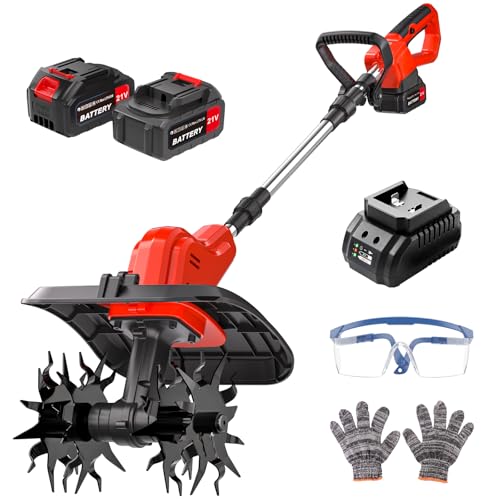
The POGGT 21V Cordless Tiller pushes the cordless format closer to the corded IncwBo in coverage area. An 11.8-inch cut and 6.6-inch working depth chew through larger beds without the trailing cord, while two 4.0Ah batteries keep you moving through the second half of the job.
The real-time battery display is a small but useful touch, since you can watch the gauge drop and swap packs before the tines stall mid-row. For most backyards, this lands in the sweet spot between the SOARFLY’s narrower cut and a full corded tiller.
Useful Strengths
- ✓11.8-inch width covers more ground per pass than typical cordless cultivators.
- ✓Battery level display prevents mid-row stalls from surprise depletion.
- ✓360 RPM operating speed breaks clods quickly without bogging down.
Points To Note
- •Heavier than the SOARFLY, which adds fatigue over long sessions.
- •Full recharge takes a few hours, so plan large jobs around battery swaps.
Who Should Grab It
Homeowners with medium-to-large plots who want cordless freedom and wider coverage in a single tool.
Reach For A Different Pick When
The CKLT 66in Rotary Cultivator is the better fit if you’d rather work standing tall with a long-handled manual tool than manage batteries.
The CKLT Rotary Cultivator closes the lineup on a long-handled manual note. The 66-inch shaft keeps you upright while tempered spring steel tines do the cutting, which matters in compacted ground where thinner tines would flex and skip. Spring steel gives the blades enough give to absorb rocks without snapping.
It belongs in the same conversation as the BARAYSTUS and YEELOR rotary options above, but the spring steel tines are the differentiator for heavy soils. For most gardeners with average loam, the difference shows up more in long-term durability than in daily feel.
Strengths Worth Knowing
- ✓Tempered spring steel tines resist bending in rocky or root-filled soil.
- ✓Long 66-inch shaft saves your back on extended sessions.
- ✓Serrated star wheels grip and break clods on the push stroke.
A Few Limitations
- •Long handle is awkward to store in a small shed or closet.
- •Manual effort is real on first-pass ground; expect a workout.
- •Owners commonly report the handle joint needing a tightening after the first month.
Key Product Details
| | Feature | Specification | Why It Matters |
|---|
| Handle length | 66 inches | Saves your back during long passes |
| Tine material | Tempered spring steel | Flexes without breaking |
| Wheel design | Serrated star wheels | Grip clods and slice weeds |
| Best soil type | Compacted or rocky | Handles ground thinner tines skip |
Built With In Mind
Gardeners working heavier clay or reclaiming a long-neglected bed who want one manual tool that won’t quit.
Where A Sibling Pick Shines
The IncwBo 12-inch corded model handles the same compacted ground faster, at the cost of trailing a cord and storing a heavier machine.
What Matters Most Before Choosing Manual Tillers
Start with your soil, because every other decision flows from it. Sandy or loamy ground plays nicely with the lightweight rotary cultivators like the YEELOR and CKLT entries, while heavy clay rewards the steel tines of the BARAYSTUS twist claw or the powered bite of the IncwBo. Match the tool to the ground rather than the other way around.
Think about the working width next. Handheld claws cover a few inches per pass and reward patience on small beds. Cordless cultivators at 9 to 11.8 inches handle most backyard plots in a reasonable number of passes. A 12-inch corded tiller covers ground the fastest, but you pay for it in cord management and storage space.
Ergonomics matter more than people expect. Telescoping shafts on the BARAYSTUS rotary cultivator ease back strain, while a long fixed shaft like the CKLT’s 66 inches favors taller gardeners. For most households, comfort beats raw width in the long run.
Finally, consider storage and maintenance. Manual twist claws and rotary cultivators hang on a wall hook and tolerate a damp shed without complaint. Cordless tillers need a charging spot and a place for spare batteries, while the corded IncwBo wants dry storage and an occasional tine cleaning.
Smart Buying Notes Across This List
Where Shoppers Go Wrong
The most common slip is buying a powered tiller for a job a manual claw handles in twenty minutes. If you’re fluffing a single raised bed or aerating between perennials, the Altdorff or BARAYSTUS twist tools get the work done without dragging a battery or extension cord into the garden.
The opposite mistake also happens: trying to break new ground with a lightweight rotary cultivator and wondering why the tines skate over the surface. First-pass work on compacted ground needs steel tines with bite, which is where the CKLT spring steel model or a powered tiller earns its keep.
Where The Extra Money Goes
Higher-tier cordless models like the SOARFLY and POGGT earn their cost through larger batteries, real-time charge displays, and wider working widths. You pay for runtime and coverage, not just convenience. For most gardeners with plots under a few hundred square feet, those upgrades matter more than raw motor power.
Frequently Asked Questions
QHow deep should a manual tiller reach?
Most garden beds only need six to eight inches of loosened soil for annual vegetables and flowers. Anything deeper is welcome on clay-heavy plots where roots struggle to penetrate.
QAre cordless tillers powerful enough for clay soil?
Cordless cultivators handle previously worked clay reasonably well, but for unbroken ground the corded IncwBo or the spring steel CKLT will save you time and frustration.
QCan a hand tiller replace a powered one?
For small raised beds and ongoing maintenance, a quality twist claw like the BARAYSTUS or Altdorff covers the work without batteries, cords, or storage headaches.
QHow long do cordless tiller batteries last?
Two 4.0Ah batteries, as found in the SOARFLY and POGGT entries, generally cover a typical backyard session with one pack recharging while the other runs.
QDo rotary cultivators work in wet soil?
Working wet ground compacts it further, regardless of tool type. Wait a day or two after rain so the soil crumbles instead of smearing under the tines.
Final Verdict
Manual tillers and their powered cousins each fit a specific corner of the garden, and the right pick depends on your plot, your soil, and how much bending your back can handle. Match the tool to the ground rather than chasing the widest swath on the table. Start with one solid implement that fits your most common job, then add a specialty tool later if the work expands.


