

Apartment dwellers and home cooks tired of flavorless produce can pull a tray of radish, broccoli, or pea shoots off a sunny windowsill in roughly a week. Microgreens punch well above their weight nutritionally, and most kits cut out the mess of soil entirely. You just seed, mist, and harvest with scissors. The seven kits below cover every level of commitment, from a five-tray starter set to mason-jar sprouters that look right at home on a kitchen counter.
A Fast Comparison Of The Options

EBaokuup 5 Pack Seed Sprouter Trays Kit

EBaokuup 10 Pack Seed Sprouter Tray Kit

Back to the Roots DIY Microgreen Grow Kit

Boombamo Premium Sprouting Jar Kit

ZESTIGREENS Sprouting Jar Kit

Legigo 10 Pack Microgreens Growing Trays Kit
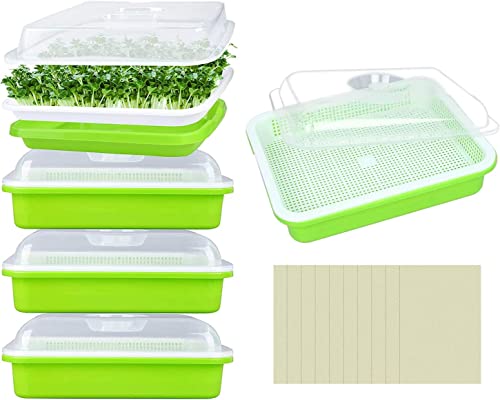
Legigo 5 Pack Seed Sprouter Trays with Lids
More On The Choices That Made The List
Starting a windowsill garden feels approachable with a five-tray starter set that does not demand soil. The EBaokuup 5 Pack comes with planting paper and stackable trays, so you can rotate harvests through the week without anything tipping over.
You simply wet the paper, scatter seeds, and mist twice a day. For anyone curious about microgreens but unsure how much space or time the habit takes, this set is the lowest-commitment entry on the list.
Well-Handled Touches
- Stackable design keeps a small footprint on a narrow ledge.
- Planting paper removes the mess of loose soil on countertops.
- Five trays let you stagger varieties like radish, broccoli, and pea shoots.
- Solid PP (polypropylene, a lightweight food-safe plastic) construction holds up to repeated rinsing.
Trade Offs
- Trays measure 8.8 by 5.7 inches, so harvests stay modest per cycle.
- Seeds are not included, so you’ll need to source your own varieties separately.
Who It Suits Best
First-time growers who want a no-fuss introduction before committing to larger setups.
Consider Something Else When
If you cook with greens every night and want continuous larger harvests, the Legigo 10 Pack Microgreens Growing Trays Kit covers more square footage per tray.
The EBaokuup 10 Pack doubles down on the same tray format as the five-pack, which makes life easier when you actually get hooked on the routine. Ten trays means a real rotation: seed two, grow two, harvest two, repeat.
You can run five varieties side by side, or stagger radish and broccoli by a few days so salads never run out. Compared to the smaller EBaokuup starter, this kit simply removes the bottleneck of waiting for trays to free up.
The Value In It
- Double the capacity lets you rotate harvests without downtime.
- Same proven PP body as the five-pack, so cleaning feels familiar.
- Forty sheets of planting paper cover many cycles.
Honest Caveats
- Takes up more windowsill real estate than the five-tray starter.
- You still need to buy seeds separately since none ship in the box.
The Right Fit
Growers who already know they like microgreens and want a continuous harvest cycle.
Look Elsewhere When
Counter space is genuinely limited, in which case the ZESTIGREENS Sprouting Jar Kit takes up almost no room at all.
The Back to the Roots kit stands apart because everything you need lands in the same box. The 6-Grow Variety Pack includes trays and a curated seed selection, which removes the awkward first step of figuring out what to plant.
For households new to growing food indoors, this removes guesswork. You open the box, read the simple directions, and end up with six different microgreens to taste-test in roughly a week.
Real Benefits
- Seeds ship in the kit, so there is no extra trip to a garden store.
- Six distinct varieties let you find your favorites quickly.
- Brand is widely recognized in the beginner gardening space.
Small Caveats
- Per-tray capacity sits somewhere between the smallest and largest picks here.
- Once the included seeds run out, you’ll be sourcing refills on your own.
Key Advantages
Made For
Beginners who want seeds, trays, and directions in one box on day one.
A Better Fit Elsewhere
Experienced growers who already have favorite seeds will get more flexibility from the EBaokuup 10 Pack Seed Sprouter Tray Kit.
Boombamo goes a different direction entirely with mason-jar sprouting instead of trays. The kit pairs wide-mouth jars with mesh lids, blackout sleeves, a stand, and a drip tray, which addresses every pain point of seed sprouting in jars.
The blackout sleeves block light during germination, which most growers find produces better-flavored sprouts. If your goal is mung bean, alfalfa, or broccoli sprouts rather than wheatgrass-style greens, this format is more natural.
The Case For It
- Blackout sleeves let you control the dark phase properly.
- Mesh lids drain freely, reducing mold risk during humid conditions.
- Stand and drip tray keep the counter dry between rinses.
- Wide-mouth jars make scooping out finished sprouts simple.
Things To Weigh
- Glass jars weigh more than plastic trays when moving the whole setup.
- Sprouts demand more frequent rinsing than soil-free microgreens in trays.
The Numbers That Matter
Best Suited To
Home sprouters who want bean and seed sprouts rather than leafy microgreens.
Skip It When
You want to grow wheatgrass or pea shoots on a flat surface, since the EBaokuup 5 Pack Seed Sprouter Trays Kit handles that format better.
ZESTIGREENS keeps the jar-sprouting concept simple with two wide-mouth mason jars, mesh lids, and a stand. There are no blackout sleeves, but the simpler build suits anyone who just wants clean counter-friendly sprouting.
You can tuck a paper bag over the jars for the dark phase, which many home sprouters already do. For renters or shared kitchens, the smaller footprint helps a lot.
Strengths Worth Knowing
- Two-jar setup takes up minimal shelf space.
- Stand keeps jars upright and angled for draining.
- Mesh lids rinse easily under running water.
- Useful for kitchen-counter sprouting routines.
Points To Keep In Mind
- No blackout sleeves, so you’ll improvise with a cloth for the dark phase.
- Capacity is half of what the Boombamo kit offers, so simultaneous batches stay smaller.
Perfect Match For
Small-kitchen sprouters who want jars, lids, and a stand without extra accessories.
Reach For A Different Pick When
You want blackout sleeves included out of the box, in which case the Boombamo Premium Sprouting Jar Kit is the better-equipped option.
The Legigo 10 Pack steps up with noticeably larger trays than the smaller picks on this list. Each tray spans roughly 13 by 10 inches, which gives dense-seed crops like wheatgrass room to bulk up properly.
For households that want meaningful harvests rather than garnish-sized pinches, the extra surface area pays off. You can still use the same mist-and-water routine as the smaller EBaokuup trays.
Useful Strengths
- Larger tray footprint produces bigger harvests per cycle.
- Ten-tray count supports staggered growing schedules.
- Inner and bottom tray design keeps roots contained without soil.
Less Ideal Details
- Takes up more windowsill space than compact picks.
- Seeds are not included, like most tray kits on this list.
Feature Snapshot
Who Should Grab It
Cooks and families who want real handfuls of greens rather than small garnishes.
Swap It Out When
Counter space is tight, in which case the EBaokuup 5 Pack Seed Sprouter Trays Kit fits more comfortably on a narrow ledge.
Adding lids to a sprouting tray sounds small, but it changes the germination environment. The Legigo 5 Pack traps humidity during the first day or two, which many growers find produces more even sprouting for slow-to-start varieties.
Once seedlings emerge, you remove the lids and let air circulate as usual. The hooded format works especially well for beginners who worry about under-misting.
Noteworthy Benefits
- Lids hold humidity during early germination.
- Food-grade plastic body resists odor and staining over time.
- Spacious tray footprint compared to slim starter kits.
Practical Considerations
- Lids add a step to the daily routine since you remove and replace them.
- Still requires sourcing your own seeds to start growing.
Core Details
Whose Shelf It Belongs On
First-time growers who want humidity control during the trickiest germination window.
Where A Sibling Pick Shines
Anyone wanting a more guided, seed-included first run will find the Back to the Roots DIY Microgreen Grow Kit easier to start with.
Picking A Microgreen Growing Kit That Fits Your Routine
The right kit comes down to where you plan to grow, how often you want to harvest, and which crops you actually enjoy eating. Think of it the same way you would think about any small kitchen tool: match the format to the habit you realistically want to build, not the most ambitious version of yourself.
Tray Kits Versus Jar Kits
Trays work best for leafy microgreens like radish, broccoli, and wheatgrass because the seeds spread across a flat surface and grow upward as a canopy. Mason jar kits suit sprouts and small seeds like alfalfa and mung bean that tumble and rinse well in a vessel with a mesh lid. Pick the format that matches the crop you want on your plate most often, since switching later means buying a second setup.
Size, Count, And Rotation
A single tray fills a sandwich, but households cooking greens nightly need multiple trays on a staggered schedule. Five trays let you start something fresh every couple of days, while ten trays support a true weekly rotation. Bigger trays add harvest weight per cycle but demand more windowsill real estate. Measure your ledge first, then choose the kit that fits without crowding.
Material And Cleaning
Food-grade PP plastic and glass mason jars are both safe choices for edible sprouts, though they behave differently day to day. Plastic trays are light, stackable, and rinse quickly under running water. Glass jars feel premium and last through years of use, but they are heavier to move and chip if dropped. Pick whichever routine you’ll actually clean without dread, since sprouts demand regular rinsing to stay fresh.
Key Considerations Across These Picks
Pitfalls Shoppers Hit
A common stumble is buying a tray kit without realizing seeds ship separately, which delays the first harvest by a week while a separate order arrives. Another trap is choosing jars when you actually wanted wheatgrass-style greens, since the formats serve different crops. Measure your windowsill before adding ten large trays to a cart, because crowded seedlings compete for light and grow leggy.
Where The Extra Money Goes
Higher-tier kits earn their keep through blackout sleeves, sturdy stands, and food-grade materials that hold up to daily rinsing. Premium jar kits bundle accessories that would cost extra to piece together, while larger tray packs simply spread the per-tray cost down. You pay more for convenience, durability, and included seeds, which suits busy households who want everything in one box. Casual growers may not need every upgrade, but daily sprouters tend to appreciate the saved time within a month.
Frequently Asked Questions
Do microgreen kits come with seeds?
Some kits include seeds, like the Back to the Roots DIY Microgreen Grow Kit, while most tray and jar kits ship without them. Plan to buy seeds separately unless the product description confirms they are in the box.
How long does it take to harvest microgreens?
Most microgreens reach harvest size in seven to fourteen days from seeding, depending on the variety and growing conditions. Fast crops like radish are ready sooner, while wheatgrass and pea shoots take a bit longer.
Can I reuse the trays or jars?
Yes. Plastic trays and glass jars both clean up with warm water and a brush, then serve many cycles. Replace the planting paper or rinse the mesh lid between uses to keep things sanitary.
Which crops grow best in jars versus trays?
Jars handle small seeds that tumble freely, like alfalfa, mung bean, and broccoli sprouts. Trays suit larger seeds and crops that grow as a flat canopy, like wheatgrass, sunflower, and pea shoots.
Do I need soil with these kits?
No. Every kit on this list uses water plus planting paper or mesh lids, which keeps indoor growing clean. The hydroponic (soilless) approach suits apartments and renters who want to avoid soil entirely.
Closing Remarks
Your best pick depends on the crops you love and the counter space you can spare. Jar kits serve sprout lovers, while tray kits handle leafy microgreens with less daily effort. Start small if you are curious, then scale up once the habit sticks.
