

Raised beds, narrow flower borders, and freshly seeded lawn patches ask for a different kind of tool than the heavy tiller sitting at the rental counter. The right mini-garden tiller slips between tomato cages, breaks up last season’s crusted topsoil, and tucks into a corner of the shed when the work is done. You want enough bite to handle compacted ground without dragging a gas engine across your patio or wrestling an extension cord through the petunias. The eight compact cultivators below cover cordless convenience, corded endurance, and one classic gas option that still earns its spot in the shed.
A Closer Look At The Lineup

TaskStar Mini Cordless Tiller Cultivator 20V 2.6 lbs Handheld

Honda FG110 Mini Tiller Cultivator (FG110KiAT)

Saker 22V Cordless Garden Tiller Cultivator

Muylux 20V Cordless Tiller Cultivator with 2 Batteries
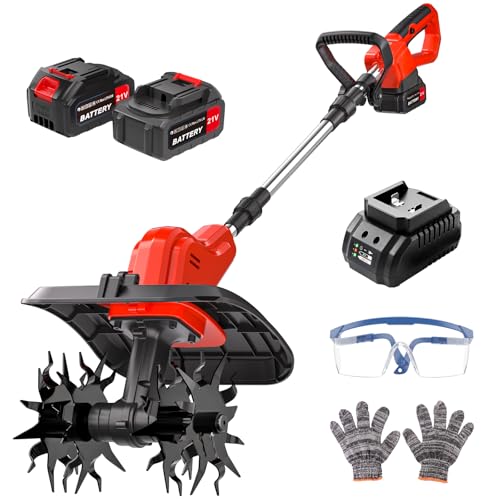
POGGT 21V Cordless Tiller 11.8″ Width with Dual 4.0Ah
IncwBo 12″ 10.5-Amp Corded Electric Tiller Cultivator
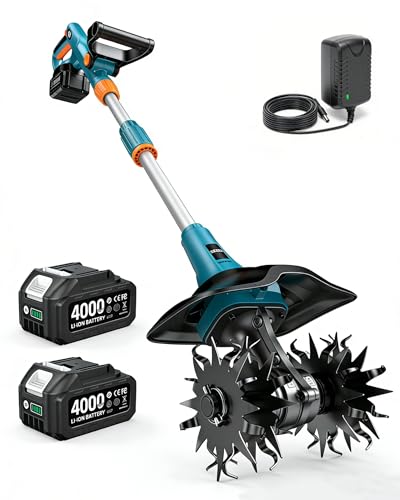
Seesii 20V Cordless Tiller Cultivator

Seesii Mini Cordless Tiller Cultivator 20V 2.6 lbs
The TaskStar mini tiller earns its place at the top of the list for sheer portability. At roughly 2.6 pounds, it weighs less than a bag of flour and runs on a 20V battery platform with two included 2.0Ah packs, so you can swap a fresh cell in mid-bed without hunting for an outlet. The 4-inch width and 4-inch working depth make it a natural fit for tight raised beds and narrow flower borders where a bigger cultivator would churn up more dirt than you want.
For most weekend gardeners dealing with loose topsoil and occasional weeds, this tool handles light cultivation without fatigue. It is built for one-handed use, which is rare in this category and helpful if you have wrist sensitivity. Compared with the Honda FG110, you trade raw torque for silent operation and zero fuel mixing.
Reasons It Performs
- 2.6-pound body is light enough for one-handed operation across long sessions
- Dual 20V 2.0Ah batteries keep a spare ready when the first cell runs low
- 4-inch width works cleanly between established plants without slicing roots
- Cordless design removes extension-cord tangles on patio gardens
- 300 RPM motor speed tackles compost mixing in a wheelbarrow or bed
Things To Consider
- Shallow 4-inch depth means repeat passes for deep soil work
- Compact size struggles in heavy clay or root-filled ground
- Battery runtime drops noticeably under dense, weedy patches
Feature Snapshot
Made For
Seniors, apartment gardeners, and anyone tending raised beds or small herb plots will find the light weight and short runtime the most comfortable match.
Look Elsewhere When
Anyone breaking new ground in heavy clay should reach for the Honda FG110 instead, since its gas engine handles compacted soil far more aggressively.
The Honda FG110 is the one gas mini tiller that has earned a long reputation among home growers. A 4-stroke Honda GX25 engine starts easily, runs on straight fuel rather than an oil mix, and powers patented hybrid tines that combine digging and cultivating action in a single pass. You give up the silent operation of the cordless picks above, but you gain the kind of torque that bites into packed ground without bogging down.
For homeowners with established beds, compacted lawn edges, or a serious patch of vegetable garden to refresh each spring, the FG110 is the most capable tool in this lineup. It is louder and heavier than the TaskStar, yet the trade shows up only when the soil gets tough. Compare it with the IncwBo corded tiller and you give up cord-free convenience, but you keep unlimited runtime as long as the fuel tank holds out.
Strengths Worth Knowing
- 4-stroke Honda GX25 engine delivers real digging torque in clay
- Hybrid tines alternate angles for digging and cultivating in one pass
- Unlimited runtime with a quick fuel top-up
- Reputation for long service life with basic maintenance
- Reliable cold-start behavior across spring and fall seasons
Trade Offs
- Noise and exhaust make it less friendly for early-morning yard work
- Heavier than any battery option in this lineup
- Periodic engine maintenance, including air filter checks and spark plug service, adds ownership steps
Right Fit For
Experienced home growers with mid-sized vegetable plots and tough native soil will get the most return from the FG110’s torque.
A Better Fit Elsewhere
Patio gardeners with only a couple of small raised beds should consider the TaskStar instead, since they will rarely need the Honda’s extra digging power.
The Saker 22V cordless tiller sits in a comfortable middle ground for shoppers stepping into powered cultivation for the first time. The 22V battery platform supplies enough torque for routine weeding and light bed prep without pushing into heavier clay. Cordless operation means you can carry it from a back porch to a side yard without thinking about where the nearest outlet lives.
For most beginners with a modest herb garden or a few annual flower beds, this pick avoids the intimidation factor of a gas engine. It is less powerful than the Honda FG110, yet lighter and easier to store. Compared with the TaskStar, you trade the 300-RPM motor speed for a slightly different battery platform, which may matter if you already own compatible tools.
The Good Stuff
- Cordless design removes extension-cord hassle on multi-bed gardens
- Lighter than gas models, easier to lift onto a workbench
- Quieter operation suits noise-sensitive neighborhoods
- Lower learning curve for first-time tiller owners
Points To Note
- Less torque than the Honda gas option for compacted ground
- Battery runtime can shorten under continuous heavy weeds
- Replacement batteries, when needed, add to long-term cost
Who It Suits Best
First-time tiller owners tending modest flower beds and herb gardens will find this Saker approachable and easy to store.
Consider Something Else When
Anyone facing a dense, root-filled patch of soil will get better results from the Honda FG110’s gas-powered bite.
The Muylux 20V cultivator leans on steel tines spinning up to 240 RPM to break up loose soil and shallow weeds. Two 2.0Ah batteries ship in the box alongside a charger, so you can start a session and finish it without waiting on a recharge. The 4-inch working depth suits backyard gardens, and the cordless design removes the worry about an extension cord snagging on plant markers.
For homeowners with a mid-sized yard and a mix of lawn edges and vegetable beds, this Muylux hits a comfortable middle spot. It does not match the Honda FG110’s torque in heavy clay, but it handles lighter weekly maintenance with little fuss. The steel tines are a notable step up from the plastic blades found on some entry-level cultivators in the same category.
Key Advantages
- Steel tines resist bending when they meet small rocks
- Two included batteries reduce downtime during longer sessions
- Cordless convenience suits garden plots away from the house
- 240 RPM motor is balanced for soil aeration tasks
A Few Limitations
- 4-inch depth is shallow for deep-rooted weed removal
- Compact footprint means more passes on larger plots
- Steel tines can dull faster in rocky soil without periodic checks
Spec Overview
Best Suited To
Homeowners with mixed lawn and vegetable beds who want reliable weekly tilling without engine noise will appreciate the Muylux balance.
Skip It When
Shoppers needing wider swaths for bigger plots will do better with the POGGT 21V cultivator and its 11.8-inch working width.
The POGGT 21V stands out in the cordless crowd with an 11.8-inch working width and dual 4.0Ah batteries that stretch runtime into genuinely usable territory. A 360 RPM motor speed is the highest in this battery-powered group, which helps when you face crusted soil or densely rooted perennial beds. The onboard power display lets you watch the battery level drain in real time, so you are not caught mid-row with a dead cell.
For gardeners working larger raised beds or tackling weekly maintenance across a sizable yard, the wider cut saves real time. Compare that with the TaskStar’s 4-inch width, and the productivity difference adds up quickly over a season. This is not a tool for tiny herb boxes, but it earns its slot for shoppers who treat tilling as a recurring chore rather than an annual event.
The Case For It
- 11.8-inch width covers larger beds with fewer passes
- Dual 4.0Ah batteries deliver extended runtime for weekly sessions
- 360 RPM motor speed handles crusted soil more confidently
- Onboard power display removes guesswork during work
Worth Bearing In Mind
- Wider body is harder to maneuver in very narrow borders
- Larger battery platform adds some heft versus lighter picks
- Higher power consumption per pass means shorter sessions under heavy weeds
Feature Rundown
Whose Shelf It Belongs On
Frequent gardeners maintaining large raised beds or weekly vegetable rows will appreciate the wider cut and longer runtime.
Reach For A Different Pick When
Anyone tilling a few small herb pots should consider the TaskStar, since the wider POGGT is overkill for narrow containers.
The IncwBo corded tiller trades battery freedom for steady, uninterrupted power from a standard outlet. A 12-inch working width and a 10.5-amp motor dig to roughly 8 inches deep, which is the deepest in this lineup. The corded design means you never stop to swap a battery, and the wider rotor covers serious ground on each pass.
For homeowners with a sizable garden plot within reach of an outdoor outlet, this IncwBo offers the kind of bite that battery picks in the same range cannot match. It is heavier than the POGGT and requires careful cord management around planted rows. Compared with the Honda FG110, you give up the gas engine’s portability but keep a quieter, lower-maintenance alternative.
Practical Pluses
- 12-inch rotor width covers wide beds with fewer passes
- 8-inch working depth reaches further than most battery picks
- Corded power delivers consistent torque without recharging
- Quieter operation than gas models for suburban neighborhoods
Less Ideal Details
- Requires an outdoor outlet and extension cord management
- Heavier than most cordless picks in this category
- Limited mobility away from the house or garage power source
Quick Facts
Who Should Grab It
Gardeners with sizable plots within reach of an outdoor outlet who want deep tilling without engine noise will value this IncwBo.
Where Another Pick Suits Better
Anyone working plots far from power should consider the POGGT 21V cultivator for its cordless mobility and similar width.
The Seesii 20V cultivator doubles as a tiller, cultivator, and soil mixer, so you can break ground, blend compost, and aerate beds with one tool. The 20V platform sits in the same battery family as many entry-level cordless yard tools, which is convenient if you already own a compatible charger. The compact body works well in raised beds and small kitchen gardens.
For gardeners who want one tool for several soil-prep tasks, this Seesii covers the routine cycle of spring loosening, mid-season compost mixing, and fall aeration. It is less aggressive than the Honda FG110 in heavy ground, yet quieter and easier to store. Compared with the Muylux, the Seesii leans toward flexibility over raw tine speed.
Useful Highlights
- Three-in-one design handles breaking, mixing, and aerating
- Cordless operation suits beds in any corner of the yard
- Compact body fits standard raised bed dimensions
- Quieter than gas options for noise-sensitive neighborhoods
Honest Caveats
- Multi-task design means each function is a compromise
- Less torque than gas alternatives in heavy clay
Perfect Match For
Gardeners wanting a single cordless tool that handles breaking, mixing, and aerating across mixed beds will appreciate the Seesii.
Swap It Out When
Anyone focused on frequent weekly tilling over large plots should pick the POGGT 21V cultivator instead, since its wider cut and longer runtime fit heavier schedules.
The Seesii Mini lands in the same featherweight category as the TaskStar, with a 2.6-pound body that anyone can lift with one hand. The 20V platform ships with two 2.0Ah batteries, so you can keep working while the spare charges. Compact dimensions mean it slips into a small closet or shed corner when the season ends.
For older gardeners, apartment patio growers, or anyone with limited storage space, this Seesii Mini trades power for pure ease of use. It is not a tool for breaking new ground, but it handles the steady maintenance work that keeps established beds productive. Compared with the Honda FG110, the Seesii Mini is a fraction of the weight, though it is also a fraction of the bite.
A Strong Showing
- 2.6-pound body suits seniors and one-handed operation
- Two included batteries keep a spare ready mid-session
- Cordless design works in tight patio gardens
- Compact footprint stores in small sheds or closets
Points To Keep In Mind
- Shallow bite limits use to loose soil and light weeding
- Not suited for compacted or root-heavy ground
At A Glance
Built With In Mind
Older gardeners, patio growers, and anyone with limited storage will find the Seesii Mini the easiest pick to lift and stash.
Another Choice May Suit
Anyone with mid-sized vegetable beds who needs deeper cultivation should consider the Honda FG110 instead.
What Matters Most When Choosing Mini-Garden Tillers
Power Source and Runtime
Cordless battery models keep you mobile across raised beds and patio gardens without managing an extension cord. Runtime hinges on battery capacity, where larger amp-hour (Ah) numbers stretch sessions, and on workload, since dense weeds drain cells faster than loose compost mixing. Corded electric tillers deliver steady torque but tether you to an outdoor outlet, which fits plots close to the house but limits reach. Gas models like the Honda FG110 run as long as the fuel lasts, yet demand regular engine maintenance.
Size and Working Width
A 4-inch working width slips between seedlings in narrow raised beds without tearing up established plants. Mid-range picks around 8 to 12 inches handle standard vegetable rows efficiently, and wider models cover ground faster on open plots. Depth matters too, and 4 inches is enough for routine bed prep, while 6 to 8 inches reaches deeper root zones for seasonal renewal.
Weight and Storage
Handheld cordless tillers around 2.6 pounds suit one-handed operation and tuck into small sheds. Larger cordless and corded options weigh more, which can fatigue shoulders during long sessions. Think about where the tool will live between uses, since storage weight and footprint affect how often you actually pull it out.
Key Considerations Across These Picks
Pitfalls Shoppers Hit
Choosing a tiller based on motor speed alone often backfires when the working depth and tine material cannot back up the RPM. Lightweight handheld picks also struggle in compacted or root-filled soil, so match the tool to your soil type rather than the headline spec. Battery platform compatibility matters for long-term ownership, since replacing cells across mismatched brands adds cost.
When Paying More Pays Off
Higher-tier picks in this category earn their keep with stronger motors, steel tines, and larger battery platforms that handle frequent weekly sessions. The Honda FG110 brings gas torque that battery picks cannot match, and the IncwBo corded model reaches deeper than most cordless alternatives. Spending up makes sense for gardeners who till regularly or face tougher native soil, while occasional light weeding is well-served by the lighter handheld picks.
