

You don’t need a backyard or a green thumb to keep fresh herbs alive through the colder months. A small countertop garden can put basil, lettuce, and cherry tomatoes within arm’s reach, even in a studio apartment with one dim window. The trick is picking a system that matches the space you actually have, the plants you actually want, and the amount of attention you’re willing to give.
The eight kits below cover the main flavors of indoor growing: app-connected smart gardens, no-frills starter rigs, and a DIY planter for hands-on tinkerers. Some lean toward twelve-pod productivity, others keep things small enough to live on a kitchen windowsill. Reading from top to bottom gives you the cleanest picture of where each one fits.
A Fast Comparison Of The Options

Ahopegarden 12-Pod Hydroponic Kit with LCD Control
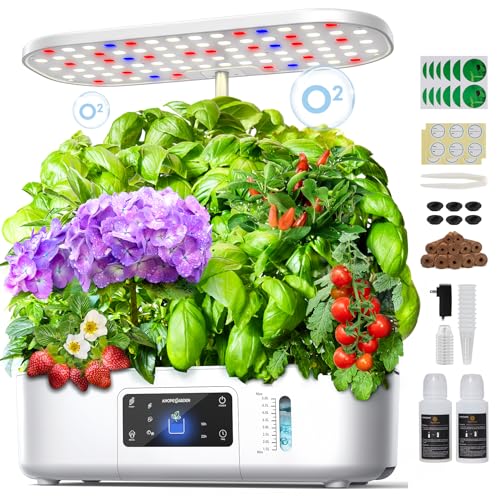
Ahopegarden 12-Pod Hydroponic System with Touch Panel

inBloom 12-Pod Indoor Garden with LED Grow Light

URUQ 8-Pod Hydroponic Growing System (Black)

URUQ 8-Pod Hydroponic Growing System (White)

Ahopegarden 12-Pod Kit with Temp & Humidity Monitor

Ahopegarden 12-Pod System with Smart Env. Detection

Aunifun DIY Self-Watering Hydroponic Grower Kit
Why These Options Stand Out
The first pick sets the tone for the rest of the list: a twelve-pod countertop garden with a touchscreen interface, a 17-inch vertical profile, and a full-spectrum LED panel designed to mimic the sun’s wavelengths. The ABS body keeps weight low, which matters more than you’d think once the unit is full of water and roots.
For tech-forward cooks, the LCD panel is the headline feature. You can adjust the light cycle without unplugging anything or remembering button combos. Compared to the inBloom model further down, this one trades a height-adjustable riser for a cleaner control surface, which suits anyone who treats their kitchen counter like a piece of furniture.
Where It Excels
- Twelve pods cover a full herb rotation, so you’re never stuck waiting on regrowth
- LCD touchscreen makes light scheduling visible at a glance, useful for forgetful waterers
- Full-spectrum LED panel covers the wavelengths leafy plants and seedlings actually use
- ABS shell stays light enough to move for cleaning without dragging the whole setup apart
- 17-inch profile leaves headroom under most upper cabinets, depending on shelf height
Things To Consider
- Twelve pods running at once means more nutrient solution changes than an eight-pod rig
- Owners commonly report the pump needs a quick rinse every few weeks to stay quiet
Who It Suits Best
Tech-forward home cooks who want a single dashboard for the whole garden and enough pod capacity to mix herbs with salad greens.
Where Another Pick Suits Better
The URUQ 8-Pod Hydroponic Growing System (Black) is a better fit for small kitchens where counter depth is tighter than width.
Sharing the same 17-inch footprint as the previous pick, this Ahopegarden unit keeps the touch interface but trims back to the essentials that first-time growers actually use. The full-spectrum panel is still integrated into the lid, which means seedlings and mature plants share one light source without swapping risers.
Beginners benefit most here because there’s nothing extra to learn. Where the LCD model ahead includes more visual feedback, this one leans on simple on-and-off touch logic. If you’re moving from a pot of basil on the windowsill to something more structured, this is the step that doesn’t require a manual.
Reasons It Performs
- Touch control reduces the button-counting that frustrates first-time users
- Twelve pods give beginners room to experiment without running out of space
- ABS construction is easy to wipe down after the inevitable water splash
- Integrated full-spectrum panel removes the guesswork of positioning a separate light
Honest Caveats
- Touch panels can be slow to respond when the surface is damp from misting
- Seeds and nutrients are sold separately, a small add-on cost often overlooked
- No temperature or humidity feedback, which matters for anyone growing finicky herbs
Made For
First-time indoor gardeners who want a forgiving setup with enough pods to learn what grows well in their space.
Swap It Out When
The Ahopegarden 12-Pod Kit with Temp & Humidity Monitor is a better fit once you’ve outgrown the basics and want real numbers on your climate.
This inBloom system keeps the twelve-pod count but swaps a fixed panel for an adjustable grow light on a riser. A 4.2-liter reservoir sits underneath, which is meaningfully larger than most compact kits and means fewer fill-ups during a busy week.
Multi-variety growers benefit most here because the height adjustment lets you stack lettuces under taller basil or dill in the same tray. Compared to the URUQ models below, this one prioritizes capacity over footprint, so it works better in a kitchen with a deeper counter than a narrow windowsill.
Well-Handled Touches
- Height-adjustable light accommodates everything from seedlings to mature leafy herbs
- 4.2L reservoir cuts refill trips roughly in half compared to smaller eight-pod kits
- Twelve planting stations support a real herb-and-greens rotation for one or two people
- Pod kit is included so you can plant on day one without a separate accessory run
Points To Keep In Mind
- The taller light post needs vertical clearance that some upper cabinets don’t allow
- Seeds aren’t included, so plan a starter pack alongside the unit
Key Product Details
Best Suited To
Multi-variety herb growers who want adjustable clearance and a reservoir they don’t have to top off constantly.
Reach For A Different Pick When
The URUQ 8-Pod Hydroponic Growing System (White) is a better match for narrow windowsills where depth matters more than pod count.
URUQ’s black eight-pod kit trades capacity for a tighter footprint and a 180-degree adjustable LED arm that pivots out of the way when you’re harvesting or wiping the counter. A 24-watt panel sits at the end of that arm, which is enough output for a steady rotation of basil, parsley, and lettuce.
Small-kitchen dwellers benefit most because the unit slips into corners where a twelve-pod garden would feel cramped. Compared to the Ahopegarden LCD kit at the top, this one skips the touchscreen in favor of simple on-board controls and a lighter learning curve.
Features That Help
- 180-degree light rotation lets the panel sit flat for shorter plants and angled for taller herbs
- 21-inch maximum height covers most kitchen cabinets and shelf clearances
- Eight pods keep nutrient solution changes manageable for casual growers
- Compact body fits windowsills and narrow counters where larger kits won’t sit
Trade Offs
- Eight pods means you’ll run out of space faster with mixed planting
- The pivoting arm needs clearance behind the unit to swing freely
- Owners commonly report the included sponge inserts dry out quickly in dry winter air
Perfect Match For
Small-kitchen dwellers and dorm residents who need a kit that disappears into a corner when not in use.
Not Your Match When
The Ahopegarden 12-Pod Kit with LCD Control is a better fit if you want more pods and a touchscreen in roughly the same footprint category.
Same eight-pod URUQ body as the previous pick, only swapped into a white shell that reads lighter on the counter. The 24-watt LED arm and 21-inch maximum reach stay unchanged, so the growing experience is identical and the difference comes down to finish and room aesthetic.
Minimalist setups benefit most from the white version because it disappears against pale backsplashes and bright counters. Compared to the black variant, this one shows mineral residue from hard water more readily, which is worth weighing depending on your local supply.
Positive Takeaways
- White finish blends into bright, modern kitchens and lighter countertops
- 180-degree adjustable LED arm supports herbs at multiple growth stages
- Eight-pod layout keeps daily care under ten minutes for most routines
- Compact footprint suits rental kitchens where counter real estate is limited
Worth Bearing In Mind
- White surfaces show water spots and mineral haze more than the black variant
- Same eight-pod cap as the black model, so plan your rotation accordingly
Quick Facts
Right Fit For
Minimalist countertop growers who want the same compact URUQ body in a finish that matches lighter kitchen palettes.
Where Another Pick Suits Better
The inBloom 12-Pod Indoor Garden is the better call if pod count matters more than the size of the LED arm.
This Ahopegarden model adds the one thing most countertop gardens skip: a built-in temperature and humidity sensor that displays real readings rather than relying on ambient guesswork. The LED panel runs a 16-hour-on, 8-hour-off cycle that mimics daylight hours without needing a timer plug.
Data-driven plant parents benefit most because the readout helps explain why basil bolts in winter or why seedlings stretch toward the panel. Compared to the touch-panel Ahopegarden earlier, this one trades simplicity for visibility into the growing environment.
Good Reasons To Consider
- Built-in temperature and humidity readouts replace the sticker hygrometer habit
- Sixteen-hour light cycle automates the schedule most herbs respond to indoors
- Twelve-pod layout supports a real rotation of herbs and salad greens
- Soilless design keeps cleanup contained to the reservoir and pod inserts
Soft Spots
- Sensor accuracy depends on placement; keep the unit away from oven or window drafts
- Reservoir access requires lifting the pod tray, which gets heavier as roots fill in
Who Should Grab It
Data-driven plant parents who want climate numbers on the unit itself rather than juggling a separate thermometer.
Look Elsewhere When
The Ahopegarden 12-Pod System with Smart Env. Detection is the better pick if you want environmental feedback that adjusts the system automatically.
This Ahopegarden iteration layers environmental detection on top of the standard twelve-pod kit, so the panel reacts to room conditions rather than running a fixed schedule. For growers who forget to adjust settings seasonally, that’s a real time-saver during winter heating months.
Set-and-forget growers benefit most because the system handles the timing math that otherwise requires manual tweaking. Compared to the temperature-and-humidity model above, this one focuses on detection that drives adjustments rather than just displaying numbers on screen.
The Case For It
- Environmental detection adjusts light behavior as room conditions shift through the year
- Sixteen-hour light cycle remains the baseline during stable indoor conditions
- Twelve pods offer the same planting headroom as the simpler Ahopegarden kits
- Compact body keeps counter footprint reasonable for one- or two-person households
Less-Strong Areas
- Smart features need power at all times, so outlet placement matters more than with dumb units
- Detection logic can overreact near heating vents, which forces repositioning
- Pods and seeds ship separately, so first-day planting still needs an accessory order
Feature Overview
Whose Shelf It Belongs On
Set-and-forget growers who travel often and want the kit to handle seasonal adjustments without manual resets.
A Better Fit Elsewhere
The URUQ 8-Pod Hydroponic Growing System (Black) suits tighter budgets and smaller counters better.
This kit breaks the mold on the rest of the list. Instead of a self-contained smart garden, you get a PVC planting box, six planting baskets with sponges, an aquarium-style air pump, a bubble stone, a check valve, and a buoy. You supply the container, the seeds, and the patience to set it up.
Experimenters and hobbyists benefit most because the kit rewards a hands-on approach. Compared to the Ahopegarden kits up top, this one assumes you already understand how a basic air-driven hydroponic loop works, which means a steeper entry but a much lower ongoing cost.
Positive Points
- Air pump and bubble stone create oxygenated water that roots respond to quickly
- PVC-U construction resists water damage in ways wooden frames do not
- Includes six baskets and sponges so a starter crop fits without buying extras
- Compact 28 by 19 centimeter box fits on shelves and unused counter edges
Potential Drawbacks
- No grow light included, which means adding a separate panel for indoor setups
- Setup requires basic plumbing comfort; first-timers may need to watch a tutorial
- Buoy-based water level reading is less precise than digital reservoir gauges
- Air pump noise tends to be more noticeable than silent submersible alternatives
The Key Facts
Built With In Mind
Experimenters and hobbyists who enjoy building their own setup and don’t mind sourcing a grow light separately.
Skip It When
The Ahopegarden 12-Pod System with Touch Panel is the better pick for anyone who wants a turnkey garden without the assembly step.
What To Weigh Before Picking Your Mini-Hydroponic System
Pod Count Versus Footprint
Twelve-pod kits like the Ahopegarden and inBloom models cover more variety, but they also demand more counter depth and more frequent reservoir refills. Eight-pod kits, especially the URUQ pair, fit narrower spaces without sacrificing light coverage, and they’re easier to rotate through without gaps. Runners logging long hours away from home benefit most from smaller reservoirs, since a quick weekly refill is more realistic than chasing a thirsty twelve-pod garden.
Light Output And Adjustability
A fixed-height panel works fine for short crops like lettuce and basil, but anything taller, like dill or cherry tomatoes, benefits from an adjustable arm or riser. Full-spectrum LEDs (lights engineered to cover the wavelengths plants use for photosynthesis) cover the wavelengths most herbs and greens need without specialized bulbs. If you’re growing in a dim corner rather than near a window, prioritize adjustable height so you can keep the panel close to the canopy without burning leaves.
Smart Features Worth The Extra
Touchscreens, environmental sensors, and auto-adjusting panels all add convenience, but they also add points of failure. Beginners usually do fine with a simple on-off light cycle, while experienced indoor gardeners tend to value humidity and temperature readouts once they’ve had a crop bolt or stretch unexpectedly. Match the tech to your actual attention span rather than the spec sheet.
Maintenance Realities
Every hydroponic kit on this list needs a reservoir rinse and a nutrient refresh on a regular schedule. Pumps tend to accumulate mineral residue in hard-water areas, and sponges dry out between plantings. Pick a unit you can actually lift and clean without disassembling the whole setup, especially if you live alone or share kitchen duties with a roommate.
Key Considerations Across These Picks
Mistakes Worth Dodging
The most common slip is buying a twelve-pod kit for a counter that only fits eight pods comfortably, then losing half the usable space to overhang. Another pitfall is skipping the seed and nutrient starter pack, which delays first-day planting by a week while parts ship separately. Measure your counter depth, confirm your outlet placement, and order consumables at the same time as the kit.
Where The Extra Money Goes
Stepping up to the smart Ahopegarden variants gets you environmental sensors and automatic adjustments, but the underlying pump and panel hardware stays close to the simpler kits. The premium goes into the electronics and software, not the growing capacity. Higher spend makes sense once you already know what you want to grow and need the system to react to a real indoor climate. For most beginners, the touch-panel Ahopegarden or the URUQ pair delivers the same growing results without the markup.
Frequently Asked Questions
How Often Do Mini-Hydroponic Systems Need Refilling?
Most countertop kits with a 2 to 5 liter reservoir need water and nutrient top-ups every one to two weeks, depending on plant load and room temperature. Eight-pod kits tend to stretch closer to the two-week mark, while a fully planted twelve-pod garden in a warm kitchen may need attention weekly.
Do I Need A Special Light Or Will A Window Suffice?
A south-facing window with several hours of direct sun can support lettuce and basil, but most growers find a full-spectrum LED panel produces more consistent results year-round. Window-only setups tend to slow down significantly in winter, while a kit with its own light stays on schedule regardless of season.
Can I Grow Fruiting Plants Like Tomatoes Indoors?
Cherry tomatoes and small peppers are possible, but they need taller light clearance and a sturdier support than most countertop kits offer. Herbs, salad greens, and microgreens are the realistic sweet spot for the eight- and twelve-pod systems in this list.
Are Seeds Included With These Kits?
Most kits include the growing baskets, sponges, and domes, but seeds and nutrient solution are usually sold separately. Plan a starter pack alongside the unit so you can plant on day one rather than waiting for a second shipment.
How Long Until I Can Harvest?
Leafy greens like lettuce and basil are typically ready to start cutting within three to four weeks under a full-spectrum LED on the standard 16-hour cycle. Hardier herbs such as rosemary take longer to establish, so expect a few months before meaningful harvests on those.
Closing Remarks
A mini-hydroponic system works best when it matches the space, the plants, and the routine you already have, not the spec sheet you’re hoping for. The right kit is the one you’ll actually refill on schedule, so prioritize footprint and ease of cleaning before chasing extra pods or smart features. Start small, learn what your kitchen’s light and humidity can support, and upgrade once you know which crops earn their keep.
