

A fresh ridge of soil across the lawn or a half-wilted tomato plant yanked underground is a frustrating sight for any homeowner. Burrowing pests work quietly, and by the time tunnels surface, the damage is already done. The right deterrent, applied early and matched to your soil and yard size, keeps moles, voles, and gophers moving on before your grass pays the price. This roundup covers eight options worth knowing about, from castor-oil sprays to granular blends and longer-lasting pack placements.
An Overview Of The Picks

Bonide MoleMax Mole & Vole Repellent, 32 oz Ready-to-Spray

LEBMP Mole Repellent Outdoor 8-Piece Pack

LEBMP Mole Repellent Outdoor 10-Piece Pack
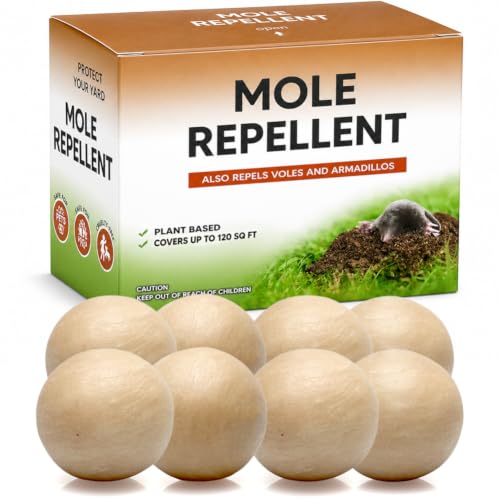
KQCWKH Mole Repellent Outdoor 8P
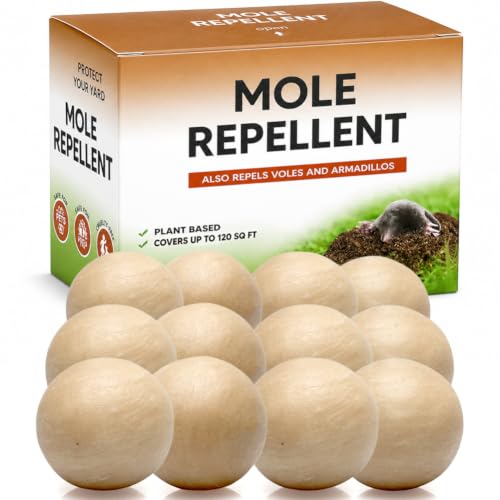
KQCWKH Mole Repellent Outdoor 12P
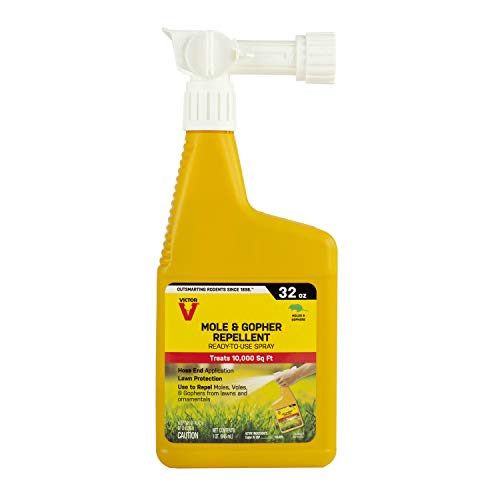
Victor Mole and Gopher Repellent Spray, 32 fl oz

EPIC Repellents Mole Scram 22lb Bucket

Victor M7001-1 Mole & Gopher Repellent, 64 oz
More On The Choices That Made The List
Hose-end bottles are the easiest entry point for most homeowners, and Bonide MoleMax is one of the long-running names in that lane. The 32-ounce ready-to-spray format attaches directly to a standard garden hose, so coverage comes down to how far you’re willing to walk. Castor oil is the active component, working through the soil to make treated zones uncomfortable for moles, voles, gophers, and the usual supporting cast of burrowing pests.
For an average suburban yard in the range of a few thousand square feet, the bottle covers without constant refilling. It plays nicely with flower beds and around ornamental plants when used as directed, which matters if you’ve invested in landscaping you don’t want to scorch. Owners commonly report reapplying after heavy rain or every few weeks during peak digging season.
Useful Highlights
- Ready-to-spray hose-end bottle removes mixing and measuring steps
- Targets moles, voles, gophers, armadillos, rabbits, and ground squirrels in one pass
- Castor-oil base is generally safe around established flower beds
- Lightweight enough for older homeowners to handle without strain
Things To Consider
- Reapplication after heavy rain is the norm, which adds to yearly upkeep
- Coverage claims vary with water pressure and walking speed
- Castor-oil smell can linger briefly after application
Quick Facts
Right Fit For
First-time shoppers with a typical suburban lawn who want a low-commitment, no-mix way to test whether castor-oil deterrents work on their soil.
Reach For A Different Pick When
Your yard runs an acre or more and you don’t want to refill often, in which case the EPIC Repellents Mole Scram 22lb Bucket is a stronger fit.
Pack-style repellents trade wide spray coverage for targeted placement, and the LEBMP 8-piece set is a tidy starter. Each pack gets dropped near active tunnels or root zones, releasing scent-based deterrents into the surrounding soil. The format makes sense for homeowners who know exactly where the damage is happening rather than blanketing the whole yard.
Coverage per placement runs around 120 square feet, so spacing matters. Place them at tunnel entrances, along known runs, and around prized shrubs rather than scattering randomly. Because the formula uses natural ingredients and is exempt under FIFRA 25(b), it skips EPA registration, which simplifies household storage around kids and pets.
Strengths Worth Knowing
- Targeted placement suits yards with clear damage hotspots
- Natural-ingredient formula exempts it from EPA registration requirements
- No mixing or spraying, drop in and walk away
Trade-Offs
- Eight packs cover a limited footprint, so larger yards need multiple boxes
- Placement matters: random scattering wastes product and underperforms
- Results depend on accurately identifying where tunnels are active
Built With In Mind
Homeowners with a small yard, a couple of obvious tunnel runs, or a fenced garden who want a no-spray, no-mess approach to mole control.
Consider Something Else When
Damage is spread across a wide lawn without clear hotspots, in which case the Bonide MoleMax ready-to-spray covers open ground more efficiently.
The 10-piece version of the same LEBMP formula gives you two extra placements for slightly broader coverage without jumping to a different product line. For a mid-size yard with several known trouble spots, those extra packs can be the difference between treating a perimeter and missing the corners where tunnels reappear.
Same FIFRA 25(b) exemption as the 8-pack, same per-placement coverage, same natural-ingredient approach. The pitch is simple: more placements, more reach, same handling. Storage stays minimal since the packs are small, and there’s no spray equipment to clean afterward.
Real-World Strengths
- Two extra packs bridge the gap for medium yards without buying a second box
- Same low-fuss placement logic as the 8-pack version
- Natural-ingredient profile keeps storage simple
- Works alongside flower beds and landscaped areas without specialized gear
Worth Noting
- Still relies on accurate tunnel identification to perform well
- Performance can taper in saturated soil after extended rain
Who Should Grab It
Shoppers who liked the LEBMP 8-pack concept but want a little more reach for a yard that falls between small and large.
Where Another Pick Suits Better
Tunnel damage is widespread rather than concentrated, in which case the KQCWKH 12P offers still more placements at a comparable approach.
KQCWKH enters the pack-format category with the same simple premise: drop, leave, and let the placement do the work. The 8-pack is sized for smaller yards or first-time trials, where committing to a 12-pack feels like a leap. Target pests stretch across moles, gophers, voles, groundhogs, armadillos, and skunks, covering most of the burrowing crowd in one product.
Each placement runs up to about three months before needing replacement, so a single application covers a meaningful chunk of the active season. Owners commonly pair placements along fence lines, near shed foundations, and around prized plantings where damage tends to start.
The Upside
- Multi-month per-placement duration reduces how often you walk the yard
- Broad pest coverage handles mixed infestations
- FIFRA 25(b) exempt formula simplifies storage and handling
Honest Caveats
- Eight placements go quickly on anything larger than a small yard
- Performance hinges on placing them where moles actually travel
- Heavily compacted or rocky soil can limit scent dispersal
Feature Snapshot
Best Suited To
Homeowners new to pack-style repellents who want a low-commitment 8-pack to test results before sizing up.
Skip It When
Tunnel activity is spread across a large lot and you need broader reach, in which case the KQCWKH 12P or the EPIC Repellents Mole Scram 22lb Bucket fits better.
The 12-pack version of KQCWKH trades the trial-size approach for broader placement coverage, which suits yards where damage keeps popping up in new spots. Twelve placements let you line fence perimeters, surround garden beds, and still leave spares for the corners where moles love to hide.
Same per-placement longevity, roughly three months, and the same natural-ingredient profile as the 8-pack. For homeowners who already know the territory and want to treat it more thoroughly without buying two boxes, the 12P is the logical step up.
Noteworthy Benefits
- Twelve placements let you treat perimeter and interior zones in one buy
- Three-month per-placement duration covers most of an active season
- Natural-ingredient formula keeps storage simple
Points To Keep In Mind
- Heavier initial buy than trial packs, so commit once you’ve confirmed placement strategy works
- Scent dispersal may be uneven in dense clay or rocky soil
- Heavy rain periods can shorten effective duration
Who Will Love This
Homeowners with mid-to-large yards who already understand placement strategy and want to treat a wider area without piecing together multiple smaller packs.
Not Your Match When
Damage is contained to one corner and you want a smaller, cheaper trial, in which case the KQCWKH 8P is a smarter first step.
Victor leans hard into simplicity with a one-bottle, one-ingredient approach: 100% castor oil. For shoppers who want to avoid blends they can’t pronounce, that’s a meaningful signal. The 32-fluid-ounce hose-end bottle covers up to about 10,000 square feet per fill, which suits an average yard in a single pass.
Spray coverage is fast, the application is intuitive, and the natural base keeps the product compatible with lawns, gardens, and ornamental beds when used as directed. Compared to Bonide’s MoleMax, the formula is single-ingredient rather than blended, which some homeowners prefer for transparency.
Where It Delivers
- Single-ingredient castor oil simplifies what you’re actually applying
- Up to 10,000 square feet of coverage per bottle for medium yards
- Hose-end format removes mixing and equipment cleanup
- Targets moles, gophers, voles, and armadillos in one application
Room For Improvement
- Single-ingredient formula may need more frequent reapplication than multi-ingredient sprays
- Coverage varies with hose pressure and walking pace
- Reapplication after rain is part of normal upkeep
Feature Card
Perfect Match For
Homeowners who want a transparent, single-ingredient castor-oil spray and prefer straightforward labeling over proprietary blends.
A Better Fit Elsewhere
You want a multi-ingredient formula or built-in rainfast additives, in which case the Bonide MoleMax ready-to-spray offers a broader blend.
For larger properties and serious infestations, granular repellents in bulk format earn their keep. The EPIC Repellents Mole Scram arrives in a 22-pound bucket, sized for acreage or commercial-scale landscaping. The all-natural, biodegradable granular base spreads by hand or with a broadcast spreader across wide lawn areas.
The pitch is straightforward: scatter, water in, and let the soil carry the scent down into the tunnel network. Compared to spray or pack formats earlier in this list, the granular approach trades precision for scale, which is exactly what big yards need.
Advantages To Know
- 22-pound bucket handles acreage without frequent refills
- All-natural, biodegradable granular base suits eco-minded owners
- Works with a standard broadcast spreader for fast application
- Not formulated to be offensive or dangerous to humans when used as directed
Practical Considerations
- Bulk format requires storage space in a shed or garage
- Granular application needs watering-in for full effect, so dry stretches matter
- Overkill for small urban lots where a spray bottle would suffice
Right Fit For
Owners of larger rural or suburban properties, professional landscapers, and anyone managing persistent infestations across wide ground.
Look Elsewhere When
You’re working with a small city lot and want something quicker to apply, in which case the Victor 32 fl oz hose-end spray is a better size match.
The 64-ounce Victor M7001-1 closes the list with a dual-action castor-oil formula targeting moles, gophers, voles, and armadillos. Coverage reaches up to about 4,000 square feet per bag, sitting between the smaller 32-ounce spray and the bulk 22-pound bucket, which makes it a useful middle option for larger suburban lots.
Compared to the smaller Victor spray earlier in this roundup, the M7001-1 uses a different delivery form that suits repeat-application yards where you want to refresh treatment through the season without committing to a 22-pound bucket.
Everyday Perks
- Dual-action formula targets burrowing pests through scent and soil contact
- Covers up to about 4,000 square feet, suiting larger suburban lots
- Castor-oil base applies safely on lawns and gardens as directed
- Sized for repeat seasonal application without bulk storage commitment
Soft Spots
- Coverage estimate assumes typical soil conditions; clay-heavy lots may need more
- Repeated applications are part of the routine during peak activity months
- Smaller footprint than bulk options means refilling mid-season on bigger lots
Feature Snapshot
Who It Suits Best
Homeowners with mid-size to large suburban lots who want repeat treatments through the season without jumping to a 22-pound professional bucket.
Swap It Out When
Your property stretches beyond a typical suburban lot, where the EPIC Repellents Mole Scram 22lb Bucket’s bulk format saves trips to restock.
Picking The Right Mole Deterrent For Your Yard
The category breaks into three main formats: castor-oil sprays for broad hose-end coverage, pack-style placements for targeted tunnel work, and granular blends for wide-acreage or professional-scale use. Match format to yard size first, because picking the wrong scale is the fastest path to disappointment.
Soil type quietly shapes performance. Sandy and loamy soils carry castor-oil scent down through tunnel networks more reliably than dense clay, where compaction slows dispersal. If your yard is heavy clay, expect more frequent reapplication or lean toward pack placements near active tunnels where you know scent can reach the runners.
Reapplication rhythm matters more than first impressions. Most castor-oil products wash through or break down over a few weeks, especially after rain. Sprays typically need refreshing every two to four weeks during peak activity, while pack placements and some granular products stretch to two or three months per application. Build that maintenance window into your decision, because a product you forget to reapply isn’t doing any work.
Pet and kid households should weigh regulatory status. Several natural-ingredient options on this list are exempt under FIFRA 25(b), meaning they’re formulated without EPA-registered pesticides. That exemption isn’t a safety endorsement on its own, but it does signal a simpler ingredient profile that cautious households often prefer.
What Separates The Options That Made This List
Where Shoppers Go Wrong
The most common slip is buying a small spray bottle for an acre-plus yard and expecting full coverage. A 32-ounce bottle that handles 5,000 to 10,000 square feet runs out fast on real acreage, and partial coverage lets moles simply relocate rather than leave. Match format to yard size first, then to pest type.
Another frequent miss is placing pack-style repellents randomly rather than at active tunnel entrances. Without placement accuracy, scent dispersal is wasted. Walk the yard first, identify fresh ridges and visible holes, then drop packs there rather than scattering evenly.
What The Higher Tier Buys
Stepping up to the 22-pound granular bucket buys scale, not magic. You’re paying for fewer refill trips, broader coverage per application, and a format that suits professional or acreage use. For an average suburban lot under 10,000 square feet, the smaller sprays and pack formats do the same job without the storage commitment.
Dual-action formulas like the Victor M7001-1 add a second sensory cue to the standard castor-oil approach, which can matter in yards where moles have stuck around through single-ingredient treatments. The honest read is that for most homeowners, the basic castor-oil options work fine first; the upgrade earns its keep on stubborn infestations or larger lots.
Frequently Asked Questions
How long does it take for mole repellent to start working?
Most castor-oil-based treatments begin showing reduced tunnel activity within one to two weeks of consistent application, though exact timing depends on soil type and weather. Rain can shorten effectiveness, so reapplying after heavy storms is common practice.
Are natural-ingredient repellents as effective as stronger formulas?
For many homeowners, yes. Options exempt under FIFRA 25(b) use natural ingredients and rely on castor oil and similar compounds to make soil unpleasant for burrowing pests. Severe infestations on larger properties sometimes need more aggressive or repeated treatment to fully resolve.
Can I use mole repellent around vegetable gardens?
Several products on this list are designed to be safe around lawns and gardens when used as directed, including flower beds and ornamental plantings. Always follow the label guidance for any edible plants, since concentration and reapplication intervals can differ from lawn use.
Do I need to reapply after rain?
Yes, in most cases. Castor-oil-based treatments can wash through or dilute during heavy rain, so reapplication after storms is standard practice. Pack-style placements and granular products typically hold up longer than spray formats under wet conditions.
Will repellent solve the problem permanently?
Reliable results depend on consistent application and matching the product to your yard size and pest pressure. Repellents discourage activity rather than eliminate the underlying population, so ongoing maintenance through the active season is usually part of the routine.
Wrap Up
The best mole repellent for your yard comes down to scale, soil, and how much upkeep you’re willing to take on. Small urban lots do well with pack placements or a 32-ounce spray, mid-size properties benefit from a repeat-application format like the Victor M7001-1, and anything approaching acreage earns its keep with a bulk granular bucket. Start by matching format to yard size, apply early in the season before tunnels spread, and refresh after heavy rain to keep the pressure on through peak digging months.
