

Replacing a mower blade is one of those maintenance chores that quietly changes how your lawn looks, yet most people grab whatever fits and move on. The right blade, matched to your deck size and grass type, sharpens cut quality, reduces clumping, and keeps clippings moving smoothly. These eight picks cover everything from residential walk-behinds to commercial zero-turns, so you can match your machine and mowing style without guesswork.
The Main Contenders

Grasscool 21″ Deck Troy Bilt Mulching Blades 942-0741A

Oregon 91-626 Blades for 61″ Scag, Ferris, Simplicity

MaxPower 561139B 3-Blade Set for 60″ Exmark

MaxPower 561746B USA Made 3-Blade Set

ZALANA 42″ Deck High Lift Blades 2-Pack

Chway 942-0741A 21″ Mulching Blade
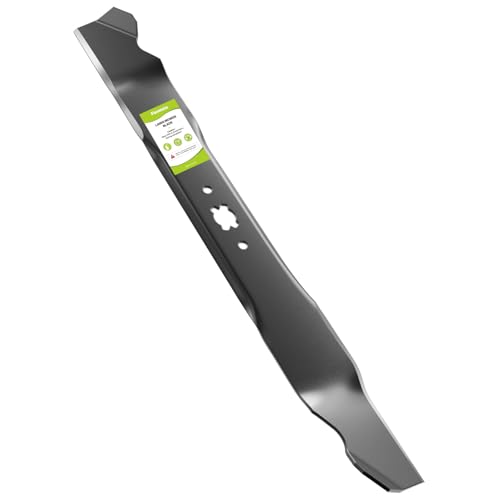
Fismiuta 21″ Mulching Blade for MTD Mowers

GICOOL 942-0741A Mulching Mower Blade
Inside Each Recommended Option
Walk-behind owners running a Troy-Bilt TB110, TB130, or TB230 know the frustration of a dull, ragged cut, especially in spring growth. This Grasscool set targets the common 21-inch residential deck and cross-references a long list of MTD, Cub Cadet, and Craftsman part codes. The design favors mulching, so clippings recirculate under the deck and drop back into the turf as fine organic matter.
For most suburban lots cut weekly, the fitment coverage and OEM-equivalent profile make it a low-friction swap. You get back to a cleaner finish without hunting down a dealer-only part.
Points In Its Favor
- Wide Troy-Bilt model coverage spanning TB110 through TB360 walk-behinds.
- Mulching geometry that breaks clippings into smaller pieces for faster turf breakdown.
- Drop-in replacement for several OEM part numbers including 942-0741A and 742-0741A.
- Useful for households running multiple MTD-family machines that share the same blade profile.
Things To Consider
- Single-blade pack, so two-blade decks require a second purchase to fully refresh the cut.
- Mulching blades tend to bog down in tall, wet grass, so mowing frequency matters.
Made For
Troy-Bilt walk-behind owners with a 21-inch deck who want a clean mulching cut on a typical suburban lawn.
Look Elsewhere When
Your machine runs a 60 or 61-inch commercial deck, in which case the Oregon 91-626 set covers that fitment.
Commercial mowing crews burning through acreage on 61-inch Scag, Ferris, or Simplicity decks know that blade stock matters. Oregon’s 91-626 ships as a six-pack built around a 21-inch blade length, 2.50-inch width, and 0.203-inch thickness, dimensions tuned for heavy-duty zero-turn duty. The thicker stock resists flexing under high-RPM engagement, which matters when blades hit hidden roots or sprinkler heads.
Where the Grasscool set earlier in this list handles a 21-inch residential deck, this Oregon option steps up to fleet-scale replacement. The six-pack quantity also matches typical three-blade commercial decks that rotate spares between cuts.
Positive Takeaways
- Six-blade pack supports a full three-blade deck refresh plus rotation spares.
- 0.203-inch thickness adds durability over thinner residential blades.
- Direct fitment for Scag 48111, Ferris 5020842, and Simplicity 5022808ASM part codes.
- Engineered for sustained commercial mowing cycles.
Points To Note
- Overkill for a homeowner with one walk-behind mower.
- Storage matters; six 21-inch blades need a dry, hung spot to prevent rust.
Feature Card
Who It Suits Best
Lawn-care professionals and property managers running 61-inch zero-turn mowers who need dependable OEM-spec replacements.
Skip It When
You only need a single residential walk-behind blade, where the Chway 942-0741A is a simpler match.
Exmark owners chasing OEM fit without the dealer price tag lean toward MaxPower’s heavy-duty set. The 561139B ships as a three-blade pack built for 60-inch cut machines, replacing OEM numbers 103-6403, 103-6403-S, and 140-1240 across Laser Z, Laser HP, Quest, Pioneer, and Ultra Cut families. The center hole pattern and length line up to keep deck balance intact.
Compared to the Oregon 91-626 covered earlier, this MaxPower set targets a specific Exmark fitment rather than a multi-brand commercial spread. USA-made steel is the headline claim, which appeals to shoppers who prioritize domestic manufacturing in replacement wear parts.
Real-World Strengths
- Direct replacement across the Exmark 60-inch commercial lineup.
- Three-blade set matches standard zero-turn spindle configuration.
- USA-made construction for shoppers tracking origin.
- OEM-spec dimensions reduce vibration and spindle wear.
Worth Noting
- Specific to Exmark fitment, so it won’t help a Scag or Ferris operator.
- Heavy-duty stock requires a torque wrench for safe reinstallation.
Right Fit For
Exmark zero-turn owners with a 60-inch deck who want OEM-comparable blades without visiting a dealer.
Consider Something Else When
Your fleet runs Scag or Ferris 61-inch decks, where the Oregon 91-626 set is the better fit.
Residential riders with a 21-inch cutting deck on a Craftsman, Husqvarna, or Poulan machine often need a straightforward OEM replacement. MaxPower’s 561746B ships three blades built to meet or exceed OEM specs, replacing part numbers 539113312 and 510417901. The five-point star center hole is a common Craftsman pattern, simplifying the swap.
The Grasscool mulching set reviewed first covers walk-behind fitment, while this MaxPower option steps into the residential rider category. USA-made steel is the consistent theme across MaxPower’s lineup, useful for shoppers tracking part origin.
Strengths Worth Knowing
- Three-blade pack matches typical residential rider decks.
- Direct OEM cross-reference for Craftsman, Husqvarna, and Poulan part codes.
- USA-made steel construction.
- Standardized blade length of 21 inches suits common mid-size riders.
Trade Offs
- OEM-spec replacement, not a high-lift upgrade.
- Five-point star center hole limits fitment to specific rider models.
Feature Card
Built With In Mind
Homeowners with a 21-inch Craftsman, Husqvarna, or Poulan rider needing a clean OEM-style blade swap.
Reach For A Different Pick When
Your mower is a 42-inch Cub Cadet XT1, where the ZALANA high-lift pair is the better match.
Bagging clippings cleanly from a 42-inch deck requires airflow, and high-lift blades generate exactly that. ZALANA’s two-pack targets Cub Cadet XT1-LT42 and XT2-LX42 riders, plus Craftsman LT1500 and Troy-Bilt Bronco machines using the same 942-04308 part family. Blade length lands at 21-1/4 inches with a 6-point star center hole.
Compared to the MaxPower 561746B reviewed earlier, this ZALANA set prioritizes lift and discharge over OEM-spec neutrality. Bagging performance improves noticeably when the extra sail area pulls clippings up and into the bag.
The Good Stuff
- High-lift sail design improves bagging efficiency in thick spring grass.
- Two-pack matches a 42-inch twin-blade rider deck.
- Cross-reference includes 942-04308, 942-04312, and Toro 112-0315.
- Direct fitment for Cub Cadet XT1 and XT2 series riders.
Minor Gripes
- High-lift geometry uses more engine torque, noticeable on smaller engines.
- Two-pack leaves a partial inventory for a second deck swap.
Feature Card
Best Suited To
Cub Cadet XT1-LT42 or Troy-Bilt Bronco owners who bag clippings regularly and want stronger deck vacuum.
A Better Fit Elsewhere
If you side-discharge or mulch a flat lot, the MaxPower 561746B set offers a calmer OEM-style cut.
Anyone sharpening or replacing a single blade on a Troy-Bilt or MTD walk-behind will appreciate the simplicity of Chway’s offering. The 942-0741A cross-reference covers the same MTD, Cub Cadet, and Craftsman family as the Grasscool set reviewed first, packaged as a single blade for shoppers who only need one at a time.
The honest read here is straightforward: this is a no-frills replacement for the homeowner who knows their model number and wants a single mulching blade on hand. You skip the multi-pack markup and keep the other spindle for later.
Good Reasons To Consider
- Single-blade pack keeps cost down for one-off replacements.
- Direct OEM cross-reference for 942-0741A and 742-0741A part codes.
- Compatible with the Troy-Bilt TB110, TB200, and TB230 walk-behinds.
- Mulching geometry suits small suburban yards cut weekly.
Points To Keep In Mind
- One blade means a second purchase for twin-blade decks.
- Minimal branding on the blade itself, so verify part numbers before mounting.
Who Should Grab It
Homeowners replacing one damaged blade on a Troy-Bilt or MTD 21-inch walk-behind without overbuying.
Swap It Out When
You want a multi-blade value pack from the same fitment family, in which case the Grasscool option is the logical sibling.
Walk-behind owners who bag more than they mulch often chase stronger deck vacuum. Fismiuta’s 21-inch blade markets an upgraded lift profile aimed at boosting airflow under the deck for cleaner collection. It cross-references the same 942-0741A, 742-0741A, and CMXGZAM100067 codes used across Troy-Bilt, Cub Cadet, and Craftsman walk-behinds.
Where the Chway 942-0741A leans toward a budget single-blade replacement, this Fismiuta entry pushes airflow performance as the headline. For bagging-heavy yards with thick spring growth, that extra lift can save real time emptying the bag.
What Earns Its Place
- Boosted lift geometry aimed at stronger bagging airflow.
- Broad fitment for Troy-Bilt TB110 and TB200 walk-behinds.
- 3-in-1 design supports mulching, bagging, and side discharge.
- Direct replacement for the 942-0741A family of part numbers.
A Few Limitations
- Single-blade pack, so twin-blade decks require a second unit.
- Higher lift demands more engine effort in dense grass.
Feature Card
Perfect Match For
Troy-Bilt walk-behind owners who bag clippings often and want sharper airflow under the deck.
Not Your Match When
You run a 42-inch rider deck, where the ZALANA high-lift pair covers that footprint better.
GICOOL rounds out the 942-0741A family with a clean cross-reference covering MTD, Cub Cadet, Troy-Bilt, and Craftsman codes in a single-blade format. Fitment spans the TB105, TB110, TB115, TB120, TB130, TB160, TB200, TB210, and TB230 walk-behinds, useful for households that rotate machines or maintain older MTD-built units.
Compared to the Fismiuta pick reviewed just before, this GICOOL option is a simpler OEM-equivalent mulching blade without an upgraded lift claim. For shoppers who value clean cross-reference coverage over airflow marketing, it’s a tidy fit.
A Few Strong Suits
- Broad OEM cross-reference including 942-0741A, 742-0741A, and CMXGZAM100067.
- Direct fitment for Troy-Bilt TB105 through TB230 walk-behinds.
- Single-blade pack keeps the purchase lean.
- Mulching geometry suits typical suburban cutting schedules.
Room For Improvement
- Single blade, so twin-blade decks need a second unit.
- Minimal documentation on lift profile compared to airflow-focused alternatives.
Whose Shelf It Belongs On
MTD-family walk-behind owners managing multiple Troy-Bilt machines or older units needing OEM-style replacements.
Where Another Pick Suits Better
If you want an airflow-boosted mulching blade for bagging-heavy yards, the Fismiuta option is the closer match.
Picking the Right Blade for Your Mower
Start with deck size, since a 21-inch walk-behind and a 60-inch zero-turn use entirely different blade lengths and center holes. Measure or check your operator manual before buying, and cross-reference the OEM part number printed on your existing blade when possible. That single step eliminates most fitment mistakes before they happen.
Next, decide how you finish the cut. Mulching blades recirculate clippings for a tidy lawn, while high-lift designs push more air into the bag for cleaner collection. Side-discharge mowing on open acreage usually runs fine on standard OEM-style blades without specialized lift geometry.
Material thickness matters more than people expect. Thicker stock (around 0.203 inches) resists bending when blades meet hidden debris, which is why commercial picks like the Oregon 91-626 lean on it. Residential blades in the 0.157-inch range cut fine on flat, well-maintained lawns.
Finally, match your blade profile to your mowing frequency. Mulching performs best when you cut often enough that clippings stay short. Letting grass grow tall between cuts overwhelms even a good mulching blade and leaves visible clumps.
Key Takeaways Across These Picks
Wrong Turns To Avoid
The most common mistake is buying on deck size alone without checking the center hole pattern. A 21-inch blade with the wrong star or round hole simply won’t seat on the spindle, and forcing it risks damage. Equally common is assuming “mulching” works on every lawn without adjusting mowing frequency, which leads to clumping and thatch complaints.
Where The Extra Money Goes
Premium tiers typically add thicker steel, more precise heat treatment, and tighter OEM-spec tolerances. For commercial operators mowing daily, that upgrade reduces blade changes and vibration-related spindle wear. For weekend homeowners, a mid-tier USA-made blade often delivers the same cut quality without the commercial markup.
Frequently Asked Questions
How often should mower blades be replaced?
Most homeowners replace blades once per season or after roughly 25 hours of cutting. Commercial operators swap blades more frequently, sometimes multiple times per week during peak growth.
Can I sharpen mower blades instead of replacing them?
Yes, sharpening extends blade life for several cycles. Balance the blade after sharpening to prevent spindle wear from uneven rotation.
What’s the difference between mulching and high-lift blades?
Mulching blades cut and recirculate clippings for a tidy finish. High-lift blades generate stronger airflow for bagging efficiency, at the cost of more engine effort.
Do aftermarket blades void mower warranties?
Generally no, as long as the blade matches OEM specifications and fitment. Always keep your operator manual handy and follow torque specifications during installation.
Are USA-made mower blades worth the extra cost?
For frequent mowers, domestic steel often holds an edge longer and resists bending. Occasional users may not notice the difference compared to budget alternatives.
Bottom Line
The right blade comes down to your deck size, how you finish the cut, and how often you mow. Match the OEM part number first, then choose between mulching, high-lift, and standard profiles based on your lawn care habits. With any of these eight picks in the garage, your next mow should leave a noticeably cleaner finish.
