

A dull mower blade tears grass instead of slicing it, leaving brown tips and inviting disease into the lawn. Sharpening your own blade saves the trip to the repair shop and keeps cut quality high through the whole growing season. The eight kits below cover every sharpening style, from quick handheld drill attachments to benchtop grinders built for serious volume.
The Lineup, Simplified

SporGain Lawn Mower Blade Sharpener and Balancer Kit
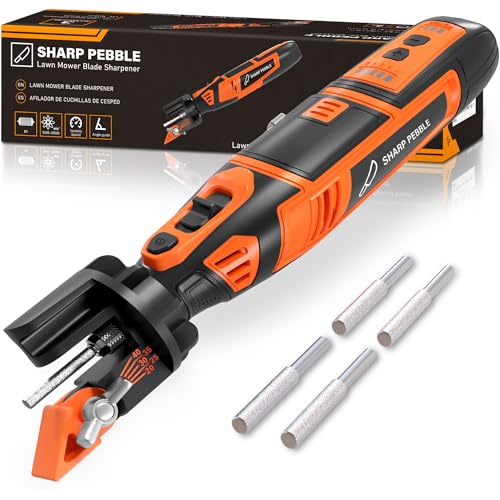
Sharp Pebble Cordless Lawn Mower Blade Sharpener Kit

Oregon Economy Lawn Mower Blade Grinder 88-025

UF-SHARP Diamond Drill Sharpener 120 Grit

SporGain Lawn Mower Blade Sharpener 550W with Sandpapers

Calsoling 3-Piece Multi-Sharp Rotary Sharpener

SporGain Angle Grinder Blade Sharpener 15-45 Degree

VEVOR 1HP Ceramic Blade Sharpener with Balancer
A Deeper Look At The Lineup
This SporGain kit pairs a handheld sharpener with a balancer, giving homeowners everything needed to keep a single mower cutting cleanly. The thick metal body and 25mm handle give the holder a planted feel, while the ball bearing pivot lets the abrasive roll smoothly across the edge.
You can match the bevel anywhere between 15 and 45 degrees, so the same tool handles the shallow angle on a standard residential blade and the steeper edge on a mulching deck. That makes it a sensible starting point for someone who wants one kit covering sharpening and balancing without buying extra stands.
What Helps Most
- Includes both sharpener and balancer, so you sharpen and check the edge in the same session.
- 15 to 45 degree range covers flat, high lift, and most mulching blades.
- Enlarged handle and ball bearing pivot make controlled passes feel natural.
- Compact size fits in a small shed or garage shelf between uses.
Things To Consider
- Manual style takes a few minutes of steady strokes per blade, so it suits routine upkeep rather than fleet work.
- Works best on blades you have removed and clamped securely.
Who It Suits Best
Homeowners maintaining one walk behind mower through the mowing season.
Where Another Pick Suits Better
Anyone sharpening multiple blades weekly should consider the VEVOR ceramic grinder for faster results.
The Sharp Pebble cordless sharpener removes the usual hassle of pulling the blade off the deck, since many standard residential blades can be honed right where they sit. A quick touch up between mows takes only a couple of minutes, which matters for anyone mowing a small lawn every weekend.
The cordless build also removes the need to drag an extension cord across the yard, a small but real convenience in a tight garage. Compared with the SporGain manual kit above, this one trades a touch of edge control for raw speed.
Positive Points
- Cordless design lets you sharpen without unmounting many standard blades.
- Routine touch ups finish in roughly two to three minutes per blade.
- Saves on replacement blade cost over a few seasons of regular mowing.
Worth Noting
- Very dull or nicked edges still benefit from removing the blade and using a slower method.
- Battery life between charges is the limiting factor for larger properties with multiple mowers.
Made For
Homeowners who want fast touch ups without pulling the blade or wrestling a cord.
Consider Something Else When
Owners with riding mowers and heavy wear should look at the Oregon Economy grinder instead.
Oregon has long anchored the small engine parts market, and the 88-025 grinder is the brand’s straightforward benchtop answer for mower blade upkeep. A 1/3 horsepower motor driving the grinding wheel at 1750 RPM takes the slow hand work out of restoring a tired edge, especially after a season of weekly cuts.
Single direction grinding keeps the technique simple: lay the blade on the rest, adjust the angle, and let the wheel do the cutting. For a homeowner with one mower, this is more machine than needed, yet for anyone maintaining two or more decks it earns its place on the bench.
Advantages To Know
- 1/3 HP motor handles repeated sharpening sessions without bogging down.
- Height adjustment lets you match the rest to different blade lengths.
- Compact bench footprint fits in a corner of a garage or shed workbench.
- Strong reputation in the small engine parts world for replacement grinder wheels and accessories.
Trade Offs
- Single direction grinding means flipping the blade to finish the other edge.
- Needs a dedicated bench space and a nearby outlet.
Feature Snapshot
Right Fit For
Small engine hobbyists and homeowners with more than one mower to maintain.
Skip It When
Casual owners with one small mower may find the Calsoling multi-pack a simpler entry point.
For anyone who already owns a cordless drill, the UF-SHARP diamond sharpener drops into the chuck and gets straight to work. The 5mm shank fits any standard drill, and the all metal body holds up to repeated sessions on mower steel.
The 120 grit abrasive sits in the middle of the spectrum, coarse enough to refresh a dull edge yet fine enough to leave a serviceable finish. It is a simple tool with a single job, and that narrow focus is part of the appeal.
Strong Points
- Plugs into any standard power hand drill with no extra setup.
- All metal construction gives the holder a solid feel under load.
- 120 grit strikes a sensible balance between material removal and finish quality.
Points To Note
- Angle control depends entirely on the operator’s steady hand.
- Does not include a balancer, so you will need a separate tool for that step.
Best Suited To
Drill owners who want a low cost way to refresh a blade two or three times a season.
Not Your Match When
Anyone wanting a guided angle and built in balance check should consider the SporGain sharpener and balancer kit instead.
This SporGain bench sharpener swaps a grinding wheel for adhesive backed sanding discs, which produces less heat and a smoother finish on the cutting edge. The 550W motor provides steady torque, while the 30 and 45 degree blade holders let you lock in the bevel without freehanding it.
Ten pairs of 7 inch discs ship in the box, split between 60 grit for reshaping and 180 grit for finishing. That cuts down on the consumables you need to buy in the first year of use, a quiet benefit for first time bench sharpener owners.
Everyday Wins
- Dual grit disc selection handles both heavy reshaping and final polishing.
- 30 and 45 degree holders take the guesswork out of setting the bevel.
- Sandpaper runs cooler than a grinding wheel, which protects blade temper.
- Included disc supply covers a full season of regular use.
Honest Caveats
- Disc replacement adds an ongoing consumable cost over the life of the tool.
- Not as fast at heavy stock removal as a pure grinder like the Oregon 88-025.
Quick Facts
Whose Shelf It Belongs On
Garage workshop regulars who prefer a cooler, slower cut on their mower blades.
Reach For A Different Pick When
You sharpen blades for pay or push through high volume each week, in which case the VEVOR ceramic grinder suits better.
The Calsoling set ships three sharpening heads in the box, so you can swap between different profiles depending on whether you are working on a mower, a sickle bar cutter, or a rototiller. The corundum abrasive on a stainless steel base is built to take repeated heat cycles without flaking.
Compared with the single head UF-SHARP diamond bit above, this kit spreads its effort across more use cases. If you keep a drill in the garden shed and touch up everything from mower blades to pruners, that range matters more than peak speed on any one tool.
What Stands Out
- Three interchangeable heads handle mower blades, drill bits, and small hand tools.
- Corundum abrasive resists heat and keeps a sharp working surface longer.
- Stainless base reduces corrosion when stored in a damp garden shed.
- Universal shank fits any standard cordless or corded drill.
Small Caveats
- Each head is smaller than a dedicated mower sharpener, so a heavily nicked edge takes patience.
Core Details
Who Should Grab It
Property owners with mixed garden tools who want one drill attachment to cover them all.
Look Elsewhere When
You only sharpen mower blades and want the cleanest finish, in which case the SporGain sandpaper bench unit is the calmer choice.
This SporGain unit is built for angle grinders, which makes it the right match for anyone who already keeps a grinder in the shop. Four guide pins cover common inner hole sizes, and the snug fit between bushing and pin keeps wobble to a minimum during passes.
The angle adjustment runs the same 15 to 45 degree range as the handheld SporGain at the top of this list, but the grinder power moves metal faster. The trade off is heat, so light passes and a cool blade pay off in edge life.
What Pays Off
- Four guide pins match a wide range of grinder collet and blade hole sizes.
- Stable bushing and pin fit reduce wobble for cleaner passes.
- 15 to 45 degree range matches the most common mower blade bevels.
Where It Is Less Suited
- Grinder speed generates heat quickly, so light pressure is needed to avoid drawing the temper.
- Requires an existing angle grinder to be useful, which adds to the total cost of entry.
Built With In Mind
Homeowners and tradespeople who already rely on an angle grinder for other yard and shop tasks.
A Better Fit Elsewhere
Drill only owners should choose the Calsoling multi-pack rather than invest in a grinder setup.
The VEVOR sits at the top of this list in both size and capability. A 1 horsepower motor drives a 9 inch ceramic grinding wheel, and the bench includes a grit collector plus an integrated balancer, which keeps dust and vibration under control through regular use.
The presets cover 30 and 40 degree angles and accept high lift, low lift, gator, and flat blade profiles, the four shapes you are most likely to encounter across residential and light commercial mowers. For a property with several machines, that versatility earns its keep over the cheaper drill attachments.
Good Reasons To Consider
- 1HP motor and 9 inch ceramic wheel handle heavy stock removal without slowing.
- Built in grit collector keeps the work area cleaner during long sessions.
- Integrated balancer trims vibration and protects the mower spindle.
- Accepts four common blade profiles, including gator style teeth.
Things To Weigh
- Larger footprint needs a permanent spot on a sturdy bench.
- Higher price bracket than the handheld kits earlier in this list.
- Ceramic wheels last a long time but are an investment to replace when worn.
Key Product Details
Perfect Match For
Homeowners with multiple mowers or small property care pros who sharpen weekly through the season.
Swap It Out When
You only own one push mower, in which case the SporGain handheld sharpener and balancer kit is plenty.
Picking The Right Mower Blade Sharpener For Your Yard
Power Source: Drill, Grinder, Or Bench Station
The simplest sharpeners clamp into a drill you already own, which keeps the cost low and storage easy. Step up to an angle grinder attachment if you already keep one in the shop and want faster metal removal at the cost of extra heat on the edge. A dedicated bench station, whether the Oregon grinder or the VEVOR ceramic unit, suits anyone sharpening blades every week or maintaining more than one mower.
Abrasive Material And Grit
Diamond and corundum both cut mower steel, while ceramic wheels run cooler and last longer under heavy use. Lower grit numbers like 60 reshape a damaged edge faster, and higher numbers like 120 or 180 finish the bevel cleanly. Matching grit to the job keeps the blade from overheating and preserves the heat treatment that keeps the edge from rolling mid cut.
Angle Range And Blade Compatibility
Most residential mower blades sit at a 30 or 40 degree bevel, so a sharpener that locks those angles in saves time and protects the original edge. Wider 15 to 45 degree tools handle specialty blades on mulching kits or older machines. Check the inner hole size on your blade against any guide pins or bushings before you buy, since a sloppy fit leads to chatter marks on the edge.
Balance Checking And Dust Control
An out of balance blade vibrates through the deck and wears the spindle bearings over time. Kits with a built in balancer, such as the SporGain and VEVOR options, let you finish the job in one session. Bench units with a grit collector also keep the workspace clean, which matters if your sharpener lives in a shared garage.
Smart Shopping Notes Before You Commit
Pitfalls Shoppers Hit
The most common mistake is buying a sharpener without checking the inner hole size on your blade, then finding the guide pin does not seat properly. Another trap is reaching for the coarsest abrasive available, which strips metal fast and overheats the edge, leaving it brittle. Skipping the balance check after sharpening is the third, and it shortens spindle life long before the blade itself wears out.
What The Higher Tier Buys
Stepping up to a bench station like the VEVOR or the SporGain 550W sandpaper unit adds repeatable angle control, a balancer, and faster material removal for a fair step up in cost. For homeowners with one small mower, that extra capability is overkill and a drill attachment makes more sense. For anyone running two or more decks, the upgrade pays off across a single season of sharper cuts and longer blade life.
Frequently Asked Questions
How Often Should Mower Blades Be Sharpened?
Most homeowners sharpen once per season or after roughly 25 hours of mowing. Heavy users with sandy soil may need touch ups twice as often.
Can You Sharpen A Blade Without Removing It?
Some cordless tools, like the Sharp Pebble in this list, allow in place sharpening on standard residential blades. Heavily nicked edges still benefit from removal and clamping.
What Grit Is Best For Mower Blades?
A two step approach works well: a coarser grit like 60 for reshaping and a finer grit like 120 or 180 for finishing the bevel.
Do Mower Blade Balancers Really Matter?
Yes, an out of balance blade causes vibration that wears spindle bearings and stresses the engine over time. A quick balance check after sharpening protects the whole mower.
Are Ceramic Grinding Wheels Better Than Standard Ones?
Ceramic wheels run cooler, last longer, and hold their shape across many sessions, which matters for frequent sharpeners. Casual users will not notice the difference on a single touch up.
Bottom Line
Pick a drill attachment for a low cost first step, a guided bench unit for repeatable results, or a full grinder station for high volume work. The eight kits above cover each of those lanes, so your mower can keep slicing grass cleanly instead of tearing it through the next growing season.
