

Two rolling acres with serious grade changes demand a mower that won’t stall halfway up the slope or leave you white-knuckled on a seat. The category has shifted hard toward robotic all-wheel-drive units, though a remote-control gas walk-behind still earns its place on truly rugged terrain. These eight picks cover wire-free convenience, slope-climbing torque, and multi-acre coverage so you can match the machine to your topography rather than fighting the hill every Saturday.
The Lineup, Simplified
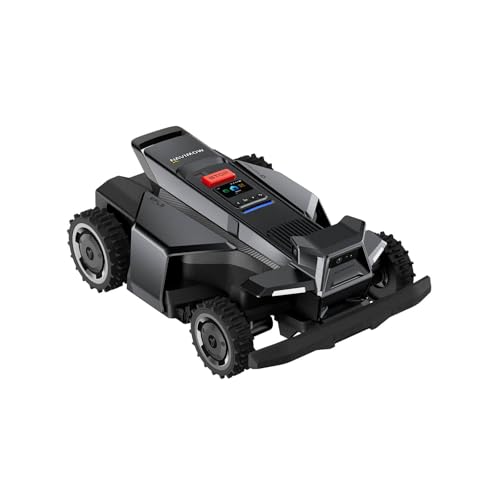
Segway Navimow X430 Robot Lawn Mower Wire Free, 1 Acre

Mammotion LUBA 2 AWD 3000X Robot Lawn Mower, 4G

Sunseeker X5 AWD Robot Lawn Mower, RTK, Vision AI
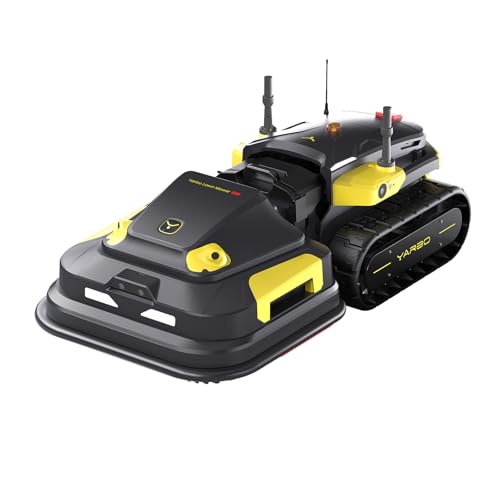
YARBO Robot Lawn Mower Pro, Wire-Free, 6 Acres

Mammotion LUBA 3 AWD 3000H Robot Lawn Mower

Remote Control Lawn Mower, 24 Inch Cut, 9HP

Mammotion LUBA 3 AWD 1500H Robot Lawn Mower

Lymow One Plus Robot Lawn Mower, AWD
Why These Options Stand Out
The Navimow X430 is built for property owners whose lawns punish ordinary riders. Its ORV-tuned dual suspension and four driven wheels let it muscle up slopes that would stall a two-wheel-drive bot, and the zero-turn steering pivots in place to avoid chewing up turf during direction changes.
For a two-acre spread with serious grade, this unit pairs GPS mapping with vision assistance so it returns to the dock without burying itself in a low spot. Cutting height runs from roughly 0.75 to 4 inches, covering anything from a tight golf-style cut to a summer-tall fescue.
Practical Pluses
- Climbs 84 percent slopes (about 40 degrees) where most robotic mowers tap out, ideal for steep banks behind the house.
- Zero-turn pivots reduce the scuff marks common on tight-radius turns, so the lawn keeps a manicured look.
- Dual 180W motors deliver real hill torque rather than just nominal power figures on paper.
- Wide cut-height window lets one machine handle both cool-season and warm-season grasses through the season.
Worth Noting
- Rated for about an acre of working area, so two-acre lots will need careful zone planning or longer run cycles.
- Initial RTK base station placement matters; owners commonly report needing to relocate it once or twice during the first week for the cleanest signal.
Built With In Mind
Property owners with one very steep acre who want a hands-off robot that handles grade without babysitting.
Swap It Out When
The YARBO Pro suits shoppers managing multi-acre estates, where the X430’s one-acre envelope gets stretched thin.
The LUBA 2 AWD 3000X trades the novelty of vision-only mapping for a rock-solid cellular connection that keeps the bot reachable even when you’re at the office. Four driven wheels share a 165W motor array, and the unit scales 80 percent slopes with a composure that makes most rear-wheel-drive competitors feel under-gunned.
For rural property owners who don’t want to lean on Wi-Fi extenders or repeater chains, the 4G link feels quietly essential. Pair that with a 0.75-acre working envelope and you have a robotic mower that quietly takes a chunk out of the weekly chore list.
The Value In It
- 4G module bypasses tricky home networks and reaches the bot from anywhere with cell coverage, useful for second homes.
- All-wheel drive and 80 percent slope rating handle the rolling pasture behind the house without sliding.
- Off-road tires grip soft, damp turf that would bog down a lighter bot after rain.
- Spare blade set ships in the box, so first replacement doesn’t trigger an extra parts run.
Trade Offs
- Rough terrain wears cutting blades faster, so plan on swapping them more often than a flat-lot owner would.
- The 0.75-acre rating means two-acre lots will need strategic zone scheduling rather than one-shot full coverage.
Feature Snapshot
Made For
Off-grid or rural owners who need reliable connectivity across a sprawling property without depending on a mesh router.
Where Another Pick Suits Better
The YARBO Pro makes more sense for estate owners pushing past three acres, where the LUBA 2’s smaller envelope runs out of headroom.
The Sunseeker X5 quietly solves the navigation problem most robotic mowers still struggle with. RTK gives it centimeter-level positioning, and a vision AI layer steps in when satellite signal weakens under a tree canopy or along a shaded fence line. The result feels less like a blind robot and more like a unit that actually sees where it’s going.
With a 0.5-acre envelope and all-wheel drive, the X5 fits neatly on the rolling half-acre lot behind a townhouse or on a half of a two-acre property split into multiple zones. It’s the kind of pick that earns its keep through reliability rather than headline features.
What Pays Off
- RTK plus VSLAM hybrid positioning keeps the bot on track in tree-shadowed areas where pure GPS mowers wander.
- Vision AI helps it dodge garden hoses, toys, and the occasional sleeping cat without constant intervention.
- Rugged tires and independent suspension absorb small roots and bumps that jar lighter platforms.
Soft Spots
- Half-acre rating means two-acre owners will need to plan for partial-day coverage or split the property into mow zones.
- Camera lenses benefit from an occasional wipe-down in dusty or pollen-heavy seasons to keep vision accuracy sharp.
Right Fit For
Sub-acre homeowners with shaded yards where satellite-only robots tend to lose their way.
Look Elsewhere When
The Mammotion LUBA 3 AWD 3000H suits shoppers who want more elaborate multi-zone management on bigger properties.
The YARBO Pro sits at the top end of the robotic category, both in acreage and in feature depth. A modular design lets the same base unit swap between mowing decks and seasonal attachments, and the cutting system chews through thick, wet, overgrown grass that would stall a smaller bot. That’s the kind of headroom you want when a two-acre lot has a few sections that don’t get touched weekly.
Six acres of rated coverage makes the YARBO genuinely over-spec for our target yard size, but the headroom shows up as fewer compromises elsewhere. For homeowners with mixed terrain, golf-course-quality turf, or hotel-style grounds, this is the platform that scales without flinching.
Everyday Wins
- Modular attachments turn the same platform into a four-season workhorse rather than a one-task mower.
- Heavy-duty blade options (razor or straight) handle both fine turf and brushy overgrown patches.
- Six-acre rating gives you abundant headroom, so two-acre jobs finish faster and with less thermal stress on the unit.
- Autonomous navigation handles golf-course-scale layouts without daily path programming.
Practical Considerations
- Larger platform needs more clearance along fence gates and shed doors than a sub-acre bot would.
- Modular components add storage complexity in smaller garden sheds where a single self-contained unit would tuck neatly away.
Best Suited To
Estate owners, small-golf-course managers, and luxury-property households with multiple acres and demanding turf standards.
Reach For A Different Pick When
The Segway Navimow X430 makes more sense for shoppers who only need steep-slope handling at a single-acre footprint.
The LUBA 3 AWD 3000H layers three positioning systems together rather than relying on any single one, and that matters more than the spec sheet suggests. LiDAR handles short-range mapping, NetRTK handles precision corrections, and dual-camera AI vision steps in for object recognition. The bot switches between them automatically depending on what it sees, which is the kind of redundancy that keeps it from getting stuck at the bottom of a shaded hill.
For an obstacle-dense two-acre property with trees, garden beds, and the occasional outdoor furniture rearrangement, that tri-fusion approach earns its keep. Up to 30 multi-zone management means you can carve the lawn into named regions and treat each one differently.
The Helpful Details
- Tri-fusion positioning (LiDAR plus NetRTK plus AI vision) keeps the bot oriented where single-source units get confused.
- 30-zone management fits a two-acre property with front, back, side, and orchard-style regions all under named profiles.
- All-wheel drive and 80 percent slope rating match the LUBA 2’s climbing without giving up any off-road capability.
- Cutting-height range of 2.2 to 4 inches covers warm-season grasses and most cool-season lawns comfortably.
Small Caveats
- Three positioning systems stacked together add cost that simpler RTK-only bots don’t carry.
- Camera and LiDAR sensors need a clear line of sight, so overgrown nearby shrubs can occasionally affect mapping accuracy.
Spec Overview
Who Should Grab It
Property owners with tree-heavy, obstacle-rich yards where single-source GPS bots regularly lose their way.
A Better Fit Elsewhere
The Sunseeker X5 AWD suits shoppers who want simpler RTK-plus-vision mapping at a more compact footprint.
Walk-behind mowers cap out where this remote-control unit begins. A 9HP gas engine drives a 24-inch deck through thick brush and tall pasture grass that would choke a residential mower, and the brushless drive motor lets you steer it from up to 200 meters away. Steep ditch banks, pond edges, and fencelines become workable without anyone standing on a tilt behind a roaring deck.
For two-acre properties where half the terrain is lawn and the other half is “good luck with that,” this is the tool that closes the gap. A 6L fuel tank keeps it running through longer sessions without refueling breaks.
Useful Touches
- Remote operation up to 200 meters keeps you out of harm’s way on 55-degree slopes and ditch edges.
- 24-inch cut width clears rough grass in fewer passes than a 21-inch residential mower can manage.
- 9HP four-stroke gas engine handles wet, overgrown patches where electric mowers bog down.
- 6L tank covers long work sessions on multi-zone properties without mid-job refueling.
Honest Caveats
- Gas engine adds routine maintenance: oil changes, spark plug service, and fuel stabilizer for off-season storage.
- Heavier than robotic mowers, so it needs a level storage spot and a clear path for retrieval after use.
Feature Snapshot
Who Will Love This
Property owners with steep ditches, pond banks, or brushy sections where a robotic mower would either stall or refuse to venture.
Not Your Match When
The Mammotion LUBA 3 AWD 3000H suits shoppers who want fully autonomous mowing rather than remote-guided sessions.
The LUBA 3 AWD 1500H is the smaller sibling in the same generation as the 3000H, pairing LiDAR and dual-camera AI vision into a tighter package. For a hilly city lot or a third-of-an-acre side yard, that smaller footprint is genuinely useful: it slips through narrow side gates and stores in a corner of the garage without dominating the space.
You give up some working area and multi-zone depth compared to the 3000H, but you keep the same AWD chassis and slope tolerance. For shoppers splitting a two-acre property into manageable sections, this bot is the workhorse for the smaller zone.
Good Reasons To Consider
- Compact body fits through narrow side-yard gates where larger bots get stuck.
- LiDAR plus dual-camera vision handles the same obstacle recognition as bigger LUBA models.
- 2.2 to 4-inch cutting range covers typical suburban turf types without needing a separate mower.
Things To Weigh
- 0.37-acre envelope is the smallest in the roundup, so this works as one zone in a multi-bot setup rather than a whole-property solution.
- Sensor stack adds cost that simpler RTK bots don’t carry, which may be hard to justify for very small lots.
Perfect Match For
Sub-acre homeowners with narrow gates, fenced side yards, or smaller mow zones inside a larger property layout.
Skip It When
The YARBO Pro covers shoppers who need one platform to span three or more acres without splitting the work across multiple bots.
The Lymow One Plus earns its place through raw cutting performance rather than acreage claims. Dual SK5 tool-steel blades spinning up to 6,000 RPM inside a cyclone airflow deck lift flattened grass for cleaner cuts, and the system mulches leaves into fine particles instead of leaving visible strips. For two-acre lots where fall cleanup doubles as mowing duty, that combination cuts a chore out of the schedule.
Rated at 100 percent slope climbing (45 degrees) and AWD all-terrain, the chassis sits closer to a small off-road platform than a typical residential bot. App control and RTK-plus-vision navigation round out a feature set aimed at the tech-forward homeowner.
Where It Delivers
- Cyclone airflow deck lifts matted grass for cleaner cuts after rain or in heavy shade.
- 1.73 acres of daily coverage suits two-acre properties that need same-day completion.
- 100 percent slope (45-degree) climbing handles aggressive banks that stop most other robots.
- Built-in mulching turns leaf cleanup into a passive benefit during fall mowing sessions.
Worth Bearing In Mind
- Higher blade RPM means more frequent blade inspections and replacement on sandy or gritty lawns.
- Off-road chassis weight sits above typical residential bots, so storage planning matters in small garden sheds.
Feature Rundown
Right Fit For
Tech-forward homeowners who want aggressive slope handling and built-in leaf mulching on a two-acre footprint.
Consider Something Else When
The Segway Navimow X430 fits shoppers who prioritize extreme slope ratings above cutting-deck technology.
What To Weigh Before Choosing A Slope-Ready Mower
Match The Slope Rating To Your Terrain
Slope ratings show up as two different formats: percentage and degrees. An 80 percent slope equals about 38 degrees, while a 100 percent slope equals 45 degrees. Walk your property after rain and identify the steepest continuous grade. A mower rated well above that grade will feel composed rather than strained, while a mower rated just barely above will slip or stall at the worst possible moment.
Decide Between Robotic And Remote Gas
Robotic mowers trade runtime independence for charging dock logistics and zone programming. They suit lawns you can map cleanly and reach with RTK or GPS signal. Remote-control gas walk-behinds suit properties where the terrain is too irregular, brushy, or steep for a bot to map reliably. For two-acre lots that mix manicured lawn with rough pasture, a remote gas unit often finishes the job a robot can’t start.
Size The Working Area Generously
Manufacturers rate working area based on ideal conditions: flat ground, no obstacles, single zone. Slopes, garden beds, and narrow corridors all reduce effective coverage. For a two-acre lot, a mower rated for 0.75 to 1.5 acres typically delivers the cleanest one-pass finish. Anything below 0.5 acres works best as part of a multi-bot setup rather than the whole solution.
Mind Maintenance And Storage Realities
Robotic mowers need periodic blade swaps, sensor cleaning, and software updates. Remote gas units need fuel stabilizer, oil changes, and spark plug service. Whichever direction you lean, plan a small storage spot with a charging outlet or fuel-safe location before the unit ships, so day-one setup stays painless.
Where These Picks Differ
Pitfalls Worth Dodging
The most common buying mistake is matching acreage rating exactly to property size without accounting for slope loss and obstacle corridors. A two-acre lot with hill sections effectively behaves like three acres of working area for the mower. Shoppers also underestimate the role of RTK base station placement: poor placement yields poor mapping for the entire ownership period, and relocating it after a bot has already learned a flawed map takes patience. Finally, budget shoppers sometimes pick a unit rated for flat lawns and discover too late that the spec sheet never mentioned slope at all.
When Spending Up Earns Its Keep
Premium tiers in this category buy three things that budget picks don’t always deliver: redundant positioning systems (LiDAR plus RTK plus vision), higher-grade slope ratings for steep properties, and modular platforms that grow with the property over time. For shoppers with terrain that complicates navigation, those layers prevent the daily frustration of a bot that needs rescuing at the bottom of the hill. For shoppers with smaller, simpler lots, mid-tier options usually deliver more value than flagship models.
Frequently Asked Questions
What slope rating should I look for in a mower for hilly two-acre lawns?
Look for at least 30 percent slope capability for mild rolling lawns and 60 percent or higher for serious grades. Slope ratings in this category range from around 30 percent for entry-level units to 100 percent for off-road platforms, so match the rating to your steepest continuous grade plus a safety margin.
Can a robotic mower really handle two acres of hilly terrain?
Yes, though the working area rating on the spec sheet assumes flat ground. For two acres with hills, expect to plan zones, schedule partial-day coverage, or run two smaller bots in tandem. Robotic mowers with all-wheel drive and high slope ratings handle the actual terrain far better than their area numbers suggest.
How does RTK navigation help on a property with trees and slopes?
RTK (Real-Time Kinematic) positioning uses a fixed base station and the mower’s GPS receiver to deliver centimeter-level accuracy, much tighter than standard GPS alone. On a property with trees, slopes, and shifting satellite coverage, RTK keeps the bot on its mapped path instead of drifting across your flower beds.
Do remote-control gas mowers make sense for residential use?
Remote-control gas mowers make sense where the terrain is too steep, brushy, or irregular for any robotic unit to map reliably. For residential lawns with consistent turf, a robotic mower is quieter and more autonomous. For ditches, pond banks, and overgrown sections, the remote-control format keeps you safely off the slope.
How often will I need to maintain a slope-rated robotic mower?
Plan on blade inspection every few weeks during heavy growing season and replacement a few times a year, depending on grass type and terrain. Sensor cleaning every month or two keeps cameras and LiDAR units accurate, particularly in dusty conditions. Robotic mowers with all-wheel drive tend to wear blades faster than flat-lot units because slopes demand more cutting effort per pass.
The Takeaway
Two hilly acres reward a mower that matches the terrain rather than one that just covers the square footage. For steep single-acre lots, the Segway Navimow X430 sets the slope-handling bar. For multi-acre estates, the YARBO Pro delivers the headroom. For tricky tree-covered yards, the LUBA 3 AWD 3000H layers positioning systems together. Match the unit to your worst section of lawn, not your average patch, and the rest of the property tends to take care of itself.
