

Steep, sprawling turf punishes underpowered equipment. Property owners juggling five acres and serious grade changes need a machine that climbs without bogging, cuts cleanly across uneven ground, and won’t quit halfway through the job. The picks below cover everything from lightweight reel mowers for flat patches to remote-controlled crawlers built for the gnarliest inclines, so there’s a match for every terrain profile and tolerance for hands-on work.
How The Shortlist Stacks Up

American Lawn Mower 1304-14GC 14″ 5-Blade Reel Mower

PowerSmart 21″ Gas Self-Propelled Lawn Mower for Hills
Segway Navimow X430 Robot Lawn Mower Wire-Free 4WD

Sunseeker X5 AWD Robot Lawn Mower RTK Vision AI

MOVA LiDAX Ultra 3000 AWD Robot Lawn Mower

AIWEIYA Remote Control Crawler Track Mower
YARBO Robot Lawn Mower Pro Wire-Free

DAREDEVIL Remote Control Lawn Mower 24-Inch Cut
Inside Each Recommended Option
A manual reel mower sounds almost quaint on a list built for hillside power, but the American Lawn Mower 1304-14GC earns its slot as the gentlest path through flat lawn patches tucked between slopes. The 14-inch cutting width and five heat-treated alloy steel blades deliver a scissor-action cut that won’t scalp tender turf, while the adjustable range from 1 to 2.25 inches lets you match seasonal growth.
Push power is yours alone, so the trade-off shows up fast on five rolling acres. For homeowners who walk the property with a smaller trim mower alongside a robotic or gas workhorse, this reel model handles the tight, level strips near flower beds without noise complaints or fuel. Lightweight polymer wheels keep maneuverability high, and the included grass catcher trims cleanup time noticeably.
Notable Upsides
- Silent operation that respects early-morning and late-evening neighborhood windows
- Zero emissions and no fuel cost, a planet-friendly alternative for level lawn sections
- Heat-treated alloy blades stay sharp across multiple seasons with minimal maintenance
- Lightweight frame reduces fatigue on flat connecting strips between slopes
Things To Consider
- Manual push effort scales poorly on any meaningful incline, so it cannot serve as the primary five-acre mower
- Owners commonly report that very tall or wet grass causes the reel to bind and stall mid-cut
Who It Suits Best
Homeowners maintaining small, level lawn zones as a complement to a primary riding or robotic mower will appreciate the quiet simplicity.
Consider Something Else When
Anyone needing serious slope traction should reach for the PowerSmart 21″ Gas Self-Propelled Lawn Mower for Hills instead, since its rear-wheel drive handles grade changes the reel cannot.
The PowerSmart 21-inch bridges the gap between a quiet reel and a full-blown riding mower, which makes it the practical heart of this shortlist. A 170cc OHV (overhead valve) engine fires up without priming drama, and the rear-wheel-drive transmission pairs with 10-inch wheels to grip slopes that would stall a front-drive competitor.
Six cutting heights and 3-in-1 mulching, bagging, and side-discharge versatility cover seasonal swings from spring growth to autumn cleanups. The alloy steel deck shrugs off dings from rocks and roots common on rural properties. For mid-sized yards with mixed terrain, the PowerSmart delivers reliable traction without the bulk of a riding platform.
Useful Strengths
- Rear-wheel drive transfers engine torque to the slope, so the operator guides rather than pushes
- 170cc OHV engine starts in one or two pulls and maintains power through thick grass
- Alloy steel deck resists corrosion and denting across wet, debris-heavy conditions
- Three-in-one cutting modes adapt the same machine to mulching, bagging, or discharging clippings
Trade Offs
- Walking five full acres behind any push mower is a serious endurance commitment
- Gas engine routine maintenance, including oil changes and air filter cleaning, adds ownership overhead compared to electric options
Feature Snapshot
Made For
Property owners with one to two sloped acres who want gas reliability without committing to a full riding mower will find the PowerSmart a comfortable fit.
Skip It When
Anyone tending the full five rolling acres should consider the YARBO Robot Lawn Mower Pro, which automates large estates and frees up weekends entirely.
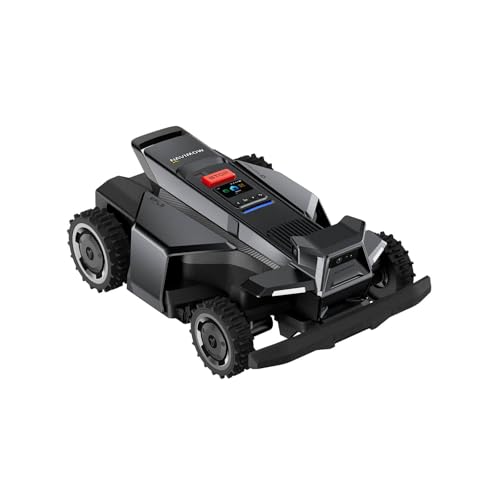
The Segway Navimow X430 arrives with serious off-road credentials. Its ORV (off-road vehicle) tuned dual suspension, 4WD layout, and 84 percent slope rating, which translates to roughly 40 degrees of climb, make it one of the most aggressive robotic mowers on the shortlist.
Two 180-watt motors drive the all-wheel system, while zero-turn steering pivots the chassis on its own footprint to avoid scraping turf on tight pivots. Cutting height adjusts from 0.75 to 4 inches to handle everything from putting-green close-cuts to tall pasture edges. For property owners who want automation but refuse to give up steep grades, this is the headline contender.
Everyday Advantages
- Four-wheel drive with dual suspension keeps the mower stable across roots, ruts, and uneven terrain
- Zero-turn steering protects turf during directional changes, a step beyond skid-steered competitors
- Wire-free setup eliminates the trenching labor that historically made robotic mowers a weekend project
- Wide cutting height range handles both lawn and meadow grass without manual adjustment
Things To Consider
- Rated for up to one acre, so a full five-acre property would need multiple units or zone planning
- Performance-focused suspension and motor hardware may demand more careful winter storage than simpler robotic decks
Best Suited To
Tech-forward homeowners with one steep acre who want the most capable slope-climbing robot on the market will appreciate what the X430 delivers.
Look Elsewhere When
Anyone needing multi-acre coverage in a single robotic platform should look at the YARBO Robot Lawn Mower Pro, which handles six acres without manual repositioning.
Navigation is the Sunseeker X5’s standout feature. Rather than relying on a single positioning system, it fuses RTK (real-time kinematic) satellite accuracy with VSLAM (visual simultaneous localization and mapping) and Vision AI, which together map the lawn, plan systematic paths, and maintain coverage even under tree canopy or in shaded corners where RTK alone tends to drift.
Rated for 0.5 acre or roughly 21,780 square feet, the X5 fits smaller hillside lots where canopy interference would derail lesser robots. Rugged tires and independent all-wheel drive tackle slopes and uneven grass without slipping, and the wire-free setup means no boundary wire trenching at install.
Points In Its Favor
- Hybrid RTK plus vision system holds a positional fix where pure satellite systems lose signal under trees
- Systematic path planning covers ground efficiently rather than bouncing randomly across the lawn
- AWD with rugged tires grips slopes and damp turf that stall lighter two-wheel-drive robots
- Wire-free boundary setup avoids the trenching and wire breaks that plague older robotic installs
Points To Keep In Mind
- Half-acre capacity means it’s a partial solution for full five-acre estates
- RTK antenna placement and reference station setup may require initial calibration time that simpler robots skip
Spec Overview
Who Will Love This
Homeowners with shaded, tree-dappled half-acre lawns who have been frustrated by robots losing their position will find the X5’s hybrid nav reassuring.
Another Choice May Suit
Those needing LiDAR depth perception for obstacle-heavy yards should consider the MOVA LiDAX Ultra 3000 AWD Robot Lawn Mower, which pairs 3D LiDAR with dual vision.
The MOVA LiDAX Ultra 3000 skips RTK entirely, leaning instead on 360-degree 3D LiDAR (light detection and ranging, which uses laser pulses to build a 3D map) plus AI dual vision for its mapping brain. That combination means no reference-station calibration, no satellite dependency, and no boundary wire to bury.
Four 116-watt hub motors feed the all-wheel-drive system, and the advanced suspension keeps the chassis planted on slopes up to 80 percent. Floating cutting discs adapt to bumpy ground rather than scalping high spots. For 0.75-acre properties with complex layouts and dense obstacles, the LiDAX stacks up as the most sensor-loaded option here.
What Pays Off
- RTK-free setup avoids the satellite calibration step that trips up first-time robotic mower owners
- 3D LiDAR depth mapping recognizes garden furniture, pets, and toys with greater accuracy than camera-only systems
- Floating cutting discs follow ground contours to prevent the patchy scalping common on rolling lawns
- Integrated 4G connectivity allows remote monitoring and scheduling without range limits
A Few Limitations
- Sensor-rich hardware tends to price above simpler robotic decks, depending on configuration
- 0.75-acre rated capacity covers less ground than the larger YARBO platform for sprawling estates
Perfect Match For
Tech enthusiasts managing obstacle-rich, moderately sloped lots up to three-quarters of an acre will appreciate the LiDAX’s plug-and-play approach.
Where Another Pick Suits Better
Property owners needing much larger coverage should reach for the YARBO Robot Lawn Mower Pro, whose modular design scales to six full acres.
Remote-controlled crawler mowers answer a problem most walk-behind machines cannot: slopes too dangerous to walk alongside. The AIWEIYA hybrid crawler pairs an oil-electric drive system with rubber tracks that grip where wheels slip, and a 45-degree (100 percent slope) rating puts it in professional-terrain territory.
Cutting height adjusts from 1.1 to 5.9 inches via remote, and the chassis raises and lowers to match changing turf. Two-piece manganese blades handle thick pasture grass and brushy edges that would stall a residential deck. Estate owners with pond banks, drainage ditches, or roadside embankments get a serious safety upgrade.
A Strong Showing
- Track drive lays down a long contact patch, which grips slopes where pneumatic wheels would slide
- Remote operation removes the operator from the slope, a real safety win on 45-degree grades
- Wide cutting height range handles both lawn finish cuts and brushy meadow work
- Manganese blades resist nicks from hidden rocks and roots common in rough terrain
Honest Caveats
- Track systems require occasional tension checks and cleaning to prevent debris buildup in the tread
- Remote-control mowing demands a learning curve to judge cut quality without walking alongside
Right Fit For
Property owners with steep embankments, pond edges, or roadside slopes where walking the mower is genuinely hazardous will value the remote-control crawler format.
Reach For A Different Pick When
Homeowners needing fully autonomous operation should consider the Segway Navimow X430, which climbs autonomously rather than via handheld remote.
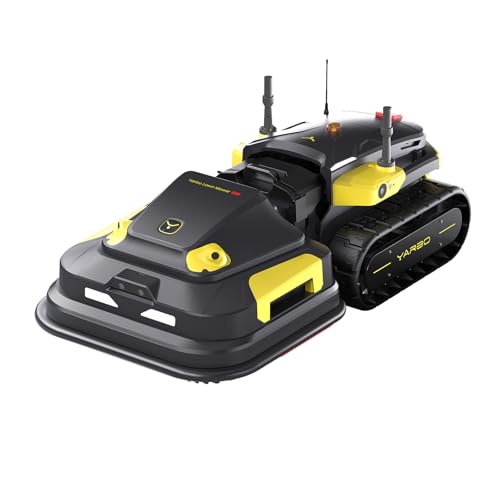
The YARBO Pro is built for acreage, specifically six acres of autonomous coverage, which makes it the most ambitious robotic platform on this list. Its modular design supports year-round yard care, so the same core unit can swap from mowing to other seasonal attachments depending on the property’s needs.
Two blade options ship with the unit, including razor blades for fine finish cuts and straight blades for thick, wet, overgrown grass. Strong cutting performance and fully autonomous navigation suit luxury homes, golf course-adjacent properties, and turf farms where labor costs justify the upfront investment. Compared to the Sunseeker X5’s half-acre rating, the YARBO’s reach is a different category entirely.
Useful Highlights
- Six-acre capacity handles the full property in a single autonomous platform, no zone swapping required
- Modular attachments extend the unit’s usefulness beyond summer mowing into year-round yard care
- Dual blade options cover both refined lawn cuts and aggressive brush clearing from one chassis
- Wire-free boundary setup avoids the installation labor that historically discouraged large-property robotics
Practical Considerations
- Premium hardware represents a significant upfront commitment compared to walk-behind alternatives
- Modular attachments expand storage footprint, so plan shed space for off-season modules
Who Should Grab It
Estate owners with several rolling acres who want to reclaim entire weekends from mowing will see the strongest return on the YARBO platform.
Swap It Out When
Anyone tending a smaller, simpler one-acre lot can save budget with the Sunseeker X5 AWD Robot Lawn Mower, which covers half-acre coverage at a lower entry point.
The DAREDEVIL SPYDER brings gas-engine grit to remote mowing. A 9-horsepower 4-stroke engine and brushless drive motor (which uses electronic commutation rather than carbon brushes, meaning less wear and longer service intervals) push a 24-inch cutting deck through thick grass, weeds, and brush that would stall most robotic platforms. The 55-degree slope climb rating covers terrain that intimidates walk-behind mowers.
A 6-liter fuel tank supports long sessions without refueling breaks, and the up-to-200-meter remote range lets the operator stand well clear of ditches, ponds, and embankments. For property owners who need a remote mower but want more raw cutting power than battery crawlers offer, this gas-driven unit fills the gap.
Everyday Wins
- 9HP gas engine powers through thick grass and brush where smaller motors bog down
- 55-degree slope rating covers serious inclines that stop walk-behind and most robotic mowers
- 24-inch deck finishes large areas faster than the 14- to 21-inch residential alternatives
- Long remote range keeps the operator safely away from ditches, ponds, and drop-offs
Possible Compromises
- Gas engine adds fuel, oil, and seasonal maintenance that electric platforms avoid
- Remote operation requires line-of-sight awareness for safe navigation around obstacles and bystanders
Whose Shelf It Belongs On
Rural property owners with overgrown ditches, steep banks, and brushy patches will appreciate the raw cutting power and remote safety this mower delivers.
A Better Fit Elsewhere
Anyone wanting silent, fully autonomous operation should consider the Segway Navimow X430 Robot Lawn Mower, which climbs steep slopes without handheld control.
What To Weigh Before Choosing A Mower For Five Hilly Acres
Slope Rating And Traction Mechanism
Slope percentage tells you how steeply a mower can climb before traction or stability fails. Walk-behind gas units like the PowerSmart handle moderate residential grades with rear-wheel drive. Robotic platforms add all-wheel drive and articulated suspension for steeper climbs, and remote crawlers with track systems push into professional-terrain territory. Match the mower’s slope rating to your property’s steepest sustained grade rather than its average angle.
Coverage Area Versus Machine Class
Five acres is a lot of ground, and the mower’s rated coverage reveals whether one machine can finish the job in a reasonable window. Small robotic units cover fractions of an acre per charge cycle and work best as supplements. Self-propelled walk mowers handle one to two acres comfortably, and modular robotic platforms like the YARBO stretch to six acres. Underestimating coverage leads to endless half-finished cuts.
Power Source And Maintenance Load
Gas engines deliver raw cutting power and long runtimes but demand oil changes, air filter service, and fuel storage. Battery-powered robotic and walk units trade some runtime for near-silent operation and minimal maintenance. Hybrid oil-electric crawlers split the difference. Your tolerance for engine upkeep and your proximity to a fuel source should guide the choice.
Navigation And Boundary Setup
Older robotic mowers required buried boundary wire, which is a trenching project on five rolling acres. Modern wire-free options use RTK satellite, vision AI, or LiDAR to learn boundaries digitally. Each system has weak spots: RTK drifts under heavy canopy, vision struggles in low light, and LiDAR handles both but costs more upfront.
Key Considerations Across These Picks
Where Shoppers Go Wrong
The most common slip is choosing a mower rated for flat suburban lawns when the property rolls seriously. Slope rating, drive system, and tire or track design all matter more than deck width on hilly ground. Another pitfall is underestimating coverage, so a half-acre-rated robot ends up covering only a fraction of five rolling acres per day. Measure your steepest sustained grade before deciding on a class.
What Separates Premium From Basic
Higher-tier robotic platforms add redundant navigation systems (RTK plus vision plus LiDAR) that hold position where simpler robots lose the plot under trees. Track-drive crawlers and gas-powered remote mowers cost more because the hardware withstands commercial-duty cycles and serious incline work. Modular designs that swap mowing for seasonal attachments justify the premium when you actually use the extra modules year-round.
Frequently Asked Questions
What slope percentage can a typical mower handle?
Most walk-behind gas mowers manage 15 to 20 percent slopes safely, rear-wheel-drive self-propelled units stretch to 25 percent, and robotic or crawler platforms rated for 80 to 84 percent climb near 40 degrees. Match the mower’s rating to your steepest sustained grade.
Is a riding mower better than a robotic mower for five acres?
Robotic platforms cover ground slowly but autonomously, freeing up weekends entirely. Riding mowers finish faster per session but require an operator for every pass. For five rolling acres with mixed terrain, a robotic unit with serious slope rating or a hybrid approach, pairing a robotic unit for most cuts with a walk-behind for tight zones, often wins on convenience.
How important is all-wheel drive on hilly terrain?
Very important. Two-wheel-drive mowers lose rear traction on steep climbs and front traction on steep descents. All-wheel drive distributes torque to all wheels, which keeps the mower planted where single-axle competitors spin out, especially in damp grass.
Can a robot mower handle wet grass on hills?
Some can. Models with aggressive tire tread, all-wheel drive, and floating cutting discs manage damp conditions better than basic two-wheel-drive decks. Very wet grass still challenges every mower, so scheduling cuts for drier windows remains wise.
Do remote-control mowers require line of sight?
Yes, in nearly all cases. Remote mowers rely on radio signals that need a clear path between the controller and the machine. Dense tree cover, metal structures, and long distances can degrade the signal, so most operators stay within 100 to 200 meters with the unit visible.
The Takeaway
Five rolling acres demand a mower that climbs without complaint, cuts evenly across uneven ground, and matches the operator’s appetite for hands-on work. Walk-behind gas units suit smaller sloped sections, robotic platforms automate the routine, and remote crawlers tackle grades too dangerous to walk alongside. The honest read is to match the mower class to your steepest grade, your coverage needs, and your tolerance for maintenance, then let the terrain decide.
