

Steep lawns turn a weekend chore into a balancing act. Anyone managing a sloped yard, a hillside orchard, or an uneven estate lawn knows that a standard walk-behind mower loses traction fast, and a push mower on a 30° grade is a genuine safety problem. Remote-controlled and self-driving slope mowers exist precisely for this terrain, pairing tracked drive systems with motors tuned for incline work. The eight options below cover a range of slopes, budgets, and property sizes, from compact robotic units that quietly trim an acre to heavy tracked gas machines that chew through tall brush on nearly vertical banks.
The Essentials At A Glance
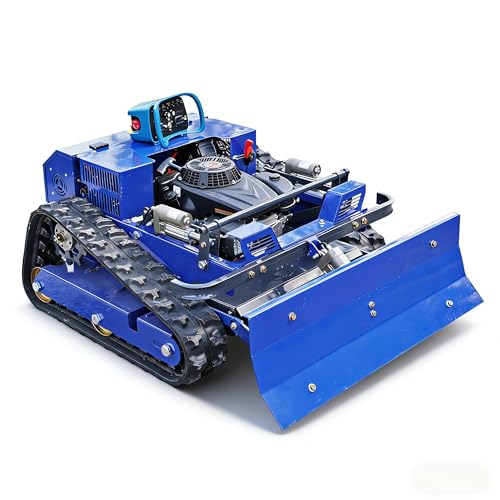
AIWEIYA Hybrid Crawler Track Mower (45° Slope)

AIWEIYA Remote Control Crawler Mower 45°

DAREDEVIL 24 Inch Gas Tracked Mower 55°
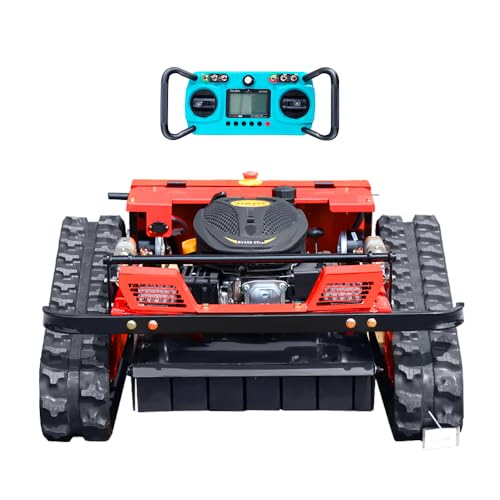
INFRONT 20 Inch Tracked Remote Mower

INFRONT Cabin Remote Mower 55° Slope

AIWEIYA 3-15CM Hybrid Crawler Mower 45°
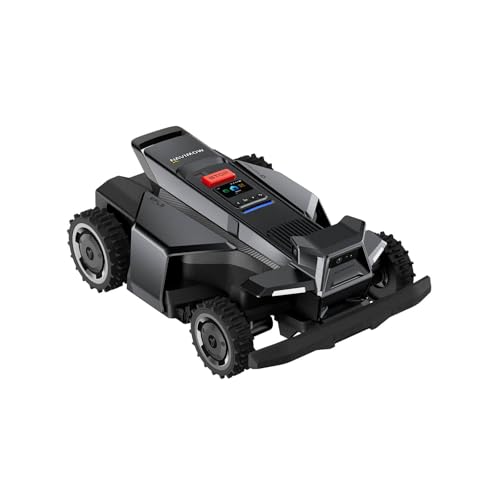
Segway Navimow X430 Wire-Free Robot Mower

HISATORX 9HP Gas Tracked Brush Mower 40°
Why These Options Stand Out
The AIWEIYA hybrid crawler pairs a brushless motor with a gasoline-electric drivetrain (a system that blends a small gas engine with battery power for combined output) to keep its weight low while still pushing through inclines up to 45°. Tracked drive, which uses tank-style rubber belts instead of wheels, distributes pressure across a wide footprint, so it grips where wheeled mowers spin out. The deck adjusts from 1.1 to 5.9 inches via remote, meaning no hiking up the slope to fiddle with levers.
Remote steering handles 360° rotation and on-the-spot climbing, useful when the bank narrows into a tight corner. For an owner with a half-acre hillside and a healthy mix of grass and weeds, it removes the worst part of the job, which is walking the slope yourself. Compared with the all-electric Segway Navimow later in this list, this one trades silent automation for raw incline capability.
Everyday Perks
- Brushless motor (a motor with no physical brushes, lasting longer and requiring less maintenance) reduces long-term wear on the drivetrain
- Tracked chassis handles soft, damp turf without bogging down
- Height adjustments from the remote save real walking on a 40° bank
- Hybrid power lets you run quieter at low demand, gas kicks in for the climb
Points To Keep In Mind
- Hybrid systems need both fuel and battery maintenance routines
- Owners of small, flat lawns won’t tap the track advantage
Made For
Homeowners with rolling lawns above 30° who want a remote option without going full commercial.
Where Another Pick Suits Better
The Segway Navimow X430 suits anyone wanting fully autonomous mowing on gentler 84% slopes within a bounded acre.
This second AIWEIYA entry runs on the same 45° crawler platform but pairs it with a two-piece manganese blade (a hardened steel alloy that holds an edge through rocky or stemmy grass) for a cleaner finish. The blade design trims and distributes clippings finely enough to feed back into the lawn as a light mulch layer, which trims a step from your seasonal maintenance.
For owners who care as much about cut quality as they do about clearing the slope, this version delivers a more refined look. Compared with the gas-fueled DAREDEVIL unit further down, it runs quieter and skips the oil changes, though it won’t match the raw cutting width.
A Favorable Mix
- Manganese blade keeps its edge through coarse, weedy turf
- Fine clippings act as natural ground cover, reducing bagging trips
- Same remote-driven chassis as the first AIWEIYA, a proven platform
- Quieter than gas rivals, friendlier for residential neighbors
Honest Caveats
- Battery runtime drops on dense, tall growth
- Blade replacement is more involved than a standard steel blade
Right Fit For
Property owners who want a manicured look on a slope without dragging a gas can up the hill.
Swap It Out When
The DAREDEVIL 24-inch gas mower is a better fit for acreage where thick brush dominates and runtime matters more than finish.
The DAREDEVIL trades electric politeness for a 9HP four-stroke gas engine (an engine that fires once per piston cycle for smoother torque and longer life) and a 24-inch cutting deck, the widest on this list. Rated for 55° slopes, it’s built for ditches, pond banks, and overgrowth that would stall smaller machines. A 6-liter tank extends run time well beyond what a battery unit can manage.
This is the choice for acreage with brush, saplings, or neglected sections. The optional snowplow attachment hints at year-round utility. Compared with the AIWEIYA hybrid picks, you trade quiet running for raw cutting power and a deck that finishes a job in fewer passes.
Where It Delivers
- 24-inch deck clears large areas quickly
- 55° slope rating covers steep banks most rivals can’t
- 6L fuel tank supports extended sessions on remote plots
- Four-stroke engine delivers steady torque through thick growth
Trade Offs
- Gas engine means routine oil checks and exhaust fumes
- Heavier chassis needs more storage space than robotic units
Quick Facts
Best Suited To
Rural property owners with multi-acre hillsides, pond edges, and overgrown fence lines.
A Better Fit Elsewhere
The Segway Navimow X430 is a better fit for owners who want automated mowing without the engine upkeep.
INFRONT’s crawler extends the remote range to roughly 700 meters, the longest on this list for an electric platform. The 20-inch deck and adjustable cutting height from 0.79 to 5.9 inches make it versatile enough to handle both fine lawn and tall, neglected grass without a blade swap.
You operate it from a safe distance, which matters when the slope borders a road, water feature, or unstable soil. Tracked drive keeps it planted on wet spring turf where wheeled robots slide. Compared with the DAREDEVIL gas unit, you give up the 24-inch deck width in exchange for silent running and a longer remote leash.
The Good Stuff
- 700-meter remote range covers large or hazardous plots
- Wide height range suits both turf and overgrown fields
- Tracked design grips soft ground after rain
- Adjustable parameters from the remote, no walking needed
Things To Consider
- Long remote range depends on clear line of sight
- Battery capacity can fall short on multi-hour sessions
Who Should Grab It
Owners of large or hazardous terrain who want to stay clear of the slope while mowing.
Consider Something Else When
The HISATORX 9HP gas tracked mower suits anyone needing longer runtime on remote acreage.
The enclosed-cabin INFRONT variant turns slope mowing into a seated, all-weather job. Rated for 55° slopes with a 20-inch cutting deck and the same 0.79 to 5.9-inch height range as the open INFRONT, it adds operator comfort and protection from clippings, dust, and sun. The brushless motor uses a downward cooling duct, which routes airflow to keep internal temps stable during long sessions.
This is the only enclosed option in the roundup, and it shifts the use case from homeowner convenience toward commercial landscaping crews and municipal grounds teams. Compared with the open-chassis AIWEIYA units earlier in the list, the cabin adds weight and footprint but pays off when the workday runs long.
Key Advantages
- Enclosed cabin shields operator from debris and weather
- Brushless motor with downward cooling extends runtime safely
- Same proven 55° slope rating as the heavy-duty class
- 20-inch deck finishes large properties efficiently
Where It Is Less Suited
- Cabin adds significant size, needs garage or barn storage
- Higher upfront cost than the open INFRONT model
Feature Snapshot
Whose Shelf It Belongs On
Professional landscaping crews managing multi-property contracts with varied terrain.
Skip It When
Homeowners with smaller lots will find the open-chassis INFRONT 20 Inch Tracked Remote Mower plenty capable.
This third AIWEIYA variant lists its cutting height in metric (3 to 15 centimeters, matching 1.18 to 5.9 inches), a small but useful detail for properties documented in metric measurements. It runs on the same hybrid oil-electric crawler platform with a two-piece manganese blade for fine mulched clippings.
The trimmed and distributed clippings feed back into the lawn as natural fertilizer, cutting a step from your seasonal routine. The chassis raises and lowers via remote, so the same machine handles both fairway-style turf and overgrown edges. Owners comparing it to the AIWEIYA Remote Control Crawler Mower 45° will find the platforms nearly identical, with the height scale being the main practical difference.
Notable Gains
- Metric height scale suits international and reference properties
- Manganese blade produces fine, mulch-ready clippings
- Hybrid drive balances quiet running with climb power
- Remote height adjustment saves trips down the slope
Potential Drawbacks
- Metric scale requires conversion for imperial-only operators
- Hybrid maintenance routines are more involved than pure electric
Perfect Match For
Property owners managing lawns documented in metric, or those importing this unit from overseas markets.
Another Choice May Suit
The INFRONT 20 Inch Tracked Remote Mower is a better fit for owners who prefer imperial measurements and a longer remote range.
The Navimow X430 takes a different approach: no boundary wire, no remote, just a wire-free robot that maps your lawn and mows on its own. Four-wheel drive with ORV (off-road vehicle) tuning handles 84% slopes (around 40°) and crosses obstacles up to roughly 2.8 inches. Two 180W motors and a zero-turn steering system pivot the front wheels independently to avoid tearing turf on tight turns.
It’s the only fully autonomous option in this roundup, and it shifts the experience from “remote control chore” to “set up once, forget about it.” Coverage runs up to one acre, with cutting height adjustable from 0.75 to 4 inches. The trade-off versus the tracked gas DAREDEVIL is raw power and brush-clearing ability, this one is built for maintained lawns, not wilderness.
Features That Help
- Wire-free setup skips the buried boundary cable
- ORV-tuned suspension smooths out uneven ground
- Zero-turn steering protects delicate turf on tight pivots
- App-based mapping lets you define no-go zones digitally
Practical Considerations
- Cutting height tops out around 4 inches, limiting tall-grass use
- Robot platform can struggle in tall weeds and uneven brush
At A Glance
Built With In Mind
Homeowners who want quiet, automatic mowing on a maintained sloped lawn under one acre.
Reach For A Different Pick When
The DAREDEVIL 24 Inch Gas Tracked Mower is a better fit for overgrown acreage and brush-clearing work.
The HISATORX closes the roundup with a 9HP gas engine, a 21.7-inch cutting deck, and the longest advertised remote range at 800 meters in open terrain. The cutting deck adjusts electrically from 0.79 to 5.9 inches via the handheld remote, so you can switch between short turf and tall brush without leaving your position.
Its 40° slope rating sits a step below the DAREDEVIL’s 55° ceiling, but the wider deck and longer remote give it an edge on broad, gently sloped fields. Hillside farms, orchards, and remote brush patches are where it earns its keep. Compared with the electric INFRONT, you trade silent operation for a tank-like work ethic on rough ground.
What Works In Its Favor
- 800-meter remote range covers large orchards and fields
- 21.7-inch deck balances agility with coverage
- Electric deck adjustment from the remote, no stops needed
- 9HP gas engine handles thick brush without bogging
- Wide height range suits varied terrain in one pass
Less Ideal Details
- Gas engine requires fuel storage and routine oil care
- Lower slope rating than the DAREDEVIL’s 55° ceiling
- Heavier than battery-only crawlers
Who Will Love This
Farmers, orchard managers, and acreage owners who need extended runtime across rough, expansive terrain.
Look Elsewhere When
The Segway Navimow X430 suits residential owners who want quiet, autonomous mowing on a maintained lawn.
What To Weigh Before Buying Mowers For Slopes
Slope Rating and Drive System
Slope ratings fall into two practical camps. Most residential crawlers rate at 45°, the steepest most homeowners encounter, while commercial-grade machines push to 55°. Tracked drive (continuous rubber belts in place of wheels) grips far better than wheels on damp or loose ground. Wheeled mowers, even four-wheel-drive ones, lose traction as the angle climbs past 30°. For inclines that touch 40° or more, tracked drive is the realistic choice.
Cutting Width and Deck Adjustments
Wider decks finish large properties faster but struggle on tight switchbacks where a 20-inch unit threads more easily. Electric height adjustment from the remote saves real effort on a slope; manual lever systems force you back down the hill for every change. Look for a deck that adjusts from roughly 0.75 inches (for tidy turf) up to at least 4 inches (for brushy growth). The picks here range from 0.75 to 5.9 inches at the top end.
Power Source: Electric, Hybrid, or Gas
Pure battery units run quiet and skip fuel storage, but runtime caps how much acreage you can cover in one session. Hybrid models blend a small gas engine with battery drive, extending runtime while keeping noise moderate. Gas-only machines, like the DAREDEVIL and HISATORX, deliver the longest runtime and the most torque for thick brush, at the cost of exhaust, fuel storage, and oil changes. Match the power source to your property size and tolerance for engine upkeep.
Remote Range and Safety Standoff
The whole point of remote operation is staying clear of an unstable slope, so range matters. Anything from 200 meters up to 800 meters appears on this list, with longer ranges assuming clear line of sight. For ditches, pond edges, and roadside embankments, prioritize range over deck width.
Pitfalls Shoppers Hit and Where The Upgrade Pays Off
Where Shoppers Go Wrong
The most common mistake is matching a residential wheeled mower to a 30°+ slope. Wheels slip, the mower slides downhill, and the operator ends up chasing it. A second trap is buying by deck width alone, ignoring slope rating. A 24-inch deck on a machine rated for only 20° is no bargain on a hillside. Finally, some shoppers underestimate the maintenance of gas engines, oil checks, spark plugs, fuel stabilizer, and overlook that battery units still need winter storage care in cold climates.
When Paying More Pays Off
The step up to enclosed cabins, ORV-tuned suspensions, and brushless motors with downward cooling pays off in two ways. First, durability, since brushless systems avoid the brush-wear failure point entirely. Second, operator comfort and uptime, which matters if you run a multi-property schedule. For a one-time homeowner cut on a half-acre, the basic crawler gets the job done. For a professional crew or a multi-acre estate, the upgrade pays for itself in fewer breakdowns and longer daily coverage.
Frequently Asked Questions
What slope is too steep for a regular mower?
Anything above 15° starts to challenge wheeled residential mowers. Above 25°, even four-wheel-drive units lose traction on wet grass. Slopes past 30° are generally unsafe for walk-behind operation, which is where tracked remote and robotic slope mowers earn their place.
How do tracked mowers handle wet grass?
Tracked drive distributes the mower’s weight across a wider footprint than wheels, reducing ground pressure. The continuous belt also grips through damp clippings that would slip under rubber tires. Most crawlers in this roundup are designed for spring conditions and morning dew.
Are robotic slope mowers safe around pets and wildlife?
Wire-free robotic units like the Segway Navimow use onboard sensors to detect obstacles and pause or reroute. Pets generally learn to avoid them quickly, but small wildlife like hedgehogs can be vulnerable to any spinning blade. Running the mower during daylight hours when animals are active reduces risk.
How long does a battery charge last on a slope mower?
Runtime varies by slope, grass density, and deck height. Expect a wide range depending on conditions. For multi-acre properties with steep sections, gas or hybrid units like the DAREDEVIL or HISATORX avoid the recharge wait entirely.
Can one slope mower handle both flat and steep sections?
Yes. Most crawlers and robots transition smoothly between flat lawn and moderate inclines. For properties with extreme pitch changes, a tracked remote unit handles the transitions better than a wheeled robot, since tracks keep their grip as the angle shifts.
Bottom Line
The right slope mower comes down to slope severity, property size, and how hands-on you want to be. Quiet robotic units like the Navimow X430 suit maintained residential lawns under an acre. Tracked electric crawlers cover mid-sized estates with mixed terrain. Gas-driven workhorses like the DAREDEVIL and HISATORX clear brush and rough acreage where raw power and long runtime matter most. Pick the platform that matches your terrain, and the slope stops being a problem.
