

Steep lawns punish ordinary mowers. The deck scalps high spots, the wheels spin out on damp grass, and the engine bogs down halfway up a grade. Anyone who has wrestled a heavy rear-bagger up a 20-degree slope knows the value of traction and balance before raw horsepower. This roundup sorts eight mowers built to handle serious inclines, from self-propelled cordless options to all-wheel-drive robotic units that crawl where most machines dare not tread.
The Picks In Brief

EGO POWER+ Cordless Electric Lawn Mower, Self-Propelled, 56V 7.5Ah Battery + 5Ah Bundle (LM2135SP)

Greenworks 40V 16in Push Lawn Mower, 4.0 Ah Battery and Charger

PowerSmart 21-Inch Self Propelled Gas Lawn Mower, 170cc OHV, Rear-Wheel Drive

21″ Self Propelled Gas Lawn Mower, 170CC 4-Stroke, 4-in-1 Cutting System (gasxcel)

Mammotion LUBA 3 AWD 1500H Robot Lawn Mower with Garage
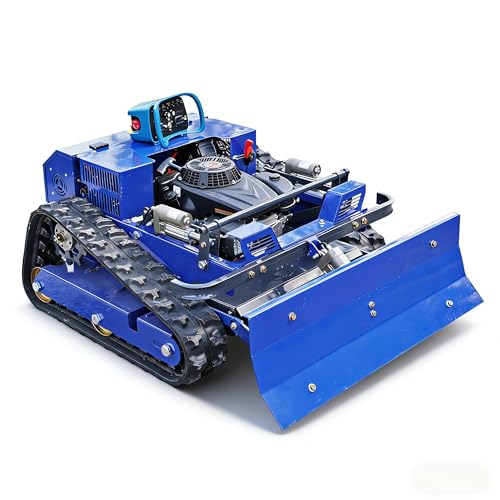
AIWEIYA Remote Control Crawler Track Lawn Mower, Hybrid 45° Slope

Sunseeker X7 AWD Robot Lawn Mower, RTK, Vision AI, 0.75 Acre

DREAME A3 AWD 1000 Robot Lawn Mower, 3D LiDAR & Dual Vision
Why These Options Stand Out
The EGO POWER+ LM2135SP brings cordless convenience to a category long ruled by gas engines. Its 21-inch deck and self-propelled drive, here meaning the rear wheels assist your pace, help you muscle the machine up moderate slopes without the noise, fumes, or pull-cord hassle of a small gas mower.
The Select Cut multi-blade system lets you swap lower blades to suit conditions, and the included 7.5Ah battery plus the bonus 5Ah pack (shipped separately) extend runtime for larger or thicker lawns. For anyone who wants a quieter Saturday morning and fewer tune-ups, this EGO feels like the natural upgrade from the budget Greenworks below.
What It Does Well
- Self-propelled drive reduces fatigue on climbs, a tangible relief on long or steep lawns.
- Swappable battery ecosystem makes charging routines flexible and field-upgradable over time.
- Brushless motor runs quieter than comparable gas units, which your neighbors will notice.
- Three interchangeable blades (Mulching, High Lift Bagging, Extended Runtime) tune performance to conditions.
Points To Keep In Mind
- Runtime is tied to battery capacity, so steep, thick grass can drain packs faster than flat open lawn.
- Charging the larger 7.5Ah pack takes longer than refueling a comparable gas tank.
Who It Suits Best
Homeowners with medium-to-large lawns who want electric simplicity and do not mind swapping a battery mid-session on the toughest sections.
Where Another Pick Suits Better
For small flat lawns on a tight budget, the Greenworks 40V 16in push mower is a lighter, more affordable fit.
The Greenworks 40V 16-inch push mower is the friendly entry point for anyone stepping away from gas. At 40 volts with a brushless motor, it is light enough to wheel around tight side yards yet potent enough to handle the kind of patchy, slope-laden lawn you might find in a suburban cul-de-sac.
Where the EGO above relies on self-propelled drive, here you provide the legwork. That sounds like a downside on hills, but the lighter weight and compact 16-inch deck actually help on short climbs or stepped lawns where a bigger machine becomes unwieldy.
Features That Help
- 40V brushless motor delivers quiet operation and no oil changes, just plug-in charging.
- 16-inch deck fits narrow side gates and tight turning areas around landscaping.
- Up to 45 minutes of runtime on the included 4.0Ah battery, more than enough for modest yards.
Things To Consider
- It is a push mower, so steep inclines demand real effort from you.
- The 40V platform is less powerful than the 56V EGO above when grass is tall or wet.
Made For
First-time homeowners and renters with small, mostly flat lawns who want quiet, low-maintenance electric mowing without the higher cost of self-propelled models.
Consider Something Else When
If your yard drops sharply or spans more than a quarter acre, the PowerSmart 21-Inch self-propelled gas mower brings rear-wheel-drive traction this Greenworks cannot match.
The PowerSmart 21-Inch self-propelled gas mower earns its keep on slopes where battery mowers run out of breath. A 170cc OHV (overhead valve) engine, a layout that improves efficiency and reduces heat compared with side-valve designs, drives a steel-decked, rear-wheel-drive chassis built to push itself uphill. Where the Greenworks above asks for leg power, this one pulls its own weight.
Three-in-one cutting, meaning mulching, bagging, and side discharge, gives you options for changing seasons, and the steel deck shrugs off the occasional rock or stump that would scar a plastic-bodied competitor. If your lawn is a quarter acre or more and uneven, this is where most homeowners land.
Useful Strengths
- Rear-wheel drive channels torque straight to the drive wheels for confident climbs.
- 170cc OHV engine handles thick, damp grass that stalls smaller motors.
- Steel deck tolerates rough, sloped terrain longer than typical stamped-metal alternatives.
- 3-in-1 design lets you mulch, bag, or discharge depending on the cut.
Honest Caveats
- Gas engines require seasonal maintenance: oil changes, spark plugs, and air filter cleaning.
- Heavier than cordless mowers, so maneuvering across flat areas can feel like overkill.
Key Advantages At A Glance
Best Suited To
Homeowners with quarter-to-half-acre lawns, mixed grass types, and noticeable slopes who value uninterrupted runtime over quiet operation.
Skip It When
For very large or extremely steep estates, the AIWEIYA crawler track mower climbs where wheeled mowers lose their footing.
The gasxcel 21-inch self-propelled mower leans hard into flexibility. Its 4-in-1 cutting system adds rear discharge to the usual mulch, bag, and side-discharge lineup, so you can aim clippings away from sensitive beds without raising the deck. For lawn owners who change tactics with the weather, that extra mode earns its place.
Underneath, a 170cc 4-stroke OHV engine delivers up to 1.5 hours per tank. The 8-inch front and 10-inch rear wheels add grip on uneven ground, and the 65L grass catcher swallows long cuts in fewer trips. This is the mower for someone who treats lawn care as craft, not a chore.
Notable Gains
- Four cutting modes, including rare rear discharge, suit varied grass conditions.
- Up to 1.5 hours of runtime per tank covers most residential lots without refueling.
- Larger 65L bag reduces emptying interruptions on longer mow sessions.
- Taller 10-inch rear wheels grip uneven ground better than uniform 7-inch wheels.
Practical Considerations
- Switching between drive and push modes takes a moment of adjustment at the start.
- Steel deck adds weight, which is great for traction but tougher to store in shallow sheds.
Who Will Love This
Detail-oriented homeowners with mixed grass heights who want discharge direction control and a fuel tank that outlasts the average battery.
A Better Fit Elsewhere
For hands-off mowing on rolling terrain, the Mammotion LUBA 3 AWD 1500H robot handles the slope while you handle the lemonade.
The Mammotion LUBA 3 AWD 1500H is where lawn care leaves your hands entirely. All-wheel drive and a 360° LiDAR sensor, here a laser-based scanner that maps terrain in real time, let it climb slopes that would tax a walk-behind mower, then return itself to the charging dock when the battery runs low. It is a different kind of tool: a robot with tracks and brains.
Setup involves letting the unit survey your yard once with RTK GPS (real-time kinematic positioning, accurate to roughly an inch) and marking virtual boundaries in the companion app. No buried wire required. The included garage (which ships separately) shelters the dock from weather, and the extra blade set extends maintenance intervals.
What Helps Most
- All-wheel drive grips slopes where two-wheeled mowers spin out.
- 360° LiDAR scans yard obstacles with centimeter-level accuracy.
- Wire-free setup via RTK GPS eliminates hours of boundary wire burial.
- Self-returns to dock and recharges, so you are not babysitting the battery.
Possible Compromises
- Initial mapping takes planning, and complex lawns may require multiple setup passes.
- Robot mowers cut frequently in small increments, a different look than weekly shearing.
Technical Highlights
Perfect Match For
Owners of half-acre-plus sloped properties who would rather spend weekends hiking than mowing and who are comfortable with smartphone-app setup.
Swap It Out When
For tight, obstacle-rich yards under a quarter acre, the DREAME A3 AWD 1000 is smaller and faster to deploy.
The AIWEIYA remote-control crawler is a specialist, not a generalist. Track-driven, hybrid-powered (a small gas engine paired with electric motors), and rated for 45° slopes, it tackles terrain that would defeat any wheeled mower on this list. You steer with a handheld remote while standing safely at the top of the hill.
Cutting height adjusts from roughly 1.1 to 5.9 inches via remote, and the brushless motor system promises long service life. This is the pick for orchards, vineyards, dam embankments, or any property where you have been told the lawn is “unmowable.”
The Case For It
- Crawler tracks distribute weight for grip on slopes up to 45°, far beyond wheeled mowers.
- Remote control keeps you off hazardous terrain during operation.
- Adjustable cutting height (1.1 to 5.9 inches) handles everything from fairway turf to overgrown fields.
- 1600W 24V brushless drive motor delivers strong torque with a long service life.
Where It Is Less Suited
- Track design and heavy chassis are overkill on flat suburban lawns.
- Remote operation requires clear sightlines and a learning curve.
Who Should Grab It
Estate owners, commercial groundskeepers, and anyone responsible for slopes too steep or unsafe for walk-behind mowers.
Not Your Match When
For moderate slopes on a typical yard, the PowerSmart 21-Inch self-propelled gas mower is more practical and far easier to store.
The Sunseeker X7 AWD pairs all-wheel-drive traction with RTK and VSLAM navigation. VSLAM (visual simultaneous localization and mapping) is camera-based positioning that backs up the GPS signal when trees or buildings block satellites. Together, those systems let the mower plan systematic coverage routes across multi-zone lawns up to 0.75 acre.
Deep-tread tires and binocular vision AI help it navigate roots, mud, and uneven ground, conditions that stop cheaper robots in their tracks. Wire-free setup means no buried boundary, and the larger capacity makes it suitable for properties where the Mammotion LUBA 3 might feel stretched.
Where It Excels
- RTK + VSLAM dual navigation maintains accuracy even under tree cover.
- Binocular vision AI identifies obstacles that single-camera robots might miss.
- Covers up to 0.75 acre across multi-zone layouts.
- Deep-tread tires improve traction on mud, roots, and uneven terrain.
Some Limits To Know
- Vision-based mapping can be affected by very bright sun glare in open fields.
- Robot mowers run on schedules, so sudden grass surges still require a quick manual trim.
Technical Reference
Right Fit For
Homeowners with large, multi-zone lawns that include tree-shaded areas where pure GPS navigation would lose signal.
Another Choice May Suit
For yards under a quarter acre with simpler layouts, the DREAME A3 AWD 1000 is smaller and quicker to deploy.
The DREAME A3 AWD 1000 rounds out the list as the compact, tech-forward option. Its 360° 3D LiDAR and dual-vision AI combine for obstacle detection that picks up small objects other robots might bump into. AWD hub motors, where each wheel carries its own motor for direct power delivery, claim 80% slope capability, which translates to roughly 38.7° in real terms.
It targets 0.25-acre lawns and recharges in about 45 minutes. If the Sunseeker X7 above feels oversized for your yard, this DREAME delivers similar intelligence in a smaller, faster-charging package.
Everyday Wins
- 360° 3D LiDAR maps your yard in three dimensions for precise obstacle avoidance.
- 45-minute fast charge minimizes downtime between mowing cycles.
- AWD hub motors handle slopes up to 80% (38.7°) in a compact chassis.
- Wire-free setup avoids the weekend of trenching that older systems demand.
Small Limitations
- Best suited to 0.25-acre lawns; larger properties may need multiple charge cycles.
- Robot mowers maintain a manicured look only if scheduled consistently.
Feature Card
Built With In Mind
Tech-comfortable homeowners with smaller sloped yards who want hands-free mowing without committing to a large-property model.
Reach For A Different Pick When
For half-acre-plus lawns with multiple zones, the Sunseeker X7 AWD covers ground faster in fewer cycles.
What Matters Most Before Choosing Mowers For Steep Hills
Match the Drive System to Your Slope
Rear-wheel drive works well on moderate inclines, but on steep hills, all-wheel drive, whether on a walk-behind, a remote-control crawler, or a robot, delivers the consistent traction you actually need. Front-wheel-drive mowers can lose grip climbing a wet grade, and a manual push mower can become exhausting within minutes. Decide first whether your slope is “occasional bump” or “real incline,” and choose accordingly.
Decide Between Runtime and Convenience
Gas mowers, like the PowerSmart and gasxcel picks above, run as long as the tank holds out. Cordless and robotic mowers trade that endurance for quieter operation and zero emissions. For a small yard, runtime rarely matters; for a large sloped property, a battery-only mower may leave you mid-slope waiting for a recharge.
Factor in Storage and Maintenance
Gas engines demand oil changes, fuel stabilizer, and seasonal tune-ups. Electric and robotic units trade engine service for blade changes and software updates, but they ask for a covered charging spot. The AIWEIYA crawler, given its size, needs a shed or covered parking, while the DREAME A3 fits neatly beside a patio door.
Consider Safety on Real Inclines
Steep slopes carry real risk. Mowers with low centers of gravity and all-wheel drive, plus remote-control operation at the extreme end, keep you out of harm’s way. Self-propelled units help, but on truly steep ground, a robotic or remote unit is the safer long-term answer.
Key Considerations Across These Picks
Common Buying Mistakes in This Category
Buyers often focus on deck size and horsepower, then discover too late that traction and balance mattered more. A 21-inch deck on a front-wheel-drive mower still slides sideways on a wet slope. Other shoppers skip measuring their actual slope angle and end up under-equipped. Walk your yard before browsing and note where the mower would need to push itself uphill; that exercise reveals the real requirement.
When Paying More Actually Pays Off
The jump from a budget push mower to a self-propelled rear-wheel-drive unit, or from a basic robot to an all-wheel-drive model with LiDAR, brings tangible safety and time savings. Higher-tier models also tend to use brushless motors, which last longer and run cooler than brushed designs. If your lawn sees weekly use across real slopes, the upgrade pays back in fewer headaches and longer service life.
Frequently Asked Questions
What slope angle can a self-propelled mower actually handle?
Most rear-wheel-drive self-propelled mowers manage moderate grades up to about 20° before traction becomes inconsistent. All-wheel-drive and tracked designs, such as the AIWEIYA crawler, push that to 45° or more.
Are robotic mowers safe on steep hills?
Modern AWD robots with LiDAR or vision AI can handle steep residential inclines reliably, though they perform best on slopes under 40°. Owners commonly recommend checking boundary mapping after the first few runs to confirm stable behavior.
How do gas and battery mowers compare on hills?
Gas mowers offer consistent torque and unlimited runtime, which helps on long climbs, while battery mowers trade some sustained power for quieter operation and easier maintenance. Choice often depends on how much slope you actually have.
What wheel size helps most on uneven ground?
Larger rear wheels, like the 10-inch units on the gasxcel mower above, roll over ruts and uneven turf more easily than uniform small wheels, improving both traction and operator comfort.
Is a remote-control mower worth it for residential use?
For estates, orchards, or properties with extreme slopes, yes. For typical suburban lawns, a self-propelled or robotic unit is simpler and easier to store.
Bottom Line
The right mower for steep hills is the one that matches your slope, your acreage, and your tolerance for maintenance. Battery self-propelled and robotic units cover most residential needs, while gas rear-wheel-drive mowers remain the workhorses for larger properties, and remote-controlled crawlers handle the truly extreme terrain. Choose based on the steepest grade you face, not the average one, and the rest of the season takes care of itself.
