

Pond muck builds faster than most people expect. Leaves drop in, fish waste piles up, and by midsummer the bottom of your pond turns into a thick black layer that feeds algae blooms and sulfurous smells. Biological muck removers for ponds use beneficial bacteria and enzymes to digest that organic sludge on contact, slowly restoring depth and clarity without dredging.
You want something safe for koi, goldfish, frogs, and the occasional duck, and ideally something that fits how big your pond actually is. A small backyard tub calls for a different package size than a half-acre pond, and tablets work better than liquid in a container full of floating plants. The picks below cover everything from single-tub fountains to large water gardens, with honest caveats called out so you can match the right treatment to your situation.
A Quick View Of The Lineup

Muck Clear – Natural Pond Sludge Treatment, 500 Tablets

Pond Sludge Remover – 5 Pounds Beneficial Bacteria Treatment

Pond Sludge Remover – 10 Pounds Beneficial Bacteria Treatment

4X Pond Cleaner, Muck & Sludge Remover, 32oz

PondValue Ultimate Pond Bacteria Treatment, 1 Gal
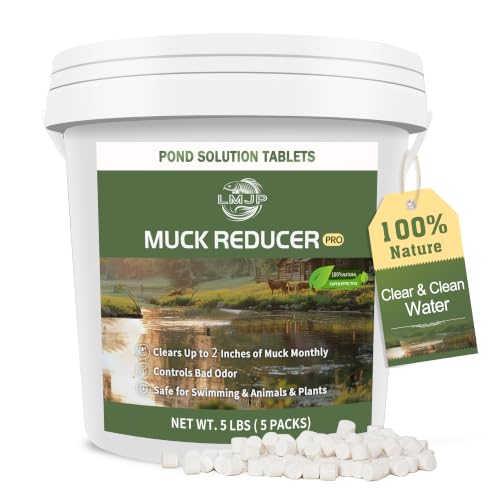
LMJP Muck Reducer for Ponds, Sludge Solution, 5LB

LMJP Muck Reducer for Ponds, Sludge Solution, 15LB

LMJP Muck Reducer for Ponds, Sludge Solution, 1LB
The Picks, Examined More Closely
Muck Clear earns the top slot because it works across three very different setups, from a 50-gallon fountain to a 1,000-gallon backyard pond. The tablets sink and slowly dissolve, releasing a blend of beneficial bacteria and enzymes that digest organic debris on contact rather than just masking it.
For most homeowners juggling more than one water feature, that versatility saves you from buying separate products. The format also keeps the active cultures shielded until they reach the bottom, which matters when your pond has heavy plant cover that would block surface treatments.
Where It Helps
- Multi-format reach: safe for fish, pets, and wildlife, with applications spanning ponds, fountains, and birdbaths alike.
- Continuous slow-release action: tablets dissolve over time, so you aren’t reapplying every few days.
- Chemical-free profile: uses biological action instead of harsh clarifiers, which protects koi and pond plants.
- Long supply at 500 tablets: stretches across a full treatment season for most small and mid-size ponds.
Things To Consider
- Dosing rhythm matters: most biological treatments need consistent application every couple of weeks to keep the bacterial colonies active.
- Cold-water slowdown: below roughly 50°F, microbial activity drops sharply, so winter doses do little until spring warms the water.
Who It Suits Best
You manage a multi-feature yard with a pond, fountain, and birdbath, and want one product that handles all three without harming fish or visiting wildlife.
Where Another Pick Suits Better
Cabin Obsession Pond Sludge Remover in the 10-pound pail is a better fit if you own a true lake or full-acre pond and need bulk pellet coverage.
The 5-pound pail from Cabin Obsession lands in the sweet spot for most residential ponds. The gradual-release pellets sink to the bottom and keep working as they dissolve, which means you don’t need to babysit the application once the dose is out.
Made in the USA with bacteria and enzymes that pose no threat to fish, dogs, or curious toddlers who lean over the pond edge. You may find the application rate stumbles on very large ponds, but for the typical 500 to 2,000-gallon backyard, the 5-pound size stretches through a full spring-to-fall season.
The Practical Payoff
- Steady sludge reduction: pellets dissolve at the bottom, reaching the muck layer instead of being skimmed away by filters or wind.
- Recreation-safe formula: designed for ponds where pets, kids, and wildlife all take an interest in the water.
- Domestic manufacturing: produced in the USA, which can mean tighter ingredient oversight.
Honest Caveats
- Not instant gratification: sludge breaks down gradually, so visible improvement typically shows over weeks, not days.
- Storage sensitivity: bacterial products lose potency in extreme heat, so storing the pail in a shaded garage matters.
Key Specs
Made For
Residential pond keepers with a mid-size water feature who want a low-touch, slow-release treatment that works without constant reapplication.
Consider Something Else When
Muck Clear in the 500-tablet count is a smarter pick if you also run a birdbath or fountain alongside the pond and want one product covering all three.
Same formula as the 5-pound pail, just doubled. The 10-pound version suits serious pond keepers running larger water features or treating multiple ponds from a single supply.
The bulk format reduces per-pound cost and the inconvenience of reordering mid-season. Compare that to the 5-pound option above: if you already know you’ll use that much treatment, skipping the reorder cycle is worth it.
Everyday Advantages
- Higher per-season coverage: 10 pounds handles a 1,500+ gallon pond across an entire treatment window.
- Same trusted chemistry: identical bacterial blend as the smaller pail, just more of it.
- Bulk convenience: fewer orders, fewer shipping boxes, less repackaging waste.
- Wildlife-friendly: keeps pond safe for amphibians, birds, and fish throughout the treatment cycle.
Worth Bearing In Mind
- Bigger container to store: the pail needs a dry spot shielded from direct heat and sun.
- Overkill for small ponds: a 200-gallon tub fountain will use only a fraction of the contents, potentially wasting the rest if you can’t reseal it well.
Feature Snapshot
Best Suited To
Pond owners with multiple mid-size features or one large water garden who prefer buying in bulk and skipping the mid-season reorder.
Look Elsewhere When
PondValue Ultimate Pond Bacteria Treatment in a 1-gallon liquid is a stronger match if you prefer liquid application over pellets and run a large open water surface.
Not Rocket Sciences leans into concentration rather than volume. A single 32-ounce bottle is formulated to deliver the bacterial activity you’d expect from a much larger container of competitor product, which makes it easy to dose without hauling heavy pails to the pond edge.
The liquid format disperses faster than pellets, so you see quicker microbial action in the water column. Depending on your pond’s turnover rate, that can mean faster results, but it also means the active cultures get filtered out sooner in heavily circulated systems.
The Upside
- High concentration per ounce: a little bottle goes a long way, easing storage and handling.
- Quick water-column action: liquid mixes faster than sinking pellets, reaching suspended organics.
- Compact footprint: fits in a kitchen drawer or small garden shelf without dedicated space.
Points To Note
- Less reach at the bottom: liquid disperses through the water but doesn’t target bottom muck as directly as sinking pellets do.
- Smaller bottle means frequent refills for large ponds, which adds up if you skip shipping in bulk.
Quick Facts
Who Should Grab It
Apartment balcony gardeners and small-pond owners who want a concentrate that won’t crowd the storage closet and disperses fast in shallow water.
Skip It When
LMJP Muck Reducer tablets are a better call if your pond has a thick, established sludge layer where sinking pellets reach further than any liquid pour.
PondValue goes wide with a full gallon of liquid bacteria formulated for lakes and large water gardens. Shake the bottle and pour directly into the pond, no mixing required, and the cultures activate on contact with the water.
The convenience factor matters here. You skip the pellet-counting and just dose by volume, which speeds up treatment across a large surface area. For most backyard koi ponds, a gallon goes further than you’d think, but a real lake might chew through it faster than expected.
Points In Its Favor
- No-mix application: shake, pour, done, which speeds up treatment across wide pond surfaces.
- Immediate activation: bacterial colonies start working on contact with pond water.
- Large-volume format: one gallon supports serious pond footprints or multi-pond dosing schedules.
- Versatile fit: works in backyard water gardens, koi ponds, and small lakes alike.
Trade-Offs To Consider
- Heavy jug: a full gallon weighs around 8 pounds, which complicates hauling out to a far pond.
- Liquid dispersal misses bottom sludge: less effective at thick, packed muck layers compared to sinking tablets.
At A Glance
Built With In Mind
Pond and lake owners with broad open water who prefer pour-and-go treatment over pellet measurement, especially across multiple water features.
Another Choice May Suit
LMJP Muck Reducer in the 15LB bucket is the right call when sludge is thick and you want sinking tablets that target the bottom layer directly.
LMJP positions its tablets for ponds that have already crossed into “noticeable smell” territory. The sinking tablets deliver enzyme activity straight to the muck, where anaerobic decomposition produces those sulfurous odors most pond owners describe as rotten egg.
The 5-pound pail fits the same mid-size pond profile as the Cabin Obsession 5-pounder above. The differentiator is the tablet format versus pellets, which sink individually and dissolve at predictable rates, making it easier to spread across a wide bottom without dumping heavy concentrations in one spot.
Good Reasons To Consider
- Direct bottom delivery: tablets sink quickly and dissolve where sludge accumulates.
- Odor-control focus: designed to address the anaerobic smell that builds in neglected ponds.
- Spread-friendly tablets: easier to distribute evenly across the pond bottom than a scoop of pellets.
Small Caveats
- Slower visual feedback: enzymatic breakdown takes weeks, so patience matters before judging results.
- Pail storage: the bucket needs a dry, cool spot to keep the tablets from clumping before use.
The Right Fit
Pond keepers fighting both visible sludge and foul pond odors who prefer tablet application for easier distribution across a wide bottom.
Reach For A Different Pick When
4X Pond Cleaner liquid is a smarter grab if your main concern is suspended particles and water-column clarity rather than bottom muck.
The 15-pound LMJP pail scales the same tablet formula up for serious pond owners. Same chemistry, same sinking action, just enough tablets to keep dosing across an entire growing season without reordering.
This is the format worth buying if you’ve already worked through a 5-pound pail and know you’ll keep treating. The per-pound savings help if you run multiple ponds or share treatment with neighbors who have their own water features.
Reasons It Performs
- Season-long supply: 15 pounds covers multi-month treatment without reordering.
- Targets sludge and odor: addresses both visible muck and anaerobic smell in a single formula.
- Bulk tablet convenience: easier to distribute across wide bottoms than powder alternatives.
Potential Compromises
- Substantial storage footprint: the bucket takes up meaningful shed or garage space.
- Heavy to transport: 15 pounds of tablets plus the pail is a real carry to a far pond.
Whose Shelf It Belongs On
Large-pond and small-lake owners who already know they need season-long treatment and want to skip the reorder cycle.
A Better Fit Elsewhere
Cabin Obsession 10-pound pail is the better value if you prefer pellets over tablets and want a slightly smaller container to manage.
The 1-pound trial size gives you a low-commitment way to test LMJP tablets in a small pond, fountain, or birdbath before sizing up. Same sinking action, same enzyme profile, just fewer tablets in a smaller container.
For most tiny water features under 100 gallons, a 1-pound pail lasts multiple seasons. It’s also useful as a backup supply to keep on hand for spot-treating problem areas in larger ponds without cracking open the big pail.
Strengths Worth Knowing
- Low-commitment entry point: lets you test tablet treatment before buying larger pails.
- Multi-feature reach: works in small ponds, fountains, and birdbaths without waste.
- Compact storage: 1-pound pail fits on a shelf or in a garden caddy without dedicated space.
A Few Limitations
- Not built for big ponds: you’ll burn through 1 pound fast on anything over 500 gallons.
- Per-pound cost runs higher than the 5- or 15-pound pails, so it’s a stepping stone, not a destination.
Perfect Match For
First-time pond owners and small-feature keepers who want to try tablet muck treatment without committing to a large bucket up front.
Not Your Match When
Cabin Obsession 5-pound pail is the smarter buy once you know tablets work for your setup, since the larger format costs less per dose.
Matching Muck Removers To Your Pond Type
Tablet versus liquid matters more than most shoppers expect. Tablets sink and dissolve at the bottom, so they reach sludge where it actually lives. Liquids spread through the water column and target suspended organics, but they struggle with thick packed layers.
Match the format to your problem. If you can see a black muck layer when the water drops, sinking tablets are the better tool. If your issue is cloudy water and floating debris, a concentrated liquid like 4X Pond Cleaner works faster. For wide ponds and lakes, the bulk tablets and large liquid formats keep dosing efficient without constant refills.
Think about your pond’s footprint in gallons. A small 200-gallon tub fountain needs maybe 1 to 2 pounds of tablets per season, while a 5,000-gallon koi pond chews through 5 to 10 pounds. Buying undersized forces mid-season reorders, while oversizing means storing extra product in conditions that can degrade bacterial potency.
Cold-water dormancy affects every biological treatment on this list. Below roughly 50°F, beneficial bacteria and enzymes slow dramatically, so winter applications barely register. The honest read is that you save your doses for spring through fall and accept that muck control pauses when the pond goes dormant.
Key Considerations Across These Picks
Mistakes Worth Dodging
Buying the largest pail without measuring your pond first is the most common slip. A 15-pound bucket on a 300-gallon pond means you’ll be storing active bacteria for years, losing potency along the way. Measure your pond’s approximate volume before deciding on package size.
Mixing formats mid-treatment is another trap. Switching from liquid to tablets (or vice versa) mid-season can disrupt the bacterial colony you’re trying to establish. Pick one format and stick with it for a full season to give the microbes time to colonize the muck layer.
The Upgrade Payoff
The jump from a 1-pound trial pail to a 10- or 15-pound bulk container saves real money per dose, but the upgrade only makes sense once you’ve confirmed the format works in your setup. Larger liquid formats like the 1-gallon PondValue bottle save hauling trips and refills when you’re treating wide water surfaces, while bulk tablet pails from Cabin Obsession or LMJP lower per-dose cost across multi-month schedules.
Frequently Asked Questions
How long does biological muck removal take to show visible results?
Most pond owners see noticeable improvement within four to six weeks of consistent dosing, though deeper sludge layers can take a full season or longer to fully break down. Temperature matters: warm-water bacteria work faster, so summer treatment cycles show results sooner than spring applications.
Can I use muck removers with fish and aquatic plants?
The treatments in this list are formulated to be safe for koi, goldfish, frogs, and pond plants when used as directed. Heavy overdosing can still stress fish by shifting oxygen levels, so follow the label rate for your pond size rather than guessing.
Should I choose tablets or liquid for my pond?
Tablets sink to the bottom and target the sludge layer directly, which makes them the right call when you can see a thick muck line. Liquids disperse through the water column and work faster on suspended particles, which helps when cloudy water is the main complaint.
How often should I apply muck remover to my pond?
Most treatments recommend dosing every two weeks during the active growing season, though some pellet formats work on a longer slow-release cycle. Cold months slow bacterial activity, so you can pause applications when water temperatures drop below 50°F.
Do I need to remove the muck manually before treatment?
No, and in fact raking or disturbing the sludge layer before treatment can stir up anaerobic bacteria and release foul odors. Let the biological treatment colonize the undisturbed muck and digest it in place over time.
Wrap Up
Biological muck removers for ponds work best when matched to the size of your water feature and the type of buildup you’re fighting. Small fountains and birdbaths do fine with tablet trial sizes, while mid-size backyard ponds benefit from 5- or 10-pound pellet pails. Lakes and large koi setups call for bulk tablet buckets or gallon-liquid formats. Whichever you pick, consistent dosing through the warm months gives the bacterial colonies time to do the slow work of digesting organic sludge, leaving you with clearer water and a healthier pond by fall.
