

A patchy, pale lawn rarely needs anything fancy, just the right nitrogen dose at the right time. The challenge most homeowners face is matching a fertilizer’s release pattern to their grass type, climate, and patience for reapplying. The eight options below span liquids that green up fast and slow-release granules that quietly feed for months, so you can match product to yard.
The Main Contenders

Jonathan Green Veri-Green Nitrogen Lawn Fertilizer 15,000 Sq Ft

Petramax Liquid Nitrogen Fertilizer 28-0-0 NPK 32 Oz

Petramax Liquid Nitrogen Fertilizer 28-0-0 NPK 1 Gallon

PetraMax Neighbor’s Envy 7-in-1 Liquid Fertilizer 1 Gallon

GreenView Fairway Formula Lawn Fertilizer 33 lb Bag

Scotts Liquid Green Max Lawn Food 32 oz
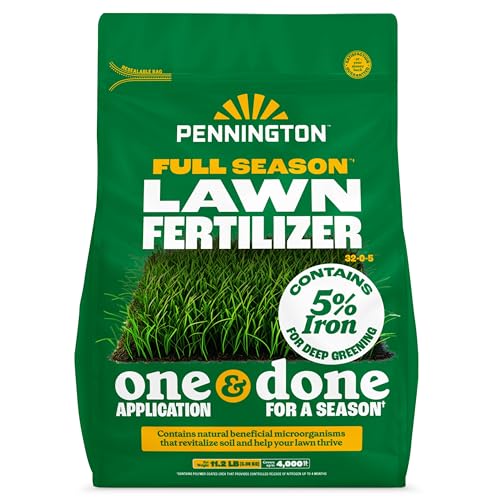
Pennington Full Season Lawn Fertilizer 4M 32-0-5

Pennington Full Season Lawn Fertilizer 12M 32-0-5
A Breakdown Of The Leading Choices
Granular nitrogen fertilizers like this Jonathan Green option work best when you want a single application that keeps feeding the lawn for weeks. The 29-0-3 analysis (that’s 29% nitrogen, zero phosphorus, 3% potassium) delivers a heavy nitrogen hit without the phosphorus runoff that troubles many municipalities. Coverage extends up to 15,000 square feet, which fits most suburban lots without forcing a second bag.
Compared to the PetraMax liquids later in this list, this is a hands-down spreader job rather than a hose-end spray. The added iron pushes color quickly once the granules dissolve into the soil, which matters during drought stress when grass naturally fades. For cool-season turf like fescue or Kentucky bluegrass, the slow-release nitrogen feeds steadily through heat spikes without forcing rapid top growth that demands constant mowing.
A Favorable Mix
- 29-0-3 analysis packs nearly a third of every granule as nitrogen, so a modest spread rate still feeds aggressively.
- Iron inclusion drives deeper green color faster than nitrogen alone can manage.
- Gradual nitrogen release reduces the weekly mowing binge common with quick-release blends.
- 15,000 square foot coverage handles most suburban lawns from a single bag.
- Low-phosphorus formula aligns with regional fertilizer restrictions in many counties.
Things To Consider
- Granular application requires a spreader and benefits from slightly damp ground for even pickup.
- Color response may take a week or two, slower than the liquid options that green up in days.
Key Specs
Who It Suits Best
Suburban homeowners with cool-season grass who want a single spring or fall application to carry the lawn through a long stretch of the season.
Look Elsewhere When
Shoppers needing visible greening within a few days should consider the Scotts Liquid Green Max Lawn Food 32 oz instead.
When the lawn looks tired and you want color this weekend, a liquid nitrogen product like the PetraMax 32 oz bottle delivers results faster than any granular. The 28-0-0 analysis carries serious nitrogen concentration, and the blend splits between quick-release and slow-release nitrogen so you see early green-up without the grass crashing two weeks later.
Unlike the Jonathan Green granular that needs a spreader and patience, this one hooks to a hose-end sprayer or a pump sprayer depending on your setup. For a small yard under 3,000 square feet, a single bottle covers several light applications across spring and summer. It’s the kind of product that earns a slot under the kitchen sink for touch-ups after a heat wave fades the turf.
The Upside
- Hose-end spray format skips the spreader and the cleanup.
- Mixed quick and slow nitrogen releases balance rapid color with extended feeding.
- 28-0-0 analysis supports visible greening in days rather than weeks.
Points To Note
- Smaller bottle means repeat purchases for yards over a few thousand square feet.
- Application must be done when the grass is dry and temperatures stay below typical summer highs to prevent leaf burn.
Made For
Homeowners with compact lawns who want a fuss-free way to refresh color between mowings.
Consider Something Else When
Yards bigger than 4,000 square feet are better served by the bulk Petramax Liquid Nitrogen Fertilizer 28-0-0 NPK 1 Gallon to cut down on refills.
The 1-gallon sibling to the PetraMax 32 oz bottle solves the volume problem for larger properties. The same 28-0-0 analysis and quick-plus-slow nitrogen blend carry over, just with enough liquid to feed a mid-size lawn through a full growing season without constant bottle runs. For someone managing half an acre or more, the per-application cost drops noticeably.
Compared to granular options like the GreenView Fairway Formula bag, this concentrate demands a pump or backpack sprayer rather than a broadcast spreader. That extra step is the trade for a faster green-up window and more uniform coverage. Storage needs a cool shed or garage corner, since concentrated nitrogen can degrade in extreme heat over time.
Notable Gains
- One-gallon jug handles several full-yard applications from a single purchase.
- Same balanced release profile as the smaller bottle for predictable feeding curves.
- Spray application covers even coverage that granular sometimes misses in patchy spots.
Honest Caveats
- Requires either a pump sprayer or hose-end attachment, which adds an equipment step.
- Weight when full makes carrying around the yard a workout on big properties.
- Storage in extreme heat or freezing can shorten shelf life.
Right Fit For
Homeowners with half-acre-plus lawns who prefer the precision of liquid feeding over granular broadcast.
A Better Fit Elsewhere
Anyone who wants a one-and-done seasonal application should reach for the Pennington Full Season Lawn Fertilizer 12M 32-0-5 instead.
When a lawn looks pale despite regular feeding, the culprit is often a secondary nutrient shortage rather than nitrogen alone. The PetraMax Neighbor’s Envy 7-in-1 stacks nitrogen with iron, humic acid, and sea kelp in a single concentrate, so you’re not juggling five separate bottles across the season. One gallon covers up to 16,000 square feet, which suits a sizeable yard in a single pass.
Where the standard Petramax 28-0-0 focuses purely on nitrogen, this blend broadens the feeding profile for tired soils. Humic acid is a soil conditioner that helps roots take up nutrients more efficiently, and sea kelp carries trace minerals that granular fertilizers usually skip. For someone who’s been feeding their lawn for years and still sees uneven color, the extra ingredients can break the plateau.
Strengths Worth Knowing
- Seven-ingredient formula addresses iron and micronutrient gaps alongside core nitrogen.
- One-gallon jug covers up to 16,000 square feet, fitting most large residential lots.
- Humic acid supports nutrient uptake at the root zone for longer-term soil health.
Things To Weigh
- Higher ingredient density raises the per-application cost compared to a single-nutrient liquid.
- Multi-ingredient concentrate settles over time, so shaking before mixing is standard practice.
Feature Snapshot
Best Suited To
Gardeners with depleted soils or persistent yellowing who want a broader nutrient profile than straight nitrogen delivers.
Skip It When
Shoppers who already feed a balanced granular and just need a quick nitrogen boost should stick with the Petramax Liquid Nitrogen Fertilizer 28-0-0 NPK 1 Gallon.
Granular fertilizers built for golf-style turf tend to be the most forgiving for homeowners who don’t want to fuss with timing. The GreenView Fairway Formula mixes immediate-release and slow-release nitrogen sources, so the lawn starts greening within a week and keeps feeding for up to roughly twelve weeks. The 33-pound bag covers up to 10,000 square feet, which works well for most single-bag purchases.
Where the PetraMax liquids demand sprayer setup, this option pulls out the broadcast spreader and you’re done in twenty minutes. The “fairway formula” framing isn’t just marketing, since the blend is engineered for uniform growth on closely mowed turf. For cool-season lawns that want steady feeding without repeated passes, the slow-release component carries the load past the initial color pop.
Reasons It Performs
- Dual nitrogen source delivers quick color and extended feeding in a single application.
- 33-pound bag covers up to 10,000 square feet for typical suburban properties.
- Granular format suits broadcast spreaders that most homeowners already own.
Some Limits To Know
- Bag weight at 33 pounds means planning the spreader route before you start pouring.
- Results trail behind liquid feeds, so don’t expect weekend turnaround.
Who Will Love This
Homeowners with cool-season turf who prefer one spring application over repeated liquid feedings.
Reach For A Different Pick When
Anyone managing warm-season Bermuda or zoysia should look at the Pennington Full Season Lawn Fertilizer 12M 32-0-5 for a longer feeding window.
The Scotts Liquid Green Max sits in a different category than the other picks on this list: it’s built for visible color within days, not for season-long feeding. The 2-in-1 liquid fertilizer and iron supplement combo pushes rapid greening, which is exactly what you want before a backyard event or a quick weekend refresh. The 32 oz bottle handles modest yards without dragging out the project.
Against the PetraMax 28-0-0 liquid, this option leans harder into fast color than long-term feeding. You may find it lands better as a touch-up product between granular applications than as a standalone seasonal plan. Application is straightforward through a hose-end sprayer, and the formula is safe across common turf types, which removes the guesswork for mixed grass blends.
Benefits That Matter
- Visible color shift within roughly three days for last-minute lawn refreshes.
- Combined liquid fertilizer and iron supplement simplifies the routine.
- Compatible with common turf types, including fescue, bluegrass, and Bermuda.
Where It Is Less Suited
- Fast-release profile means shorter feeding window than the slow-release alternatives.
- Not designed as a stand-alone seasonal feeding program.
Perfect Match For
Homeowners prepping for a gathering or post-event lawn recovery who want noticeable green within the week.
Swap It Out When
Anyone building a year-round feeding schedule is better served by the GreenView Fairway Formula Lawn Fertilizer 33 lb Bag.
Smaller lawns often get overlooked in fertilizer sizing, and oversized bags sit half-used in the garage. The Pennington Full Season 4M targets that gap with a compact 11.2-pound package that still delivers a 32-0-5 analysis and roughly four months of slow-release nitrogen from polymer-coated urea. That coating is what controls the release curve, dripping nitrogen into the soil gradually rather than dumping it all at once.
Compared to the larger Pennington 12M sibling later on this list, this one fits modest yards under about 3,500 square feet without surplus product going stale. The added 5% iron supports color depth, similar to what the Jonathan Green Veri-Green brings. For townhouse lawns and starter yards, the smaller format removes the “what do I do with the rest?” problem.
Why It Works Well
- Compact 11.2-pound bag fits small yards without leftover product.
- Polymer-coated urea releases steadily over roughly four months.
- 5% iron content deepens green color without forcing excess growth.
Trade-Offs To Consider
- Coverage tops out around 3,500 square feet, so larger lots need multiple bags.
- Slower green-up window than liquid options in early spring.
Built With In Mind
Townhouse or starter-home owners with modest turf areas who want one seasonal application and no leftover waste.
Where Another Pick Suits Better
Properties over half an acre should grab the Pennington Full Season Lawn Fertilizer 12M 32-0-5 for full-lot coverage.
The Pennington Full Season 12M is the larger sibling of the 4M version, scaled up to handle serious turf. The 33.6-pound bag carries the same 32-0-5 analysis with polymer-coated urea for a long, slow nitrogen release, but the “12M” indicates a much wider feeding window that can stretch across most of the growing season. For large lawns where repeated applications aren’t realistic, the longer release curve removes that chore from the calendar.
Where the Jonathan Green Veri-Green tops out around three months of feeding, this one pushes further before requiring reapplication. The 5% iron addition supports the deep green color homeowners chase in summer. The trade is the bag weight and storage space, since 33-plus pounds needs a dry corner in the garage rather than a kitchen shelf.
Good Reasons To Consider
- Extended release profile stretches feeding across roughly twelve months of coverage in many climates.
- 32-0-5 analysis delivers high nitrogen with potassium support for root hardiness.
- Polymer coating protects against nutrient leaching during heavy rains.
Factors To Consider
- 33.6-pound bag demands dry storage and reasonable upper-body strength to lift.
- Single-pass feeding leaves no room for mid-season correction if conditions shift.
Key Product Details
Whose Shelf It Belongs On
Large-property owners who want a single seasonal application rather than repeated summer feedings.
Not Your Match When
Modest yards under 3,500 square feet get better value and easier handling from the smaller Pennington Full Season Lawn Fertilizer 4M 32-0-5.
Picking The Right Nitrogen Source For Your Lawn
Nitrogen comes in three practical forms: quick-release for fast color, slow-release for season-long feeding, and blends that split the difference. Quick-release sources, often urea or ammonium sulfate, push visible greening within days but fade fast and can burn turf if overapplied. Slow-release sources use sulfur-coated or polymer-coated granules that drip nitrogen gradually, which is easier on the lawn and the schedule.
Granular products like the Jonathan Green Veri-Green and the Pennington Full Season line require a broadcast or drop spreader, plus a watering pass to activate the prills. Liquids like the PetraMax 28-0-0 and the Scotts Green Max skip the spreader but demand a sprayer and slightly more attention to coverage uniformity. The trade-off is timing flexibility: liquids let you feed when you want, while granules work best when rain or irrigation is expected within 24 hours.
Coverage numbers on the bag matter more than bag size. A 33-pound bag covering 10,000 square feet delivers less actual nitrogen per square foot than a smaller bag with a higher analysis percentage. Matching your lawn’s square footage to the bag’s coverage rating keeps you from under or over-applying.
What Separates A Solid Pick From A Gamble
Wrong Turns To Avoid
Buying by bag size instead of analysis is the most common fertilizer mistake. A cheap 40-pound bag with a low nitrogen percentage delivers less actual feeding than a 20-pound bag with a concentrated formula. Always compare the first number in the N-P-K analysis, since that’s the nitrogen percentage that drives greening.
Skipping a soil test before committing to a feeding program wastes money on the wrong nutrients. A basic home test kit or a county extension service sample reveals pH and existing nutrient levels, so you’re not blindly stacking nitrogen onto soil that already has plenty. For lawns with persistent yellowing despite regular feeding, micronutrient gaps like iron or sulfur are often the real issue.
Where The Extra Money Goes
Premium nitrogen fertilizers cost more for two reasons: higher analysis percentages and slower-release coatings. Polymer-coated urea, used in the Pennington Full Season line, costs more per pound than basic urea because the coating controls the release curve precisely. That precision prevents the feast-or-famine growth pattern that cheaper blends produce.
For large properties, the slow-release upgrade usually pays for itself in fewer applications and reduced mowing frequency. For small lawns where a single feeding per season is plenty, the premium isn’t worth the same premium price. Matching spending to lawn size and feeding frequency is the honest path through the price spread.
Frequently Asked Questions
How often should nitrogen fertilizer be applied to most lawns?
Most cool-season grasses benefit from two to three feedings per year, typically early spring, early fall, and sometimes late fall. Warm-season grasses usually want feeding during their active growth window in late spring through summer. The exact timing depends on grass type and local climate patterns.
What does the first number in a fertilizer analysis mean?
The first number in an N-P-K analysis represents the percentage of nitrogen by weight in the bag. A 29-0-3 fertilizer contains 29% nitrogen, so a 15-pound bag holds roughly 4.4 pounds of actual nitrogen. Higher numbers deliver more nitrogen per pound of product.
Can liquid and granular nitrogen fertilizers be used together?
Yes, and many homeowners apply a quick-release liquid in spring for fast color, then follow with a slow-release granular for the rest of the season. The two formats complement each other when timed properly, though combining them in the same spreader pass isn’t recommended.
Is high-nitrogen fertilizer safe for newly seeded lawns?
New seedlings are sensitive to high-nitrogen concentrations, which can burn tender roots. Starter fertilizers with balanced N-P-K ratios and lower nitrogen percentages are the safer choice for the first six to eight weeks, after which a regular nitrogen product can take over.
Do nitrogen fertilizers expire or lose potency over time?
Granular nitrogen fertilizers stay viable for several years when stored dry in a sealed bag. Liquids can degrade faster, especially if exposed to temperature swings or freezing. Always check the manufacturer’s date stamp and store product in a cool, dry place.
Bottom Line
Matching nitrogen source to lawn size, grass type, and feeding frequency beats chasing the highest analysis number on the shelf. The right product for you depends on whether you want weekend color or season-long feeding, and whether you prefer a spreader or a sprayer in hand. Pick the format that fits your routine, and your lawn will reward the consistency.
