

Nutsedge is the lawn weed that laughs at your mower. It grows faster than turfgrass, stands taller, and shrugs off broadleaf weed killers that work on everything else. If your yard has started showing those bright yellow-green spikes in summer, you need a selective herbicide designed specifically for sedges.
This roundup focuses on selective post-emergent products that kill nutsedge without damaging common turfgrass. The list spans ready-to-use sprays for spot treatment, hose-end concentrates for whole lawns, and professional-grade halosulfuron formulas for stubborn infestations. Each option has a genuine strength, and each fits a different type of homeowner.
A Snapshot Of The Selections

Fertilome Weed-Out Nutsedge Control RTU 32 oz

Fertilome Weed-Out Nutsedge Control RTS 32 oz

Fertilome Weed-Out Nutsedge Control Concentrate 16 oz
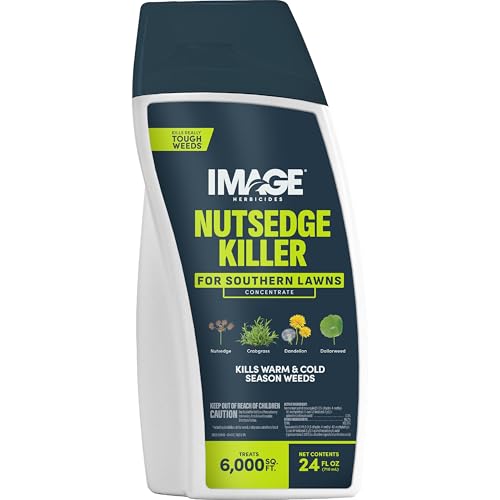
Image Herbicide Nutsedge Killer Southern Lawns 24 oz
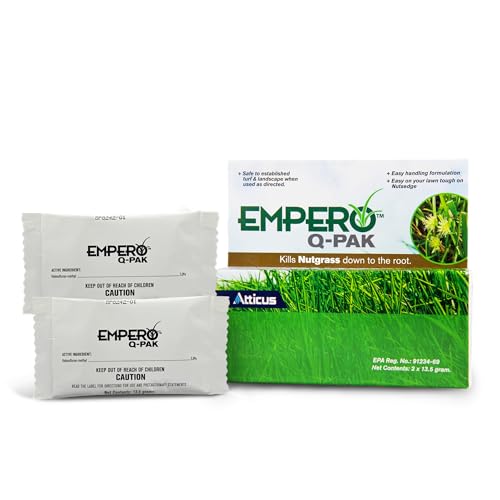
Atticus Empero Q-Pak Nutsedge Killer (2 Pack)

Ortho Nutsedge Killer Ready-to-Use 24 oz

Roundup for Lawns Crabgrass Destroyer2 64 oz

Roundup for Lawns1 Extend Wand Refill 1.25 gal
What Each Pick Brings To The Table
For homeowners with a few scattered nutsedge outbreaks rather than a yard-wide invasion, a ready-to-use bottle removes every excuse to delay treatment. The Fertilome RTU arrives pre-mixed in a trigger sprayer, so you point, squeeze, and walk away without measuring anything.
This selective herbicide targets sedges and broadleaf weeds while leaving common turfgrasses like bluegrass, fescue, and Bermuda unharmed when applied as directed. For most backyards, the 32 oz bottle covers a season’s worth of spot treatments on a quarter-acre lot, assuming nutsedge stays a secondary problem rather than the main one.
Everyday Wins
- Pre-mixed formula eliminates measuring errors and saves setup time
- Selective chemistry treats nutsedge without harming listed turfgrasses
- Trigger sprayer delivers precise coverage on individual clumps
- Compact bottle stores easily on a garage shelf between applications
Things To Consider
- Trigger sprayer becomes tedious across large areas or dense infestations
- One bottle may run short for yards where nutsedge dominates the turf
Built With In Mind
Homeowners with light, scattered nutsedge growth who want a grab-and-go spot treatment instead of mixing concentrates.
Skip It When
You face a yard-wide infestation, where the Fertilome RTS or Atticus Empero Q-Pak Nutsedge Killer handle scale far more efficiently.
When nutsedge spreads beyond a few clumps, you need a hose-end sprayer that walks the lawn with you. The Fertilome RTS (Ready-To-Spray) attaches directly to a garden hose and meters the concentrate automatically as water flows through the bottle.
Coverage scales dramatically compared to the RTU trigger bottle, which makes this a sensible step up for lots where nutsedge shows up across multiple zones. It’s still the same selective chemistry as the previous pick, so it works on bluegrass, fescue, Bermuda, and similar listed turfgrasses when applied as directed. For most homeowners treating a typical suburban yard, one 32 oz bottle handles the whole lawn in a single pass.
The Helpful Details
- Hose-end design eliminates pump sprayers and pre-mixing
- Built-in metering delivers consistent dilution across the lawn
- Selective action preserves listed cool- and warm-season turfgrasses
- Faster coverage than trigger bottles for medium-sized yards
Worth Noting
- Less precise than spot treatment for nutsedge near flower beds or vegetable gardens
- Requires a standard garden hose connection at the treatment site
- Whole-lawn application may treat areas without nutsedge, which some homeowners prefer to avoid
Right Fit For
Homeowners with mid-size lawns where nutsedge appears throughout the turf rather than in isolated patches.
Look Elsewhere When
You only need to treat a handful of weeds, where the Fertilome RTU 32 oz delivers the same chemistry with finer control.
The concentrate version of Fertilome’s Nutsedge Control assumes you already own a pump or backpack sprayer and want full control over dilution. A 16 oz bottle yields multiple tank loads, which makes it the economical pick for anyone treating nutsedge more than once per season.
The selective chemistry targets sedges and listed broadleaf weeds while leaving common turf species alone when used as directed. It’s the same active approach as the RTU and RTS picks, just delivered in a form factor suited to larger or repeat treatments. For most lawns, a pint of concentrate goes a long way, stretching across thousands of square feet of coverage per application.
Real-World Strengths
- Concentrate format lowers per-application cost across repeated treatments
- Compatible with standard pump and backpack sprayers you likely already own
- Selective formula works on multiple sedge and broadleaf species
- Compact bottle takes up minimal shelf space in a chemical storage area
Trade Offs
- Requires accurate measuring and mixing before each application
- Less convenient than pre-mixed options for one-off spot treatments
Best Suited To
Experienced homeowners who already own sprayer equipment and want the most economical option for ongoing seasonal use.
A Better Fit Elsewhere
You want grab-and-go convenience, where the Fertilome RTU 32 oz eliminates the measuring step entirely.
Key Product Details
Southern lawns run on different turf species than northern yards, and many general nutsedge products can damage St. Augustine or centipede grass. Image formulated this ready-to-spray specifically for warm-season southern turfgrasses, which gives it a clear niche.
The 24-oz hose-end bottle connects to a standard garden spigot and meters concentrate as you walk. For homeowners south of the transition zone dealing with yellow nutsedge in St. Augustine or Bermuda, this addresses the species compatibility gap that trips up most general-purpose weed killers. For most southern lawns, one bottle covers a typical residential lot in a single application pass.
A Strong Showing
- Formulated for warm-season turfgrasses where generic formulas risk damage
- Hose-end sprayer simplifies whole-lawn treatment
- Targets nutsedge along with dollarweed and other southern broadleaf pests
Honest Caveats
- Limited usefulness outside southern turf compatibility zones
- Hose-end delivery lacks the precision of trigger spray for beds and borders
- Cool-season lawn owners will need a different option entirely
Perfect Match For
Homeowners in the deep south growing St. Augustine, centipede, Bermuda, or zoysia who need a sedge killer rated for those species.
Reach For A Different Pick When
Your lawn runs on cool-season grass like fescue or bluegrass, where the Fertilome trio or Atticus Empero Q-Pak cover the same weeds safely.
Halosulfuron-methyl is the active ingredient lawn care professionals reach for when nutsedge has gone past the “annoying” stage into “lawn takeover” territory. Atticus packages this pro-grade chemistry in a two-pack of pre-measured water-soluble pouches that dissolve directly into a pump sprayer.
The Q-Pak format removes the liquid measuring step, which reduces the chance of under- or over-dosing on a concentrated active. For most homeowners facing dense nutsedge pressure on established cool- or warm-season turf, halosulfuron travels down to the root tubers and finishes the plant from below. Compatible turf species include bluegrass, fescue, Bermuda, and zoysia when applied as directed.
Key Advantages
- Halosulfuron active targets nutsedge tubers for complete top-to-bottom kill
- Pre-measured pouches eliminate concentrate measuring errors
- Two-pack format supports follow-up treatments within the same season
- Compatible with both warm- and cool-season established turf
- Lower active rate per acre than older sedge herbicides, reducing environmental load
Points To Keep In Mind
- Higher upfront cost than general-purpose sedge killers
- Requires a pump sprayer and some mixing knowledge to deploy
- Slow visual results compared to burn-down herbicides, often taking two to three weeks
Feature Snapshot
Who Should Grab It
Homeowners with severe or recurring nutsedge pressure on established turf who want a professional-grade selective herbicide.
Where Another Pick Suits Better
You only need light spot treatment, where the Fertilome RTU 32 oz or Ortho Nutsedge Killer Ready-to-Use 24 oz cost less and skip the mixing step.
First-time nutsedge treatments feel less intimidating with a familiar brand in a pre-mixed bottle. Ortho’s Nutsedge Killer arrives ready to spray and targets both yellow and purple nutsedge, plus kyllinga, wild onion, and a long list of broadleaf weeds.
The selective formula works on a wide range of established lawn types when applied as directed, which gives nervous beginners some breathing room. For most new users, the 24-oz trigger bottle covers a season’s worth of small outbreaks without forcing them to learn herbicide math on day one.
Everyday Perks
- Pre-mixed trigger spray removes all setup decisions
- Treats multiple sedge species plus listed broadleaf weeds
- Recognizable brand lowers the learning curve for first-time users
Small Caveats
- Trigger sprayer slows down large-scale coverage significantly
- Limited compatibility with some southern turfgrasses compared to Image’s dedicated formula
Who Will Love This
First-time nutsedge fighters who want a familiar, ready-to-spray option without measuring or mixing.
Consider Something Else When
You grow southern turf like St. Augustine, where Image Herbicide Nutsedge Killer Southern Lawns 24 oz is rated for those species.
Crabgrass and nutsedge sometimes share the same lawn at the same time, and most sedge killers ignore grassy weeds entirely. Roundup for Lawns Crabgrass Destroyer2 covers both, which makes it a smart pick when your weed problem isn’t a single species.
The 64-oz concentrate format suits a pump sprayer and gives you the flexibility to treat larger areas or spot-spray individual clumps. For most lawn renovation projects, this product’s flexibility around seeding schedules matters: it can be applied the day of seeding for listed turf types, though new seedlings still need protection windows afterward.
Well-Handled Touches
- Targets both grassy weeds and nutsedge in a single product
- Pre-seeding application window supports lawn renovation timing
- 64-oz concentrate scales for larger lots or repeat treatments
Points To Note
- Requires a pump sprayer and accurate mixing for proper coverage
- Compatibility is restricted to listed turf species
- Newly seeded lawns still require a waiting period before application
Made For
Homeowners renovating a lawn or fighting crabgrass and nutsedge simultaneously who want one product to handle both.
Not Your Match When
Nutsedge is your only target and crabgrass isn’t a problem, where the Fertilome concentrate or Atticus Empero focus entirely on sedge control.
Large northern lawns with mixed weed pressure benefit from a refill that pours into the Extend Wand sprayer system. This 1.25-gallon jug handles broadleaf weeds and nutsedge across bluegrass, fescue, zoysia, and perennial ryegrass when applied as directed.
The refill format assumes you already own the compatible Extend Wand, which keeps packaging waste down for repeat users. For most large properties, the bulk size eliminates the constant reordering that 24-oz and 32-oz bottles demand across a full treatment season.
The Practical Payoff
- Bulk 1.25-gallon size suits properties over half an acre
- Refill format reduces packaging waste for repeat users
- Targets a wide weed list on compatible northern turf species
- Compatible with Extend Wand system for less stooping and bending
- Reduces per-application cost compared to smaller ready-to-use bottles
Some Limits To Know
- Requires the separate Extend Wand sprayer handle for proper application
- Restricted to northern grass compatibility, so southern lawns need a different product
Feature Rundown
Whose Shelf It Belongs On
Northern homeowners with large properties who already use the Extend Wand system and want bulk weed control without frequent reordering.
Swap It Out When
You grow southern turfgrass or don’t own the wand system, where Image Herbicide Nutsedge Killer Southern Lawns 24 oz or the Fertilome trio cover similar ground without extras.
Choosing A Nutsedge Killer That Fits Your Lawn
Before picking a bottle, identify two things: your turf species and the scale of the infestation. Cool-season grasses like fescue and bluegrass tolerate most selective sedge herbicides, while southern species like St. Augustine and centipede narrow your options significantly.
Spot treatment suits light outbreaks where nutsedge shows up in a few clumps. Hose-end or pump sprayers make sense for whole-lawn coverage. Halosulfuron-based products like the Atticus Empero Q-Pak belong in your cart when prior treatments have failed or the sedge has colonized multiple zones.
Match The Product To Your Turf
Always confirm the label lists your specific grass species before applying. Northern yards usually run bluegrass, fescue, ryegrass, or zoysia. Southern lawns often include St. Augustine, Bermuda, centipede, or Bahia, and each has different tolerance profiles. A product safe on fescue can yellow out St. Augustine in a single pass.
Think About Spray Format And Scale
Trigger sprayers handle a handful of weeds without dragging equipment out of the garage. Hose-end bottles cover a quarter-acre lot in one walk. Pump or backpack sprayers paired with concentrate give you the lowest cost per square foot at the price of setup time. The 1.25-gallon Extend Wand refill fits properties past half an acre.
Time Applications Around Active Growth
Nutsedge responds best when it’s actively growing, which means warm soil and visible green foliage. Treat in late spring or early summer for the first pass, then plan a follow-up two to three weeks later for any regrowth from missed tubers.
Check Weather And Re-Entry Windows
Most selective sedge herbicides need a rain-free window after application to absorb into the foliage. Hot afternoons also stress the chemistry, so early morning or evening treatments tend to perform better. Keep pets and kids off treated areas until the spray dries, which usually takes a few hours.
Key Considerations Across These Picks
Pitfalls Shoppers Hit
The most common mistake is grabbing a non-selective herbicide and torching the lawn along with the nutsedge. Products labeled “kills everything” don’t distinguish between weeds and turf. Always confirm the label says “selective” and lists your specific grass species.
Another slip-up is treating dormant or drought-stressed nutsedge. The plant needs active green growth to absorb and translocate the herbicide down to the tubers. Spraying brown, stressed weeds wastes product and sets you up for regrowth.
What The Higher Tier Buys
The Atticus Empero and similar halosulfuron products cost more because the active ingredient travels further into the plant. Where general sedge killers brown the visible foliage, halosulfuron reaches the underground tubers and kills the whole plant. That extra reach justifies the higher price when nutsedge keeps coming back season after season, since each untreated tuber is a future outbreak waiting to happen.
Frequently Asked Questions
How long does it take for nutsedge killer to work?
Most selective sedge herbicides show visible yellowing within seven to fourteen days, with full kill taking two to three weeks for halosulfuron-based products.
Can I seed my lawn after applying nutsedge killer?
It depends on the product. Some allow seeding the same day, while others require a waiting period of several weeks; always check the specific label instructions before seeding.
Will nutsedge killer harm my grass?
Selective formulas target sedges and listed broadleaf weeds while leaving listed turfgrass species unharmed when applied as directed, but always confirm your specific grass is on the label.
How often should I apply nutsedge killer?
One application handles light infestations, while heavier outbreaks usually need a follow-up treatment two to three weeks after the first pass to catch regrowth from missed tubers.
Is it better to spray nutsedge or pull it?
Spraying wins for established infestations because pulling rarely removes the underground tubers, which regrow within days. Manual removal only makes sense for a single plant in a visible area.
The Takeaway
Nutsedge is stubborn, but the right selective herbicide makes it manageable. Start by identifying your turf species, then match the spray format to your lawn’s size and the infestation’s scale. Light outbreaks respond to trigger or hose-end bottles, while entrenched sedge colonies need halosulfuron products that reach the tubers. Re-treat what survives, and the lawn comes back cleaner each season.
