

Zero turn mowers handle real grass, real tight corners, and real acreage. The category splits fast though, from full-power riding decks to robotic units that quietly handle your lawn on a schedule. Choosing the right one means matching power, deck width, and features to the size and shape of your yard, plus your tolerance for tinkering.
This shortlist covers the main paths: traditional riding mowers for big properties, lift jacks for maintenance work, and a growing roster of robotic mowers for anyone who would rather sip coffee than push a deck. Each pick below earned its place by solving a clear use case rather than chasing a marketing headline.
The Shortlist At A Glance

Universal Zero Turn Mower Canopy for ROPS 1.5″-3″
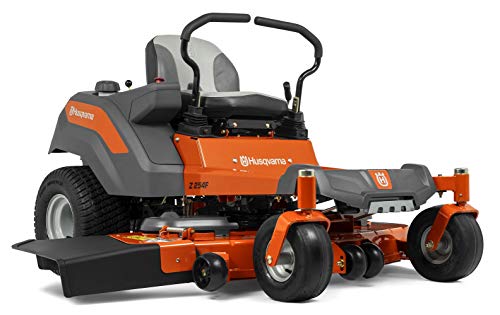
Husqvarna Z254F 54 in. 23 HP Kawasaki Zero Turn Riding Mower

Heavy Duty Lawn Mower Lift Jack 550lbs Capacity
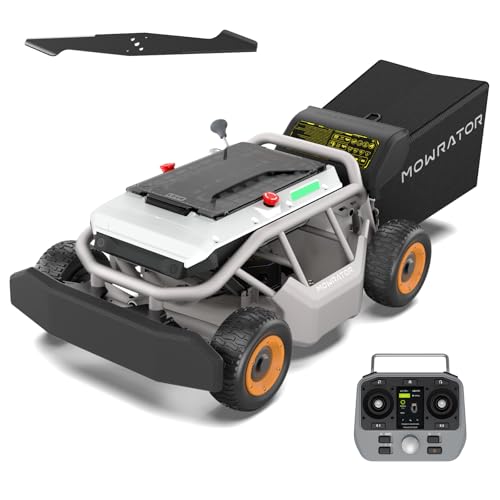
Mowrator S1 4WD Remote Control Lawn Mower 21-Inch

ANTHBOT M5 LIDAR Robotic Lawn Mower 1/8 Acre

Segway Navimow i215 LiDAR Robot Lawn Mower

Segway Navimow i110N Robot Lawn Mower 1/4 Acre
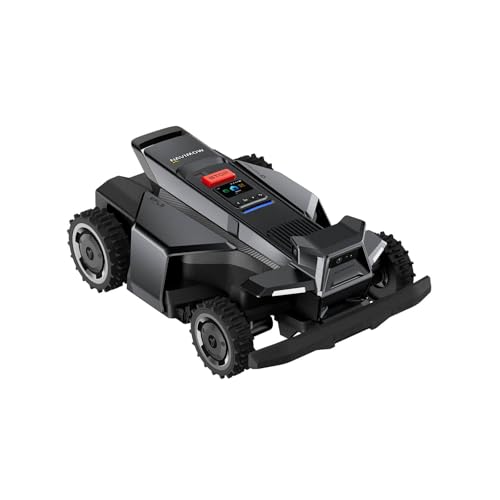
Segway Navimow X430 Robot Lawn Mower for 1 Acre

Segway Navimow i210 AWD Robot Lawn Mower 0.25 Acre

roborock RockMow X120H LiDAR AWD Robot Lawn Mower
What Each Pick Brings To The Table
Sitting on a zero turn mower for two hours under a July sun will drain anyone. This Proenclosures canopy drops over the ROPS (Roll-Over Protective Structure, the upright bars behind the seat) and gives the operator a sliver of real shade without changing how the machine drives.
It is built around a steel core with a UV-resistant powder coat finish, and the U-bolts let you tweak the height to fit ROPS tubes between 1.5″ and 3″. Most owners pair it with a full-size riding unit like the Husqvarna Z254F covered below, since the universal fit targets the most common ROPS diameters.
Notable Gains
- Cuts glare and keeps the operator cooler on long summer passes
- Steel core resists warping under prolonged sun exposure
- Adjustable U-bolts accommodate a wide range of ROPS tube sizes
- All hardware ships in the box, so installation stays simple
Things To Consider
- Color match is approximate against factory paint, not pixel-perfect
- Storage gets bulkier with the canopy in place, plan shed clearance accordingly
Made For
Operators in sunny climates who log long hours on a full-size riding mower and want overhead shade without a permanent cab.
Consider Something Else When
You want hands-free mowing, in which case the Mowrator S1 covered later in this list is a better fit.
Wide-open lawns reward wide decks, and the Husqvarna Z254F clears a 54-inch swath per pass. The 23 HP Kawasaki engine pairs with a hydrostatic transmission (a sealed hydraulic drive that uses fluid pressure instead of gears, so speed adjusts smoothly without shifting) to move the unit briskly across flat turf.
Compared with the canopy above, this is the actual mower it bolts onto. It targets owners with multi-acre properties who want a proven riding platform rather than a robotic helper, and the deck-lift assist makes height adjustments straightforward when you switch between thick and patchy grass.
Useful Strengths
- 54-inch fabricated deck covers ground fast, ideal for acreage
- 23 HP Kawasaki power plant handles tall, thick grass
- Zero-turn radius pivots around trees and beds without rework
Points To Note
- Full-size frame demands trailer space for transport
- Fuel and oil changes fall on the owner, no robotic convenience
Key Specs
Whose Yard It Belongs On
Owners of two or more flat acres who want a real riding mower and the muscle to finish fast.
Look Elsewhere When
Your lawn is under a quarter acre and you would rather automate the work, where the ANTHBOT M5 makes more sense.
A zero turn mower is only as sharp as its blade, and getting under one to swap that blade is half the job. The RocVanc lift jack raises tractors and zero-turn units up to 550 pounds so the operator can stand comfortably underneath.
Unlike the Husqvarna Z254F above, this is not a mower, it is the tool that maintains one. The adjustable wheel span fits common zero turn footprints, and the safety lock holds the deck in place once lifted. Owners commonly report the non-slip wheels make rolling the jack across a garage floor far less stressful than a typical floor jack.
The Upside
- 550-pound capacity covers most consumer zero turn models
- Safety lock prevents slip-back during blade swaps
- Adjustable width fits both tractors and zero turn frames
- Non-slip wheels steady the unit on smooth garage floors
Worth Noting
- Requires a level surface for safe lifting, sloped driveways can complicate setup
- Welded steel frame is heavy, plan to store it near where you service
Built With In Mind
DIY owners who sharpen their own blades and want a safer alternative to stacking crib blocks under the deck.
Skip It When
You never touch the underside of the deck yourself, where the Husqvarna Z254F’s full-service dealer network is the better match.
Not every lawn invites you to ride it. The Mowrator S1 is a 4WD (four-wheel-drive) remote-controlled mower with a 21-inch deck, aimed at properties where slopes or rough ground make riding uncomfortable. You guide it from a standing position with the included remote.
Compared with the RocVanc lift jack above, this is what you mow with rather than what you service. The four-wheel drive and 37° slope rating open up properties that would stop a riding mower. Battery power means quieter operation, though for full autonomous mowing, the robotic units later in this list take over the job entirely.
A Few Strong Suits
- 4WD drive climbs 37° slopes without losing traction
- Remote operation keeps the operator off the mower on uneven ground
- 21-inch deck trims yards a typical push mower would struggle with
Honest Caveats
- Requires active operator attention rather than full autonomy
- Runtime is finite, expect a recharge for larger properties
At A Glance
Who Will Love This
Owners of hilly or uneven properties who want mower power without riding on the machine itself.
A Better Fit Elsewhere
You want full autonomous mowing with no remote in hand, where the Segway Navimow X430 runs itself.
Robotic mowers used to require a weekend of perimeter wire. The ANTHBOT M5 skips all of that with a 360° LiDAR (Light Detection and Ranging, a laser-based scanning system that builds a 3D map of the surroundings) plus dual vision cameras that map the lawn as soon as you set it down.
Unlike the Mowrator S1 above, there is no remote, this is a set-it-and-let-it-mow unit. Coverage is rated at about an eighth of an acre, which fits small suburban lawns rather than the multi-acre footprint the Husqvarna Z254F handles.
Points In Its Favor
- No boundary wire or RTK (Real-Time Kinematic, a GPS correction method) antenna needed for setup
- Out-of-box setup reportedly takes just minutes
- LiDAR plus dual cameras map small lawns accurately
Small Caveats
- Eighth-acre capacity caps it for larger suburban lots
- Mapping accuracy can drop under heavy tree cover, depending on canopy density
Best Suited To
First-time robotic mower owners with a small, mostly open lawn who want the shortest setup possible.
Another Choice May Suit
You have a bigger or more complex yard, where the Segway Navimow X430’s one-acre rating is a smarter match.
Noise complaints are a real friction point for suburban mowing. The Segway Navimow i215 runs at 59 dB(A) (decibels A-weighted, the standard scale for everyday sound measurement), quieter than a normal conversation, so early-morning or evening runs stay neighborly.
Like the ANTHBOT M5 above, it skips the boundary wire, but the i215 pairs solid-state LiDAR (a more compact, vibration-resistant laser sensor with no moving parts) with vision sensors for satellite-free navigation. Coverage extends to about 0.37 acre, which fits most suburban lots that the Husqvarna Z254F would otherwise mow.
Strong Points
- 59 dB(A) operation keeps noise complaints off your plate
- Solid-state LiDAR plus vision gives stable navigation day and night
- Off-road wheels handle 45% slopes without losing the line
- Wire-free setup avoids the perimeter wire burial project
Minor Gripes
- 0.37-acre limit caps it on larger lots
- App-dependent for mapping and scheduling, less ideal for non-smartphone households
Feature Snapshot
Perfect Match For
Suburban homeowners with HOA rules or noise-sensitive neighbors who want automated, low-decibel mowing.
Reach For A Different Pick When
Your lawn tops half an acre with steep grades, where the Segway Navimow X430 covers more ground and steeper slopes.
Mid-sized lawns with multiple beds and zones need smarter mapping than a simple perimeter. The Segway Navimow i110N uses RTK plus vision sensors to maintain centimeter-level navigation, plus AI-assisted mapping that flags no-go zones for you to confirm.
Compared with the Navimow i215 above, this unit targets slightly larger quarter-acre lots and adds multi-zone management, which is a meaningful upgrade for lawns split by driveways, planters, or fenced sections. At 58 dB(A) it stays within the same quiet-operating band.
Everyday Perks
- Multi-zone mapping handles split lawns with separate areas
- RTK plus vision keeps the line stable under trees
- Virtual boundaries replace physical wire entirely
- 58 dB(A) operation stays neighbor-friendly
Possible Compromises
- Initial map setup rewards patience on heavily landscaped lots
- RTK base station location affects long-term positioning stability
The Right Fit
Homeowners with a quarter-acre lot broken into multiple grass areas who want hands-off zone-by-zone mowing.
Swap It Out When
Your yard pushes past half an acre, where the Segway Navimow X430 handles more ground in fewer passes.
Robotic mowers have historically avoided real hills. The Segway Navimow X430 fixes that with 4WD traction and an ORV-tuned suspension system (Off-Road Vehicle style geometry borrowed from side-by-side UTVs), letting it climb slopes up to 84% (roughly 40°) and clear obstacles just under three inches tall.
Where the Husqvarna Z254F handles flat acreage, the X430 handles contoured, hilly, or uneven properties up to a full acre without a perimeter wire. Its zero-turn steering keeps the turf intact rather than tearing wide arcs on tight pivots.
Where It Helps
- Climbs 84% slopes that stop most robotic mowers
- Clears obstacles up to 2.8 inches without getting stuck
- Zero-turn steering protects turf on tight pivots
- Cuts up to one acre without manual recharging trips
Trade Offs
- Premium positioning puts it at a higher price point than entry units
- Steep terrain demands correct initial map calibration
Who Should Grab It
Owners of large, sloped properties who want autonomous mowing without sacrificing traction or turf quality.
Not Your Match When
Your lawn is small and flat, where the ANTHBOT M5’s simpler setup is the better match.
Quarter-acre lawns with a meaningful slope are a common pain point. The Segway Navimow i210 AWD uses an all-wheel-drive system with electronic stability control (automotive-style sensors that brake individual wheels to prevent sliding) to handle 45% slopes without sliding or scuffing the turf.
Compared with the larger X430 above, this is the lighter, quarter-acre sibling with true zero-turn steering via a concentric third-wheel design. The concentric layout keeps the turn radius tight without leaving brown wheel patches on the grass.
A Few Highlights
- AWD plus stability control handles 45% slopes cleanly
- Zero-turn steering avoids the wide arcs that scuff turf
- Wire-free setup skips the boundary wire project
- Compact footprint fits storage in tight shed corners
Areas To Watch
- 0.25-acre capacity caps it for larger suburban lots
- Slope performance assumes dry grass, wet conditions may reduce grip
Right Fit For
Homeowners with quarter-acre sloped lawns who want autonomous mowing that won’t chew up the grass on turns.
Where Another Pick Suits Better
You need to cover bigger or rougher terrain, where the Segway Navimow X430 is the more capable option.
Roborock brings its indoor-mapped robotics expertise outdoors with the RockMow X120H. Dual LiDAR sensors build a 3D yard map in minutes, while AWD traction handles slopes up to 80% without losing grip.
Compared with the ANTHBOT M5 and Segway Navimow line earlier in this list, the RockMow X120H adds 4G connectivity (cellular data link that keeps the mower reachable even when your home Wi-Fi does not reach the far corner of the yard) and AI obstacle avoidance. Coverage stretches to roughly half an acre, slotting between the small-lot ANTHBOT and the one-acre Segway X430.
A Favorable Mix
- Dual LiDAR plus vision mapping builds accurate 3D yard maps quickly
- AWD handles 80% slopes without slipping
- AI obstacle avoidance spots toys, hoses, and pets in real time
- 4G link keeps the mower connected beyond Wi-Fi range
Less Ideal Details
- Smart features lean heavily on the companion app, less ideal for non-tech households
- 4G service availability depends on regional cellular coverage
Quick Facts
Who Will Love This
Tech-forward homeowners with a half-acre lot who want the sharpest mapping and obstacle avoidance in this list.
Consider Something Else When
You want a simpler, lower-touch setup, where the ANTHBOT M5 is friendlier for first-time robotic owners.
## What To Weigh Before Choosing A Zero Turn Mower The first question is whether you want to drive or be driven. Traditional riding units like the Husqvarna Z254F still own flat, multi-acre properties, but robotic and remote mowers now cover most suburban lots with less weekend time tied up. Match coverage to actual lawn area, not the rough estimate you might carry in your head. Second, look at terrain honestly. Flat lawns tolerate almost anything, but slopes above 20% deserve a unit with AWD plus stability control, like the Segway Navimow i210 AWD or X430. Wet, soft ground also changes the picture, since traction drops fast and tire type matters more than engine power. Third, weigh the maintenance load. Riding mowers need oil changes, blade swaps, and storage space for a 54-inch deck. Robotic units need charging dock space, app setup, and the occasional blade replacement, but no fuel or oil. The RocVanc lift jack helps anyone who plans to handle blade work themselves, regardless of which mower they choose. ## Avoiding Common Shopping Mistakes ### Where Shoppers Go Wrong The most common trap is buying for the lawn you wish you had rather than the one you actually mow. A 54-inch deck on a quarter-acre lot wastes fuel and leaves rougher cut quality. Conversely, a small robotic mower on three acres never finishes. Measure the grass, count the slopes, and then choose coverage accordingly. A second mistake is ignoring connectivity. Robotic mowers lean heavily on companion apps, and Wi-Fi dead zones around the perimeter interrupt mapping sessions. Units with 4G fallback, like the RockMow X120H, sidestep that problem, though cellular coverage varies by neighborhood. ### Where The Extra Money Goes Higher-tier robotic mowers add real, useful upgrades. Dual LiDAR beats single LiDAR on accuracy, AWD beats two-wheel drive on slopes, and 4G beats Wi-Fi-only on reliability. For hilly or complex lawns, these tiers translate directly into fewer stuck-mower rescue missions and cleaner cuts. On the riding side, premium tiers buy stronger engines, fabricated decks, and longer service intervals. Owners with multi-acre properties mow weekly through summer, and that workload quickly justifies the upgrade. For occasional use on a flat half-acre, the simpler tiers do the job without the extra spend. ## Frequently Asked Questions ### How Big Of A Lawn Justifies A Zero Turn Mower Over A Push Mower? Once a yard crosses roughly half an acre with open, passable ground, the time saved on a zero turn starts to matter. Smaller lawns rarely justify the storage footprint, especially with robotic options that handle them automatically. ### Are Robotic Zero Turn Mowers Reliable On Uneven Ground? Modern AWD robotic units like the Segway Navimow X430 and i210 AWD handle moderate slopes and bumps well, but performance depends on initial mapping quality. Owners with very rough terrain may still find a remote-controlled unit like the Mowrator S1 more predictable. ### Do Robotic Mowers Handle Slopes Better Than Riding Mowers? It depends on the comparison. Robotic AWD units like the X430 actually match or beat many entry riding mowers on steep grades. Traditional riding decks still win on flat, open acreage where speed matters more than slope traction. ### Can You Add A Canopy To Any Zero Turn Mower? Most modern zero turn mowers have a ROPS bar that accepts a universal canopy like the Proenclosures unit covered here. Very old or non-folding ROPS designs may not fit the standard U-bolt range, so check tube diameter before ordering. ## Wrap Up Zero turn mowers now split into two clear paths, full-size riding decks for big open properties and robotic units for everything in between. The right pick comes down to your lawn’s size, slope, and how much weekend time you want back. Start with the terrain, then let the picks above narrow the field.