

Hunting property rarely comes with wide-open fields. Most whitetail managers contend with tree lines, woodlot edges, and creek-side pockets that only see a few hours of direct light per day, and a standard full-sun forage mix can stall in those conditions. The right seed blend for shaded areas leans on species that photosynthesize efficiently in lower light, handle root competition from nearby trees, and still deliver the protein and tonnage deer need to keep coming back. Below are ten options worth considering, from shade-tolerant perennials to no-till throw-and-grow blends built for tough, hard-to-reach spots.
A Quick View Of The Lineup

Evolved Harvest 7 Card Stud Adaptive Food Plot Seed

Whitetail Institute No-Plow Deer Food Plot Seed

Whitetail Institute FUSION Deer Food Plot Seed

Whitetail Institute Winter-Greens Deer Food Plot Seed
Domain Outdoor Big Sexy Food Plot Seed

Whitetail Institute Secret Spot Deer Food Plot Seed
Whitetail Institute Tall Tine Tubers Deer Food Plot Seed
No Till Food Plot Seeds for Deer Throw and Grow Mix

Whitetail Institute Beets and Greens Deer Food Plot Seed
Whitetail Institute Chic Magnet Deer Food Plot Seed
What Each Pick Brings To The Table
Land managers working with a patchwork of light conditions often need one bag that does several jobs, and that is the case Evolved Harvest built 7 Card Stud around. The blend combines triticale, oats, winter peas, clover, chicory, turnip, and radish into a single mix, so as the season shifts the plot keeps offering something fresh instead of going dormant all at once.
Clover and chicory handle lower-light pockets reasonably well, and the cereal grains push up quick canopy even in marginal soils. For most mixed-light properties, this is a sensible all-season foundation that you can mow or rotate without starting over.
Everyday Perks
- Multiple species share the workload across the hunting season, so a shaded patch rarely sits empty.
- Cereal grains establish quickly, helping suppress weeds while slower forages get going.
- The brassica component (turnip and radish) gives deer a carbohydrate-rich option once temperatures drop.
- One bag covers varied soil types, which suits small property owners with multiple micro-sites.
Worth Noting
- Some seeds are small and need good seed-to-soil contact, so a light rake or cultipack improves germination in thick leaf litter.
- Performance varies by region, and the mix may not include every species a local deer herd prefers.
Key Advantages
Best Suited To
Land managers with mixed-light property who want one bag to handle early bow season through late firearms without reseeding.
Look Elsewhere When
The Whitetail Institute No-Plow Deer Food Plot Seed suits small backwoods plots better, since it germinates with almost no seedbed prep.
Sometimes the best hunting spot on the property is the one you cannot get a tractor into. No-Plow exists for exactly that scenario, and the formulation has earned a long track record among hunters planting pockets of woods that see only a few hours of direct sun per day.
The annuals in this mix establish fast and tolerate modest ground prep, so you can broadcast into a scraped patch and still get a stand going. In our view, this is one of the easier entry points for someone building a first shaded kill plot.
Reasons It Performs
- Designed for areas that only receive three to four hours of sunlight daily, common along tree lines and benches.
- High-protein annual that can stay attractive for roughly nine months under decent conditions.
- No need for heavy equipment, which protects soil structure in remote corners.
Trade Offs
- Works best after a light surface scuffle, so a rake or drag still helps in unworked ground.
- Annual species mean you will replant each year, unlike a perennial clover or chicory stand.
Feature Snapshot
Whose Shelf It Belongs On
Hunters with steep, rough, or equipment-inaccessible shaded pockets who want a fast, forgiving annual.
Skip It When
The Whitetail Institute FUSION Deer Food Plot Seed fits better, since it returns for multiple seasons from a single planting.
FUSION pairs proprietary clover genetics with WINA perennial chicory, and the result is a persistent blend that handles weather swings better than most single-species offerings. The mix suits plots that shift between full sun and partial shade through the day, since both legumes hold quality in lower light.
You may find the perennials take a full season to really hit their stride, but once established, the plot keeps producing without annual reseeding. For most managers, that long-tail return is the main draw.
Key Advantages
- Clover plus chicory offers solid protein levels across the warm months.
- Heat, cold, and drought tolerance reduce the risk of mid-summer die-off in dry shaded pockets.
- Perennial lifespan trims annual reseeding cost and labor.
Points To Keep In Mind
- Initial establishment is slower than an annual cereal blend, so weed pressure must be controlled early.
- Soil pH matters more for clover, and a lime application may be necessary in acidic woodland soils.
Right Fit For
Land managers building a longer-term shaded plot who want a single planting to carry multiple seasons.
Consider Something Else When
The Whitetail Institute Chic Magnet Deer Food Plot Seed suits hunters focused purely on a long-lasting chicory stand, with added antler-building protein emphasis.
When temperatures drop and most forages fade, brassicas often keep delivering, and Winter-Greens leans entirely into that late-season window. The blend is built around WINA brassica varieties, with a small amount of tall tine turnip mixed in for bulb attraction.
Deer pattern hard on these plots in late fall and early winter, especially where surrounding natural browse is limited. The honest read is that brassicas perform best when planted in a clean seedbed, so a shaded opening with prepped soil will outperform an unworked leaf-litter site.
The Helpful Details
- Brassica family tolerates frost and stays accessible even after snow flurries.
- Drought resistance helps during the late-summer establishment window.
- High attraction during the late hunting phase when other plots have gone dormant.
A Few Limitations
- Annual rotation required, so expect yearly reseeding in the same plot.
- Some deer herds take a season to learn to browse brassicas heavily, depending on regional pressure.
Quick Facts
Made For
Northern hunters who need a cold-month food source in shaded clearings and want deer to keep visiting after the first frost.
A Better Fit Elsewhere
The Whitetail Institute Tall Tine Tubers Deer Food Plot Seed suits someone wanting both leafy forage and bulb digging from turnips.
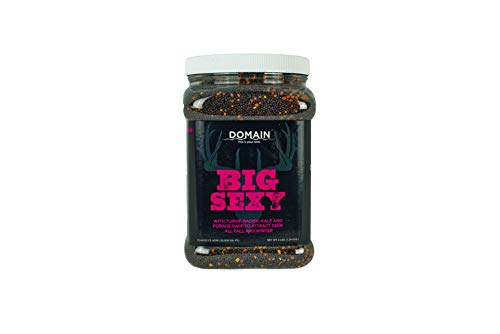
Big Sexy arrives in a reusable jug, which makes hauling seed into a backwoods plot a bit easier than wrestling a paper sack through the brush. Inside, the mix blends turnip, radish, kale, and forage rape chosen for cold tolerance and high nutrition.
Domain positions this as a cool-season foundation for antler growth support, and the leafy bulb-producing components give deer both a leafy browse and a root option. Depending on your soil prep, you can expect a fairly quick germination once moisture arrives.
Positive Points
- Single jug covers about half an acre, simplifying rate calculations.
- Cool-season species selection handles frost and short photoperiods well.
- Reusable container cuts down on packaging waste over multiple seasons.
Softer Spots
- Container jug format is bulkier than a flat bag for long hikes in.
- Brassica-heavy mix may need a learning curve if your local herd is not used to these species.
Perfect Match For
Hunters with a defined half-acre shaded clearing who want a tidy jug format and a cool-season nutrition boost.
Reach For A Different Pick When
The Whitetail Institute Beets and Greens Deer Food Plot Seed fits a similar late-season window but adds sugar beet sweetness to the attraction profile.
Secret Spot is built for the tucked-away patches most hunters forget about: a hinge cut, a small clearing behind a ridge, a forgotten bench. The blend pulls from roughly twelve forages so something is always in season, and the mix tolerates minimal ground prep with hand tools.
For shaded sites that are awkward to reach, the included soil pH booster is a small but practical touch that helps forage establish in slightly acidic woodland ground. In most cases, the trade-off is a smaller bag footprint in exchange for broader species coverage.
Where It Helps
- Plantable with hand tools, which protects remote or steep locations.
- Broad species range keeps the plot attractive across the hunting season and beyond.
- Soil pH booster supports germination in moderately acidic soils.
Factors To Consider
- Smaller bag size means larger shaded plots will need multiple purchases.
- Annual blend, so plan on reworking the site each year for consistent attraction.
Who It Suits Best
Backcountry and bowhunters planting small, hidden shaded pockets with hand tools and limited equipment access.
Where A Sibling Pick Shines
The Whitetail Institute No-Plow Deer Food Plot Seed suits a slightly larger remote plot with the same no-till approach and more coverage per bag.
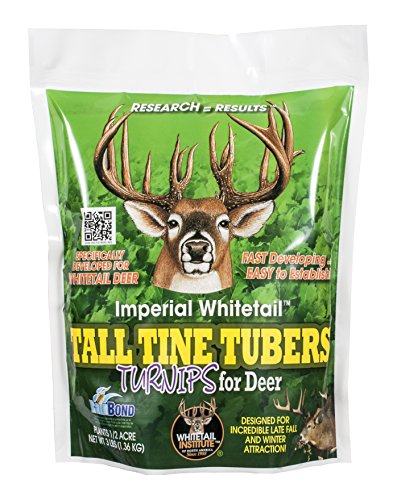
Turnip plots reward patience, because the leafy tops feed deer through fall and the bulbs carry the attraction into the cold months. Tall Tine Tubers was developed specifically for whitetail food plots, and the research effort behind the variety is one reason it remains a popular late-season choice.
Compared to brassica-only blends like Winter-Greens, the value here is that two food sources mature on different timelines, which spreads the draw across a longer window.
Real Benefits
- Tops and bulbs give deer two different feed options within the same plot.
- Long development timeline keeps the plot attractive into late winter.
- Coverage options at 0.5 acre and 2 acres match small or mid-size shaded clearings.
Honest Caveats
- Turnips need adequate rainfall during establishment, so dry shaded hillsides can struggle.
- Annual life cycle, so the plot will need to be redone each season.
Core Details
Right Fit For
Hunters with shaded openings who want a single species that produces both leafy forage and bulb digging through the cold months.
Swap It Out When
The Evolved Harvest 7 Card Stud Adaptive Food Plot Seed fits a multi-species rotation better across the entire hunting season.
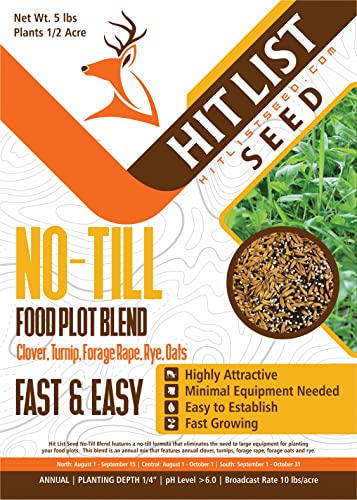
For first-timers who want results without renting equipment, the Hit List Seed throw-and-grow blend is hard to beat. Crimson clover, purple top turnips, forage brassica, oats, and rye all sit in one bag, so a shaded raked patch can turn into a deer draw with a hand-crank spreader and a rain.
Fast germination is the main reason this mix appeals to beginners, though veterans sometimes use it for last-minute fall plots when timing slips. For most people, the trade-off is annual reseeding in exchange for a low-fuss start.
Practical Advantages
- No-till approach works in plots you cannot get equipment into.
- Quick germination gives visible results within weeks under decent moisture.
- Multi-species blend reduces the risk of one species failing in tough conditions.
Trade-Offs To Consider
- Bag covers a modest footprint, so larger properties may need multiple units.
- Annual blend means the plot will not persist into the following year without replanting.
Who Should Grab It
New food plotters or busy hunters who want a forgiving shaded plot without investing in tillage equipment.
Another Choice May Suit
The Whitetail Institute Secret Spot Deer Food Plot Seed is a stronger fit for remote shaded pockets where pH buffering and a broader forage mix are priorities.
Sugar beets give a food plot a sweetness most brassicas alone cannot match, and Beets and Greens leans into that flavor advantage. Whitetail Institute proprietary kale, turnip, and radish varieties round out the mix, so deer find leafy browse, bulb forage, and sugary roots in one stand.
Compared to brassica-only blends, the sugar beet component often pulls deer onto the plot faster, especially in herds already conditioned to root crops. The honest read is that this is a strong late-season option for shaded clearings with decent soil depth.
Where It Delivers
- Sugar beet sweetness is a strong late-season draw.
- Multi-component blend offers leafy, bulb, and root forage in one stand.
- Holds attraction well into the cold months once established.
Possible Compromises
- 3 lb bag limits coverage to roughly half an acre, so larger plots need multiple units.
- Sugar beets prefer deeper, looser soils, so thin woodland soils may yield smaller roots.
Built With In Mind
Hunters with shaded openings on decent soil who want a sweet late-season attraction in addition to standard brassica browse.
Not Your Match When
The Domain Outdoor Big Sexy Food Plot Seed fits a wider, larger half-acre planting with a reusable jug and similar brassica-heavy appeal.
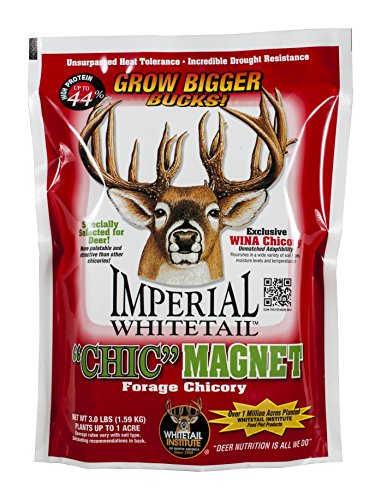
Chic Magnet wraps a single component, WINA-100 perennial chicory, in a coating designed to lift seedling survival rates. The result is a plot that can last up to three years from a single planting, which suits managers who prefer to seed once and let the stand establish.
Heat, cold, and drought tolerance all show up in the species profile, making this a candidate for shaded plots in transition zones where weather swings hard. You may find establishment slow in the first year, but mature stands pull consistent browse through the warm months.
The Case For It
- Perennial lifespan up to three years from one planting, trimming long-term reseeding effort.
- Coated seed supports stronger seedling survival in marginal ground.
- Strong heat and drought tolerance helps in dry, partially shaded pockets.
Where It Is Less Suited
- Single-species plot offers less dietary variety than a multi-component blend.
- Year-one growth can look thin until the chicory roots establish.
Who Will Love This
Hunters who want a low-replant shaded plot on a deeper-lobed stand and are willing to wait for the chicory to mature.
Where Another Pick Suits Better
The Whitetail Institute FUSION Deer Food Plot Seed delivers a similar perennial approach with added clover diversity for a more varied diet.
What To Weigh Before Seeding A Shaded Food Plot
Shade changes the rules, so a seed mix that thrives in a wide-open hay field can stall in a woodlot. Light availability is the first filter: track how many hours of direct sun your chosen spot actually receives during the growing season, and match that to the species in the bag.
Cereal grains like rye and oats establish quickly and tolerate partial shade better than most legumes, while clovers and chicory hold quality with three to four hours of sun. Brassicas and turnips handle short photoperiods well but prefer a clean seedbed, so soil prep matters more than sun hours in a tight spot.
Root competition is the other quiet factor. Nearby trees pull moisture and nutrients aggressively, so deeper topsoil, organic matter, or even a light lime application can swing results. Soil pH between about 6.0 and 7.0 suits most species in this category, and a basic test kit removes the guesswork before spending money on seed.
Plot size and access drive the rest. Small remote pockets favor hand-tooled throw-and-grow blends, while half-acre shaded openings can support perennial blends worth the higher upfront cost. Match the bag coverage to your actual footprint rather than rounding down and ending up with a thin stand that weeds can overrun.
Key Considerations Across These Picks
Common Pitfalls When Buying Shaded Plot Seed
The most frequent slip is choosing a full-sun mix and assuming partial shade is close enough. Most open-field blends need six or more hours of direct light, and shaded pockets rarely deliver that, so germination stalls and weeds win.
Another trap is ignoring seed-to-soil contact. Leaf litter, thatch, and root mat block small seeds from reaching mineral soil, and a quick rake or drag often matters more than the bag you choose. Buying more bag than you need, or skipping a soil test, tends to compound the problem rather than fix it.
When Paying Up Earns Its Place
Premium perennial blends cost more up front but replace annual reseeding and the labor that comes with it. For someone managing multiple shaded plots, that trade-off can pencil out within a few seasons. The upgrade is worth it for hunters who want a low-fuss shaded stand that keeps producing year after year.
Frequently Asked Questions
Can any food plot seed grow in heavy shade?
No seed thrives in deep, all-day shade, but several blends tolerate partial shade with three to four hours of direct light. Cereal grains, clover, chicory, and brassicas are the most forgiving options for these conditions.
Should I lime shaded food plot soil before planting?
Most woodland soils trend acidic, and a basic soil test tells you whether lime is needed. For most clover and chicory blends, a pH in the 6.0 to 7.0 range is a sensible target.
How small can a shaded food plot be and still attract deer?
Even a quarter-acre shaded plot can pull deer if the forage is high quality and located near cover. Small, remote pockets often outperform larger open plots during daylight because deer feel secure approaching them.
Do I need to till shaded ground before planting?
Tillage helps but is not always required, especially with no-till blends designed for hand-tool prep. A cleared, raked, or burned surface usually gives seed enough contact to germinate.
When is the best time to plant food plot seed in shaded areas?
Fall plantings tend to perform well in shaded plots because trees drop leaves and allow more light to reach the ground during the establishment window. Spring plantings also work, particularly for clover and chicory blends that prefer cooler establishment temperatures.
Wrap Up
Shaded food plots reward managers who match species to actual light and soil conditions, not just bag weight. Perennials like FUSION and Chic Magnet suit long-term plots, brassica-heavy blends like Winter-Greens and Tall Tine Tubers pull late-season traffic, and no-till options like No-Plow and Secret Spot fit the tight, remote spots. Pick the bag that matches your plot, prep the soil, and let the shade work with you rather than against you.
