

Growing tomatoes in fabric bags changes the game for patio and small-space gardeners. The right container keeps roots oxygenated, drains freely during summer storms, and moves with the sun across a balcony or deck. With dozens of options out there, picking the right one means balancing size, fabric weight, handle strength, and whether you also need a built-in support cage. This roundup covers ten solid picks for the 2026 season, from simple 5-gallon starter bags to wheeled planter towers with full trellis systems. You’re sure to find a fit for your space, your tomato variety, and the way you actually garden.
A Fast Comparison Of The Options

FEED GARDEN 10 Gallon Grow Bags 4 Pack (300G)

FEED GARDEN 5 Gallon Grow Bags 4 Pack 300G

Land Guard 10-Pack 10 Gallon Fabric Grow Bags
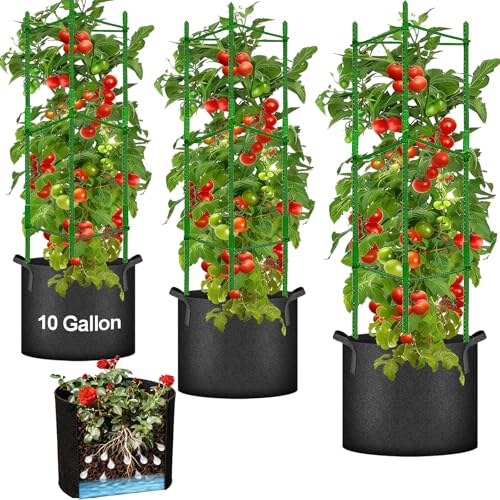
Moirsunt Tomato Cages with 10 Gallon Grow Bags 48″
KOBAZ Tomato Planter Box with Trellis 41.3″
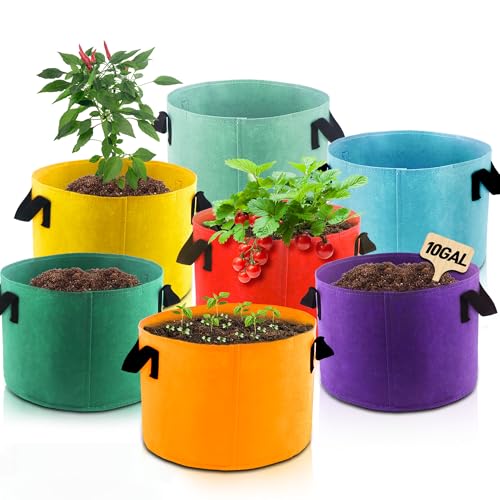
Biotolot 10-Gallon Fabric Grow Bag 7-Pack (Mixed Colors)

Legigo 4 Pack Tomato Cages with 17 Gallon Grow Bags

ANPHSIN Triangle Tomato Cage with 10 Gal Grow Bags (3 Sets)

TeCreatio Tomato Planter Raised Bed 56.5″ Self-Watering

WLLEYAY 3 Pack 46″ Square Tomato Cages with 17 Gal Grow Bags
Meet The Standout Selections
Tomato plants with deep taproots need real vertical room, and a 10-gallon fabric bag gives the root zone room to spread without turning into a waterlogged mess. The FEED GARDEN 10 Gallon Grow Bags 4 Pack uses 300G thickened non-woven fabric, meaning the walls hold their shape even when the soil is fully saturated. For a backyard grower running four indeterminate plants along a sunny fence line, this set covers a full season’s worth of production without the bags sagging or tearing at the seams.
Reinforced handles make a real difference when you’re shifting a soil-heavy bag across the patio to chase afternoon sun. Compared to the lighter 200G bags common at the entry level, these feel sturdier in the hand and tend to last through multiple seasons of fold-and-store cycles. You’re getting four matching bags that arrive ready to fill.
Well-Handled Touches
- 300G fabric thickness resists tearing and deformation over multiple seasons
- Reinforced handles support a fully watered bag without ripping at the stitching
- Breathable non-woven walls promote air-pruning, which prevents root circling in mature plants
- Generous 10-gallon capacity supports deep-rooted indeterminate varieties like Brandywine or Cherokee Purple
- Fast drainage cuts the risk of root rot during heavy summer rain
Things To Consider
- Four bags fill a lot of space, so you’ll need a dedicated sunny area or a long patio run
- The thicker fabric costs more per bag than thin disposable options
- No built-in support, so you’ll need separate stakes or cages for tall varieties
Who It Suits Best
Backyard tomato growers running four indeterminate plants who want fabric bags that survive more than one season.
Look Elsewhere When
The Moirsunt Tomato Cages with 10 Gallon Grow Bags is a better match if you want built-in cage support included from day one.
Not every tomato needs a 10-gallon bag. Determinate varieties like Roma or patio types stay compact and produce heavily in a 5-gallon container, and the FEED GARDEN 5 Gallon Grow Bags 4 Pack delivers that capacity without the bulk. The 300G non-woven fabric matches the build quality of its 10-gallon sibling, so you get the same multi-season durability in a smaller footprint.
Each empty bag weighs just 4 oz, and the four-pack totals around 16 oz, so storage between seasons is painless. Fold them flat, tuck them in a garage bin, and they’re ready to replant year after year. If you’re working with a narrow balcony railing or a small herb corner, this set slips into tight spots where the 10-gallon bags won’t fit.
Features That Help
- 300G fabric outlasts thinner 200G entry-level bags across multiple grow cycles
- Double-stitched handles give a confident grip when relocating a watered bag
- Foldable design stores flat in a drawer or bin during winter
- 5-gallon size suits determinate and dwarf tomato varieties
- Breathable weave prevents waterlogging during summer storms
Worth Noting
- Limited root depth for vigorous indeterminate plants
- Dries out faster than larger bags, so summer watering frequency goes up
Made For
Patio gardeners and apartment growers running smaller tomato cultivars in tight, sunny corners.
Consider Something Else When
The FEED GARDEN 10 Gallon Grow Bags 4 Pack is a smarter match if you’re growing tall indeterminates that need more root depth.
Ten bags in one shipment makes sense when you’re filling a long side yard or rotating crops across a backyard. The Land Guard 10-Pack 10 Gallon Fabric Grow Bags comes in a black non-woven finish that absorbs heat, which tomato roots appreciate during cool spring nights. The high-strength weaving keeps the bags lightweight enough to relocate even when full, and the integrated handles support serious weight.
For a community garden plot or a large household running a dozen tomato plants, this set spreads cost across more containers. You sacrifice some of the 300G thickness found in premium picks, but for a single-season starter setup, the trade-off often works. Just expect a shorter lifespan than the heavier fabric options on this list.
A Strong Showing
- Ten bags cover a full backyard rotation or community plot
- Non-woven fabric allows excess water to drain freely through the soil
- Lightweight construction makes repositioning manageable
- 10-gallon capacity handles most standard tomato varieties comfortably
Trade Offs
- Fabric is thinner than 300G competitors, so lifespan may be shorter
- Black color absorbs more heat in direct sun, which can stress roots in hot climates
Right Fit For
Larger-scale growers and community gardeners who need volume and value over multi-season heavy-duty construction.
A Better Fit Elsewhere
The FEED GARDEN 10 Gallon Grow Bags 4 Pack is worth the upgrade if you want thicker fabric that survives multiple seasons.
Buying a grow bag and a tomato cage separately means matching sizes and hoping the stakes reach the right height. The Moirsunt Tomato Cages with 10 Gallon Grow Bags solves that by shipping both together: three three-layer cages, three 10-gallon bags, and the steel core stakes to hold a 48-inch trellis. For a first-time grower who wants everything in one box, the convenience is hard to beat.
The 27 steel core stakes and 18 connecting pipes build a sturdy frame that supports heavy fruit clusters as they ripen. You can move the whole assembly to catch morning sun, then shift it back to afternoon shade without disassembling anything. The trade-off is footprint, since each cage-plus-bag combo needs a clear circle of space.
Real-World Strengths
- Three complete cage-and-bag sets arrive in one package, no extra shopping needed
- 48-inch cage height supports tall vining varieties like Sun Gold or Black Krim
- Three-layer design lets you train branches horizontally as the plant grows
- Steel core stakes handle the weight of mature fruit clusters
Room For Improvement
- Assembly takes time, and the included manual is fairly basic
- Each complete set requires significant deck or yard space
Best Suited To
First-time tomato growers who want a complete cage-and-bag system without piecing parts together from multiple listings.
Reach For A Different Pick When
The Legigo 4 Pack Tomato Cages with 17 Gallon Grow Bags makes more sense if you want square cages and bigger 17-gallon pots.
A rolling planter with a built-in trellis turns a tomato patch into a movable feature. The KOBAZ Tomato Planter Box with Trellis 41.3″ pairs a 4.1-gallon growing pot with a 31.65-inch trellis, and four lockable swivel wheels let you roll the whole unit to follow the sun across a deck. At 9.84 by 9.84 inches in footprint, it fits narrow spaces where wider bags won’t.
For renters or anyone with a strict HOA deck, this kind of mobile planter respects the “no permanent beds” rule. The 4.1-gallon pot limits you to smaller tomato varieties or herbs at the base, but the trellis height still gives vining plants room to climb. You’re paying for the wheel and frame engineering as much as for the soil volume.
The Case For It
- Lockable wheels let you reposition the planter without lifting
- Integrated 31.65-inch trellis supports climbing tomatoes and beans
- Slim 9.84 by 9.84-inch footprint fits narrow balcony edges
- Year-round build holds up across multiple growing seasons
Points To Keep In Mind
- 4.1-gallon capacity restricts you to compact or determinate tomato types
- Hard-sided planter doesn’t air-prune roots the way fabric bags do
Perfect Match For
Apartment and condo growers who need a slim, rolling planter they can shift around the deck throughout the day.
Swap It Out When
The Land Guard 10-Pack 10 Gallon Fabric Grow Bags is a better match if you want larger soil volume and traditional fabric construction.
Color-coding your garden sounds frivolous until you’ve tried to remember which pot held the Brandywine and which held the Cherokee Purple. The Biotolot 10-Gallon Fabric Grow Bag 7-Pack ships seven bags in different colors, so you can dedicate each hue to a specific variety. That visual cue makes daily watering and pruning a lot faster, especially once the foliage fills in and labels disappear.
The non-woven fabric construction drains freely and lets roots breathe, and the integrated handles support a fully watered 10-gallon bag. For families gardening with kids, the color variety turns a chore into a more engaging routine. You give up a bit of the long-term heavy-duty feel of 300G fabric, but you gain organization and visual appeal.
Practical Advantages
- Seven different colors help you track varieties without reading faded labels
- Non-woven fabric drains quickly to prevent overwatering
- 10-gallon size supports standard indeterminate tomato varieties
- Integrated handles simplify repositioning around the yard
- Color variety adds visual interest to a patio garden layout
Soft Spots
- Fabric weight isn’t specified, so durability may vary season to season
- Bright colors may fade in direct sun over multiple years
Who Should Grab It
Family gardeners and variety collectors who want visual organization alongside functional fabric containers.
Another Choice May Suit
The FEED GARDEN 10 Gallon Grow Bags 4 Pack is a stronger pick if multi-season fabric thickness matters more than color variety.
Heirloom tomato plants get massive, and a flimsy round cage folds under the weight of a mature Brandywine loaded with fruit. The Legigo 4 Pack Tomato Cages with 17 Gallon Grow Bags uses a 47-inch square frame that distributes pressure across four support stakes, which holds up better than triangular designs. The 17-gallon fabric pots give the root system real depth to anchor those big plants.
The kit includes 100 plant ties, 48 stakes, and 24 connectors, so you have hardware for training branches as the season progresses. Note that only two of the four cages come with grow bags included, so you’ll need to source extra fabric pots if you want a bag under every cage. The build quality is the standout, and the price reflects the heavy-duty framing.
Practical Pluses
- Square cage geometry distributes weight more evenly than triangular frames
- 17-gallon grow bag capacity supports deep-rooted heirloom varieties
- 47-inch height accommodates tall indeterminate cultivars
- 100 included plant ties cover a full season of branch training
Possible Compromises
- Only two grow bags ship with four cages, so extra bags must be sourced separately
- Square footprint demands more layout planning than round bags
The Right Fit
Heirloom tomato growers running large, heavy plants that need square cage support and serious soil volume.
Not Your Match When
The Moirsunt Tomato Cages with 10 Gallon Grow Bags is a simpler match if you want a bag included with every cage in a smaller 10-gallon size.
The ANPHSIN Sturdy Triangle Tomato Cage kit ships three complete sets, each with a three-layer plant support and a 10-gallon grow bag. The plastic-coated steel core stakes resist rust through wet seasons, and the triangle profile uses 27 straight poles, 27 connecting rods, and 18 joints to lock each tier together. The build lands in a middle ground between lightweight budget cages and the heavier square frames.
For a mid-sized planting of three tomato plants, the configuration covers a typical backyard row without dominating the space. You can train branches up through the three layers, which spreads the canopy and improves airflow around the fruit. The trade-off is that triangle cages concentrate pressure on three points, so very heavy heirlooms may still need staking support.
What Stands Out
- Three complete cage-and-bag sets cover a standard backyard tomato row
- Plastic-coated steel resists rust through humid growing seasons
- Three-tier design trains branches vertically for better airflow
- 10-gallon grow bag included with every cage set
Honest Caveats
- Triangle geometry concentrates pressure, so very heavy fruit loads may stress joints
- Assembly requires careful attention to connector alignment
Whose Shelf It Belongs On
Mid-scale growers planting three to four tomato varieties who want a balanced cage-and-bag combo at a moderate price point.
Where A Sibling Pick Shines
The Legigo 4 Pack Tomato Cages with 17 Gallon Grow Bags is a better match for very heavy heirlooms that need square support framing.
Self-watering planters solve the daily chore problem during peak summer heat. The TeCreatio Tomato Planter Raised Bed 56.5″ includes a built-in reservoir and a water indicator, so you know exactly when to refill without guessing. Four ventilation holes in the planter box keep oxygen flowing to the root zone, which prevents the soil suffocation that plagues sealed plastic containers.
At 56.5 inches tall with a metal trellis, this unit is closer to a small greenhouse tower than a simple grow bag. Five sturdy wheels (four with brakes) let you roll the whole thing across a patio to follow the sun, and the raised height saves your back during harvest. The cost is significantly higher than fabric options, but for a serious grower or someone with limited time, the watering automation alone can justify the spend.
Useful Highlights
- Built-in reservoir and water indicator automate daily watering checks
- Four ventilation holes promote healthy oxygen flow to roots
- Five wheels (four locking) reposition the unit without heavy lifting
- 56.5-inch metal trellis supports tall vining tomato varieties
Where It May Fall Short
- Costs considerably more than fabric bag alternatives
- Larger footprint demands dedicated patio or yard space
Built With In Mind
Busy growers and hot-climate gardeners who want a self-watering system that reduces daily maintenance during peak summer.
Skip It When
The KOBAZ Tomato Planter Box with Trellis 41.3″ delivers a similar rolling trellis concept at a more accessible price point.
Square cages handle weight better than round ones, and the WLLEYAY 3 Pack 46″ Square Tomato Cages ships with three cages paired to 17-gallon grow bags. The steel core tubes are thickened and hardened to resist bending, and a polyethylene anti-rust coating protects the frame through wet weather. For a grower running a small but serious tomato operation, this kit balances size, durability, and footprint.
The 46-inch height supports most indeterminate varieties, though extremely tall heirlooms may still need a stake extension. The 17-gallon fabric bags give roots plenty of room, and the included handles make relocating a filled bag manageable. The frosted finish keeps the visual profile cleaner than shiny metal alternatives, which matters on a visible patio.
The Value In It
- Thickened steel core tubes resist bending under heavy fruit loads
- Polyethylene coating protects against rust through wet seasons
- Square cage geometry distributes weight more evenly than round frames
- 17-gallon grow bags give deep-rooted varieties room to anchor
- Frosted finish looks cleaner than glossy alternatives on a visible patio
Some Limits To Know
- 46-inch cage height may be short for very tall heirloom varieties
Who Will Love This
Multi-season growers running three tomato plants who want square cage durability and large fabric bags in one package.
Where Another Pick Suits Better
The Legigo 4 Pack Tomato Cages with 17 Gallon Grow Bags is the upgrade pick if you want four cages and a slightly taller 47-inch frame.
Choosing The Right Size And Material For Tomato Containers
Fabric thickness, measured in grams per square meter (g/m²), tells you how much abuse a bag can handle. A 300G bag has denser weave than 200G, so it holds its shape when full and survives multiple seasons of folding and reuse. Tomato roots benefit from breathable fabric because it air-prunes the root tips, which prevents the circling pattern that strangles plants in smooth plastic pots.
Bag capacity drives plant health more than most gardeners expect. Determinate and patio tomatoes thrive in 5-gallon containers, while most indeterminate varieties need 10 gallons or more for a full season of fruit production. For heirlooms with deep taproots, 17-gallon bags give the root zone room to anchor a tall, heavy plant without toppling.
Handle construction often decides whether a bag is actually usable. A fully watered 10-gallon bag weighs 40+ pounds, so reinforced or double-stitched handles prevent the frustration of a torn seam halfway across the patio. Look for handles that wrap under the bag’s base, not just loop through the top hem.
Drainage and airflow work together in fabric containers. The breathable weave lets excess water drain while oxygen reaches the root zone, which reduces the risk of root rot during heavy rain. Hard-sided planters can trap moisture, so look for ventilation holes or a self-watering reservoir with an overflow path if you go with a solid planter.
Cage compatibility matters once plants get tall. Most tomato varieties need 4 to 6 feet of support, and a flimsy round cage buckles under the weight of mature fruit clusters. Square cages distribute pressure across four anchor points, and heavy-duty steel-core stakes hold their shape through wind and rain. If your chosen bag doesn’t include a cage, plan to pair it with one that matches the bag’s diameter.
Key Considerations Across These Picks
Where Shoppers Go Wrong
The most common mistake is underestimating bag size. A 5-gallon bag works for a patio tomato, but most gardeners plant indeterminate varieties that outgrow that volume by midseason, leading to stunted growth and split fruit. Match bag capacity to the mature size of your chosen cultivar.
Another slip is buying the cheapest thin-fabric bags and expecting multi-season use. Entry-level 200G bags can collapse or tear after a single summer, so if you plan to reuse containers year after year, investing in 300G fabric or a rigid planter pays off in the long run.
Where The Extra Money Goes
Higher-tier grow bags and planters earn their price through fabric density, rust-resistant coatings, and engineered features like self-watering reservoirs. A 300G bag costs more per unit but survives multiple seasons, while a premium planter tower replaces daily watering with a reservoir check. The upgrade makes sense for serious growers, large plantings, or anyone who travels during peak summer.
