

A dull pair of pruners turns a quick weekend tidy into an hour of grunting through stems that should’ve snapped clean. Anyone maintaining roses, fruit trees, or an overgrown hedge knows that hand strength matters less than blade geometry, leverage, and grip fit. The eight heavy duty hand pruners below cover the realistic range: forged bypass blades for live growth, anvil jaws for woody stems, a ratcheting option for tired hands, and one cordless model for orchard-scale work. Pick the design that matches your branches and your grip, and the rest of the season feels easier.
A Snapshot Of The Selections

Original LÖWE Professional Anvil Pruner 1.104
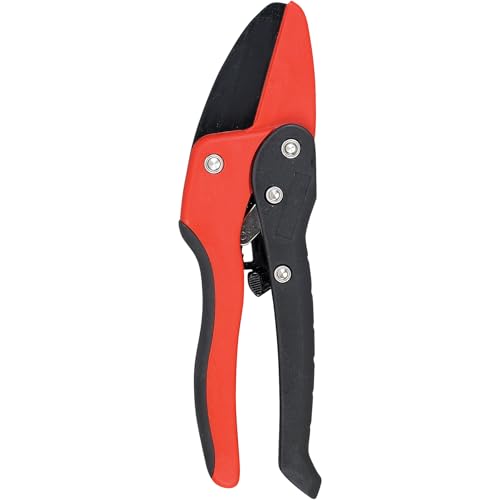
Corona Tools Ratchet Hand Pruner, 3/4″ Cut

Fondwell 8.5″ Professional Hand Pruners

Edward Tools Classic Cut Bypass Pruners

Corona BP 6250 MAXFORGED Bypass Pruner
Anttctig Electric Pruning Shears, 2.56″

VOTREK 8.5″ Garden Shears, Adjustable

TONMA TP-1 8.1″ Pruning Shears, Japan
A Breakdown Of The Leading Choices
Where most pruners cut like scissors, the LÖWE 1.104 uses an anvil action: a single sharp blade closes onto a flat metal plate, crushing dry stems with concentrated force rather than slicing them. That style suits dead wood and twiggy cleanup after a season of growth, and the carbon steel blade carries a sliding lacquer coat to cut friction and slow rust. For medium to large hands, the grip geometry sits comfortably during long sessions of rose pruning or hedge tidy-ups.
Made in Germany with all replaceable parts, this is a tool meant to be serviced rather than replaced. A one-hand safety lock keeps the blade closed in storage. Compare that approach to the bypass designs covered below, and the trade-off shows up fast: anvil pruners can bruise live green stems, so a thoughtful gardener keeps one of each on the bench.
Bright Spots
- Anvil design chews through dead, dry branches with minimal wrist strain.
- Carbon steel blade with sliding lacquer fights corrosion and stays sharper longer between honings.
- All replaceable parts mean a dropped handle or worn spring doesn’t end the tool’s life.
- Comfortable grip geometry for medium to large hands during long pruning sessions.
- One-hand safety lock is intuitive when stepping away mid-task.
Worth Noting
- Anvil action can crush tender live growth, so it isn’t a one-tool-fits-all choice.
- Heavier than most bypass pruners, which matters during overhead work.
Whose Shelf It Belongs On
This one fits gardeners who mostly deal with established woody shrubs, dormant rose canes, and late-winter cleanup where a bypass blade would struggle.
A Better Fit Elsewhere
Anyone pruning mostly live green growth will get cleaner cuts from the Corona BP 6250 MAXFORGED Bypass Pruner covered below.
Ratcheting pruners work in stages, biting a little deeper with each squeeze so a thicker stem finally gives without demanding maximum grip strength. That mechanism turns pruning from a hand-strength contest into something anyone can do, which is why this Corona model has stayed popular with older gardeners and those recovering from wrist injuries. The 3/4-inch capacity handles most shrub and small-tree work without forcing a switch to loppers.
The padded grip spreads pressure across the palm, and the steel blade stands up to repeated cuts through woody stems. Where the LÖWE above crushes dry wood with brute force, this Corona uses mechanical advantage to slice it: a different path to the same result, depending on which muscles you’d rather save.
A Few Highlights
- Ratcheting action multiplies hand strength, useful for arthritic or fatigued grip.
- 3/4-inch cut capacity handles most woody stems without reaching for loppers.
- Steel blade holds an edge through repeated heavy cuts.
- Padded grip reduces pressure points during long sessions.
Trade Offs
- Ratcheting takes more strokes per cut, slowing rapid pruning of thin material.
- Heavier than a standard bypass, so it tires the wrist in overhead positions.
Right Fit For
Gardeners with reduced grip strength, older hands, or anyone tackling woody overgrowth in stages rather than all at once.
Look Elsewhere When
You mostly trim live green growth and want cleaner scissor-like cuts, where the TONMA TP-1 ahead makes more sense.
The Fondwell PS85 keeps things simple, which is exactly what a casual gardener needs. A bypass blade (two curved edges that pass each other like scissors) makes clean cuts on live green stems, the standard configuration for roses, herbs, and soft fruit canes. At 8.5 inches overall, the tool fits a wide range of hand sizes without forcing a cramped grip or a sloppy oversized hold.
A push-to-lock mechanism secures the blade between sessions, and the lightweight frame reduces fatigue during a long afternoon of snipping. For someone just starting out or replacing a flimsy older pair, this delivers the basics without the cost of forged components or replaceable parts found higher up the list.
Where It Excels
- Bypass action delivers clean cuts on live stems, reducing plant damage.
- Lightweight frame minimizes hand fatigue during extended trimming.
- Push-to-lock safety mechanism keeps the blade secured in storage.
Points To Note
- Cut capacity is modest, so thicker woody branches require a heavier tool.
- Blade steel is entry-grade, meaning more frequent sharpening under heavy use.
Best Suited To
Casual gardeners, beginners, and anyone maintaining a few roses or small shrubs without daily heavy use.
Reach For A Different Pick When
You prune woody material above a half-inch thick routinely, where the Edward Tools Classic Cut Bypass Pruners next on the list handle the load better.
Forged carbon steel is the difference between a pruner that survives a season and one that survives a decade. Edward Tools presses that steel into a bypass design that cuts up to a 1-inch branch diameter, which is enough headroom for nearly any backyard shrub, fruit tree, or climbing rose. The Classic Cut geometry aims for a clean scissor-like slice rather than a crush, so live wood heals faster.
Where the Fondwell above keeps things light and simple, this model trades some of that comfort for blade durability. The non-slip handle grip stays put when the morning dew is on the roses, and a safety latch keeps the tool closed in a gardener’s apron pocket. Resharpening is part of long-term ownership.
What Makes Sense
- Forged carbon steel blade resists dulling and accepts resharpening over time.
- 1-inch cutting capacity covers most residential shrubs and small tree work.
- Non-slip grip holds steady even with wet gloves or morning dew.
- Safety latch secures the tool during transport in an apron or tool belt.
Honest Caveats
- Heavier than budget bypass pruners, so longer sessions tire the wrist more.
- No replacement parts pathway, so wear eventually retires the tool.
Who Should Grab It
Homeowners managing mixed gardens of shrubs, fruit trees, and roses who want one pruner to reach for most of the time.
Skip It When
Dead wood is your main target, in which case the LÖWE 1.104 anvil at the top of this list is purpose-built for that material.
Pros reach for a pruner dozens of times an hour, and aluminum framing keeps the BP 6250 light in the hand without flexing under load. The MAXFORGED steel blade is replaceable, which matters when a day’s grinding through privet hedge eventually dulls the edge. With a 1-inch capacity, this Corona covers live green wood, woody stems, and the thicker fruit-tree suckers that defeat smaller pruners.
The non-slip comfort grip softens long sessions, and the forged blade geometry produces the clean scissor-cut that helps plants heal quickly. Where the Edward Tools model above is a strong homeowner pick, this one tilts toward crews and serious enthusiasts who treat pruners as a daily-use tool rather than an occasional helper.
Features That Help
- Aluminum frame keeps weight low without sacrificing cutting rigidity.
- Replaceable forged steel blade extends tool life well beyond entry-level options.
- 1-inch cut capacity handles thick branches other residential pruners can’t reach.
- Non-slip grip stays secure during wet or sweaty conditions.
Points To Keep In Mind
- Premium price relative to casual-use pruners.
- Aluminum frame, while light, can dent if dropped on stone.
Made For
Landscape professionals, orchardists, and dedicated hobbyists pruning several hours a day, multiple days a week.
Not Your Match When
Your pruning amounts to a few snips per weekend, where the lighter Fondwell 8.5″ above covers the workload at a friendlier cost.
Once the day’s cuts climb into the hundreds, hand strength becomes the bottleneck. This cordless pruner sidesteps that entirely with a 2.56-inch jaw opening powered by interchangeable batteries, and a switchable opening size handles thinner stems without chewing through battery life on every cut. Two batteries and a spare blade ship in the box, so a long orchard session doesn’t end at 30% charge.
The category is a different animal than the manual picks above: a backpack or belt harness carries the battery, the cutter weighs less than a hand pruner, and the cuts happen at the pull of a trigger. Anyone with grip limitations, large-scale orchards, or commercial landscaping finds the math quickly favors a tool like this.
Practical Advantages
- 2.56-inch opening chews through branches that defeat every manual option here.
- Adjustable opening extends battery runtime on lighter material.
- Two included batteries keep work going when one runs down.
- Spare blade in the box reduces downtime from a dulled edge.
Some Limits To Know
- Heavier overall system once the battery pack is included.
- Replaces rather than complements manual pruners, so it’s overkill for small yards.
Who It Suits Best
Orchard owners, vineyard managers, and anyone pruning enough wood in a session that hand strength becomes the limiting factor.
Swap It Out When
You prune a handful of roses on Saturday morning, where the manual Corona Ratchet Hand Pruner earlier on this list is a saner scale.
Most pruners assume one hand size fits all, which leaves smaller grips cramping and larger hands slipping. VOTREK solves that with a stepless handle adjustment that opens or closes the grip width without tools, plus a separately adjustable cutting width. The same tool fits a teenager’s rose-tending session and a tall adult’s hedge trim without compromise.
For a household where more than one person reaches for the pruners, that’s a quiet quality-of-life upgrade. The 8.5-inch frame keeps the tool in the comfortable middle ground, and the bypass blade handles live wood the way most backyard pruning requires. Where the Anttctig above is a serious investment, this stays in casual-garden territory.
Notable Gains
- Stepless handle adjustment fits hands from small to extra-large.
- Adjustable cutting width adapts to different stem thicknesses.
- Shared household tool without needing separate pairs per user.
- One-handed adjustment avoids fumbling with extra hardware mid-task.
Where It May Fall Short
- Adjustment mechanism adds moving parts that can wear over years.
- Less rugged than fixed-frame pruners for daily heavy use.
Who Will Love This
Households with multiple gardeners of different sizes, or anyone whose grip strength varies day to day.
Consider Something Else When
You’re a single-user professional who needs the rugged consistency of the Corona BP 6250 covered earlier.
Japanese steelwork earns its reputation in the kitchen, and the same logic applies to a pruning blade. The TONMA TP-1 uses SK5 stainless steel, a high-carbon tool steel that holds an edge through dense, repetitive cuts and resists corrosion in damp garden sheds. At 8.1 inches, the frame stays compact enough for detail work on roses and ornamentals without sacrificing the leverage for 1-inch branches.
The tight-fitting safety lock stays put whether the tool is open or closed, which prevents the blade swinging open inside a tool drawer. Where the Edward Tools model delivers forged steel at a budget-conscious price, this one pushes refinement further: smoother action, finer cuts, and the kind of long-term durability that justifies the spend for gardeners who notice the difference.
What Helps Most
- SK5 stainless blade holds a sharp edge through extended use.
- 1-inch cut capacity rivals larger pruners in a compact frame.
- Tight safety lock prevents accidental opening during transport or storage.
- Made in Japan with the precision assembly Japanese toolmaking is known for.
Small Caveats
- Premium price relative to most bypass options on this list.
- Smaller frame may feel undersized for very large hands during all-day use.
Perfect Match For
Rosarians, ornamental gardeners, and detail-focused pruners who value a clean slice and a tool that lasts a decade.
Where Another Pick Suits Better
Crew-scale daily work favors the aluminum-framed Corona BP 6250 reviewed above for its lighter weight and replaceable blade.
What Matters Most Before Choosing Heavy Duty Hand Pruners
Cutting action is the first fork in the road. A bypass blade (two curved edges passing each other) suits live green growth because it slices cleanly and helps the plant heal. An anvil blade (one sharp edge meeting a flat plate) suits dry, woody stems because it crushes through them with focused pressure. Gardeners dealing with both keep two pruners on the bench rather than searching for one compromise.
Cut capacity comes next. A half-inch rating covers roses, herbs, and small ornamentals. Three-quarter-inch handles most shrubs and soft fruit canes. One-inch reaches into small tree territory, including fruit tree suckers and thicker ornamental branches. Match the rating to the thickest stem you realistically face, not the thinnest, because forcing an under-capacity tool accelerates wear on the hinge and the wrist.
Grip fit matters more than most catalogs admit. A tool that cramps small hands or slips from large ones shortens every session and adds fatigue. The VOTREK stepless adjustment in this list addresses that directly, while fixed-frame models suit one hand size well and the next awkwardly. Handle material affects comfort too: hard plastic transfers pressure, while padded or contoured grips spread it.
Blade material determines longevity. Forged carbon steel, the kind found in the Edward Tools and LÖWE picks, holds an edge and resharpens cleanly. Entry-grade stainless steel costs less and sharpens faster. SK5 stainless, like the TONMA uses, sits between the two and resists corrosion in damp storage. Replaceable blades, found on the Corona BP 6250, extend tool life without buying a new pruner.
Picking Through The Heavier Options
Wrong Turns To Avoid
Buying on cut capacity alone is a common slip. A 1-inch rating on a flimsy hinge flexes under load and produces ragged cuts that damage plants. Blade material and frame rigidity matter as much as the headline spec. Equally, skipping the safety lock sounds harmless until a sharp blade opens inside a gardener’s apron pocket or a kitchen drawer. The lock is one-handed and takes a second; treat it as standard equipment.
Another trap is choosing an anvil pruner for live growth because the price looked friendly. Anvil jaws crush green stems instead of slicing them, leaving wounds that invite disease and slow regrowth. Match the action to the wood, and the plants thank you.
Where The Extra Money Goes
Premium pruners earn their keep through steel, hinges, and replaceable parts. Forged or Japanese-grade steel holds an edge longer, which means less time at the sharpening stone and cleaner cuts in the garden. Sealed bearing pivots reduce handle wobble over years, while cheap stamped pivots loosen and produce blade misalignment.
Replaceable components, found on the LÖWE and the Corona BP 6250, mean a worn spring or dropped handle doesn’t retire the tool. The economics shift when a $30 pruner lasts five years versus a $70 pruner lasting fifteen with two blade swaps in between. Higher-tier models suit daily users; weekend gardeners often find mid-tier picks deliver everything they need.
Frequently Asked Questions
What cut capacity do most home gardeners actually need? A 3/4-inch bypass pruner handles the bulk of residential shrubs, roses, and small fruit canes. Anything thicker is rare enough that a separate pair of loppers makes more sense than upsizing the pruner.
How often should pruning shears be sharpened? For a casual gardener, a light honing once or twice per season keeps cuts clean. Heavy users may sharpen monthly during peak growth. A quick pass with a diamond file at the original bevel angle is usually enough.
Are anvil pruners bad for plants? They’re not bad in general, but they’re wrong for live green growth. Anvil jaws crush instead of slicing, which damages tender tissue and slows healing. They’re best reserved for dead wood and dry twigs.
Should I oil my pruners after each use? A wipe-down with a light oil or dry cloth after cutting sappy wood keeps the pivot smooth and slows corrosion on carbon steel blades. It’s a small habit that extends tool life noticeably.
Is a ratcheting pruner worth it for small hands? Yes, often more than for large hands. The mechanism multiplies whatever grip strength you bring, so smaller or weaker grips benefit most. The trade-off is more strokes per cut, which adds up during high-volume work.
The Takeaway
The best heavy duty hand pruners match your typical branches, your grip, and your pruning volume. Start with the action (bypass for live wood, anvil for dry) and the capacity (3/4 inch for most homeowners, 1 inch for tree work), then refine by hand fit and steel grade. Anything from this list, used on the material it was built for, will outlast a drawer full of compromises.
