

Clover creeps into lawn edges, settles into thin patches, and laughs at a quick mow. The right herbicide targets the broadleaf without punishing the surrounding turf, and the difference between a clean spring lawn and a splotchy one usually comes down to ingredient fit and grass type. This list rounds up seven options that handle clover specifically, from liquid concentrates for big yards to grab-and-go sprays for spot treatments.
A Closer Look At The Lineup

Hi-Yield (35261) Triclopyr Ester, 8 oz
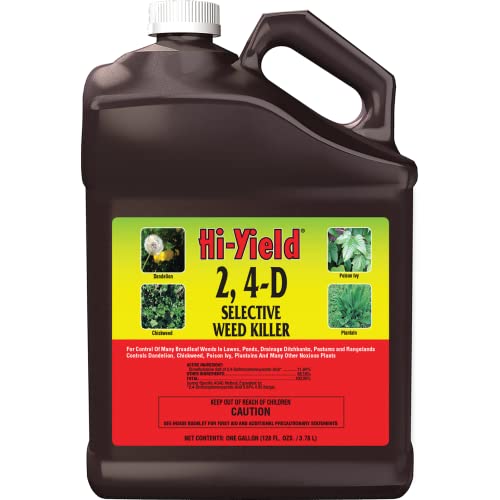
Hi-Yield (21416) 2,4-D Selective Weed Killer, 1 gal

Fertilome (10513) Weed-Out Lawn Weed Killer RTS, 32 oz
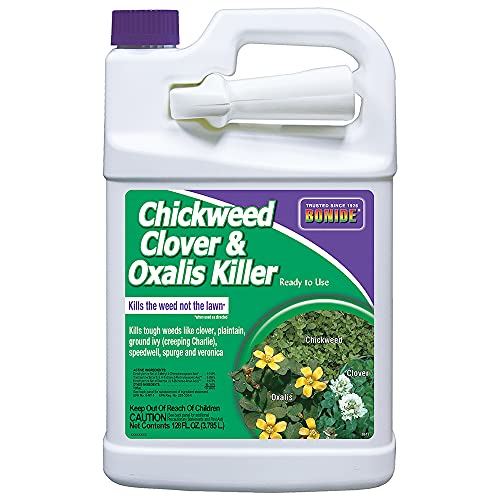
Bonide Chickweed, Clover & Oxalis Killer, 128 oz Ready-to-Use Spray

Ortho WeedClear Lawn Weed Killer Ready-to-Spray3, 32 fl. oz.

Spectracide Large Plot Weed Stop for Lawns Concentrate, 1 Gal

SpeedZone EW Lawn Weed Killer
More Details On Our Top Picks
Hi-Yield Triclopyr Ester is the kind of concentrate that lives in a garage shelf until clover shows up in the kind of place a broadcast sprayer can’t easily reach. The 8 oz bottle is small, but triclopyr (a synthetic auxin herbicide that mimics plant growth hormones and overwhelms broadleaf species) punches well above its weight on stubborn weeds like oxalis and wild violet. You measure it out, mix it with water, and spot-treat problem areas rather than blanketing the whole yard.
Compared with the ready-to-spray Bonide entry later in this list, this one asks for a little more setup. You will need a pump sprayer, accurate measuring, and a basic understanding of dilution rates. For cool-season lawns with patches of clover that refuse to die, that extra effort pays off in cleaner results.
Useful Touches
- Targets tough broadleaf weeds like oxalis and wild violet, not just common dandelions
- Liquid concentrate format stretches a small bottle across many spot treatments
- Labeled for use on perennial bluegrass, perennial ryegrass, and tall fescue ornamental turf
- Doubles as a bluegrass suppressor for homeowners reshaping patchy areas
Worth Noting
- Not labeled for Bahiagrass, Bentgrass, Bermudagrass, Centipedegrass, St. Augustine, or Zoysiagrass, so warm-climate lawns should look elsewhere
- Requires a separate pump sprayer and careful measurement, which adds setup time
Who It Suits Best
Homeowners with cool-season grass and a few persistent clover or violet patches who don’t mind a little measuring and mixing.
Look Elsewhere When
Anyone with a Southern lawn should reach for the Ortho WeedClear Ready-to-Spray3 instead, since it is built for warm-season turf like St. Augustine and Centipede.
Hi-Yield 2,4-D Selective Weed Killer arrives in a 1-gallon jug built for properties where a small bottle of concentrate would barely make a dent. The active ingredient, 2,4-D, is one of the oldest and most studied broadleaf herbicides on the market, and it has earned a reputation for clearing out dandelions, clover, and a long list of similar intruders without wiping out the surrounding turf.
Where the Hi-Yield Triclopyr Ester above targets stubborn outliers, this jug covers the spread-everything-with-spray pattern. It is also labeled for use beyond the home lawn, including ponds, drainage ditches, pastures, and rangelands. That flexibility makes it appealing to anyone managing more grass than a typical city lot.
Advantages To Know
- Gallon format handles several large applications from a single container
- Labeled for lawns, pastures, rangelands, ponds, and drainage ditches, adding flexibility
- Targets a wide list of broadleaf weeds including dandelion, aster, and goatsbeard
Trade Offs
- Concentrate form requires mixing, a sprayer, and label-reading before each use
- Not the right answer for someone who wants grab-and-go simplicity
Key Product Details
Best Suited To
Property managers and homeowners with extensive lawns or pasture land who want a single jug that covers multiple broadleaf weeds over many treatments.
Consider Something Else When
The Bonide Chickweed, Clover & Oxalis Killer is a better match for someone who wants a hose-end spray and no measuring.
Fertilome Weed-Out RTS is the middle-ground option that handles a long list of broadleaf weeds without forcing you to commit to a single grass type. The RTS, or ready-to-spray, format means the bottle hooks onto a standard garden hose, and the sprayer head does the mixing as you go. One pint of concentrate covers up to 8,000 square feet of lawn when applied at label rates.
The label lists Bahia, Bermuda, Zoysia, Kentucky Bluegrass, and Fescue among its compatible turf types, which is a wider net than most competitors offer. For most home lawns with a mix of weeds, that flexibility saves the headache of matching a herbicide to a specific grass cultivar.
A Few Strong Suits
- Targets over 200 broadleaf weeds including dandelion, clover, and chickweed
- Up to 8,000 sq ft of coverage from a single pint of concentrate
- Compatible with several warm- and cool-season turf types from one bottle
Honest Caveats
- Coverage depends on dilution rate, so heavy infestations may need follow-up applications
- Requires attaching to a hose, which limits use in areas without a spigot nearby
Who Should Grab It
Homeowners with mixed-grass lawns who want one bottle that handles clover, dandelions, and chickweed across multiple turf types.
Reach For A Different Pick When
The Hi-Yield 2,4-D gallon is a smarter choice for someone managing pastures or acreage well beyond a residential yard.
Bonide Chickweed, Clover & Oxalis Killer is the no-fuss option for someone who would rather not measure, mix, or read a dilution chart on a Saturday morning. The 128 oz bottle comes ready to use with a hose-end sprayer, so you hook it up, water the lawn, and walk away. The systemic action (meaning the herbicide is absorbed by the plant and travels down to the roots rather than only burning the leaves) takes aim at the root system while leaving most lawn grasses alone.
For a first clover treatment, the simplicity is hard to beat. The label covers chickweed, clover, dandelions, ground ivy, oxalis, wild violet, and over 100 additional broadleaf weeds, which means you are not locked into one narrow target. The bottle is also reusable for the rest of the season.
Standout Benefits
- No mixing required; attaches to a standard garden hose for instant spraying
- Targets clover specifically, plus over 100 other tough broadleaf weeds
- Labeled for residential turf, making it approachable for everyday homeowners
Some Limits To Know
- Pre-mixed concentration is fixed, so you cannot adjust strength for stubborn patches
- Storage in a garage or shed through winter requires temperature-stable conditions
Made For
First-time users and homeowners who want a hose-end spray that covers clover and similar weeds without measuring or calculating dilution.
A Better Fit Elsewhere
The Hi-Yield Triclopyr Ester is the right call for someone who needs a stronger concentrate to handle persistent oxalis and wild violet patches.
Ortho WeedClear Ready-to-Spray3 is built with Southern lawns in mind, and the grass-type list on the label reflects that. Bahiagrass, Bentgrass, Bermudagrass, Buffalograss, Centipedegrass, Fescue, Kentucky Bluegrass, Zoysiagrass, and St. Augustinegrass (with the Floratam variety noted as an exception) are all in play, which is a wider warm-season roster than most competing products offer.
The 32 fl oz bottle is small enough to store on a shelf and big enough to cover typical residential lots. You hook it to a hose, spray the affected areas, and the formula is designed to start showing results within hours rather than days. Compared with the Fertilome RTS, this one leans harder into Southern turf compatibility.
What Stands Out
- Compatible with nine common warm- and cool-season turf types
- Targets dandelion, chickweed, clover, dollarweed, and over 250 listed broadleaf weeds
- Quick visible response time so you can see whether the application worked
Where It Is Less Suited
- St. Augustinegrass users should avoid the Floratam variety per label guidance
- Hose-end format means you need outdoor water access during application
The Right Fit
Homeowners in Southern states with St. Augustine, Centipede, or Bermuda grass who need a clover-specific spray without buying multiple bottles.
Swap It Out When
The Fertilome Weed-Out RTS is a better match for mixed-grass lawns in transition zones where neither warm- nor cool-season grass dominates.
Spectracide Weed Stop for Lawns comes in a 1-gallon concentrate that treats up to 32,000 square feet of Northern grasses or 42,500 square feet of Southern grasses, which puts it firmly in large-property territory. The formula targets more than 200 listed broadleaf weeds including dandelion, chickweed, and clover, and the label emphasizes root kill rather than just leaf burn.
Compared with the Bonide ready-to-use spray earlier, this option requires mixing and a pump or tank sprayer, but the trade-off is a much lower cost per square foot covered. For homeowners treating clover as part of an annual maintenance routine, that math works in Spectracide’s favor.
The Value In It
- Up to 42,500 sq ft coverage on Southern grass types from a single gallon
- Targets over 200 broadleaf weeds including dandelion, chickweed, and clover
- Concentrate format keeps per-treatment cost lower than ready-to-use alternatives
Points To Keep In Mind
- Requires a sprayer, mixing, and label reading before each application
- A full gallon may be more product than a small urban lawn realistically needs
Key Product Details
Who Will Love This
Homeowners with large lawns who treat clover and broadleaf weeds several times a season and want one concentrate jug to cover the year.
Not Your Match When
The Bonide ready-to-use spray fits someone who would rather not deal with mixing and just wants to hook up a hose on a Saturday.
SpeedZone EW is the post-emergent herbicide (meaning it kills weeds that are already growing rather than preventing new ones) that leans on a four-ingredient blend for broad-spectrum control, and it has long been associated with turf management at the professional level. The label covers more than 90 listed broadleaf species including white clover, dandelion, ground ivy, and spurge, and it tolerates both cool- and warm-season established turf.
Where the other entries here target broadleaf weeds with one or two active ingredients, SpeedZone combines four to attack weeds through multiple modes of action. That complexity is part of why it shows up on golf courses and athletic fields, and it is also why homeowners with stubborn clover problems sometimes reach for it after a simpler product falls short.
Noteworthy Benefits
- Four-ingredient blend attacks weeds through multiple modes of action
- Labeled for both cool- and warm-season established turfgrass
- Covers 90+ listed broadleaf weeds including clover, dandelion, and ground ivy
Potential Drawbacks
- Pro-grade concentrate demands careful handling and a proper sprayer
- Not the right first purchase for someone who has never applied a broadleaf herbicide
Perfect Match For
Homeowners with persistent clover who have tried simpler products and need a multi-ingredient formula for tougher infestations.
Where Another Pick Suits Better
The Ortho WeedClear Ready-to-Spray3 is the gentler entry point for a first clover treatment on a Southern lawn.
Choosing The Right Clover Herbicide For Your Lawn
Clover herbicides look similar from the bottle, but the differences show up in grass compatibility, application format, and how aggressively they attack broadleaf weeds. Picking the wrong one can mean scorched turf or, just as bad, weeds that shrug off the spray and come back stronger.
Match The Herbicide To Your Grass Type
The single biggest factor is whether your lawn is cool-season (Kentucky Bluegrass, Fescue, Ryegrass) or warm-season (Bermuda, Zoysia, St. Augustine, Centipede). Many clover herbicides are safe on one group and damaging to the other, so reading the grass-type list on the label is non-negotiable. The Hi-Yield Triclopyr Ester, for example, is built for cool-season turf only.
Choose Between Ready-To-Spray And Concentrate
Ready-to-spray formats like Bonide and Ortho WeedClear hook onto a hose and mix as you go, which is easier for one-off treatments. Concentrates like Spectracide or the Hi-Yield 2,4-D gallon require a pump sprayer and accurate measurement, but they cover more ground at a lower per-application cost. For lawns over a quarter acre, concentrate usually wins on value.
Consider Clover Density And Other Weeds
Light clover mixed with dandelions and chickweed is a job for a broad-spectrum product like Fertilome Weed-Out. Heavy, mat-like clover that has resisted previous treatments is where multi-ingredient formulas like SpeedZone EW earn their keep, since the four-ingredient blend hits weeds through different biological pathways.
Time The Application To The Growing Cycle
Clover is most vulnerable in spring and fall when it is actively growing and moving nutrients to its roots. Spraying during summer dormancy or right before a heat wave reduces effectiveness. Most labels also recommend a rain-free window of several hours after application so the herbicide can absorb into the leaves.
Key Considerations Across These Picks
Common Shopping Slip Ups
The most frequent mistake is grabbing a herbicide that targets the wrong grass type. A bottle safe on Kentucky Bluegrass can scorch a Bermuda lawn in a single application, and the damage is often visible within a week. Another pitfall is under-dosing, which kills the leafy top of the clover but leaves the roots intact for a quick rebound.
Where The Extra Money Goes
Higher-tier products like SpeedZone EW combine multiple active ingredients to attack weeds through several biological pathways at once, which is why they cost more than single-ingredient concentrates. The upgrade makes sense for established lawns with stubborn or recurring infestations, but a basic 2,4-D concentrate handles most first-time clover outbreaks without the extra spend.
Frequently Asked Questions
When is the best time to spray clover in a lawn?
The best window is during active growth in spring or fall, when clover is moving nutrients to its roots and the herbicide can travel with it. Avoid spraying during summer heat or right before rain.
Will clover herbicide hurt my grass?
Selective herbicides are designed to target broadleaf weeds while leaving turfgrass alone, but only when applied at label rates to compatible grass types. Always confirm your grass species appears on the product label before spraying.
How long does it take for clover to die after spraying?
Visible yellowing and wilting often show up within a few days, but full kill including the roots typically takes two to four weeks depending on weather and the product used.
Do I need to mow before applying herbicide?
Mowing two or three days before application works well, since it gives the weed leaves time to regrow surface area for the spray to absorb. Avoid mowing immediately after to let the herbicide stay in contact with the plant.
Can I reseed my lawn after using a clover herbicide?
Most labels recommend waiting several weeks before reseeding, since residual herbicide can prevent new grass from establishing. Check the specific product label for the exact reseeding interval.
Closing Remarks
Clover control comes down to matching the herbicide to your grass, picking a format that fits your routine, and timing the application to active growth. For most home lawns, a ready-to-spray option handles the first round, and a concentrate jug makes sense for larger or repeat treatments. The right pick is the one that fits your yard, your grass, and the time you actually have on a Saturday.
