

Dollarweed earns its name honestly: those round, coin-shaped leaves spread fast across moist turf and choke out the grass you actually want. The right herbicide turns a creeping invasion into a manageable patch, then a memory. The wrong one yellows your St. Augustine or wipes out a fescue lawn along with the weeds. These eight options cover the most common lawn types, application styles, and problem scales so you can match a product to your situation instead of guessing at the garden center.
How The Shortlist Stacks Up
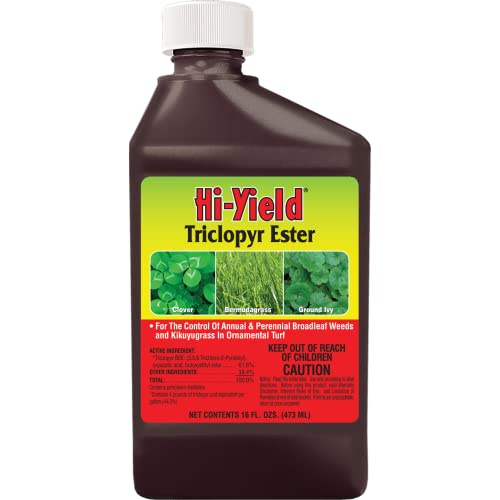
Hi-Yield (35262) Triclopyr Ester 16 oz
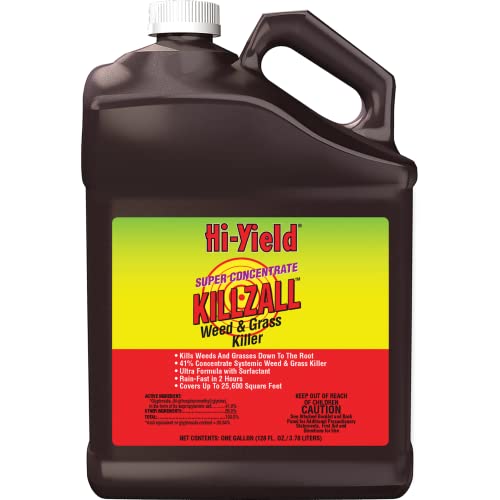
Hi-Yield (33693) Super Concentrate Killzall 1 gal
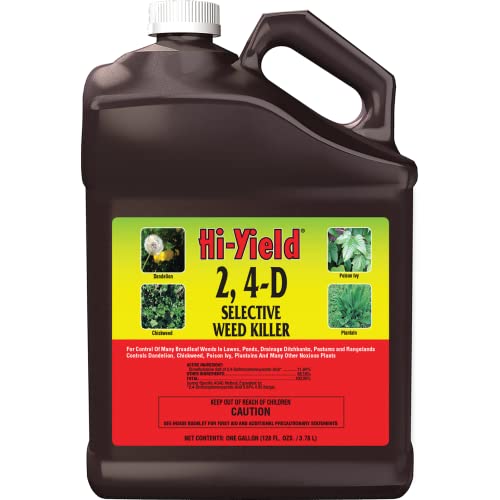
Hi-Yield (21416) 2,4-D Selective Weed Killer 1 gal

Roundup Dual Action 365 Weed & Grass Killer 1.33 gal

Spectracide Weed Stop For Lawns Concentrate 32 oz
Image Herbicide Nutsedge Killer for Southern Lawns 24 oz

Airmax Shoreline Defense Emergent Weed Control 1 Gallon

Ortho WeedClear Lawn Weed Killer with Comfort Wand 1 gal
What Each Pick Brings To The Table
Cool-season lawns, where dollarweed tends to colonize thin or shaded spots, often need a selective broadleaf herbicide that ignores fescue and ryegrass while wiping out the invaders. This 16 oz liquid concentrate of triclopyr ester (a synthetic auxin herbicide that mimics plant growth hormones and causes broadleaf weeds to twist and die) does exactly that, working through the leaf and root to control actively growing annual and perennial broadleaf weeds like Oxalis and Wild Violet, with the same active ingredient also functioning as a bluegrass suppressor if you want to thin out coarse bluegrass in a finer rye lawn.
The trade-off is turf restriction. Hi-Yield clearly excludes Bahiagrass, Bentgrass, Bermudagrass, Centipedegrass, St. Augustine, and Zoysiagrass from the label, so anyone in the transition zone or South needs to look elsewhere. Within its approved turf list, the small 16 oz bottle concentrates the active ingredient enough that a little goes a long way, though you’ll still want a pump sprayer and the discipline to measure rather than pour.
Practical Pluses
- Selective chemistry protects perennial ryegrass, tall fescue, and perennial bluegrass while clearing broadleaf invaders
- Dual-purpose formula doubles as a bluegrass suppressor for cool-season overseeding projects
- Concentrate format means one 16 oz bottle treats a meaningful patch with a standard pump sprayer
- Targets tough perennials like Wild Violet that often shrug off general broadleaf sprays
Worth Noting
- Hard ban list on warm-season turf types makes it useless for Southern lawns
- Concentrate demands measuring and a dedicated sprayer to avoid drift onto ornamentals
Best Suited To
Homeowners with cool-season fescue, ryegrass, or bluegrass lawns chasing stubborn broadleaf weeds like Wild Violet and Oxalis.
Look Elsewhere When
Your lawn is St. Augustine or centipede, where the Image Herbicide Nutsedge Killer for Southern Lawns 24 oz is the safer label match.
Some dollarweed problems aren’t really lawn problems; they’re bare-ground problems along fence lines, gravel drives, and foundation edges where no grass survives anyway. Killzall is a non-selective herbicide (meaning it kills any green plant it touches, grass included) that handles those zones without apology. The double-surfactant formulation (surfactants are wetting agents that help the spray stick to waxy leaves instead of beading up) dries on the plant quickly so rain or irrigation won’t wash it off mid-treatment, and the single gallon jug covers up to 25,600 square feet of mixed weeds, grasses, and woody brush at typical dilution rates.
The label is blunt: do not use on lawns. Anywhere you spray this turns brown within days, which is exactly what you want on a weedy patio crack or a fence row choked with brush, and exactly what you don’t want on a lawn you care about. Treat it as a site-prep tool rather than a turf product, and pair it with a pump sprayer you label clearly so nobody mistakes it for selective chemistry later.
Advantages To Know
- Massive coverage area from a single gallon makes it economical for acreage or whole-yard renovations
- Non-selective action reaches grasses, broadleaves, and woody brush in one pass
- Double-surfactant blend helps the active ingredient stick to waxy or hairy weed leaves
- Liquid concentrate mixes readily with water for adjustable strength on brush versus seedlings
Trade Offs
- Zero tolerance for nearby desirable turf; overspray or runoff will kill grass instantly
- Owners commonly need a second pass on deep-rooted perennials like established dollarweed mats
Made For
Shoppers reclaiming bare soil, gravel, fence rows, or hardscape edges where dollarweed has colonized cracks and no lawn needs protecting.
Swap It Out When
You want dollarweed gone without harming your lawn, in which case Hi-Yield (21416) 2,4-D Selective Weed Killer 1 gal is the turf-safe alternative.
For acres rather than square feet, the gallon jug of Hi-Yield 2,4-D delivers selective broadleaf control across lawns, pastures, rangelands, ponds, and drainage ditches. The active ingredient 2,4-D is one of the oldest and most studied broadleaf herbicides on the market, and this formula targets familiar offenders including Dandelion, Arrowhead, Buckhorn, Aster, and Goatsbeard. It plays nicely with Hi-Yield’s own Spreader Sticker surfactant for shoppers who want to boost leaf adhesion on waxy weeds.
Where it earns its value spot is the multi-use label. Treating a pasture, a drainage ditch, and a half-acre lawn with the same jug simplifies storage and inventory, though the broad approval list also means you must read the fine print carefully to match rate and timing to each site. Compared to the smaller 16 oz triclopyr bottle, this one trades turf specificity for sheer volume.
Standout Benefits
- Gallon format covers large lawns, pastures, and drainage ditches from a single container
- Selective chemistry spares most turfgrasses while targeting a wide broadleaf weed list
- Compatibility with Hi-Yield Spreader Sticker lets you tune performance to leaf type
- Well-documented active ingredient with decades of label history behind it
Soft Spots
- Less specific than triclopyr on tough perennial broadleaves like Wild Violet
- Restricted-use considerations apply near ponds and sensitive sites, so reading the full label matters
Right Fit For
Rural and suburban shoppers with large lawns, horse pastures, or multi-acre lots who want one jug to cover several labeled sites.
Consider Something Else When
You’re treating a small St. Augustine yard, where the Image Herbicide Nutsedge Killer for Southern Lawns 24 oz handles warm turf more safely.
Dollarweed often returns within weeks of treatment because the seeds and runners underground keep producing new growth. Roundup Dual Action 365 tackles that cycle in two stages: a foliar kill that takes down existing weeds, plus a residual herbicide barrier (a chemical layer left in the soil that stops new weed seeds from germinating) that continues to block regrowth for an extended period. The Pump ‘N Go 2 sprayer harness mounts on the bottle so you can pressurize and walk, no separate pump sprayer required, and rainfast performance in roughly 30 minutes means a passing shower won’t undo your work.
The catch is that this is a non-selective total vegetation killer on hardscape, not a turf product. Anywhere you spray, including desirable grass, dies and stays dead for the labeled duration. For patio cracks, driveway edges, gravel paths, and foundation perimeters, that’s exactly the point. Just keep it well away from any lawn you want to keep.
Strong Points
- Two-stage approach handles existing weeds and the next flush of seedlings in one application
- Built-in Pump ‘N Go 2 sprayer removes the need for a separate pump or mixing station
- Rainfast window around 30 minutes keeps treatment on schedule through pop-up storms
- Targets a broad list including clover, dandelion, crabgrass, and poison ivy
Points To Keep In Mind
- Non-selective action means it cannot be used where you want grass to survive
- Residual barrier restricts replanting in treated zones for the labeled interval
Who Will Love This
Homeowners fighting recurring dollarweed in hardscape, gravel, and patio cracks who want one seasonal treatment instead of monthly spot sprays.
Not Your Match When
You need selective control inside a living lawn, where Ortho WeedClear Lawn Weed Killer with Comfort Wand 1 gal keeps turf intact.
First-time sprayers often want a concentrate that mixes easily, treats a typical suburban lawn, and doesn’t demand a learning curve. Spectracide Weed Stop For Lawns Plus Crabgrass Killer concentrate does that in a 32 oz bottle, formulated as a selective broadleaf and crabgrass herbicide that you dilute with water in a pump or hose-end sprayer. The 32 oz size covers a meaningful residential lawn without committing you to a gallon jug you’ll store for years.
Compared to the larger Hi-Yield gallons on this list, the smaller format costs less up front and finishes faster, so the product doesn’t sit in a garage through multiple seasons losing potency. The trade-off is that very large yards may need multiple bottles, and crabgrass-specific adjuvants in the formula can stress sensitive turf in extreme heat if you spray at the wrong moment.
What Helps Most
- Compact 32 oz concentrate is approachable for first-time herbicide users
- Targets both broadleaf weeds and young crabgrass in a single tank mix
- Modest price per bottle compared to gallon concentrates for small-lot shoppers
- Standard dilution rates work with off-the-shelf pump or hose-end sprayers
A Few Limitations
- Not formulated for sensitive warm-season turf types like St. Augustine or centipede
- Multiple bottles required for half-acre or larger lawns
The Right Fit
Beginners with a small to mid-size lawn who want a forgiving concentrate without committing to a full gallon jug.
A Better Fit Elsewhere
You have a Southern lawn like St. Augustine, where the Image Herbicide Nutsedge Killer for Southern Lawns 24 oz matches warm-season labels.
Southern turf is famously picky: St. Augustine, centipede, and Bahia all react badly to many of the broadleaf herbicides that work fine on fescue. Image Nutsedge Killer is built specifically for those warm-season grasses, formulated to kill listed tough invaders including dandelion, dollarweed, and crabgrass without burning the underlying lawn when applied as directed. The ready-to-spray format means you hook the bottle to a standard garden hose and walk the yard, no measuring, no separate sprayer to clean.
Where this product earns its spot is the post-emergent targeting (meaning it kills weeds that are already growing and visible, rather than preventing seeds from sprouting) of dollarweed and crabgrass in the same application, which is exactly the dual problem most Southern homeowners face. The smaller 24 oz bottle treats a defined residential yard rather than acreage, which suits the typical St. Augustine lot size in the Southeast.
Good Reasons To Consider
- Label-matched for warm-season turf types where many broadleaf herbicides cause damage
- Ready-to-spray hose-end format removes measuring and mixing from the routine
- Targets dollarweed, crabgrass, and dandelion in one pass for typical Southern lawns
- Bottle size suits a residential yard rather than forcing you to store surplus concentrate
Practical Considerations
- Limited to labeled Southern turfgrasses, so it’s not useful for fescue or ryegrass yards
- Owners commonly apply a second round at the labeled interval for persistent dollarweed mats
Key Specs
Built With In Mind
Southern homeowners with St. Augustine, centipede, or other warm-season lawns who want dollarweed and crabgrass treated in one application.
Reach For A Different Pick When
Your lawn is fescue or ryegrass, where Hi-Yield (35262) Triclopyr Ester 16 oz is the cool-season match.
Dollarweed loves wet soil, so pond edges, lake banks, and drainage ditches are prime real estate for it. Most lawn herbicides are illegal to apply over open water, but Airmax Shoreline Defense is labeled for fresh and brackish water use, controlling emergent aquatic weeds (plants rooted in shallow water with foliage above the surface) like cattails, phragmites, and various shoreline grasses that creep out into the swim area. The broad-spectrum liquid targets both foliage and root systems, which matters for perennials that regrow from runners underground.
The honest read is that this is a specialty product for waterfront property owners, not a typical lawn shopper. For shoppers with a dock, a private pond, or a sloped shoreline slowly surrendering to weeds, it’s the right tool. For everyone else, a turf-specific pick on this list makes more sense.
Points In Its Favor
- Aquatic label makes it legal and effective at the water’s edge where most herbicides cannot go
- Controls tough emergent species like cattails and phragmites that overrun shorelines
- Root-kill action reduces regrowth from underground runners and rhizomes
- Suitable for fresh and brackish water, covering coastal and inland ponds
Honest Caveats
- Specialty format carries no useful purpose for standard lawn-only situations
- Restricted-use considerations and state-level aquatic permits may apply, so local regulations matter
Perfect Match For
Waterfront property owners with private ponds, lake banks, or shoreline edges where dollarweed and other emergent weeds have colonized the shallows.
Skip It When
Your dollarweed problem is strictly on a mowed lawn, where Ortho WeedClear Lawn Weed Killer with Comfort Wand 1 gal handles turf without aquatic overreach.
For shoppers who’d rather not measure, mix, or clean a pump sprayer, this ready-to-use gallon with the Comfort Wand applicator turns weed control into a hose-end job. The selective formula targets dollarweed, dandelion, chickweed, clover, oxalis, spurge, knotweed, henbit, and other listed broadleaves without harming labeled lawn grasses when applied as directed. Visible results show in hours rather than weeks, and the battery-assisted wand reduces hand fatigue across a full yard of spot spraying.
Compared to the concentrates on this list, the convenience comes at a higher price per treated square foot because you’re paying for water, packaging, and the wand mechanism. For a small lawn or spot treatment on a few stubborn patches, the trade is worth it. For half-acre-plus coverage, a concentrate bottle is more economical per acre.
Useful Touches
- Ready-to-use format eliminates measuring, mixing, and post-spray equipment cleanup
- Comfort Wand reduces hand fatigue during long spot-spraying sessions
- Visible results in hours help confirm coverage while you still have the bottle in hand
- Long list of labeled broadleaf weeds covers most common lawn invaders
Where It May Fall Short
- Higher cost per square foot than concentrates for yards beyond a quarter acre
- Ready-to-use jug is heavier to carry around than a small concentrate bottle and pump sprayer
Whose Shelf It Belongs On
Homeowners with small lawns or spot-treatment needs who want a no-mix, grab-and-walk herbicide without owning a pump sprayer.
Where Another Pick Suits Better
You’re working a large yard and want more ounces per dollar, where Hi-Yield (21416) 2,4-D Selective Weed Killer 1 gal concentrate is the better value.
Picking The Right Herbicide For Your Yard
Dollarweed thrives in wet, thin, and over-irrigated turf, which is why the first decision is your grass type. Cool-season lawns (fescue, ryegrass, Kentucky bluegrass) tolerate a different set of selective herbicides than warm-season lawns (St. Augustine, centipede, Bermuda, Zoysia). Reading the label for your specific turf type matters more than brand recognition, because the wrong match either fails to control the weed or burns the lawn.
Application style shapes the second decision. Concentrates cost less per square foot and suit larger yards, but they require a pump or hose-end sprayer you can calibrate and clean. Ready-to-use bottles with built-in wands trade money for convenience and avoid measurement errors, which helps first-time users who would rather walk than mix. For spots under a few hundred square feet, ready-to-use is usually the better call.
Coverage, selectivity, and residual action are the third tier of considerations. Non-selective herbicides like Killzall and Roundup Dual Action 365 wipe out everything green and are restricted to hardscape or pre-renovation use. Selective formulas protect the lawn while killing listed broadleaves. Residual products add a soil barrier that blocks new weeds for weeks or months after the initial kill, useful for driveways and cracks where regrowth is relentless. Match the chemistry to the zone you actually have, and dollarweed stops feeling inevitable.
Reading Between The Picks
Pitfalls Shoppers Hit
The most common dollarweed mistake is reaching for a broad-spectrum herbicide without checking whether the lawn type is on the label. Many shoppers assume “lawn weed killer” means any lawn, but warm-season grasses like St. Augustine and centipede react with yellowing or death to several common cool-season products. The reverse mistake also happens: applying a selective turf product to a hardscape crack and wondering why the surrounding grass is fine but the dollarweed keeps coming back.
A second pitfall is treating symptoms without addressing the environment. Dollarweed signals wet soil, poor drainage, or over-irrigation, and herbicides alone rarely fix the underlying cause. Shoppers who treat once and then resume the same watering schedule often see the same weeds return within a season. Adjusting irrigation and improving drainage typically matters as much as the product choice.
Where The Extra Money Goes
Higher-tier products earn their price through formulation refinements rather than just bigger bottles. Ready-to-use packaging with comfort wands, rainfast chemistry, and dual-action kill-plus-prevent formulas all cost more per ounce than bare concentrates but save time and reduce error. For a single small-lawn application, the upgrade usually pays for itself in convenience. For multi-acre treatment, the math flips and concentrate is the smarter spend.
Frequently Asked Questions
What is the best time of year to spray dollarweed?
Dollarweed absorbs herbicide most effectively during active growth in spring and early fall when soil is warm but air temperatures stay below the high 80s. Spraying during summer dormancy or drought stress slows uptake and increases the risk of turf damage.
Do I need a surfactant with my herbicide?
Many ready-to-use products include surfactants, but concentrate users often benefit from adding a spreader-sticker to improve leaf adhesion on waxy or hairy weeds. Check your concentrate label before adding anything, because some formulas already include wetting agents.
Will one treatment kill dollarweed completely?
Most lawns need two applications at the labeled interval to clear established dollarweed mats, and tough infestations sometimes require a third pass. Repeat treatments target regrowth from underground runners that the first spray missed.
Is it safe to use herbicide near vegetable gardens?
Selective turf herbicides drift, and many vegetable plants react poorly to even small amounts of 2,4-D or triclopyr. Spray on calm days, shield desirable plants with cardboard, and never apply a lawn product where the label excludes food crops.
How long should I keep pets and kids off a treated lawn?
Most product labels recommend keeping people and pets off the treated area until the spray has dried completely, which is typically a few hours. Read the specific label for the exact interval, especially for products with residual soil activity.
Closing Remarks
Dollarweed responds best when you match the herbicide to your grass type, your zone, and your willingness to mix versus spray straight from the bottle. The right choice for a fescue lawn in the North looks nothing like the right choice for a St. Augustine yard in the South, and waterfront properties need an entirely different category of product. Start with the label, pick the format that fits how you actually want to spray, and treat the soil condition as seriously as the weed itself. A clean lawn is a reachable goal, not a quarterly chore, once the chemistry lines up with the site.
