

Your indoor jungle looks calm on the shelf, but it’s always working. Light shifts, humidity drops, soil nutrients get pulled down, and the only thing keeping leaves glossy and new growth pushing is a steady feeding rhythm. The right plant food saves you from guesswork and helps pothos, fiddle leaf figs, monsteras, and the rest of your collection hold their color through the darker months. This roundup breaks down eight solid options, from low-maintenance spikes to organic concentrates, so you can match the format to your routine instead of fighting the bottle.
An Overview Of The Picks

Miracle-Gro Indoor Plant Food Spikes for All Plants

Instant Biologics Self-Dissolving Houseplant Tablets

Jack’s Classic 15-30-15 Houseplant Special Fertilizer

HiThrive 16oz Houseplant Fertilizer 6-2-4 NPK

HiThrive 32oz Indoor Plant Food 6-2-4 NPK
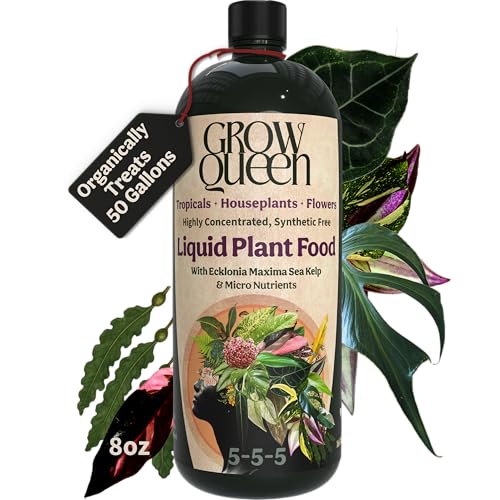
Grow Queen Organic Liquid Indoor Plant Food 5-5-5

Houseplant Resource Center Organic Indoor Fertilizer 3-1-2

Miracle-Gro Organic Plant Food 32 fl. oz.
The Details Behind The Selections
If your watering can collects dust between waterings, spikes take the mental load off your routine. Each pre-measured stick drops into the soil and slowly releases nutrients over an extended window, so you don’t have to remember a mixing ratio or track feedings on a calendar. The 48-count box covers a sizable collection without forcing constant repurchasing.
They’re a sensible match for travelers, busy parents, or anyone whose plant shelf doubles as a reminder of tasks they forgot. The trade-off is less control, so for picky specimens that need precise feeding schedules, the liquid and powder formats later in this list give you more room to adjust.
Strong Points
- Pre-measured sticks remove dosing guesswork entirely.
- Slow-release design keeps feeding consistent for weeks.
- 48-count package lasts through most small indoor collections.
- Works across flowers, herbs, and foliage without swapping products.
Things To Consider
- Less precise than liquid feeds for finicky or recovering plants.
- Spike placement matters, owners commonly note uneven feeding when sticks cluster near one side of the root ball.
Key Specs
Who It Suits Best
Plant owners who want a set-and-forget rhythm without measuring or mixing anything during watering day.
Where Another Pick Suits Better
Blooming houseplants benefit more from Jack’s Classic 15-30-15 Houseplant Special Fertilizer, which pushes flowering harder with its high-phosphorus ratio.
Drop a tablet in a glass of water, give it a stir, and you’ve got a feeding solution ready to pour, no measuring spoons, no spilled concentrate. That format hits a real sweet spot for new plant parents who aren’t sure what strength to mix. It also makes storage simple, since tablets stay stable in a small bag rather than a leaky bottle.
The convenience comes with a smaller quantity per package, four tablets is enough for a few feedings rather than a full year. For someone with one or two favorite plants, that’s plenty. For a shelf of twenty, you’ll go through them fast.
Useful Highlights
- No measuring, scooping, or guesswork during feeding.
- Compact tablet form keeps counters clean and clutter-free.
- All-purpose formula works across tropicals, succulents, and foliage plants.
Worth Noting
- Four-tablet count runs short for owners with large collections.
- Tablets need a moment to fully dissolve, so rushing through prep leaves undissolved bits at the bottom of your watering can.
Made For
Beginner plant owners with a small collection who want a clean, no-mess way to feed without learning ratios yet.
Skip It When
A multi-plant household will get better mileage from HiThrive 32oz Indoor Plant Food, which makes 175+ gallons and stretches further per bottle.
The 15-30-15 ratio flips the usual nitrogen-forward formula toward phosphorus, which is the nutrient plants use to set buds and push blooms. African violets, begonias, and holiday cacti tend to respond to that push with fuller flowering cycles. The water-soluble powder mixes cleanly and includes an included scoop, so measuring stays consistent.
It doubles as a foliar feed, meaning you can mist diluted solution onto leaves for a faster uptake on heavy feeders. Compared to the spikes above, this requires active effort, but for growers chasing flowers rather than just foliage, the trade is worth it.
A Strong Showing
- High-phosphorus formula targets bloom production.
- Water-soluble powder dilutes cleanly with no residue.
- Works as both root drench and foliar spray.
- Includes a measuring scoop for consistent dosing.
- 8oz jar lasts through many feeding cycles.
Trade Offs
- Mixing required each feed, less convenient than spikes or tablets.
- Higher phosphorus ratio isn’t ideal for foliage-only plants like snake plants or pothos, which prefer nitrogen-forward feeds.
Key Specs
Right Fit For
Growers focused on flowering houseplants, like African violets, begonias, and bromeliads, who want stronger bud set.
Look Elsewhere When
Foliage-heavy collections are better served by HiThrive 16oz Houseplant Fertilizer, whose balanced 6-2-4 ratio supports steady leaf growth.
A 6-2-4 ratio splits the difference between foliage push and structural support, which is exactly what most aroids and ficus trees want during active growth. The 2x concentration turns one 16oz bottle into more than 87 gallons of feeding solution, so even a busy plant shelf drains this slowly. Mixing stays simple: a small dose in your watering can, then a normal pour-through.
Where the earlier tablets excel at simplicity, this concentrate wins on cost per feeding. For someone running a fiddle leaf fig, a monstera, and a handful of pothos on the same shelf, the math favors liquid concentrates almost every time.
What It Does Well
- Makes 87+ gallons from a single bottle, strong dilution value.
- Balanced 6-2-4 ratio supports both foliage and root development.
- Liquid format allows precise strength adjustments per plant.
Points To Note
- Requires mixing each feeding, no pre-portioned shortcuts.
- Liquid bottles can leak in storage if the cap isn’t fully tightened after use.
Feature Snapshot
Whose Shelf It Belongs On
Plant owners with large indoor collections who want low-cost per-feeding and flexible dilution strength.
Another Choice May Suit
Growers chasing flowers specifically should reach for Jack’s Classic 15-30-15 Houseplant Special Fertilizer for its bloom-oriented formula.
The same trusted 6-2-4 ratio as its smaller sibling, just stretched across a 32oz bottle that yields 175+ gallons of feed. That extra capacity pays off when your collection includes patio containers brought inside for winter or a windowsill lineup that keeps multiplying. One purchase can carry a household through a full growing season.
Storage is the only real consideration: a quart bottle takes more shelf space than the 16oz version, so a utility closet or under-sink bin works better than a kitchen counter. If you’ve got the room, the larger format simply lasts longer between repurchases.
Real-World Strengths
- 175+ gallon yield supports very large plant collections.
- Same versatile 6-2-4 ratio for foliage and roots.
- Concentrate format lets you adjust strength per species.
- One bottle can span an entire growing season for most homes.
Honest Caveats
- 32oz bottle demands more storage space than smaller formats.
- Heavier bottle can be awkward when measuring into smaller watering cans.
Best Suited To
Multi-plant households and indoor gardeners juggling containers, hanging baskets, and shelves all at once.
Not Your Match When
Someone with just a few small pots will find HiThrive 16oz Houseplant Fertilizer a better fit, since the smaller bottle stores more easily.
A balanced 5-5-5 organic blend with added sea kelp delivers an even spread of nitrogen, phosphorus, and potassium, the three macronutrients plants need in roughly equal measure during steady growth. Sea kelp contributes trace minerals and natural growth hormones that help foliage stay lush without chemical-feeling residues. Treats 50 gallons from a small 8oz bottle.
This one’s the right pick if you’d rather feed plants with something that feels closer to a kitchen compost than a synthetic formula. The trade-off is that organic feeds tend to act a touch slower than synthetic ones, so results build over weeks rather than days.
Notable Upsides
- True 5-5-5 organic balance suits mixed collections.
- Sea kelp adds micronutrients and gentle growth support.
- Gentle formula reduces risk of leaf burn on sensitive plants.
- Treats 50 gallons from a compact 8oz bottle.
A Few Limitations
- Organic feeds typically show visible results over a longer window than synthetic options.
- Sea kelp smell can briefly linger near sensitive noses right after mixing.
Quick Facts
Perfect Match For
Organic-leaning households who prefer plant-based ingredients and want a gentle everyday formula.
Reach For A Different Pick When
Growers wanting stronger bloom output may prefer Jack’s Classic 15-30-15 Houseplant Special Fertilizer for its targeted phosphorus push.
The 3-1-2 ratio mirrors what many botanists and houseplant specialists consider closest to what foliage plants use in their natural ratio, more nitrogen than phosphorus or potassium, but not aggressively so. Chelated micronutrients (minerals bound for easier plant absorption) extend the feeding value beyond a single watering, so plants keep drawing from the soil between doses.
This formula was designed with pothos, peace lilies, monsteras, and cacti in mind, which covers a huge slice of the average indoor collection. It’s a versatile middle-ground option that doesn’t push blooms or overfeed, just keeps things stable and green.
Everyday Wins
- 3-1-2 ratio suits most foliage-heavy houseplants.
- Chelated micronutrients extend nutrient availability over time.
- Safe across tropicals, succulents, and cacti in the same routine.
- Liquid format mixes cleanly into standard watering cans.
Softer Spots
- Lower phosphorus limits bloom intensity on flowering varieties.
- 8oz bottle runs through faster than larger concentrate options like the HiThrive 32oz format.
Who Should Grab It
Owners of mixed tropical collections who want one balanced formula for pothos, peace lilies, monsteras, and cacti alike.
Consider Something Else When
Heavy-feeding flowering plants will do better with Grow Queen Organic Liquid Indoor Plant Food, whose 5-5-5 balance covers blooms more evenly.
This plant-based organic formula draws from a 94% plant-derived ingredient list, which gives you organic gardening credentials without leaving the trusted Miracle-Gro umbrella. The liquid format feeds immediately on application, so you don’t wait weeks to see results. At 32 fl. oz., it’s a generous bottle that lasts.
It’s designed for both indoor and outdoor container use, which means you can share a bottle between your houseplants and your patio pots without buying two products. For someone transitioning from conventional feeds to organic options, this offers a familiar workflow with cleaner ingredients.
Key Advantages
- Plant-based organic ingredients reduce synthetic exposure.
- Liquid formula feeds plants immediately on application.
- Works for both indoor and outdoor container plants.
- 32 fl. oz. size offers extended use between repurchases.
- Trusted brand recognition simplifies switching from synthetic feeds.
Minor Gripes
- Larger bottle takes up more storage space than 8oz options.
- Organic liquids tend to need more frequent application than slow-release spikes.
The Right Fit
Everyday organic feeders who want a trusted brand name and a single bottle that handles indoor and outdoor containers alike.
A Better Fit Elsewhere
Pure-foliage collectors wanting a strong nitrogen push will find Houseplant Resource Center Organic Indoor Fertilizer’s 3-1-2 ratio more leaf-focused.
What Matters When Choosing Indoor Plant Food
Format Fits Your Routine
Spikes, tablets, powders, and liquids each demand different levels of attention. Spikes win on forgetfulness, but liquids give the most control over strength. Powders stretch furthest per ounce if you don’t mind mixing. Tablets sit in between, offering portioned simplicity with a smaller upfront count. Pick the format that matches how often you actually think about feeding, not the one that sounds best on paper.
The NPK Ratio Drives Results
Every fertilizer label lists three numbers, called the NPK ratio, representing nitrogen, phosphorus, and potassium by weight. Nitrogen pushes leaf growth, phosphorus drives blooms and root development, and potassium supports overall plant health and disease resistance. Foliage-only plants like pothos and monsteras usually prefer nitrogen-forward ratios (the 6-2-4 or 3-1-2 options above). Flowering varieties like African violets respond better to phosphorus-heavy formulas such as 15-30-15.
Organic Versus Synthetic
Organic feeds, like Grow Queen’s 5-5-5 and Miracle-Gro’s plant-based option, rely on natural ingredients and break down more slowly, supporting soil health over time. Synthetic formulas deliver faster visible results but can build up salts in potting soil if overused. The honest read is that both work; the choice usually comes down to ingredient preference and patience for results.
Concentration And Yield
Concentrated liquids stretch into dozens or hundreds of gallons of feeding solution, which lowers cost per use. Powders offer similar efficiency with longer shelf life. Ready-to-use sprays and tablets feel more convenient but cost more per feeding. For a single plant, convenience may matter more. For a full shelf, concentration saves real money across a year.
Key Considerations Across These Picks
Where Shoppers Go Wrong
A common slip is buying a high-phosphorus bloom formula for general foliage use, which often leads to salt buildup and crispy leaf tips over time. Another trap is overfeeding during winter dormancy, when most houseplants slow their growth and need little to no fertilizer until spring returns. Always check whether your plant is actively growing before pouring a dose.
What The Higher Tier Buys
Stepping up to a larger concentrate like the 32oz HiThrive or the quart Miracle-Gro Organic typically buys you a lower cost per feeding and fewer restocking trips. Premium organic options add trace minerals and gentler ingredients, which can matter for sensitive species or households preferring plant-based formulas. The honest takeaway is that the upgrade pays off when you have enough plants to justify the larger bottle, and when ingredient quality matters to you.
