

A patchy, yellow lawn rarely comes down to bad seed. Most of the time, the real culprit sits right at the surface: the wrong spray pattern, an arc that won’t cooperate, or a rotor that throws water everywhere except where the grass actually grows. Picking the right inground sprinkler head quietly determines whether your irrigation investment pays off or becomes a Saturday of frustration. This roundup sorts through eight solid options built for different yard shapes, water pressures, and installation styles. You’ll find a mix of fixed sprays, impact rotors, gear-driven units, and quick-connect DIY systems, each one picked because it solves a specific problem homeowners actually face.
The Main Contenders

Rain Bird 1804VAN 4-Inch Pop Up Sprinkler

Orbit 55201 Pulse XL Pop-Up Impact Sprinkler

Rain Bird CP3504PC Rain Curtain Professional Rotor

LIULO TOOL 2-Pack Gear Drive Sprinklers

HolyMaji 10-Pack Variable Arc Nozzle (12AN)
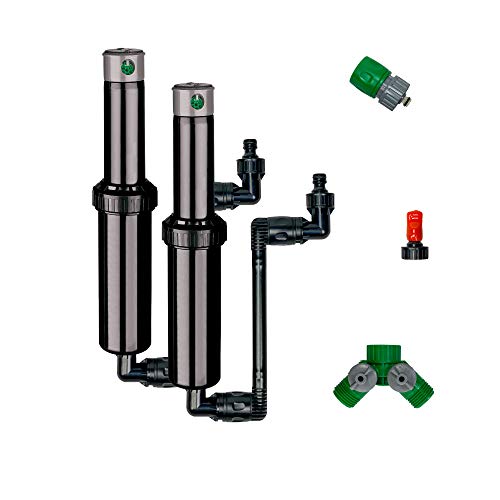
Quick-Snap QSK-742 In-Ground Pop-Up Sprinkler 2-Pack

Rain Bird 52SA Stainless Steel Rotor

Rain Bird 1806VAN 6-Inch Pop Up Sprinkler
More On The Choices That Made The List
The Rain Bird 1804VAN sits in the sweet spot most homeowners actually live in: a mid-size yard where you want clean, predictable spray coverage without paying for commercial-grade hardware. The 4-inch pop-up height clears average cool-season turf and most ornamental beds, while the variable-arc nozzle (a nozzle whose spray angle can be dialed from a narrow slice to a full circle) lets you match odd lawn geometries instead of forcing your planting beds into squares.
What makes this one work as a daily-driver pick is its 1/2-inch female threaded inlet, a standard thread pattern that drops onto virtually any residential riser. For most suburban lots, the adjustable arc and proven internal seal design make it a strong anchor for a new system or a phased upgrade.
Real Benefits
- Variable arc from 0 to 360 degrees fits curved beds and narrow side yards without wasting water on the driveway.
- 4-inch riser keeps the nozzle above most turfgrass, reducing splash-back that browns out patches near the head.
- Standard 1/2-inch threaded inlet pairs with virtually any residential manifold or swing-pipe fitting.
- Made in the USA, with parts and replacement nozzles widely available at irrigation suppliers.
Things To Consider
- Fixed-spray bodies throw mist finer than rotor heads, so wind above 10 mph can drift coverage off-target.
- Operating window is short, so on larger lawns you’ll need more heads spaced closer together than with a rotor.
Quick Facts
Who It Suits Best
Homeowners laying out a new zone-based residential system on a typical quarter-acre lot.
Where Another Pick Suits Better
Yards larger than a half-acre with wide-open turf may be better served by the Rain Bird CP3504PC rotor, which throws water further per head.
Where the Rain Bird 1804VAN handles clean municipal water, the Orbit 55201 is built for the opposite reality: mineral-heavy well water, reclaimed water, or older supply lines that tend to clog delicate spray nozzles. Its double-weighted impact arm keeps the head rotating even when grit enters the stream, and the canister-style pop-up keeps the whole mechanism tucked below turf level when the zone shuts off.
The practical upside is reach. With a throw distance up to roughly 45 feet, this impact head covers ground that would otherwise require three or four fixed-spray heads like the 1804VAN. Depending on your soil and water source, you may find this the only head in the roundup that survives season after season in a hard-water environment.
The Practical Payoff
- Engineered for high-mineral and reclaimed water without the clogging that plagues fine-mist sprays.
- Throw distance up to about 45 feet, reducing the number of heads needed on open lawn sections.
- Adjustable arc from 20 to 360 degrees, useful for both corner zones and full-circle coverage.
- Impact mechanism handles higher inlet pressures than most rotor heads on the market.
Worth Noting
- Impact heads are louder than gear-driven rotors, which can be noticeable near bedrooms or patios.
- Heavier droplets can erode mulch beds if the head is aimed without adjustment.
Made For
Homeowners on well or reclaimed water lines who have watched cheaper spray heads clog within a single season.
Skip It When
Quiet operation matters more than clog resistance; the Rain Bird 52SA rotor is the gentler choice.
The CP3504PC sits in a different category than the fixed-spray 1804VAN reviewed above. This is a true rotor: a gear-driven head that turns a single stream of water in a slow, even arc, throwing 15 to 35 feet depending on the nozzle you install. Where spray heads mist, rotors push heavier droplets, which is exactly what you want on a windy day or on a slope where fine droplets would simply blow away.
It comes with six interchangeable Rain Curtain nozzles, so you can tune precipitation rates (the speed at which water lands on the lawn, measured in inches per hour) to match the rest of your zone. That’s a quiet but real advantage: matched precipitation prevents the dry spots that show up when a spray zone and a rotor zone share a single valve.
Advantages To Know
- Rain Curtain technology produces large droplets that resist wind drift, a problem that plagues mist-style sprays.
- Six included nozzles let you match precipitation rates across mixed head types in a single zone.
- Gear-drive mechanism runs quieter than impact heads like the Orbit 55201 reviewed earlier.
- Full-circle operation with a 15-35 foot throw covers mid-size lawns with fewer heads overall.
Honest Caveats
- Requires higher gallons-per-minute flow than fixed sprays, so on low-flow city water you may need to run fewer heads per zone.
- Close-in watering is gentler than competing rotors, but still a touch heavier than a well-tuned spray head.
Feature Snapshot
Right Fit For
Homeowners upgrading from a spray-only system to mixed rotors for larger or windier lawns.
Consider Something Else When
Your yard is small and tightly planted; the Rain Bird 1804VAN is the better match for narrow beds.
Every other pick on this list is a true inground head, designed to sit flush with the lawn and disappear when the system is off. The LIULO TOOL 2-Pack breaks that pattern on purpose: it’s a spike-based gear-drive sprinkler, meaning you push a stake into the soil and the head sits above ground. That makes it a flexible option for renters, seasonal beds, or vegetable gardens where trenching PVC simply isn’t on the table.
The real draw here is the five spray patterns: jet, flat, full, cone, and vertical. You twist a collar on top to switch between a wide lawn-friendly mist and a tall vertical column for watering seedlings. Two units run from a single hose via the included 3/4-inch adapters, and depending on your layout, you can daisy-chain more heads to expand coverage.
A Few Highlights
- Five distinct spray patterns cover seedlings, established beds, and lawn patches from one head.
- Spike base installs in seconds without tools, PVC glue, or trenching.
- Multi-unit connection lets two heads run from a single hose to widen coverage.
Trade Offs
- Above-ground spike design is easy to knock over, trip on, or mow into.
- Plastic gear housing is a step down in long-term durability from Rain Bird’s professional rotors.
Best Suited To
Renters, gardeners, or homeowners watering a vegetable plot where permanent installation isn’t practical.
Not Your Match When
You want a flush-mounted system that disappears into the turf; the Quick-Snap QSK-742 is the DIY-friendly inground option.
This one is a different kind of pick. The HolyMaji listing is ten replacement variable-arc nozzles, the small threaded tips that screw into the top of compatible pop-up bodies like the Rain Bird 1804VAN or the 1806VAN reviewed later. Most inground sprinkler heads last decades in the ground, but the nozzle is the part that takes the abuse: it cracks, clogs, gets chewed by a mower wheel, or simply loses its edge.
Buying a ten-pack at once means you can rebuild an entire zone in a single afternoon, plus keep spares on the shelf for the next time a head starts misbehaving. You rotate the textured top edge to dial the spray from a narrow wedge to a full 360-degree circle, just like the OEM nozzles that ship on premium bodies.
What Makes Sense
- Ten nozzles in one pack covers a full multi-head zone with spares left over.
- 0 to 360-degree arc adjustment lets you fine-tune coverage without buying specialty nozzles.
- Replacement approach saves the cost and labor of digging up intact sprinkler bodies.
Points To Note
- These are nozzles only, so you still need working pop-up bodies, risers, and supply lines in the ground.
- Compatibility is broad but not universal, so checking your existing head’s threading matters before ordering.
Spec Overview
Who Should Grab It
Homeowners with an older system whose nozzles have cracked, drifted, or stopped popping up cleanly.
Look Elsewhere When
You don’t have working inground bodies to begin with; start with the Rain Bird 1804VAN or Quick-Snap QSK-742 instead.
The Quick-Snap QSK-742 is the most approachable inground option in this roundup. Instead of requiring PVC primer, cement, and a trenching tool, it snaps directly onto a standard garden hose via the included quick connectors and Y-splitter. Two heads, two connectors, and a splitter arrive in the box, which is enough to cover a meaningful slice of lawn without calling a contractor.
The 5-inch pop-up body hides cleanly below the turf, the spray pattern adjusts with a simple twist, and the system collapses back into the ground when the water shuts off so you can mow straight over it. For a homeowner who wants the visual cleanliness of inground heads but doesn’t want to dig a 6-inch trench, depending on your soil, this is the friendliest middle ground.
A Strong Showing
- Snap-on hose connection means no PVC primer, cement, or pipe-cutting tools required.
- Pop-up body retracts flush with the lawn, so mowing over the heads is safe.
- Two-head kit with Y-splitter covers up to roughly 5,000 square feet total.
- Adjustable spray pattern keeps one kit useful across oddly shaped lawn patches.
Small Caveats
- Above-ground hose runs between heads are visible until you bury them, which adds a step to a “no dig” setup.
- Quick-connect fittings are convenient, but they aren’t as leak-proof long-term as solvent-welded PVC.
Perfect Match For
First-time DIYers who want a real inground look without scheduling a contractor or renting a trencher.
A Better Fit Elsewhere
Long-term homeowners ready to commit to a fully piped system; the Rain Bird 1804VAN threaded onto PVC is the more permanent route.
Step up from the CP3504PC reviewed earlier and you land at the Rain Bird 52SA, a rotor built around a stainless steel shaft. That detail sounds small until you remember how often cheap rotor shafts corrode, seize, and snap at the riser connection after a few seasons in mineral-heavy soil. The 52SA trades up specifically to address that wear pattern.
Throw distance lands between 25 and 50 feet, which puts this firmly in large-lawn territory. A flat-bladed screwdriver is all you need to adjust the arc and check the pattern while the system is running, a feature most rotors save for shop-only service. For most suburban estates, depending on your water pressure, this is the head that quietly outlasts everything else in the ground.
Everyday Advantages
- Stainless steel drive shaft resists corrosion in mineral-heavy or acidic soils.
- Throw distance from 25 to 50 feet, ideal for large open lawns with few obstacles.
- Top-of-head arc adjustment with a flat-bladed screwdriver, no special tool required.
- Rain Curtain nozzle produces large, wind-resistant droplets similar to the CP3504PC.
Points To Keep In Mind
- Stainless internals push the price well above the standard polymer-shaft rotors on the market.
- Full-circle pattern only, so corner zones will need a separate adjustable head.
At A Glance
Whose Shelf It Belongs On
Homeowners designing a long-term system on a large lot who want to replace rotors once, not every few years.
Reach For A Different Pick When
Your yard has lots of corners and curves; the Rain Bird 1804VAN handles odd geometry more gracefully.
The 1806VAN takes the proven 1804VAN platform and adds two extra inches of pop-up height. That extra clearance matters more than it sounds: in tall fescue, ornamental grasses, or densely planted perennial beds, a 4-inch riser can end up discharging the stream straight into a clump of foliage instead of over it. The 6-inch body pushes the nozzle above the canopy where the spray pattern can actually do its job.
Same variable-arc nozzle, same 1/2-inch threaded inlet, same USA-made construction as the 4-inch version. For most deep-rooted turf and tall ornamental plantings, you may find this taller body the one that finally eliminates those mysterious dry rings around the head.
Well-Handled Touches
- 6-inch pop-up clears tall fescue, ornamental grasses, and dense perennial foliage without spraying into the canopy.
- Variable arc from 0 to 360 degrees, matching the geometry flexibility of the 4-inch sibling.
- Standard 1/2-inch female threaded inlet fits the same risers and swing-pipe fittings as the rest of the 1800 series.
- USA-made construction with parts and nozzles stocked at most irrigation suppliers.
Things To Weigh Up
- Retracted height of 6 inches requires a slightly deeper trench than the 4-inch 1804VAN, so installation labor is a touch higher.
- In short-cut turf, the taller riser can sway slightly when the system pops up if the surrounding soil wasn’t compacted firmly.
Built With In Mind
Homeowners with tall turf, prairie-style plantings, or deep-rooted ornamental beds where a shorter head would spray into the foliage.
Swap It Out When
Your lawn is short-cut bluegrass or Bermuda; the 4-inch Rain Bird 1804VAN is the better body height for low turf.
What Matters Most Before Choosing Inground Sprinkler Heads
Spray Heads vs. Rotors vs. Impacts
A spray head, like the Rain Bird 1804VAN or the 1806VAN, throws a fine mist over a short distance, typically 4 to 15 feet. Rotors, including the CP3504PC and the stainless 52SA, push a single stream much further at a slower rotation rate. Impact sprinklers, like the Orbit 55201, use a weighted arm to slap the stream in a circle. Sprays fit small, irregular spaces; rotors cover open turf efficiently; impacts survive dirty or mineral-heavy water that would clog the others.
Throw Distance and Pressure Match
Throw distance depends on water pressure (PSI) and flow rate (GPM, gallons per minute). A rotor that throws 35 feet at 45 PSI may only reach 20 feet at 25 PSI, which matters if your home sits at the low end of municipal pressure. Match the head’s published throw window to your measured pressure before designing the zone, and group heads with similar precipitation rates on a single valve.
Pop-Up Height and Plant Canopy
A 4-inch pop-up works in short turf. Tall fescue, ornamental grasses, or dense perennial beds hide a 4-inch body under foliage, which is exactly why the 1806VAN reviewed above exists. Measure the tallest mature growth in each zone before picking body height, especially in regions where warm-season grasses can pass 4 inches between mowings.
Water Quality and Material Choices
Mineral-heavy well water and reclaimed supplies eat plastic components faster than treated municipal water. Stainless steel shafts (like the 52SA) and impact mechanisms (like the Orbit 55201) survive where standard polymer rotors seize up. If your supply comes from a private well, match the head’s water-quality rating before falling in love with a quieter rotor.
Common Buying Traps and What the Higher Tier Buys
Where Shoppers Go Wrong
The single most common mistake is mixing spray heads and rotors on the same zone without matching their precipitation rates, the speed at which water lands per square foot per hour. A spray head and a rotor running the same minutes will leave one zone dry and the other waterlogged. Always group heads by type on a single valve, or use matched-precipitation nozzles like those on the Rain Bird CP3504PC to bridge the gap.
Another trap is over-reach on cheap bodies. Heads sold as full-circle only or with limited arc adjustment force you into rigid grid layouts that waste water on the driveway. Variable-arc nozzles, like the 12AN replacements in the HolyMaji pack, solve this only if the body beneath them actually accepts the part.
When Paying More Pays Off
The upgrade from a polymer-shaft rotor to the stainless 52SA looks like overkill until the third winter. Stainless internals resist the corrosion that seizes cheaper rotors in mineral-heavy or acidic soil, so the lifetime cost evens out over a decade. Quiet gear-driven rotors cost more than impact heads because the internal mechanism is more precise and the water stream moves without the slapping noise. On a patio adjacent to the lawn, that quieter operation is worth a small premium.
Frequently Asked Questions
What is the difference between a spray head and a rotor sprinkler?
A spray head mists water over a short distance, typically under 15 feet, while a rotor turns a single stream to throw water 15 to 50 feet. Sprays suit small, irregular spaces; rotors suit large open turf where fewer heads cover more ground.
How far apart should inground sprinkler heads be spaced?
Spacing depends on the head’s throw distance, generally head-to-head coverage, meaning each head throws just past the next one so their spray patterns overlap. For a rotor throwing 30 feet, space heads about 28 to 30 feet apart to avoid dry bands between zones.
Can I mix different sprinkler head brands on the same irrigation system?
Yes, as long as the threads match (most use 1/2-inch female threads) and the heads share similar precipitation rates on a single valve. The Rain Bird 1800 series bodies reviewed here accept a wide variety of nozzles across brands.
How do I know if my water pressure supports a rotor sprinkler?
Measure static pressure at an outdoor spigot with a simple pressure gauge. Rotors typically need 30 to 50 PSI to hit their published throw distances, while spray heads operate comfortably at 20 to 30 PSI. If your pressure sits below 30 PSI, stick with spray heads rather than rotors.
How often should inground sprinkler heads be replaced?
Most quality pop-up bodies last 10 to 20 years, but the nozzles on top wear faster and may need replacing every 3 to 5 years. Replacement nozzle packs like the HolyMaji 10-piece set let you refresh the spray pattern without digging up the entire body.
Closing Remarks
The right inground sprinkler head is the one that matches your water source, your soil, and the shape of your lawn, not the one with the most impressive spec sheet. Start with the throw distance you actually need, then narrow by water quality and pop-up height. For most mid-size residential lots, the Rain Bird 1804VAN or its 6-inch sibling will do the job cleanly. Larger or windier properties benefit from the rotor platform, and DIYers on existing hose lines get a real inground look from the Quick-Snap kit. Match the head to the yard, and the rest of the system tends to take care of itself.
