

Bugs find a way. They crawl up the foundation, swarm the porch light, and ruin an otherwise perfect evening on the patio. The right outdoor insecticide cuts that cycle down fast, treating the perimeter, the lawn, and the garden beds where pests breed.
This roundup walks through eight liquid concentrates, granules, and ready-to-spray options that handle the most common outdoor invaders, from perimeter invaders to lawn-chewing grubs. The list mixes DIY-friendly ready-to-sprays with heavier-duty concentrates, so you can match the product to the scale of your yard and the severity of your bug problem.
The Shortlist At A Glance
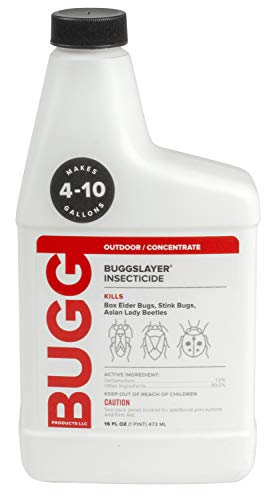
BUGGSLAYER Insecticide Concentrate Outdoor Insect Control 16 oz
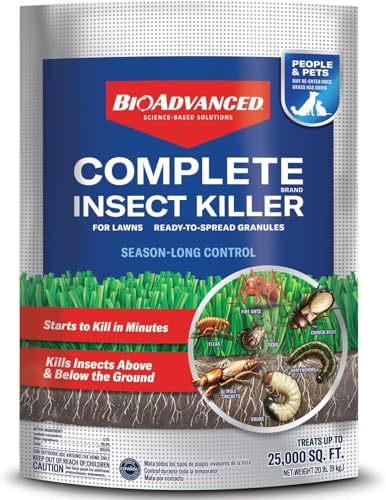
BioAdvanced Insect Killer for Lawns Granules 20 lb

Martin’s Cyonara Lawn & Garden Concentrate 32 oz

Talstar One Insecticide 1 Gallon Bifenthrin Concentrate
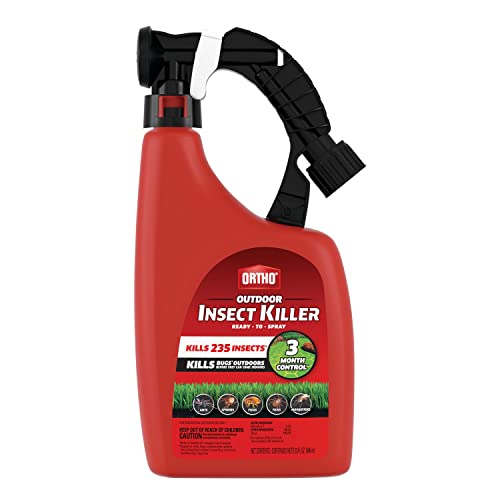
Ortho Outdoor Insect Killer Ready-to-Spray 32 fl oz

Amdro Quick Kill Insect Killer Concentrate 32 oz

Amdro Quick Kill Insect Killer Ready-to-Spray 32 oz

BioAdvanced Insect Killer Ready-to-Spray 32 oz
More On The Choices That Made The List
BUGGSLAYER is a 16 oz concentrate built for foundation and entry-point defense, which makes it a natural fit if your problem is bugs that migrate indoors rather than insects already chewing up the lawn. The water-based formula mixes into a standard pump or tank sprayer and is designed to lay down a barrier around doors, windows, and the foundation line where box elder bugs, stink bugs, and Asian ladybugs tend to gather before crossing the threshold.
Compared to the granular and ready-to-spray picks later in the list, this one expects you to own a sprayer and be comfortable measuring the concentrate, so it suits someone who treats pest control as a seasonal project rather than a weekend impulse. For most homes in areas with heavy fall box elder pressure, that perimeter pass is the difference between a quiet autumn and a living room full of bugs.
Where It Delivers
- Water-based mix means low odor during and right after application
- Targets the entry-point pests (stink bugs, box elders, ladybugs) that most general lawn killers don’t prioritize
- 16 oz bottle dilutes into a meaningful amount of finished spray for a typical suburban foundation
- Works well as a complementary treatment alongside a lawn granule like the BioAdvanced pick below
Worth Noting
- Requires a separate pump or tank sprayer, which adds setup if you don’t already own one
- Not aimed at soil-dwelling grubs or turf insects, so it pairs with another product for full-yard coverage
- Owners commonly report re-treatment every few weeks during peak migration for the barrier to hold
Feature Snapshot
Made For
Homeowners whose main complaint is bugs crossing from outside to inside, especially during seasonal migrations in older homes with foundation gaps.
Skip It When
You want a hose-end ready-to-spray instead; the Ortho Outdoor Insect Killer Ready-to-Spray is the better match for that hands-off workflow.
The BioAdvanced granule bag takes a different path from the concentrates above, using ready-to-spread pellets you walk out with a broadcast or drop spreader. The fast-acting formula targets both surface feeders and below-ground grubs in a single pass, so you don’t have to choose between the chinch bugs chewing the top of your turf and the grubs feeding on the roots.
For most homeowners, that combination is the real appeal. You get one application window for two problem categories, with no mixing, no sprayer to clean, and no guesswork about dilution ratios. The 20 lb bag is sized for a meaningful lawn area, and a single pass with a spreader is faster than pumping a tank sprayer across the same square footage.
Well-Handled Touches
- Granular form means no measuring, no mixing, and no leftover liquid to dispose of
- Targets both surface insects and soil-stage grubs in the same application
- Works well for treating ant mounds scattered around the lawn perimeter
Trade Offs
- You need a broadcast or drop spreader to apply evenly, which is an extra tool if you don’t own one
- Granules need watering in to activate, so plan application around your irrigation or rainfall schedule
Best Suited To
Suburban homeowners with a mid-to-large turf area who prefer a spreader-based routine over a sprayer-based one.
A Better Fit Elsewhere
Anyone focused on a tight perimeter barrier; the BUGGSLAYER concentrate handles that entry-point work with more precision than a broadcast granule.
Martin’s Cyonara is a lambda-cyhalothrin concentrate, a synthetic pyrethroid, that the maker positions across an unusually wide list of target sites: lawns, vegetables, roses, flowers, trees, and shrubs. The 0.5% formulation lands in a quart bottle, and the broad pest list covers more than 130 named insects, from spider mites and aphids to fire ants and chinch bugs.
That breadth is what sets it apart from the BUGGSLAYER and the BioAdvanced granule. Where the BUGGSLAYER is built for the foundation line and the BioAdvanced is built for turf, Cyonara stretches across ornamental and edible plantings. The trade-off is that you handle a more potent concentrate and need to respect plant-by-plant label instructions, especially around food crops, so this is a stronger fit for gardeners who already work with a tank sprayer.
Useful Highlights
- Broad pest coverage that handles mites, aphids, fire ants, and chinch bugs from the same bottle
- Low-odor formulation compared to stronger pyrethroid concentrates
- Approved for use on vegetables and ornamentals in the same yard, reducing the need for two separate products
Room For Improvement
- Requires careful label reading on edible crops, since application rates and pre-harvest intervals differ by plant
- You supply the pump or tank sprayer and the measuring discipline that goes with it
Quick Facts
Right Fit For
Experienced gardeners who maintain mixed plantings and want one concentrate that handles ornamentals and vegetables.
Look Elsewhere When
You’d rather skip mixing entirely; the Amdro Quick Kill Ready-to-Spray attaches to a hose and removes the measuring step.
Talstar One is a bifenthrin concentrate that the pros reach for first. The 1-gallon jug is sized for repeated perimeter treatments across a full season, and the active ingredient is the same one you’ll find in many professional pest control service trucks, used against ants, spiders, roaches, fleas, ticks, and mosquitoes around foundations, doors, and windows.
For most homeowners, this is overkill for a single weekend project. The 1-gallon container is meant to be diluted into multiple tank loads, and bifenthrin at full strength deserves careful handling. Where the other concentrates on this list treat a few thousand square feet per bottle, Talstar is built for ongoing perimeter maintenance on larger properties or for someone who wants pro-grade results without hiring out.
Practical Pluses
- Same active ingredient many pest control services use, so the label guidance is well documented
- One gallon dilutes into many tank loads for repeated perimeter passes
- Effective across both indoor and outdoor treatment areas on the same property
- Controls more than 75 listed pests including spiders, ants, and mosquitoes
Points To Keep In Mind
- 1-gallon size is heavy and built for multi-use, not a one-and-done treatment
- Bifenthrin concentrates require careful measuring and PPE for safe handling
- Overkill for a small city lot where a 16 oz or 32 oz bottle would suffice
Spec Overview
Who It Suits Best
Property owners with large yards who want pro-grade perimeter control and are comfortable handling concentrate safely.
Consider Something Else When
You only need to treat a small patio perimeter once a season; the BUGGSLAYER 16 oz handles that scope with less concentrate to store.
Ortho’s Ready-to-Spray bottle is the most approachable pick on the list. You attach the container to a standard garden hose, and the bottle meters the concentrate into the water stream as you walk the perimeter. The label claims coverage of more than 235 listed insects, including ants, spiders, mosquitoes, fleas, and ticks, with the added benefit that you can use it around flowers, vegetable gardens, and fruit trees.
For most first-time users, the appeal is that there’s no measuring, no tank to fill, and no cleanup beyond screwing the bottle back on. The maker’s label also positions it as suitable for edibles, which separates it from a perimeter-only concentrate like the BUGGSLAYER, though you still need to respect the listed application rates per plant type.
The Good Stuff
- Hose-end format removes the mixing and measuring step entirely
- Labeled for use on edibles, flowers, and fruit trees beyond the lawn perimeter
- Broad pest list covers 235 named insects in a single bottle
- The contact-kill action produces visible results quickly for casual users
Less Ideal Details
- Contact-kill focus means residual protection fades faster than the Talstar or Cyonara concentrates
- Hose-end application uses more water than a tank sprayer, which can feel wasteful on large lots
Who Should Grab It
First-time DIYers who want a no-mix product that attaches to a hose and works around edible plantings.
Swap It Out When
You have a heavy ant or chinch bug problem; the BioAdvanced Complete granules handle soil-dwelling pests with more staying power.
Amdro’s Quick Kill concentrate is a 32 oz bottle that dilutes into a full gallon of finished spray and targets more than 500 listed insects. The maker emphasizes same-day contact kill plus a residual window of up to three months, so you can apply once and have protection carry through the heaviest part of the season.
For most yards, that three-month residual is the main draw compared to the contact-only Ortho Ready-to-Spray. You give up the convenience of a hose-end bottle in exchange for longer coverage, and you need a tank sprayer to apply. The included measuring cap on the bottle simplifies dilution, which is a small but appreciated detail when you’re mixing a full gallon at a time.
Key Advantages
- 32 oz bottle dilutes into a full gallon of finished spray for larger yards
- Residual action holds for up to three months after application
- Covers more than 500 listed insects in a single formulation
- Includes a measuring cap for easier dilution
Some Limits To Know
- Tank sprayer required, so setup takes longer than a hose-end bottle
- Same-day kill action can be slower on heavy infestations than the contact-only Ortho pick
Key Product Details
Perfect Match For
Homeowners with bigger yards who already own a tank sprayer and want fewer re-treatment passes per season.
Not Your Match When
You’d rather skip the sprayer entirely; the Amdro Quick Kill Ready-to-Spray delivers a similar residual without the mixing step.
Amdro’s Ready-to-Spray is the hose-end sibling of the concentrate above. You attach the 32 oz bottle to a garden hose and spray a perimeter or lawn pass without measuring or mixing. The formula targets the same broad pest list, more than 500 insects including cicadas, mosquitoes, ants, spiders, and Japanese beetles, with a residual window of up to three months.
For most weekend users, the difference between this and the concentrate version comes down to convenience versus coverage. The Ready-to-Spray trades the tank-sprayer precision of the concentrate for a quicker setup, and you can complete a meaningful treatment in the time it takes to walk the foundation and a strip of lawn. Where the concentrate excels on large lots, this bottle fits the casual Saturday-morning workflow better.
Real Benefits
- Hose-end attachment means no tank to fill or rinse afterward
- Residual protection holds for up to three months on most listed pests
- Targets more than 500 listed insects including seasonal ones like cicadas and Japanese beetles
What To Weigh
- Less precise than a tank sprayer, so you may use more product per square foot
- Coverage of edible plants depends on the specific label, so always check before spraying vegetable beds
Whose Shelf It Belongs On
Casual DIYers who want Amdro’s broad pest coverage without buying or cleaning a tank sprayer.
Reach For A Different Pick When
You want pro-grade perimeter precision; the Talstar One 1-gallon concentrate delivers that for experienced users.
BioAdvanced’s Ready-to-Spray rounds out the list with a hose-end bottle aimed at soil and turf around the home. The label claims contact-kill coverage of more than 500 listed surface insects, including grubs, ants, ticks, and mosquitoes, with a flexible application that works on both lawn and ornamental soil areas.
For most homeowners, the appeal sits between the convenience of the Ortho and the broad pest count of the Amdro Ready-to-Spray. Where the Ortho is the easiest entry point for edible gardens, this BioAdvanced bottle leans toward turf and ornamental beds, and the soil-and-turf positioning pairs naturally with the BioAdvanced granules in pick two if you want a hose-end pass on top of a granular application.
What Earns Its Place
- Soil-and-turf flexibility for homeowners with mixed lawn and planting beds
- Targets grubs, ants, ticks, and mosquitoes from a single hose-end bottle
- Pairs well with the BioAdvanced granules for a layered approach to the same yard
Potential Compromises
- Not labeled for edible vegetable gardens in the same way the Ortho Ready-to-Spray is, so keep it on turf and ornamentals
- Hose-end delivery wastes more product than a tank sprayer on large areas
Built With In Mind
Homeowners with mixed turf and ornamental beds who want a single hose-end bottle for surface insect control.
Where A Sibling Pick Shines
You mainly want to protect edible plantings; the Ortho Outdoor Insect Killer Ready-to-Spray is the better-labeled pick for that use.
What To Weigh Before Choosing An Outdoor Insect Killer
Match The Format To Your Equipment
The biggest practical decision is whether you already own, or want to own, a sprayer. Concentrates like BUGGSLAYER, Martin’s Cyonara, and Talstar One assume you have a pump or tank sprayer and are comfortable measuring. Granules like the BioAdvanced 20 lb bag assume a spreader. Ready-to-spray bottles like the Ortho, Amdro, and BioAdvanced hose-end options assume nothing beyond a garden hose. Picking the format that matches your existing tools saves you from buying equipment before you buy the product.
Define The Pest Before You Pick The Product
Perimeter pests (box elders, stink bugs, ladybugs) point toward a foundation concentrate like BUGGSLAYER or Talstar. Lawn pests (chinch bugs, grubs, mole crickets) point toward granules or a turf-ready spray. Garden pests (aphids, mites, caterpillars on vegetables and ornamentals) point toward Martin’s Cyonara, which is labeled across both edible and ornamental plantings. Choosing by pest category first prevents overspending on coverage you don’t need.
Read The Edible-Plant Label Carefully
Several concentrates and ready-to-sprays are approved for use on fruits and vegetables, but the application rates and pre-harvest intervals vary plant to plant. For most vegetable gardeners, that label step is non-negotiable, and a product like Martin’s Cyonara is appealing precisely because it consolidates that label work into one bottle. If you don’t grow edibles, you can skip the label scrutiny and prioritize pest coverage and residual length instead.
Balance Residual Length Against Re-Treatment Effort
Contact-kill products work fast but fade quickly, while residual formulations like the Amdro concentrates can stretch coverage to three months. For most homeowners, a longer residual means fewer re-treatment passes per season, which matters more on larger lots than on small patios. The trade-off shows up in handling complexity, since concentrates with longer residual tend to be stronger and require more careful mixing.
Picking The Right Approach For Your Yard
Wrong Turns To Avoid
A common slip is buying the most powerful concentrate on the list when a smaller bottle would handle the job. Talstar’s 1-gallon jug is genuinely effective, but it’s overkill for a single patio perimeter, and the leftover concentrate has to be stored safely. Another trap is treating only the lawn and ignoring the foundation line, since many of the most visible pests migrate from the soil next to the house rather than from open turf. For most yards, the foundation pass and the lawn pass are two different jobs that benefit from two different products.
Where The Extra Money Goes
The premium tier in this category buys you a longer residual window, broader pest coverage, and concentrate strength that pros rely on. The Talstar One 1-gallon is the clearest example, with bifenthrin and enough volume for an entire season of perimeter treatments. For most homeowners, the upgrade pays off only when the yard is large, the pest pressure is severe, or you simply prefer to mix your own concentrates. A small urban patio doesn’t need that tier, and a 16 oz or 32 oz bottle from the same category handles it with less concentrate to store.
Frequently Asked Questions
How Often Should I Re-Treat The Outdoor Perimeter?
For most ready-to-spray products, re-treatment every 30 to 60 days during peak season keeps the barrier consistent, while residual concentrates can stretch to three months between passes. Your exact re-treatment window depends on rainfall, sun exposure, and pest pressure, so check the label for the residual claim on the specific product you use.
Can I Use These Products Around Vegetable Gardens?
Some products on this list, including Martin’s Cyonara and the Ortho Ready-to-Spray, are labeled for use on edible plants, but the application rates and pre-harvest intervals differ by crop. You should always read the edible-crop section of the label before spraying anything on vegetables or fruit trees, and avoid using non-edible concentrates like the BioAdvanced Ready-to-Spray on food crops.
Do I Need A Separate Sprayer To Apply These?
Granules require a broadcast or drop spreader, concentrates require a pump or tank sprayer, and ready-to-spray bottles only need a garden hose. The format you pick determines the equipment you need, so choose based on what you already own or what you’re willing to buy.
Are These Products Safe Around Pets And Children?
Most labels include a re-entry interval, the time you should keep pets and people off treated surfaces until the spray dries. For most homeowners, drying time is a few hours for liquid products and immediate for watered-in granules, but the specific interval is printed on each product’s label and should be the final word.
Will Rain Wash The Treatment Away?
Yes, rainfall shortly after application reduces effectiveness, which is why most labels recommend spraying on a dry day with no rain in the forecast for 24 hours. Granules need watering in to activate, but a heavy downpour right after spreading can move the active ingredient before it bonds to the soil.
Closing Remarks
The right outdoor insect killer comes down to your yard’s size, your existing equipment, and the specific pests you’re fighting. For most homeowners, a hose-end ready-to-spray covers a weekend treatment with no setup, while a serious perimeter problem benefits from a dedicated concentrate. Match the format to your tools, read the label for the pests you actually have, and re-treat on the residual schedule the maker recommends for the smoothest season outdoors.
