

Three acres of hilly turf is its own quiet beast. A mower that glides across flat ground often stalls, slips, or scalps once gravity enters the chat, so the picks below lean on rear-wheel drive, 4WD robotic platforms, and decks sized to keep total passes manageable without sacrificing control on inclines. Walk-behind gas options suit hands-on owners who want a workout and precise trimming, while wire-free robotic mowers trade active mowing for autonomous slope handling and reduced weekend labor. The shortlist balances power, traction, deck width, and the often-overlooked question of how much help you actually want from the machine itself. Specs come straight from the source data, and every recommendation ties to a real mowing scenario rather than a feature checklist.
The Choices Worth Comparing

PowerSmart 22-Inch 170cc Self Propelled Gas Lawn Mower

Worx WG752 40V 21-Inch Cordless Mower

PowerSmart 21-Inch Self-Propelled Gas Mower

PowerSmart 21-Inch Self-Propelled Mower for Hills
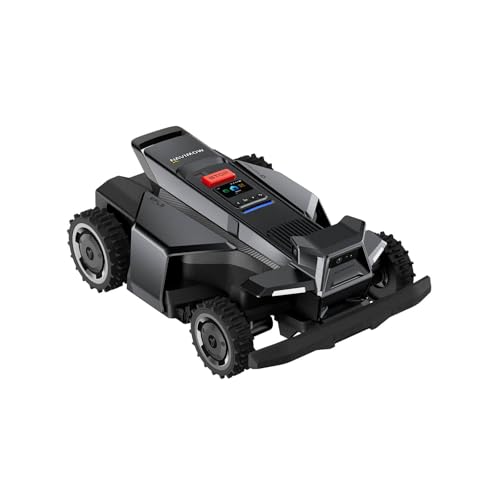
Segway Navimow X430 4WD Robot Mower

MOVA LiDAX Ultra 3000 AWD Robot Mower
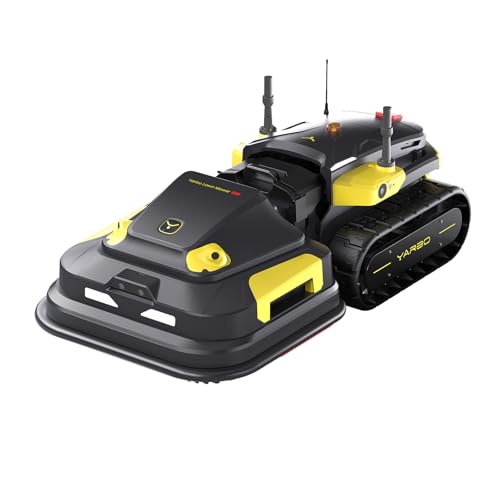
YARBO Robot Lawn Mower Pro, Wire-Free
Segway Navimow X430 with Garage X
More On The Choices That Made The List
Wider decks shrink the total passes needed across three acres, and this PowerSmart lands at the larger end of the walk-behind category. The 170cc OHV engine (an overhead-valve design that runs cooler and lasts longer than side-valve units) feeds a rear-wheel-drive chassis, which puts traction directly under your hands where the slope actually matters.
Compared with the smaller 21-inch options later in this list, the 22-inch path trims a meaningful chunk off mowing time without making the unit unwieldy on a tight turn. You still guide it manually, so steep pitches demand caution, but for owners who prefer a real engine and don’t mind the workout, the deck-to-power ratio is well balanced.
What Pays Off
- 22-inch steel deck covers ground faster than typical 20-21 inch walk-behinds, cutting passes on a three-acre layout.
- Rear-wheel drive puts torque at the back tires, which is where grip matters most on an uphill grade.
- 170cc OHV engine provides enough muscle for thick or slightly overgrown turf without bogging down.
- Self-propelled engagement reduces fatigue over a long session, which matters when three acres takes real time.
Honest Caveats
- Wider decks are heavier and harder to maneuver on very tight, twisting hillside sections.
- Gas engines require seasonal oil checks, fuel stabilizer, and spark-plug maintenance that battery models skip.
Who It Suits Best
Active homeowners with three flat-to-moderately-sloped acres who want a walk-behind that finishes the job in fewer passes and don’t mind the upkeep of a small gas engine.
Consider Something Else When
The Segway Navimow X430 4WD Robot Mower fits better when slopes exceed 30% and you’d rather hand the mowing over to a robot entirely.
The Worx WG752 trades the gas engine for a 40V battery platform, which changes the experience in ways that go beyond noise. Push-button starts, no oil, and quieter operation make early-morning mowing realistic again, and the 3-in-1 deck handles bagging, mulching, and side discharge from the same chassis.
The manufacturer rates it for roughly half an acre per charge, so this isn’t the whole-property answer for three rolling acres. Instead, it works well as the trim mower for a smaller zone within a larger property, or as a secondary unit paired with a robotic mower handling the open areas. For owners who hate the smell and fuss of gasoline, the trade-off may be worth it.
Well-Handled Touches
- Battery operation means no fuel, no oil, no winterizing, and a noticeably quieter mowing session.
- The aerodeck design increases airflow through the cutting chamber, which helps cut quality stay consistent.
- 3-in-1 versatility handles bagging, mulching, or side discharge without extra attachments.
- Push-button start removes the recoil pull, a real benefit for anyone who dreads cold-starting a small engine.
Trade-Offs To Consider
- Battery range suits roughly half an acre per charge, so three full acres will require multiple swap-and-resume cycles.
- No drive system, so steep slopes demand more leg strength and a steady pace from the operator.
Made For
Homeowners with a flat-to-mild half-acre section within a larger property, or anyone transitioning off gas for quieter, lower-maintenance mowing.
Skip It When
You need to cover the full three hilly acres in one stretch, in which case the PowerSmart 21-Inch Self-Propelled Gas Mower makes far more sense.
This 21-inch PowerSmart covers a sweet spot that often gets overlooked. It’s not the widest walk-behind on the list, nor the most compact, but the 170cc OHV engine paired with rear-wheel drive gives it a real advantage on the kind of rolling yard that punishes smaller front-wheel-drive units.
For three acres with mostly moderate inclines, the 3-in-1 steel deck delivers the flexibility to bag clippings, mulch them back into the turf, or discharge them to the side. The narrower path compared to the 22-inch sibling means a few more passes, but the trade-off is improved maneuverability around landscaping and tighter hillside curves.
Bright Spots
- Rear-wheel drive places traction exactly where gravity is pulling the chassis, helping on uphill climbs.
- Steel deck construction holds up better against rocks and roots than lighter plastic housings.
- 3-in-1 design adapts to seasonal needs: bag in spring growth, mulch in summer, discharge in fall cleanup.
Small Caveats
- 21-inch deck means more passes than the 22-inch PowerSmart, so total mowing time stretches a bit.
- Gas maintenance still applies: oil changes, air filter cleaning, and fuel draining for winter storage.
Key Specs
Best Suited To
Homeowners with three acres of mostly moderate slopes who want a versatile gas walk-behind without overspending on the widest possible deck.
A Better Fit Elsewhere
The PowerSmart 21-Inch Self-Propelled Mower for Hills is the closer cousin if the property skews steeper or you want more dedicated hill features.
This PowerSmart is the hill-focused cousin of the previous 21-inch model, and the small design choices add up on tougher ground. The 10-inch rear wheels improve traction over uneven turf, and the six-position height adjustment lets you raise the deck when grass gets tall or lower it for a clean weekly cut.
Alloy steel construction on the deck balances weight and durability, so the unit doesn’t feel like a beast to turn at the end of a row. Compared with the original 21-inch PowerSmart, this version leans more deliberately into the hilly-yard market, which means features like auto choke and recoil start are tuned to fire up quickly even after sitting in a hot garage all week.
Useful Highlights
- 10-inch rear wheels grip uneven terrain better than the smaller wheels on many competing walk-behinds.
- Six-position height adjustment adapts to thick spring growth or a low summer cut without tools.
- Auto choke simplifies cold starts, so the engine fires in one or two pulls even after storage.
- Alloy steel deck balances long-term durability against manageable weight for hillside maneuvering.
Points To Note
- Still a gas engine, so seasonal maintenance and fuel costs remain part of ownership.
- Not autonomous: steeper slopes still require careful footing and a controlled pace from the operator.
Perfect Match For
Homeowners with three hilly acres who want a walk-behind that genuinely prioritizes slope handling and don’t mind the active involvement of a self-propelled gas mower.
Not Your Match When
You’d rather not mow at all, in which case the Segway Navimow X430 4WD Robot Mower climbs that same hill on its own.
The Navimow X430 shifts the category from walk-behind labor to autonomous slope handling. Four-wheel drive and an ORV-tuned (off-road vehicle-style) dual suspension let it climb 84% slopes, which is a steeper grade than most walk-behind operators would feel safe tackling. The zero-turn steering design pivots in place, reducing turf damage on tight turns that would otherwise scuff a hillside.
Wire-free setup means no boundary cable to bury, which simplifies installation considerably. For three acres, the X430 covers up to one acre on a charge cycle, so larger properties will need it to return to its dock and resume. Compared with the MOVA LiDAX below, the X430 prioritizes raw slope-climbing over dual-map flexibility.
Practical Pluses
- 4WD drivetrain handles 84% (roughly 40-degree) slopes that would stop most walk-behinds.
- Zero-turn steering pivots without scuffing delicate hillside turf.
- Wire-free installation removes the most tedious step of traditional robot mower setup.
- Dual 180W motors provide enough torque to keep blades turning through thick patches.
Worth Bearing In Mind
- Cover rating tops out around one acre, so three-acre owners will see multiple return-and-resume cycles per session.
- Initial setup and mapping still require a few hours of hands-on configuration before the robot runs solo.
Feature Snapshot
Who Should Grab It
Property owners with steep, complex terrain up to an acre who want autonomous mowing and have slopes too aggressive for walk-behind work.
Reach For A Different Pick When
Your three acres are mostly flat with mild grades, in which case the PowerSmart 22-Inch Self Propelled Gas Mower covers more ground per pass at lower cost.
The MOVA LiDAX brings serious navigation tech to the robot category. RTK-free setup means it doesn’t need a fixed reference station to know where it is, and 360-degree 3D LiDAR (a laser-based scanning system that builds a 3D map of the yard) paired with AI dual vision gives it a detailed picture of obstacles, edges, and elevation changes.
Four hub motors, each rated at 116W, push it up 80% slopes and over obstacles up to 2.4 inches. For three acres split into front and back zones, the dual-map feature handles both sections without separate machines. Compared with the Segway Navimow X430, this MOVA trades some raw slope capacity for smarter mapping and more precise obstacle recognition.
Advantages To Know
- RTK-free installation skips the base station that traditional GPS-guided robots require.
- 3D LiDAR plus AI vision identifies obstacles more reliably than basic bumper sensors.
- Four high-torque hub motors (motors built into the wheel hubs) climb 80% slopes and clear 2.4-inch obstacles.
- Dual-map support manages two distinct lawn zones from a single unit.
Points To Keep In Mind
- Coverage tops out around 0.75 acres per cycle, so larger three-acre lots need multiple sessions.
- Advanced navigation means a longer initial mapping session before the robot runs unsupervised.
Right Fit For
Tech-comfortable owners with landscaped yards up to three-quarters of an acre who want precise obstacle avoidance and don’t need full-acre coverage per cycle.
Swap It Out When
The YARBO Robot Lawn Mower Pro fits better when your property stretches well beyond an acre and you need a modular platform that scales.
The YARBO Pro is the largest-scale option on this list, and its design reflects that. A modular platform means the machine can switch attachments for different yard tasks, and the manufacturer rates it for properties up to six acres. For a three-acre property, that headroom translates into faster completion times and less recharging.
It cuts thick, wet, and overgrown grass without bogging, which matters for properties where the mowing schedule occasionally slips. Compared with the Segway and MOVA robots, the YARBO trades some of the refined mapping tech for raw capacity and a build aimed at premium estates, golf courses, and turf farms.
Real-World Strengths
- Six-acre coverage rating gives meaningful headroom for three-acre properties, reducing return-to-dock cycles.
- Modular design supports multiple attachments for different seasonal yard tasks.
- Cutting system handles thick, wet, or overgrown grass that stops smaller robot mowers.
- Fully autonomous navigation reduces weekend labor on larger estates.
Honest Caveats
- Premium positioning means a heavier upfront investment than compact robot mowers.
- Modular system requires storage space for attachments and a learning curve to manage.
At A Glance
Built With In Mind
Premium property owners with multi-acre estates who want a modular, autonomous platform and don’t mind the higher investment for capacity.
Another Choice May Suit
The MOVA LiDAX Ultra 3000 AWD Robot Mower is a smarter match for smaller lots under an acre where precision mapping matters more than raw coverage.
This is the same Navimow X430 reviewed earlier, bundled with a dedicated Garage X shelter. The robot itself climbs 84% slopes with 4WD traction and zero-turn steering, and the garage adds weather protection that extends the life of the electronics and battery across seasons.
The garage ships separately, so setup is a two-step process, but owners who plan to leave the mower outdoors in rain or direct sun get a real durability benefit from the shelter. For three hilly acres where the dock sits in an exposed spot, the bundled version is the more weather-resilient choice. If the dock location is already under a tree or eave, the standalone X430 covers the same slope performance without the extra component.
Benefits That Matter
- 4WD and dual suspension match the slope-handling capability of the standalone X430.
- Zero-turn steering protects hillside turf during direction changes.
- Garage X shelter shields the unit from rain, sun, and debris, extending component life.
- Wire-free installation skips the boundary cable step that adds hours to traditional robot setup.
Less Ideal Details
- Garage ships separately, so expect a two-delivery setup window before the full system is operational.
- Same one-acre-per-cycle limit as the standalone X430 applies on three-acre properties.
Whose Shelf It Belongs On
Owners committed to the Navimow platform whose dock location is exposed and want maximum weather protection for the unit.
Where A Sibling Pick Shines
The YARBO Robot Lawn Mower Pro is the stronger pick when the property exceeds two acres and a modular system can handle more ground per cycle.
Key Factors For Three Acres Of Hilly Ground
Slope Grade And Drive Type
The single most important spec for hilly acreage is slope handling, and manufacturers express it as a percentage. A 30% slope is roughly 17 degrees; an 84% slope, like the Navimow X430 handles, is closer to 40 degrees. For reference, anything under 15% is walkable with a self-propelled rear-wheel-drive mower. Between 15% and 40%, you want 4WD on a robot or a self-propelled walk-behind with serious rear traction. Above 40%, only purpose-built 4WD robotic platforms with dual suspension are realistic.
Deck Width Versus Maneuverability
Wider decks (22 inches and up) cover more ground per pass, which matters on three acres where total mowing time adds up. The trade-off shows up on tight, twisting hillsides where a heavy, wide deck is harder to control. For mostly open, rolling terrain, lean wider. For narrow, contoured yards with landscaping, lean narrower.
Power Source And Maintenance Reality
Gas engines deliver consistent power and refuel in minutes, but they demand oil changes, air filter cleaning, spark plug replacement, and fuel stabilization. Battery walk-behinds eliminate most of that, but limited range restricts them to smaller zones. Robotic platforms split the difference: minimal hands-on maintenance, but their own recharging cycles. Pick the power source that matches how much weekend labor you actually want.
Coverage Rating Vs. Real Property Size
Manufacturers rate robotic mowers for “up to X acres,” which is best-case. On three hilly acres with multiple zones, expect a robot rated for one acre to require multiple return-and-resume cycles. On flat, simple layouts, it may finish in one go. Always size the robot’s coverage rating above your actual property size, especially with slopes.
Key Considerations Across These Picks
Wrong Turns To Avoid
The most common mistake is buying a wide-deck gas walk-behind for a yard that turns out to have too many slopes to push comfortably. Wider units feel productive on the first mow, but on grade they demand more strength than expected. The flip side is also true: an underpowered battery mower for a half-acre section of a three-acre lot leaves you charging mid-job, every time. Match the machine to the zone, not the whole property.
What Separates Premium From Basic
Higher-tier robotic mowers cost more for reasons that show up after month three, not day one. Better suspension, dual motors per wheel, and refined navigation algorithms handle wet grass, sudden rain, and unmapped obstacles without getting stuck. Premium walk-behinds add rear-wheel-drive geometry and deck materials that don’t flex over rough ground. The upgrade pays off when the property has any combination of steep slopes, thick grass, or complex landscaping, and it feels wasted on a flat half-acre.
