Texas flower beds live a tough life. Long summers, stubborn clay, and unpredictable rain turn bare soil into cracked dust within weeks. A thoughtful layer of mulch keeps roots cooler, holds moisture longer, and stops weeds before they start. The eight options below cover every kind of bed, from sun-baked perennials to shaded container gardens.
A Fast Comparison Of The Options
PickWhy We Picked ItBest ForAction

Editor’s Choice
SuperMoss (23261) Coco Mulch, Natural Brown
Lightweight coconut coir format
Small beds and containers

Garden Choice
HealthiStraw GardenStraw 3 cu ft Wheat Straw Mulch
Clean, compost-friendly straw
Vegetable and herb gardens

Heavy Duty Pick
Rubberific Rubber Mulch Bagged Brown
Long-lasting rubber surface
Play areas and pathways

Compact Choice
Halatool 2 Pcs Coco Husk Chips, 2.2 lb
Compressed bricks, easy storage
Potted plants and herbs

Built To Last
Coco Chips Mulch Brick, 10 lbs
High-volume compressed format
Larger landscape beds

Outdoor Ready
EZ-Straw Seeding Mulch with Tackifier, 2.5 cu ft
Bonded straw resists washout
New lawn seeding areas
Regional Favorite
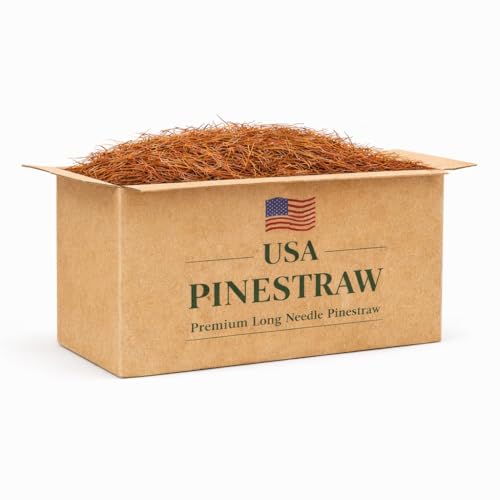
Long Needle Pine Straw Mulch, 65-80 sq ft
Native pine needle coverage
Regional Favorite
Long Needle Pine Straw Mulch, 65-80 sq ft
Native pine needle coverage
Acid-loving shrubs and trees

Value Pick
PlantBest Coco Mulch Compressed Block, 9.1 lb
Expands to 64 quarts per block
Whole-yard coverage on a budget
The Strengths Of Each Pick
Texas flower beds run hot by July, and a coco-coir layer like the SuperMoss 23261 handles that heat without breaking down into a dusty mess. The natural brown color reads tidy against perennials and stays put through summer storms, which matters when afternoon winds pick up along open lots.
Coir, the fibrous husk material from coconut shells, holds moisture far longer than shredded hardwood and resists compacting into a rain-blocking crust. For gardeners with a few small raised beds or container groupings, the 200 cubic-inch format is easy to handle without a wheelbarrow.
The Helpful Details
- ✓Holds water at the root zone, cutting down on daily soakings during August dry spells.
- ✓pH-neutral, so it won’t push alkaline-loving beds into unwanted acidity.
- ✓Won’t mat into a hard shell the way bark can after a season of overhead watering.
- ✓Light enough to carry a few bags without straining your back.
Small Caveats
- •The small 0.12 cu ft bag means a larger bed needs multiple units to achieve a 2-inch layer.
- •Coir breaks down faster than bark, so expect to top-dress every growing season.
Who It Suits Best
Backyard gardeners tending a couple of small raised beds or a tight row of containers who want clean, tidy coverage without hauling heavy loads.
Where Another Pick Suits Better
For larger landscape projects where bulk matters more than color consistency, the PlantBest Coco Mulch Compressed Block stretches much farther per purchase.
Vegetable beds and cutting gardens around Texas often call for mulch that feeds the soil rather than just sitting on top. HealthiStraw GardenStraw delivers wheat straw cleaned of most dust, dirt, and seeds, then breaks down into carbon-rich organic matter by the next planting cycle.
The 3 cu ft volume per bag covers a generous run of row crops, and the loose texture breathes well in heavy clay. You may find the light golden color fades to a soft tan within a few weeks of full sun, which actually signals the straw is integrating into the bed the way it should.
What It Does Well
- ✓Slashes watering frequency by holding soil moisture through the hottest afternoons.
- ✓Feeds the bed over time as the straw decomposes into compost-ready material.
- ✓Works across vegetables, herbs, and flowers without changing soil chemistry.
- ✓Cleans easily compared to baled field straw, with fewer stray seeds to weed later.
Trade Offs
- •Wheat straw decomposes quickly, so plan on reapplying each season for ongoing weed control.
- •The light texture can shift in heavy rain before it settles into the bed.
Feature Snapshot
| | Feature | Specification | Why It Matters |
|---|
| Volume | 3 cu ft per bag | Covers a meaningful stretch of row crops in one go. |
| Source | Sustainably grown, non-GMO wheat straw | Aligns with organic vegetable garden goals. |
| Cleaning | Filtered to reduce dust and seeds | Less weeding later, cleaner spread. |
| Water retention | Reduces watering needs substantially | Lowers summer water bills across dry months. |
Right Fit For
Kitchen gardeners and homesteaders with raised vegetable beds who want mulch that improves the soil while it protects it.
A Better Fit Elsewhere
For a low-maintenance decorative bed where you don’t want to refresh mulch every season, the Long Needle Pine Straw Mulch stays in place longer.
Rubber mulch carves out a specific niche in Texas landscaping. Where bark blows away or straw vanishes into clay, Rubberific stays put through wind, rain, and foot traffic. The bagged brown color blends with desert-style palettes common across the Hill Country and West Texas.
This is a different beast from the organic options on this list. Rubberific doesn’t feed the soil or break down, which means a one-time install can last for years without top-dressing. For pathways, play areas, or tree rings where you want a permanent surface, that’s a real advantage.
What Helps Most
- ✓Holds its color and shape through repeated sun and rain cycles without fading fast.
- ✓Won’t wash away during the heavy downpours that hit Texas in spring and fall.
- ✓Cushions impact underfoot, making it practical around play structures.
- ✓Stops weed germination without chemicals or annual refresh.
Honest Caveats
- •Rubber heats up in direct sun, which can stress shallow-rooted flowers planted directly into it.
- •Doesn’t contribute organic matter to the soil like bark or straw options do.
- •Bag weight can be substantial, so plan on a vehicle trip to haul it home.
Made For
Homeowners building a permanent play area, walkway, or tree ring who prioritize low upkeep over soil improvement.
Skip It When
Bedding annuals and perennials for seasonal color belongs in organic mulch; reach for PlantBest Coco Mulch Compressed Block instead.
Coco husk chips walk a middle line between fine coir mulch and bark nuggets. The Halatool 2-pack ships as compressed bricks that fluff up to roughly 7 quarts each, which is plenty for a clutch of container plantings or a small herb garden on the patio.
The chunky texture lets air and water move through freely, which helps in dense potting mixes that tend to compact. Each brick measures roughly 8 by 4 by 2 inches before hydration, so the package stores easily on a shelf until you’re ready to use it.
Useful Touches
- ✓Low EC (electrical conductivity, a measure of salt content) and pH-balanced, so young roots aren’t burned.
- ✓Compressed format saves garage space compared to bulky bark bags.
- ✓Husk chips resist breaking down into sludge for multiple seasons.
- ✓The two-pack covers several medium containers with room to spare.
Points To Note
- •Bricks need soaking time before they break apart, so plan ahead before planting day.
- •Smaller total volume means larger landscape beds require several packs.
Feature Snapshot
| | Feature | Specification | Why It Matters |
|---|
| Pack size | 2 bricks, 1.1 lb each | Manageable for one person to handle and store. |
| Expansion | Up to 7 quarts per brick | Covers a meaningful number of small pots. |
| Brick dimensions | Approx. 7.87 x 3.93 x 1.97 in | Fits on standard shelving without hassle. |
| EC and pH | Low EC, pH balanced | Safe for tender herbs and young transplants. |
Who Should Grab It
Patio gardeners and apartment growers who keep a handful of pots and want premium-looking mulch without hauling heavy bags.
Reach For A Different Pick When
For spreading across a full flower border, the Coco Chips Mulch Brick, 10 lbs, offers much more volume for the same effort.
When a Texas flower bed needs serious coverage, compressed coconut husk chips earn their keep. This 10-pound brick expands into enough mulch to handle a sizable border or a cluster of foundation plantings, all without the bulk of traditional bagged mulch.
The chunk size here runs larger than typical shredded bark, which creates a longer-lasting surface layer. Coconut husks naturally resist fungal growth, a real plus in humid Gulf Coast gardens where decomposition accelerates.
Where It Excels
- ✓One brick covers what would otherwise take several heavy bagged products.
- ✓Locks in moisture at the soil line, reducing how often you drag out the hose.
- ✓Suitable for orchids, tropicals, and moisture-loving ornamentals that struggle in dry Texas air.
- ✓Stores dry on a garage shelf until you’re ready to expand and use it.
Potential Drawbacks
- •Requires a soaking session before use, which adds a planning step before spreading.
- •The larger chip size can look coarse in tidy, formal garden designs.
- •Once expanded, the volume makes transport from the soak site to the bed a bit more work.
Best Suited To
Garden owners tackling a full border refresh who want bulk coverage without a stack of heavy bags cluttering the driveway.
Look Elsewhere When
For a vegetable garden where you want mulch that breaks down into soil-building material, HealthiStraw GardenStraw fits the bill more naturally.
Establishing a new lawn or overseeding a patchy area in Texas gets complicated the moment a thunderstorm rolls through. EZ-Straw solves that with a tackifier, a biodegradable bonding agent that glues the straw down so seed stays put even in heavy rain.
The 2.5 cu ft bale spreads across about 500 square feet, which handles most residential reseeding jobs in a single purchase. The processed straw has been twice-cut for easy application, so it flows through your hands rather than clumping like raw field straw.
Notable Gains
- ✓Tackifier holds straw in place through wind and rain, protecting seed investment.
- ✓Covers up to 500 square feet per bale for efficient seeding projects.
- ✓Safe around pets and children without chemical concerns.
- ✓Biodegradable bonding breaks down naturally as grass establishes.
Things To Consider
- •Designed specifically for seeding, so it’s not the right pick for established flower beds.
- •The tackifier needs a brief drying window after application to set properly.
Quick Facts
| | Feature | Specification | Why It Matters |
|---|
| Volume | 2.5 cu ft bale | Spreads across roughly 500 sq ft of seedbed. |
| Bonding agent | Biodegradable tackifier included | Keeps straw from washing or blowing away. |
| Processing | Twice-cut and screened | Easier to spread evenly by hand or blower. |
Whose Shelf It Belongs On
Homeowners patching bare spots or starting a new lawn who need the seed to survive Texas spring storms.
Not Your Match When
For mature flower beds that need moisture control around established roots, the Long Needle Pine Straw Mulch is a more lasting fit.
Pine straw carries strong Texas roots. East Texas pine forests produce long needles that interlock into a loose, airy mat over the soil. This set covers 65 to 80 square feet, which fits a foundation bed, an azalea planting, or a row of gardenias beautifully.
The needles shed rainfall rather than letting it pool, and they slowly acidify the top layer of soil as they break down. Acid-loving shrubs like azaleas, camellias, and blueberries thrive under that gradual shift, which is why pine straw shows up across so many Southern landscapes.
Where It Delivers
- ✓Interlocking needles stay in place better than loose shredded mulches in wind.
- ✓Sourced from sustainable U.S. pine forests for an environmentally conscious choice.
- ✓Suppresses weed germination while letting desirable moisture through.
- ✓Naturally acidic breakdown suits acid-loving ornamentals common in Southern gardens.
Practical Considerations
- •Floating needles can scatter during the first heavy rain before they settle into the bed.
- •Acidic breakdown may not suit every flower, so check plant preferences first.
Feature Snapshot
| | Feature | Specification | Why It Matters |
|---|
| Coverage | 65 to 80 sq ft per set | Fits typical residential foundation beds. |
| Source | USA-harvested sustainable pine | Keeps the supply chain close to home. |
| Use case | Weed control, moisture retention, erosion control | Handles three jobs in one application. |
Perfect Match For
Texas gardeners planting azaleas, gardenias, blueberries, or camellias who want a regionally familiar mulch that matches the climate.
Swap It Out When
For alkaline-tolerant perennials like salvias and lantanas, HealthiStraw GardenStraw keeps the soil chemistry closer to neutral.
The PlantBest compressed block solves the hauling problem. At 9.1 pounds dry, it expands into roughly 64 quarts of ready-to-spread mulch, covering up to 17.5 square feet at a proper 2-inch depth. One block replaces what would otherwise arrive in three or four heavy traditional bags.
Add water, wait a few minutes, and the block fluffs into light, airy coir that spreads easily by hand or with a rake. For gardeners covering a wide border on a tight budget, the math works out well, and storage is much easier between projects.
Practical Pluses
- ✓One block covers up to 17.5 sq ft at a 2-inch mulch depth.
- ✓Compressed format saves serious space versus bulky traditional bags.
- ✓Expands in minutes with plain water, no special preparation needed.
- ✓Light enough to carry from the car to the bed without strain.
A Few Limitations
- •You’ll need a wheelbarrow or large tub for the expansion step before spreading.
- •Coir texture breaks down faster than bark, so refresh timing matters for weed control.
Quick Facts
| | Feature | Specification | Why It Matters |
|---|
| Block weight | 9.1 lb dry | Manageable to carry from vehicle to bed. |
| Expansion | Up to 64 quarts (about 16 gallons) | Replaces multiple heavy traditional mulch bags. |
| Coverage | Up to 17.5 sq ft at 2-inch depth | Enough for a sizable bed section. |
| Material | Organic coconut coir | Renewable, neutral pH, holds moisture well. |
Who Will Love This
Budget-conscious gardeners tackling a large planting area who want minimal hauling and easy storage between seasons.
Consider Something Else When
For a permanent play surface or tree ring where you want zero decomposition, Rubberific Rubber Mulch Bagged Brown lasts longer with no refresh.
What Matters Most Before Choosing Mulches For Flower Beds In Texas
Heat tolerance sits at the top of the list for any Texas flower bed. A mulch that breaks down fast or locks into a hydrophobic crust (a surface that repels water instead of absorbing it) wastes your effort by midsummer. Organic options like coir, pine straw, and wheat straw all hold moisture at varying rates, while rubber stays completely inert (chemically inactive, contributing nothing to the soil).
Soil type shapes the choice too. East Texas tends toward acidic, sandy loam, while Central and West Texas deal with heavy alkaline clay. Acid-loving shrubs like azaleas and blueberries thrive under pine straw, while salvias, lantanas, and other alkaline-tolerant natives prefer straw or coir that won’t shift pH further.
Coverage math deserves attention before you order. Compressed bricks expand dramatically, while bagged straw and pine straw spread at roughly 2 inches per square foot at recommended depth. Measure your bed first so you’re not making a second trip mid-project.
Maintenance frequency varies widely. Wheat straw decomposes fastest and feeds the bed in exchange. Coco coir lasts a season or two before refreshing. Pine straw needles interlock and persist longer. Rubber mulch barely changes year to year, which is a plus for permanent installations and a minus where you want soil-building organic matter.
Key Considerations Across These Picks
Mistakes Worth Dodging
Most first-time buyers underestimate coverage volume. A 3 cu ft bag of straw looks generous on the pallet but flattens to a thin layer once spread, so always measure the square footage and depth you want before ordering. Skipping this step leads to mid-project supply runs and inconsistent thickness across the bed.
Another common slip is matching mulch to the wrong plant. Acid-loving ornamentals suffer under alkaline-leaning mulches, and vice versa. Match the mulch to the plant community in each bed, rather than buying one product for the whole yard.
Where The Extra Money Goes
Premium compressed bricks cost more per bag but stretch much further when expanded. The added cost pays off through easier storage, lighter hauling, and consistent texture once fluffed. For larger projects, that convenience can easily justify stepping up from economy bagged mulch.
Frequently Asked Questions
QHow often should mulch be refreshed in Texas heat?
Organic mulches like straw and coir typically need refreshing once per growing season, while pine straw often lasts through two seasons. Rubber mulch can go several years without replacement since it doesn’t break down.
QWhich mulch holds the most moisture in dry Texas summers?
Coir-based mulches and wheat straw tend to lead on moisture retention. A 2 to 3-inch layer of either dramatically cuts how often you need to water during July and August.
QIs pine straw safe for vegetable beds?
Pine straw works around many vegetables, but its slow acidification may bother crops that prefer neutral soil. For edible gardens where pH matters, wheat straw or coco coir are safer bets.
QCan mulch attract termites in Texas?
Organic mulches don’t directly draw termites, but they can hide the insects once they’re present. Keep any mulch layer six inches back from the home’s foundation, and avoid piling it against wooden structures.
QHow deep should mulch be applied?
Two to three inches covers most flower beds well. Thinner layers dry out too quickly, while deeper layers can trap moisture against stems and invite rot.
Bottom Line
Texas flower beds reward gardeners who match mulch to climate, soil, and plant. Start with the plant community in each bed, then weigh coverage needs and how often you’re willing to refresh. Any of the eight options above will serve you well if it fits those three pieces together.


