
Brown patch shows up fast in St. Augustine grass, usually once nighttime humidity climbs and the soil stays damp. Once those telltale tan circles start spreading, you want a fungicide that matches your lawn’s square footage, your tolerance for chemicals, and how bad the outbreak already is. This roundup walks through nine options built for southern lawns, from systemic concentrates to organic biofungicides, so you can match the right product to your situation.
An Overview Of The Picks

Fertilome St. Augustine Weed & Feed 15-0-4
Fertilome Liquid Systemic Fungicide II

Jonathan Green Lawn Fungus Control

Earth’s Ally Disease Control Concentrate

Southern Ag Atrazine St. Augustine Weed Killer
Quali-Pro Propiconazole 14.4 Fungicide
Dow AgroSciences Eagle 20EW Fungicide

Root 98 Warehouse Bio Fungicide

Select Source Propiconazole 14.3
Inside Each Recommended Option
This granular Weed & Feed is built for the warm southern lawns that struggle with chickweed and dollarweed invading St. Augustine stands. The 15-0-4 nitrogen-heavy ratio feeds the grass while the herbicide component tackles both pre-emergent and post-emergent weed pressure in a single pass.
For homeowners setting up an early-spring routine, it doubles as a lawn rehab tool and a weed barrier. The label is clear about grass type compatibility, which matters in mixed yards where Centipede and Zoysia sit alongside St. Augustine patches.
Useful Highlights
- Dual-action formula combines a 15-0-4 fertilizer with pre- and post-emergent weed control, cutting one seasonal chore in half.
- Labeled specifically for St. Augustine, Centipede, and Zoysia lawns, which removes the guesswork for southern grass mixes.
- Granular format spreads easily with a standard broadcast spreader, no mixing or pump sprayers required.
Things To Consider
- Labeled for warm-season grasses only, so Bermuda and any northern lawn types are off the table.
- Timing is critical: applying outside the early spring window can stress St. Augustine during summer heat.
Who It Suits Best
Homeowners with established St. Augustine lawns planning a single spring application to feed the turf and suppress weeds at the same time.
Consider Something Else When
Active brown patch disease calls for a dedicated fungicide like Fertilome Liquid Systemic Fungicide II, since this product is a weed and feed rather than a disease treatment.
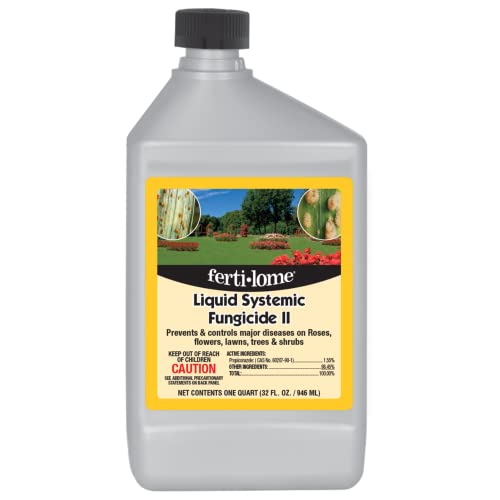
A 32-ounce bottle of liquid concentrate that mixes with water and covers a wide disease spectrum, from brown patch and take-all patch to dollar spot and leaf spot. The systemic action moves into the plant tissue, so it protects new growth as it emerges, not just the leaves you spray today.
For homeowners who already keep a pump sprayer in the garage, this is the kind of product that handles multiple lawn and ornamental problems with one bottle. It’s flexible enough for roses, flowers, trees, and turf, which makes it useful beyond just one problem area.
Standout Benefits
- Targets brown patch, dollar spot, leaf spot, and take-all patch in a single product, useful when you’re not sure which disease has shown up.
- Systemic formulation means protection travels with new growth rather than washing off after rain or irrigation.
- Mixes into a standard pump or backpack sprayer, so coverage scales from a small patch to a full yard.
Honest Caveats
- Concentrate requires accurate measuring and mixing, which adds a step compared to ready-to-spray bottles.
- Label directions are detailed, and the full disease list varies, so reading the label before purchase is worth the time.
Feature Snapshot
Made For
Homeowners already comfortable with a pump sprayer who want one product that covers several common fungal diseases on turf and ornamentals.
Look Elsewhere When
If you prefer a granular spreader routine over liquid mixing, Jonathan Green Lawn Fungus Control offers a simpler broadcast application.
A broad-spectrum granular fungicide covering around 5,000 square feet per bag, designed to prevent new fungus from establishing while it pushes back on existing outbreaks. The format is a major convenience for anyone who already owns a broadcast or drop spreader.
Where Fertilome’s concentrate handles several plant types, this one stays focused on turf, which keeps the label simpler. It works against brown patch, dollar spot, red thread, leaf spot, and pink snow mold, covering the most common cool- and warm-season lawn diseases.
The Practical Payoff
- Granular format goes through a standard spreader, no measuring, mixing, or cleanup of liquid concentrate.
- Coverage area around 5,000 square feet matches a typical suburban lawn in a single bag.
- Targets more than 20 soil-borne diseases, so it covers more than just the obvious brown patch outbreak.
Worth Noting
- Granular fungicides need watering-in to move the active ingredient into the root zone where soil-borne fungi live.
- Works as both a preventative and treatment, but timing ahead of peak disease pressure tends to deliver better results.
Right Fit For
Homeowners with mid-size St. Augustine lawns who prefer spreader application over pump sprayers and want broad disease prevention.
Not Your Match When
You want a softer active ingredient around kids and pets, in which case Earth’s Ally Disease Control Concentrate is the friendlier fit.
Built around citric acid rather than synthetic fungicides, this concentrate handles powdery mildew, downy mildew, blight, canker, black spot, and leaf spot. For households where kids and dogs use the lawn daily, the gentler formulation is the main reason to reach for it.
The trade-off is potency: organic citric-acid products tend to need more frequent repeat applications than synthetic options like Fertilome Liquid Systemic Fungicide II. The payoff shows up in re-entry time and peace of mind around the family.
Positive Takeaways
- Citric-acid active ingredient is gentler on people, pets, and the surrounding soil biology than synthetic chemistry.
- Multi-disease coverage handles powdery mildew, blight, and black spot on vegetables, ornamentals, and turf.
- Concentrate format lets you scale the mix to a small garden or a full yard without buying a new bottle each time.
Points To Note
- Reapplication intervals are typically shorter than synthetic fungicides, so the bottle doesn’t stretch as far per disease cycle.
- The label targets common leaf diseases, so severe soil-borne brown patch pressure may need a stronger follow-up product.
Key Product Details
Who Should Grab It
Families with pets and small children using the lawn daily who want a softer fungicide for routine leaf-disease maintenance.
A Better Fit Elsewhere
Severe, recurring brown patch outbreaks usually call for a stronger synthetic like Quali-Pro Propiconazole 14.4 Fungicide.
A one-gallon liquid herbicide formulated for St. Augustine and Centipede grass, targeting broadleaf weeds while providing suppression of crabgrass. Atrazine has been a southern lawn care staple for decades, mostly because it handles weed pressure that other chemistries struggle to clear without damaging the turf itself.
It earns a spot on this list because thick, healthy turf is one of the best defenses against brown patch fungus. Weeds steal water and nutrients, and stressed grass falls to disease faster, so pairing a weed killer with a fungicide plan often pays off over a full season.
Positive Points
- Targets broadleaf weeds in St. Augustine and Centipede grass, two species where many herbicides cause damage.
- Provides crabgrass suppression in addition to broadleaf control, which simplifies spring weed programs.
- One-gallon size covers large southern lawns through a full growing season at standard application rates.
Trade Offs
- Storage requires a cool, dry spot, and the jug benefits from being kept out of direct sunlight between uses.
- Restricted-use chemistry in some regions, so checking local regulations before purchase is a smart move.
Best Suited To
Homeowners managing large St. Augustine or Centipede lawns where broadleaf weeds and crabgrass are competing with the turf.
Reach For A Different Pick When
You need disease control rather than weed control, since this product does not treat brown patch fungus directly. Pair it with Fertilome Liquid Systemic Fungicide II instead.
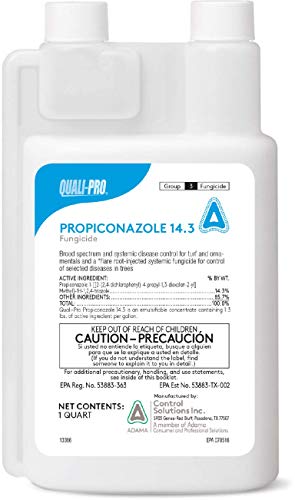
Propiconazole is the same active ingredient turf professionals reach for on golf courses and sports fields, and this 32-ounce bottle puts it in a microemulsion (a fine, water-mixable concentrate that spreads evenly across leaf surfaces) format. The locally systemic mode of action (where the chemical moves into nearby plant tissue to protect from within) means the fungicide spreads into the plant rather than sitting on the surface.
Where Jonathan Green Lawn Fungus Control handles common lawn diseases at a residential pace, Quali-Pro steps in for lawns that have been fighting brown patch year after year. The microemulsion carrier also keeps odor down compared to older solvent-based formulations.
Real Benefits
- Broad-spectrum disease control across cool- and warm-season grasses, trees, shrubs, and flowers.
- Microemulsion formulation means lower odor and better tank stability when mixed with other lawn products.
- Systemic action provides long-lasting control rather than a quick surface knockdown.
A Few Limitations
- Concentrate format requires careful measurement and proper sprayer calibration, which adds complexity for first-time users.
- Active ingredient is potent, so strict adherence to label intervals and re-entry times is essential.
Feature Snapshot
Whose Shelf It Belongs On
Experienced homeowners and lawn care pros managing recurring brown patch in St. Augustine or other warm-season grasses.
Swap It Out When
You want a simpler pour-and-spray experience without measuring concentrate, in which case Dow AgroSciences Eagle 20EW Fungicide offers a similar systemic profile with easier handling.
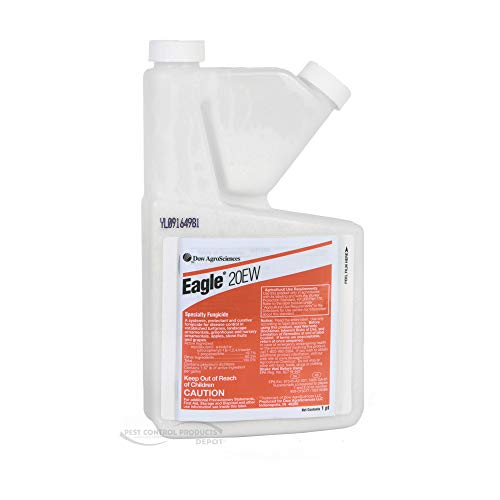
A pint-sized systemic fungicide that covers more than 15 fungal diseases across turf and ornamental species. Eagle 20EW uses a similar active chemistry to Quali-Pro Propiconazole 14.4 but in a smaller, more approachable bottle for homeowners who don’t need commercial volume.
It targets dollar spot, brown patch, anthracnose, spring dead spot, red thread, leaf spot, powdery mildew, and Zoysia large patch, which makes it a strong single-bottle solution for mixed landscapes where turf and ornamentals share disease pressure.
What Stands Out
- Broad disease coverage handles brown patch, dollar spot, anthracnose, and powdery mildew in one bottle.
- Systemic protection from the inside out shields new growth rather than only the leaves present at application.
- Well-tolerated by popular turf and ornamental species, reducing the risk of phytotoxicity (plant damage from chemical exposure) when applied as directed.
Practical Considerations
- 16-ounce pint fills fewer tank loads than the 32-ounce Quali-Pro bottle, so larger yards may need multiple purchases.
- Application timing still matters: late-season curative use tends to be less effective than earlier preventative treatment.
Perfect Match For
Homeowners who want systemic disease control for both St. Augustine turf and nearby ornamental beds from a single product.
Where A Sibling Pick Shines
Larger lawns needing more product per dollar often do better with Quali-Pro Propiconazole 14.4, which comes in a bigger concentrate bottle.
An 8-ounce bottle built around Bacillus amyloliquefaciens strain D747, a beneficial bacterium that colonizes plant surfaces and crowds out fungal pathogens. The formulation covers home gardens, vegetables, ornamental and fruit trees, shrubs, lawns, flowers, and bedding plants, which makes it a versatile pick for mixed edible and ornamental landscapes.
Compared to Earth’s Ally, the active ingredient is biological rather than citric acid, so the two products take different routes to the same goal. Biofungicides work best as part of a prevention program, applied before disease pressure peaks, rather than as a rescue treatment for a lawn already in decline.
Useful Strengths
- Biological active ingredient (Bacillus amyloliquefaciens, a beneficial soil bacterium) suits organic gardening programs where synthetic chemistry is off the table.
- Broad plant coverage from vegetables and fruit trees to lawns and bedding plants.
- Small 8-ounce bottle is approachable for new users testing biological controls on a single bed or section of lawn.
Points To Keep In Mind
- Smaller bottle size means more frequent repurchase for homeowners with larger yards or garden plots.
- Biological products benefit from cool, shaded storage to keep the bacterial spores viable between applications.
Built With In Mind
Organic gardeners running mixed vegetable and ornamental beds who want biological disease control alongside their lawn care routine.
Skip It When
You need fast curative action on a lawn already mid-outbreak, since biologicals work slower than synthetic options like Dow AgroSciences Eagle 20EW.
A flowable suspended concentrate (a liquid where active ingredients are evenly suspended rather than dissolved, requiring shaking before use) of propiconazole at the standard 14.3% concentration, designed for low use rates with strong residual control. The active ingredient is the same one in Quali-Pro’s 14.4 product, so performance falls in a similar range for the standard lawn disease lineup.
Low use rates mean a small bottle treats a large area, which is the main draw for budget-conscious homeowners. Depending on your soil and disease history, the residual profile may extend the time between treatments, reducing how often you need to mix and spray.
The Value In It
- Low use rates stretch a single bottle across more square feet than many comparable concentrates.
- Foliar (leaf-surface) and systemic properties handle both surface and internal plant protection in one product.
- Can also function as a flare root-injected systemic treatment for certain tree diseases.
Less Ideal Details
- Flowable concentrate requires shaking before each use, so a few extra seconds of prep come with every batch.
- Same propiconazole restrictions as other products in this chemistry class, so label intervals must be respected.
Feature Card
The Right Fit
Budget-minded homeowners treating larger St. Augustine lawns who want professional-grade chemistry without the commercial price tag.
Where Another Pick Suits Better
Smaller yards where you don’t need a low-rate professional concentrate may find Dow AgroSciences Eagle 20EW easier to handle at a more residential scale.
Choosing The Right Fungicide For Your St. Augustine Lawn
Brown patch is caused by the fungus Rhizoctonia solani, which thrives in warm, humid conditions common across the southern United States. St. Augustine grass is particularly susceptible, so prevention and early treatment matter more than with other turf types. The right product depends on whether you are reacting to an active outbreak or trying to get ahead of the next disease cycle.
Match The Chemistry To The Disease Stage
Systemic fungicides like propiconazole products move into the plant tissue and protect new growth, while contact fungicides stay on the leaf surface and knock down spores on contact. Curative treatments (applied after disease appears) tend to need stronger systemic options, while preventative applications can lean on broader-spectrum granular or biological products. Reading the label for the specific disease list helps you avoid buying a product that targets the wrong pathogen.
Consider Application Format
Granular products work well for homeowners who already use a broadcast spreader and want to avoid mixing liquids. Liquid concentrates offer more flexibility for spot treatments and tank mixing, but they require a pump sprayer, accurate measuring, and cleanup time. The right format often comes down to which tool you already own and feel comfortable using.
Factor In Lawn Size And Re-Entry Time
Larger yards benefit from concentrates with low use rates, since a single bottle covers more square feet. Households with kids and pets using the lawn daily may prefer shorter re-entry intervals, which biological and citric acid products typically offer. Smaller lawns can usually get by with ready-to-spray or pint-sized bottles that finish in a single season.
Key Considerations Across These Picks
Where Shoppers Go Wrong
One common mistake is applying fungicide only after the lawn is already mid-outbreak, when curative action is hardest to achieve. A preventative program timed before peak humidity gives much better results than waiting for visible damage.
Another pitfall is mixing products without checking label compatibility, which can reduce effectiveness or damage the turf. Reading the full label before each application, even on familiar products, prevents costly missteps.
Where The Extra Money Goes
Higher-tier fungicides typically invest in microemulsion formulations (ultra-fine liquid mixtures that spread evenly), longer residual control, and broader disease spectrums. For lawns that fight brown patch every single year, the upgrade often pays for itself in fewer applications and faster recovery.
Lower-priced options can still work well for occasional outbreaks or preventative maintenance on smaller yards. The honest read is that price tracks closely with formulation quality, but only you can decide how much residual control your lawn actually needs.
Frequently Asked Questions
When is the best time to apply fungicide to St. Augustine grass?
Most preventative applications go down in late spring, just before nighttime temperatures stay above 68°F consistently. Curative treatments can be applied as soon as brown patch symptoms appear, but earlier is always better.
Can I use fungicide and fertilizer at the same time?
Many labels allow combined application, but it depends on the specific products and your grass type. Check both labels for compatibility and follow the more restrictive interval guidance.
How long does it take to see results after applying fungicide?
Systemic products often show visible improvement within 7 to 14 days, while contact fungicides can stop spread faster but do not reverse existing damage. Severe outbreaks may need a follow-up application at the labeled interval.
Are organic fungicides effective against brown patch?
Biological and citric acid products work well as preventative tools but usually struggle with severe active outbreaks. Pairing organic maintenance with stronger chemistry during peak disease pressure is a common approach.
How often should I water my lawn after fungicide treatment?
Most granular products need watering-in within 24 hours to move the active ingredient into the root zone. Liquid systemic products typically should be left on the leaf surface until dry, so check the label for the specific watering window.
Final Verdict
The right fungicide for your St. Augustine lawn comes down to your grass size, your tolerance for synthetic chemistry, and whether you are preventing or treating an active outbreak. Synthetic options like the propiconazole products offer the strongest curative action for severe cases, while granular and biological picks handle routine prevention. Match the product to your situation, follow the label closely, and your lawn should come through the humid months in much better shape.
