

Centipede grass looks great when it’s thriving, but the same low-maintenance reputation that makes it popular also makes it vulnerable once fungal pressure shows up. Brown patch, dollar spot, and take-all patch can spread fast in the warm, humid stretches of the South. Choosing the right fungicide, applied at the right moment, can mean the difference between a quick recovery and a season-long struggle. This roundup focuses on products that pair well with centipede’s specific needs, from selective weed-and-feed blends to dedicated liquid and granular disease controls.
Your Options, Compared

Hi-Yield (33431) Atrazine Weed Killer RTS, 32 oz

Fertilome (13926) Centipede Weed & Feed 15-0-15, 16 lbs
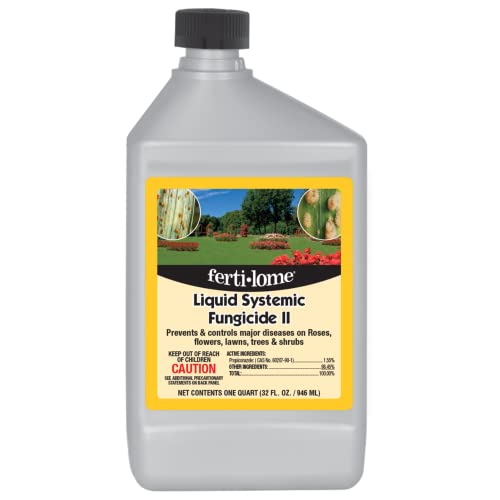
Fertilome (11378) Liquid Systemic Fungicide II Concentrate, 32 oz

Fertilome (10768) F-Stop Fungicide Granules Eagle Systemic, 20 lb
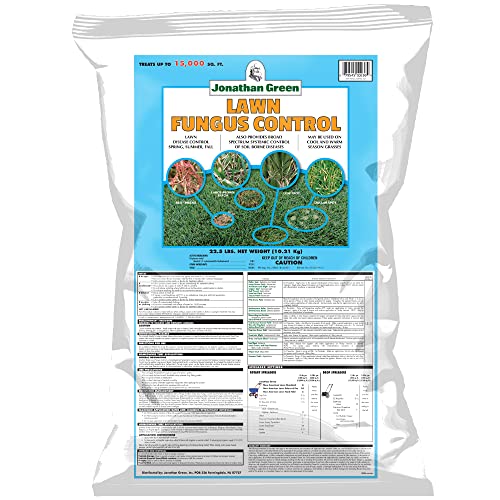
Jonathan Green Lawn Fungus Control 15,000 Sq Ft

Earth’s Ally Disease Control Fungicide Concentrate, 32 Oz

Southern Ag Atrazine St. Augustine Grass Weed Killer, 1 Gallon
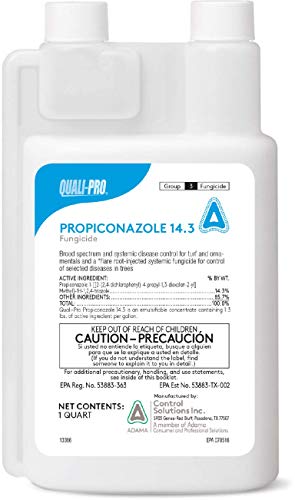
Quali-Pro 83013366 Propiconazole 14.4 Fungicide, 32oz
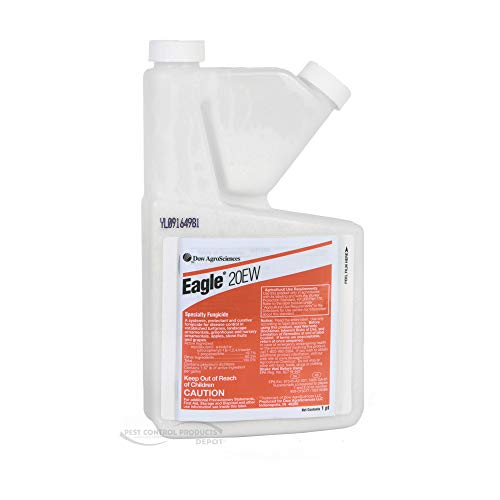
Dow AgroSciences 173917 Eagle 20EW Fungicide, 16oz-1 Pint
A Breakdown Of The Leading Choices
Centipede grass owners dealing with broadleaf invaders rather than fungal outbreaks will find this ready-to-spray bottle a low-friction option. The selective formula targets weeds like henbit, clover, and chickweed while leaving centipede stands intact, and the 32-ounce bottle covers roughly 3,720 square feet. You hook the bottle to a standard garden hose, spray, and walk away.
It earns a spot here because the ready-to-spray format removes the measuring-and-mixing step that throws off first-timers. The trade-off is a fixed concentration, so you can’t dial down for spot treatments as precisely as you can with a concentrate.
Positive Points
- No mixing required, which suits casual lawn owners
- Compatible with both St. Augustine and centipede grass
- Targets a long list of common broadleaf weeds in one pass
- Covers up to 3,720 square feet per bottle
Trade Offs
- Fixed concentration limits precision on small patches
- Application rate varies by grass type, so the label needs a careful read
Who It Suits Best
Homeowners with broadleaf weed pressure who want a quick hose-end application without measuring concentrates.
A Better Fit Elsewhere
If fungal disease is the primary concern, the Fertilome Liquid Systemic Fungicide II Concentrate handles actual pathogen pressure where this atrazine-based formula does not.
The 15-0-15 ratio on this bag is no accident. Centipede grass prefers low-phosphorus feeding, and the slow-release nitrogen plus iron content supports that characteristic yellow-green color without pushing excessive top growth. The weed-control side handles dollar weed, dandelions, chickweed, henbit, and spurge among others.
What makes it land on a centipede-focused shortlist is the twice-yearly application window. For a low-input lawn philosophy, that frequency matches how most centipede owners already manage their calendars. The catch shows up if your lawn is stressed or dry; the label calls for application to pre-moistened grass or early-morning dew, and skipping that step reduces uptake.
Advantages To Know
- Two-in-one feeding and broadleaf control saves a separate pass
- Slow-release nitrogen supports steady color without surge growth
- Iron content deepens the typical centipede hue
- Targets 200-plus broadleaf weed types
Honest Caveats
- Application timing depends on moisture or dew, which limits flexibility
- Not a fungicide, so it won’t address brown patch or dollar spot on its own
Right Fit For
Centipede owners who prefer a twice-yearly routine and want fertilization bundled with broadleaf weed suppression.
Consider Something Else When
If dollar spot or brown patch is your main headache, the Fertilome F-Stop Fungicide Granules targets those diseases directly, while this bag only handles weeds and feeding.
Liquid concentrates give you more control over coverage than granules, and this 32-ounce bottle mixes into a backpack or hose-end sprayer without much fuss. The systemic action (meaning the plant absorbs it and moves the active ingredient internally) means it works from inside the grass blade, protecting new growth rather than just coating the surface. It targets take-all patch, brown patch, dollar spot, and leaf spot across lawns, roses, flowers, and trees.
The trade-off is preparation time. Unlike the ready-to-spray Hi-Yield above, you measure, mix, and load your sprayer before each pass. For a single 2,000-square-foot lawn, that prep is barely noticeable; for someone managing several zones, it’s a real time tax.
What Pays Off
- Systemic movement protects new growth as it emerges
- Works on lawns, ornamentals, and trees from one bottle
- Liquid format spreads evenly across blade surfaces
- Mixes readily with water for standard sprayers
Practical Considerations
- Measuring and mixing adds prep time versus ready-to-spray options
- Requires a separate sprayer you may not already own
- Most effective applied early in the growing season
Best Suited To
Owners managing both lawn and ornamental disease pressure who already own a sprayer and want one product for multiple zones.
Look Elsewhere When
If you want to skip sprayer maintenance entirely, the Jonathan Green Lawn Fungus Control granular format is a stronger match for hands-off application.
Granular systemic fungicides walk a middle path between liquids and dry treatments. The 20-pound bag of Fertilome F-Stop uses the same active ingredient profile that professionals reach for, and one application keeps working for up to four weeks across more than 15 listed turf diseases. You spread it with a standard broadcast or drop spreader, then water it in.
For larger centipede lawns, the granular format beats liquid on labor. The bottle-and-spray setup from item 3 works fine on a small yard, but a half-acre lot eats time. The catch is uniformity: granular overlap and spreader calibration matter more than most casual owners realize.
Positive Takeaways
- Up to four weeks of systemic protection per pass
- Targets over 15 turfgrass diseases in one product
- Granular format suits broadcast spreaders you likely already own
- 20-pound bag handles larger residential lots
Less Ideal Details
- Spreader calibration affects how evenly disease control is distributed
- Needs watering-in to activate, so a dry window after application helps
- Heavier bag is awkward to handle for some users
Feature Snapshot
Made For
Owners of mid-to-large centipede lawns who want broad disease coverage with a spreader instead of a sprayer.
Reach For A Different Pick When
If fungal pressure is light and you’d rather spot-treat, the smaller 16-ounce Dow Eagle 20EW gives you a concentrated liquid option with the same active profile.
Jonathan Green’s granular formula aims at the homeowner who wants one bag to handle a wide range of turf diseases without learning the chemistry. The product covers up to 20 listed soil-borne and foliar diseases, including brown patch, leaf spot, red thread, dollar spot, and pink snow mold, and the bag is sized to a full 15,000 square feet.
Compare that to the Fertilome F-Stop from item 4: that bag protects for up to four weeks per pass, while this one is positioned as both a preventive and a curative. Owners commonly report reaching for it at the first sign of patchy discoloration rather than waiting for a calendar date.
Notable Gains
- Broad-spectrum coverage across 20-plus lawn diseases
- Functions as both prevention and active treatment
- 15,000-square-foot bag suits typical suburban lots
- Granular format is approachable for new lawn owners
Points To Note
- Not all centipede-specific diseases are on the label, so confirm before applying
- Works best applied before disease fully establishes
Quick Facts
Perfect Match For
Suburban homeowners who want a single bag that handles most common lawn fungi and don’t want to learn a rotation schedule.
Skip It When
If your centipede lawn faces persistent take-all patch pressure, the Fertilome Liquid Systemic Fungicide II Concentrate offers a more targeted approach for that specific disease.
Most fungicides in this category rely on synthetic chemistries, and the reentry intervals and pet restrictions that come with them are a real obstacle for households with curious dogs or small children. Earth’s Ally uses citric acid as its active ingredient, which changes the safety calculation. The concentrate tackles powdery mildew, downy mildew, blight, canker, black spot, and leaf spot.
It earns a spot here because centipede lawns often double as play space, and the gentler formulation lets you spray without coordinating a multi-hour pet lockdown. The honest read: citric-acid fungicides work best as preventives and on early-stage infections, not as a rescue treatment for advanced disease.
Practical Advantages
- Citric-acid base reduces reentry and pet concerns
- Tackles a broad list of common foliar diseases
- Liquid concentrate dilutes for standard sprayers
- Suitable for both lawn and ornamental use
Smaller Limitations
- Less effective as a curative for advanced fungal outbreaks
- Multiple repeat applications are typically needed
Whose Shelf It Belongs On
Households with kids, pets, or edible gardens nearby who want a gentler approach to early-season fungal prevention on centipede.
Swap It Out When
If brown patch has already taken hold, the Dow Eagle 20EW offers stronger curative chemistry for tougher cases.
The one-gallon concentrate format separates Southern Ag from the smaller ready-to-spray bottles. Centipede grass is on the label alongside St. Augustine, which is a meaningful endorsement given how few selective herbicides are cleared for centipede’s sensitive growth habits. The product also handles crabgrass suppression, both emerged weeds and seed-germinated weeds.
For a large centipede lawn, the gallon size is the practical pick. The catch is that atrazine concentrate calls for careful measuring, and overspray onto desirable ornamentals or flower beds is a real risk without proper shielding.
Bright Spots
- Approved for centipede and St. Augustine grass
- One-gallon concentrate covers substantial lawn area
- Handles emerged weeds and prevents new germination
- Suppresses crabgrass in the same pass
Potential Compromises
- Concentrate requires careful measuring and sprayer calibration
- Drift onto ornamentals can damage non-target plants
- Not a fungicide, so it won’t address disease pressure
Key Product Details
Who Should Grab It
Owners of large centipede lawns who already have a pump or backpack sprayer and want economical, label-approved weed control.
Not Your Match When
For a small lawn where you’d rather not deal with concentrate mixing, the ready-to-spray Hi-Yield from item 1 keeps things simpler.
Quali-Pro’s propiconazole formulation is the same active ingredient category trusted on golf courses and sports turf. The microemulsion format is a meaningful upgrade over older emulsifiable concentrates: less odor, better tank stability (meaning it stays mixed in the spray tank without separating), and more even coverage on the leaf surface. It handles both cool and warm season grasses, which means it works through centipede’s transition windows.
The locally systemic mode of action is a fancy way of saying the plant takes up the fungicide and moves it through tissue to protect new growth. The trade-off is that this is a professional-grade concentrate, so the label and reentry intervals need real attention, especially around pets and kids.
Useful Strengths
- Microemulsion format reduces odor compared to older concentrates
- Works on both cool and warm season grasses
- Locally systemic movement supports longer protection
- Tank-mix compatible with many other turf products
Some Limits To Know
- Professional-grade label means stricter reentry and handling
- Smaller 32-ounce bottle has less margin for measurement error
Built With In Mind
Experienced lawn caretakers who want professional-grade chemistry and don’t mind reading a longer label.
Another Choice May Suit
If the professional handling requirements feel like too much, the Fertilome F-Stop Granules from item 4 gives you the same active family in a more forgiving granular format.
Eagle 20EW is the concentrated liquid version of the active ingredient found in the granular F-Stop from item 4, but in a form that experienced lawn owners tend to prefer for spot treatments and smaller lawns. One pint controls more than 15 fungal diseases, including dollar spot, brown patch, anthracnose, spring dead spot, necrotic ring spot, red thread, leaf spot, powdery mildew, rusts, zoysia large patch, and septoria leaf spot.
It earns a slot because centipede lawns with recurring fungal history often need stronger chemistry than general-purpose options. The systemic action protects new growth from the inside, which matters most in the recovery phase after disease pressure has already appeared. The trade-off is concentration strength: the small 16-ounce bottle is potent, and a miscalculation in dilution can stress centipede’s sensitive turf.
The Practical Payoff
- Broad-spectrum control across 15-plus listed diseases
- Systemic movement protects new growth after application
- Compact pint size suits spot treatments and smaller lawns
- Well-tolerated by popular turf species per the label
Trade-Offs To Consider
- Highly concentrated formula requires accurate measurement
- Smaller bottle leaves less room for measurement error
- Reentry intervals need careful planning
Feature Overview
Who Will Love This
Owners with a recurring fungal history who want a concentrated liquid for targeted applications and are comfortable with precise measurement.
Where A Sibling Pick Shines
For first-time fungicide shoppers, the Jonathan Green Lawn Fungus Control from item 5 is a more forgiving entry point in granular form.
Choosing A Fungicide That Suits Your Centipede Lawn
Centipede grass is sensitive to many of the same products that work fine on Bermuda or Zoysia, so the first decision point is whether the product label actually lists centipede as a compatible turf. A formula that isn’t on the label can yellow or thin the lawn even when used at the correct rate for another species.
Next, match the format to your setup. Hose-end ready-to-spray bottles remove sprayer maintenance but limit precision. Liquid concentrates give you more control and stretch further on a per-ounce basis, but they require a pump or backpack sprayer. Granular products slot into the broadcast or drop spreader you may already own, though they need watering-in to activate.
Consider the timing of your problem. Preventive applications before symptoms fully establish generally outperform curative sprays, and the systemic products on this list work best when the lawn is actively growing. For centipede, that means late spring through early fall in most regions.
Finally, think about your household. Households with pets or small children often prefer citric-acid or other gentler chemistries for the first line of defense, saving the stronger synthetic options for confirmed outbreaks.
Key Takeaways For Smarter Shopping
Pitfalls Shoppers Hit
One of the most common mistakes is reaching for a general-purpose “lawn fungicide” without checking the centipede compatibility on the label. Many products are designed for cool-season turf and can injure warm-season grasses. Another slip is applying during the wrong weather window, since spraying right before rain washes product off the leaf before it absorbs. The third trap is over-treating in hopes of faster results; fungicide labels specify maximum application intervals for a reason, and exceeding them stresses the lawn.
What The Higher Tier Buys
Premium-tier fungicides typically bring systemic movement, longer protection windows, and broader disease coverage per pass. They also tend to use microemulsion or other refined formulations that mix more cleanly, smell less, and stay suspended in the tank longer. The upgrade pays off most when you have a confirmed, recurring disease problem and want fewer repeat applications across the season. For occasional preventive use, the mid-tier options on this list deliver most of the same benefits at a lower price per square foot.
Frequently Asked Questions
When is the best time to apply fungicide to centipede grass?
Apply during active growth in late spring through early fall, ideally in the early morning when winds are calm. Treating before disease pressure fully establishes is more effective than waiting for visible damage to spread.
Can I use a general lawn fungicide on centipede?
Only if the product label specifically lists centipede grass as a compatible species. Many general-purpose fungicides are formulated for cool-season turf and can discolor or thin centipede stands even at recommended rates.
How long does fungicide protection last on centipede?
Most granular systemic products on this list provide roughly four weeks of protection per pass, while contact-only products typically need reapplication every 7 to 14 days. Always confirm the specific interval on the product label.
Do I need to water after applying granular fungicide?
Yes, granular fungicides need watering-in to move the active ingredient off the carrier and into the soil and turf canopy. Plan a light irrigation or apply just before a moderate rain to activate the product.
Can I mix fungicide with fertilizer or weed control?
Some products are formulated for combination use, but most standalone fungicides should be applied separately unless the label explicitly approves tank mixing. Combining products without confirmation can reduce effectiveness or damage the lawn.
The Takeaway
Centipede grass rewards a measured, label-first approach. The right product depends on whether you’re facing weed pressure, fungal disease, or both, and on how much sprayer or spreader maintenance you’re willing to take on. Match the format to your lawn size, the chemistry to your household, and the timing to centipede’s growth window, and you’ll have a much smoother season.
