

Brown patches creeping across your turf, dollar spot freckling your fescue, or a fuzzy mildew coating the leaves of your prized ornamentals can turn a weekend of yard pride into a slow-burning headache. The right fungicide stops the spread before it scars the whole lawn, but the aisle is crowded with granules, liquids, concentrates, and ready-to-sprays that all promise the same thing. This shortlist cuts through the noise: ten well-regarded fungus controls covering small urban lawns, broad suburban spreads, and mixed landscape beds, with a candid read on what each one actually brings to your spreader or spray tank.
Your Options, Compared

Fertilome (12770) F-Stop Fungicide Granules, 10 lb
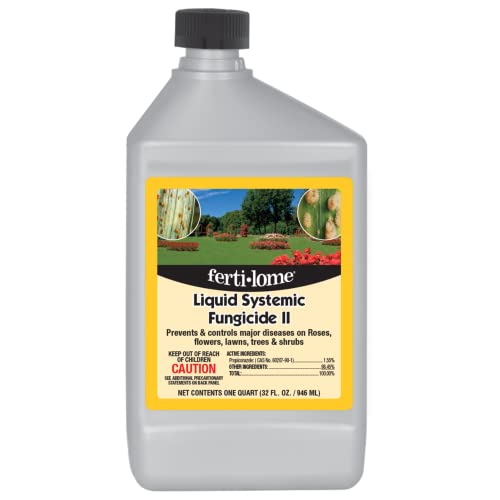
Fertilome (11378) Liquid Systemic Fungicide II, 32 oz

Fertilome (10768) F-Stop Fungicide Granules Eagle Systemic, 20 lb

Jonathan Green Lawn Fungus Control, 5,000 Sq Ft

Earth’s Ally Disease Control Fungicide Concentrate, 32 oz
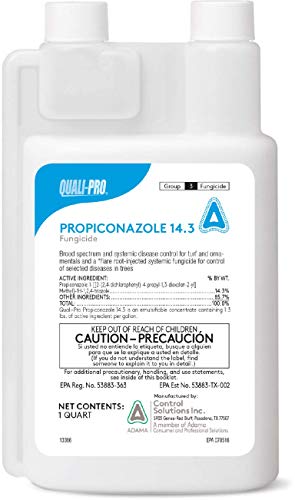
Quali-Pro 83013366 Propiconazole 14.4 Fungicide, 32 oz

Select Source Propiconazole 14.3 Pint Select Fungicide

Scotts Turf Builder Healthy Plus Lawn Food, 13.70 lbs

Atticus Gunner 14.3 MEC Propiconazole Fungicide, 32 oz

14.3 Generic Banner MAXX 1 Gallon
Taking A Closer Look At The Options
Granular fungicides suit anyone who’d rather scoop, spread, and walk away without dragging out a pump sprayer. The Fertilome F-Stop 10 lb bag is sized for the average suburban yard, and its systemic mode of action means the active ingredient moves into the plant rather than sitting on the surface. For homeowners who caught the first yellow halos in late spring and want a broad-spectrum catch-all, this is a sensible starting point.
You can broadcast it through a standard drop or rotary spreader, then water it in lightly. The label covers more than 15 turf diseases, which is plenty for most residential lawns, and a single treatment typically holds for up to four weeks under normal pressure.
Where It Helps
- Granular format skips the mixing and measuring that puts some folks off concentrates
- Systemic movement into the plant tackles infection that’s already underway, not just surface spores
- Coverage of 15-plus turf diseases handles brown patch, dollar spot, and many of the usual suspects
- One application stretches up to four weeks, so you’re not re-treating every weekend
Honest Caveats
- You’ll need to water the lawn after spreading, which can be awkward during watering restrictions
- Granules take a beat longer to act than a liquid spray, so don’t expect overnight results
- Storage in a dry shed or garage is essential, since damp clumps won’t flow through a spreader
Quick Facts
Who It Suits Best
First-time fungicide users with a small to mid-size lawn who want a forgiving granular option.
Skip It When
You’d rather spot-treat individual trouble areas, in which case the Fertilome Liquid Systemic Fungicide II is a smarter match.
When your fungus problem spans the lawn and the rose bed, a liquid concentrate earns its keep. Fertilome’s Liquid Systemic Fungicide II comes in a 32 oz bottle that you dilute with water and push through a pump or hose-end sprayer, which makes spot treatments much more precise than broadcasting granules across a mixed landscape. Gardeners with both turf and ornamentals tend to gravitate here.
The label covers take-all patch, brown patch, dollar spot, and leaf spot among others, so it works across grass types and flowering plants. Apply early in the growing season for the cleanest preventive result.
Real Benefits
- Reaches both lawn and ornamental plantings, so one bottle covers a mixed yard
- Systemic action means it moves into the plant tissue rather than washing off in the next rain
- Spot-treats small trouble patches without treating the whole lawn
- Pairs easily with most standard pump sprayers you probably already own
Worth Noting
- Mixing ratios need a measuring jug and a little care, which slows down first-time users
- Sprayer cleanup takes more time than rinsing a spreader
Feature Snapshot
Right Fit For
Homeowners juggling lawn fungus and diseased rose bushes or shrubs who want one bottle to cover both.
Look Elsewhere When
You have a broad-acre yard and would rather push granules than fill a tank, in which case the Fertilome F-Stop 20 lb Eagle Systemic bag is a better fit.
The 20 lb version of Fertilome’s F-Stop uses the same Eagle systemic active as the smaller bag, just with double the footprint. Large suburban lots, small acreage properties, and anyone responsible for more than a token patch of grass will get through the 10 lb bag in a single pass. Bigger coverage per container also means fewer reorders mid-season.
It’s still a granular, so the application is the familiar broadcast-and-water routine. With broad disease coverage and roughly four weeks of protection per pass, the larger bag suits folks who treat on a predictable calendar.
A Few Strong Suits
- 20 lb bag covers significantly more ground than the 10 lb sibling, fewer refill trips
- Same 15-plus disease spectrum as the smaller F-Stop, so you don’t trade coverage for size
- Granular format keeps equipment needs minimal
- Solid match for properties north of 5,000 sq ft where the 10 lb bag feels tight
Points To Note
- The bag is heavy, so loading the spreader on a hill can be a workout
- Storage space in a dry spot becomes more important with a larger bag open to humidity
Best Suited To
Owners of half-acre or larger lots who want to treat the whole lawn without running out halfway through.
Not Your Match When
Your lawn is on the small side and you rarely treat, where the Jonathan Green Lawn Fungus Control granular delivers similar coverage with less leftover.
Jonathan Green built its name on cool-season grass seed, so it’s no surprise their fungicide is tuned to the fescues, bluegrasses, and ryegrasses that dominate northern lawns. The 5,000 sq ft bag is sized for the typical city lot, and the granular format prevents both new outbreaks and treats existing ones. For homeowners in the transition zone who battle brown patch every July, it’s a familiar name worth considering.
The label targets more than 20 soil-borne diseases including brown patch, leaf spot, red thread, dollar spot, and pink snow mold. That breadth comes in handy when you’re not 100% sure which pathogen has moved in.
The Upside
- Targets over 20 turf diseases, including the cool-season troublemakers like pink snow mold and red thread
- Works as both a preventive and a treatment, so you can apply after you spot symptoms
- 5,000 sq ft coverage is a comfortable fit for a standard city lot
- Granular spreader application, no sprayer to clean
Small Caveats
- Granules need watering in, which adds a step after spreading
- Cool-season focus means it’s not the obvious pick for deep south St. Augustine or Bermuda lawns
Made For
Northern and transition-zone homeowners with cool-season turf who want a single granular product to cover several likely diseases.
Another Choice May Suit
You favor warm-season grasses and ornamental beds, where the Fertilome Liquid Systemic Fungicide II covers a wider plant palette.
Not every household wants synthetic fungicides in the spray drift zone. Earth’s Ally leans on citric acid as its active ingredient, which is a different category of chemistry than the conventional options on this list. For yards shared with dogs that lick everything, kids who use the lawn as a playground, or gardeners who prefer plant-derived inputs, this is the most approachable pick in the roundup.
The concentrate tackles powdery mildew, downy mildew, blight, canker, black spot, and leaf spot, which covers most of the common plant diseases outside of pure turf pathogens. It’s primarily an ornamentals-and-vegetables product rather than a broadcast lawn treatment.
What Helps Most
- Citric acid active ingredient is friendlier around curious pets and small children
- Covers a wide range of plant diseases including powdery mildew and black spot on roses
- Functions as both cure and prevention in one bottle
- Won’t leave the same residue concerns as synthetic chemistries
Things To Consider
- Not a broadcast lawn fungicide, so it won’t replace a granular for large turf outbreaks
- Natural-origin chemistry often requires more frequent reapplication than synthetics
Perfect Match For
Households with pets and kids who want a softer-chemistry option for vegetable gardens, rose beds, and foundation plantings.
A Better Fit Elsewhere
Your main problem is a large patchy lawn, where the Quali-Pro Propiconazole concentrate or the Scotts Turf Builder combo will move more ground per bottle.
Propiconazole is the active ingredient behind a lot of professional-grade turf programs, and Quali-Pro packages it in a microemulsion concentrate. A microemulsion is a liquid formulation where the active ingredient is broken into very fine droplets, which means better tank stability and more even plant coverage than older EC formulations. The trade-off is the same as with any concentrate: you’ll mix, measure, and spray.
This jug covers cool and warm season grasses, trees, shrubs, and flowers, so it works across a whole property. The locally systemic action keeps working after application, which is why this chemistry is a staple on golf courses.
A Few Highlights
- Microemulsion concentrate mixes cleanly and holds together in the tank
- Locally systemic mode of action keeps working after the spray dries
- Works on turf, trees, shrubs, and flowers from a single bottle
- Smaller droplet chemistry tends to leave less odor than older emulsifiable concentrates
Room For Improvement
- Concentrate format demands a clean sprayer, accurate measuring, and PPE respect
- Not the most forgiving pick for someone treating a lawn for the first time
Technical Highlights
Who Should Grab It
Seasoned DIYers comfortable with pump sprayers and label math who want pro-grade chemistry on a residential budget.
Swap It Out When
You’d rather skip the mixing entirely, where the Select Source Propiconazole 14.3 Pint Select offers a similar active in a smaller ready-to-mix profile.
Select Source packages propiconazole in a flowable suspended concentrate, which is a slightly different beast than a true solution. The active stays suspended in the carrier rather than fully dissolved, so a good shake before pouring is essential. Where this pint-sized jug earns its spot is the residual control, which holds working chemistry in the plant for a long window after you spray.
It’s also marketed for flare root injection in trees, which is a more advanced application but signals the depth of systemic activity on offer. For most homeowners, a foliar spray pass is the realistic use case.
Bright Spots
- Low use rates mean one pint stretches across a lot of square footage
- Excellent residual control keeps protecting between applications
- Foliar and systemic properties in one product, so it works above and inside the plant
- Smaller container is easier to store than a gallon jug
Less Ideal Details
- Suspended concentrate needs a thorough shake before measuring, or the mix rate drifts
- Smaller bottle means more frequent reordering for very large properties
Built With In Mind
Homeowners who want a long-acting propiconazole on a small-to-mid yard without committing to a full gallon jug.
Reach For A Different Pick When
You’re managing multiple acres of turf, where the 14.3 Generic Banner MAXX 1 Gallon delivers a better cost-per-acre math.
Most fungicides treat, and most fertilizers feed, but Scotts combined both into a single granular pass. Turf Builder Healthy Plus pairs a broad-spectrum, systemic fungicide with a fertilizer that pushes thicker, greener growth down to the root. For homeowners who already follow a regular Scotts feeding schedule, slotting this in means one trip across the lawn instead of two.
It covers 27 listed lawn diseases, including the usual brown patch, leaf spot, powdery mildew, and red thread. You can use it as a preventive before symptoms show or as a recovery treatment after they’ve appeared.
What Works In Its Favor
- Two-in-one formula combines fungicide and fertilizer in one spreader pass
- 27 listed diseases is one of the broadest spectrums in this roundup
- Familiar Scotts application routine if you’ve used their products before
- Strengthens grass down to the root, which helps lawns recover after disease pressure
Practical Considerations
- You’re locked into a single application window, so you can’t separate feeding from treating when conditions call for it
- Granules need a watering pass to activate, just like straight fertilizer
Whose Shelf It Belongs On
Homeowners who already feed on a Scotts schedule and want to layer disease prevention into their existing routine without a second pass.
Consider Something Else When
You’d rather treat aggressively during a flare-up without forcing a fertilizer event, in which case the Fertilome F-Stop 10 lb Granules keeps the steps separate.
Atticus positions Gunner as a microemulsion concentrate with the same 14.3 percent propiconazole you find in commercial turf products. The MEC formulation is built around extremely small droplets, which translates to easier mixing in the tank and more uniform plant coverage. For homeowners who’ve already decided propiconazole is the active they want, Gunner is a more approachable jug than some of the bulkier commercial packaging.
It carries protection against more than 20 plant fungi, which is the typical propiconazole breadth and covers most residential expectations.
Strengths Worth Knowing
- Microemulsion concentrate mixes smoothly and holds together in the tank
- Same 14.3 percent propiconazole active used in well-known commercial products
- Broad coverage across 20-plus plant fungi
- 32 oz bottle is manageable to lift and store
Trade Offs
- Still requires careful measuring and PPE, no shortcuts for concentrate products
- Single 32 oz bottle may run short on multi-acre properties
Who Will Love This
Homeowners who want a commercial-grade propiconazole in a residential-friendly jug without paying for a full gallon.
Where A Sibling Pick Shines
You have extensive acreage to cover, where the 14.3 Generic Banner MAXX 1 Gallon keeps the cost per ounce lower across the season.
The generic Banner MAXX jug is a broad-spectrum systemic fungicide built around propiconazole, the same active that powers the more familiar name-brand products. A full gallon is sized for serious turf programs, so it makes sense for properties that get treated more than once a year, multiple acres, or anyone who’d rather buy in bulk and split the cost across seasons.
It covers brown patch and a wide range of other turf and ornamental fungi, but the label includes aquatic toxicity warnings, so keep it well away from ponds, streams, and storm drains. Reading the label carefully is part of the deal with this jug.
What Earns Its Place
- One gallon stretches across multiple treatments or a large property in a single pass
- Broad-spectrum systemic action for turf and ornamentals
- Lower per-ounce cost than smaller concentrates
- Familiar propiconazole chemistry for users already comfortable with the active
Where It Is Less Suited
- Aquatic toxicity means it can’t be used near water features, which limits some properties
- Bulk jug demands serious storage planning and a committed use schedule
The Right Fit
Owners of large properties who treat on a calendar and want to lock in a season’s worth of fungicide in one jug.
Where Another Pick Suits Better
You have a small yard near a pond or other water feature, where the granular Fertilome F-Stop 10 lb bag offers a less aquatic-toxic option for similar coverage.
What To Weigh Before Choosing A Lawn Fungicide
The first fork in the road is granule versus liquid. Granular products like the Fertilome F-Stop bags or Jonathan Green Lawn Fungus Control spread through a standard lawn spreader, then need a watering pass to activate. Liquids and concentrates such as the Quali-Pro Propiconazole or Earth’s Ally go through a pump or hose-end sprayer and start working on contact, but ask for measuring, mixing, and cleanup.
Active ingredient is the next filter. Propiconazole shows up in multiple picks on this list because it’s a reliable systemic chemistry with broad coverage of brown patch, dollar spot, and other turf mainstays. If your lawn sees a familiar rotation of those diseases, propiconazole concentrates earn their learning curve. Citric acid options like Earth’s Ally take a softer path that fits households with pets and small kids, though they often need more frequent reapplication.
Grass type matters more than most folks expect. Cool-season grasses (fescue, bluegrass, rye) respond well to products tuned for them, and warm-season varieties like Bermuda, Zoysia, and St. Augustine have their own disease pressure profiles. The Scotts Turf Builder Healthy Plus is one of the few combo products that works across both. For multi-acre coverage, gallon-sized concentrates beat multiple smaller bottles on cost per ounce. For quarter-acre lots, smaller packaging keeps storage simple and reduces the risk of an open jug aging past its useful window.
Key Considerations Across These Picks
Where Shoppers Go Wrong
The most common mistake is grabbing a fungicide after symptoms show and expecting the lawn to bounce back next weekend. Fungicides stop the spread and protect new growth, but they don’t reverse the dead patches that have already formed. Pair any fungicide with realistic expectations about reseeding bare spots, and don’t skip reading the label on retreatment intervals.
Another trap is treating the lawn but ignoring the conditions that invited the fungus in the first place. Overwatering at night, poor air circulation, and thick thatch layers all keep the canopy damp enough for fungal spores to take hold. A fungicide buys you time to fix the underlying cultural problem, not a permanent pass on mowing and watering habits.
When Paying More Pays Off
The jump from a generic 10 lb granule bag to a commercial propiconazole concentrate comes with real advantages if your yard is large or your disease pressure is heavy. Concentrates stretch further per dollar of active ingredient, which matters across a multi-acre property or a season with repeat treatments. They also tend to mix more cleanly in modern microemulsion formulations, leaving less residue in the sprayer and fewer streaks on the turf.
The upgrade is worth it for homeowners who’ve moved past one-off flare-ups and now manage a recurring fungal calendar. If you’re treating for the first time and your lawn is under 5,000 square feet, the granular and ready-to-mix options on this list will get you most of the way there without the concentrate learning curve.
Frequently Asked Questions
How soon will a lawn fungicide start working?
Most contact and systemic products begin suppressing new fungal growth within days, though visible improvement in the turf can take two to three weeks as blades regrow. Severely damaged patches usually need overseeding to fill back in.
Is it safe to apply fungicide around pets and children?
Granular and citric acid options are typically the most forgiving in shared family yards. For any product, keep pets and kids off the lawn until the spray has dried or the granules have been watered in, and follow the specific label directions for reentry.
How often should lawn fungicide be reapplied?
Most labels recommend a 14 to 28 day interval between applications, with a maximum number of treatments per season. Treating on a calendar rather than only when symptoms appear is the more effective pattern for recurring diseases like brown patch.
Can one product handle both lawn and ornamental plants?
Several concentrates on this list, including the Fertilome Liquid Systemic Fungicide II and Quali-Pro Propiconazole, are labeled for both turf and ornamentals. Always confirm the specific plant types on the product label before spraying.
Will a fungicide kill existing grass along with the fungus?
When used at the recommended rate, fungicides target fungal pathogens and leave the grass itself unharmed. Over-application or mixing errors can stress the turf, so measure carefully and respect the label rates.
Closing Remarks
The best fungus control for your lawn depends less on brand loyalty and more on grass type, yard size, and how hands-on you want to be. Granular options like the Fertilome F-Stop or Jonathan Green bag fit a quick spreader pass on a residential lot. Propiconazole concentrates earn their keep on larger properties or recurring disease pressure. Earth’s Ally covers the softer-chemistry corner for households with pets and kids. Match the format to the yard, read the label, and treat before the spread takes over rather than after.
