

A garden arch changes the way an outdoor space feels, and the right one earns its place for years. Whether you’re framing a pathway, staging a backyard ceremony, or giving climbing roses somewhere to sprawl, the structure underneath has to hold up to weather, soil, and time. This shortlist covers ten garden arches and arbours that span steel tubes, wrought iron, solid wood, and vinyl, each with a different personality and a real job to do in your yard.
How The Shortlist Stacks Up
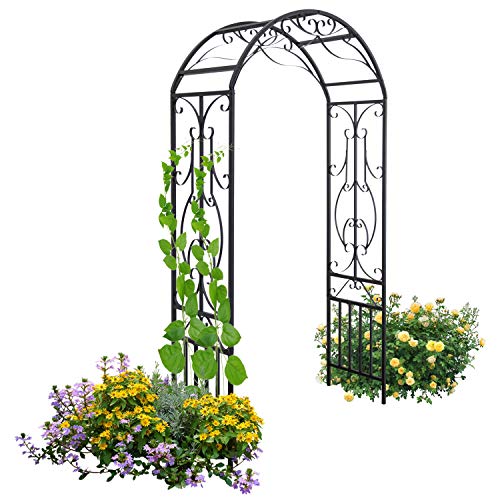
kinbor Garden Arches Arbor Black Metal Wedding Archway

VINGLI 85in Wooden Arbor Garden Arch

ATR ART TO REAL Garden Arch 7’8 H Dark Green

Outvita 7FT Black Metal Garden Arch Trellis

Queension Extra Large Garden Arch 7.2ft Wide

Skypatio Metal Pergola Arbor 7’8 Steel Trellis

SCENDOR Metal Garden Arbor 95.3 H Heavy Duty

Plow & Hearth Montebello Garden Arbor 7ft

ZANGEROI Garden Arch Trellis 7.9ft Wide Brown

VINGLI Vinyl Garden Arbor PVC Black 39.5in
A Deeper Look At The Lineup
For a first garden arch that won’t intimidate a beginner, the kinbor model earns attention. The tubular steel frame keeps the weight low, which is genuinely helpful when you’re assembling it solo on a sunny afternoon. The black finish reads as neutral against both cottage plantings and minimalist patios, and the shape works just as well marking a side-yard gate as it does framing a backyard ceremony.
You can train lightweight climbers like morning glory up the sides during a single growing season, and the slim profile tucks into tighter pathways where bulkier iron arbours would feel oversized. Compared to the VINGLI wood option later in this list, the kinbor arch trades natural grain for portability and easier storage in a shed over winter.
A Few Highlights
- Lightweight tubular steel is easy to reposition as your garden layout shifts.
- Neutral black finish pairs with both rustic and modern garden styles.
- Slender profile suits narrow pathways and side-yard entrances.
- Quick to assemble, helpful for renters who move every few seasons.
Worth Noting
- Lightweight steel can flex in strong winds unless anchored into soil.
- Coating may show wear after several seasons of weather exposure.
Key Specs
Who It Suits Best
First-time arch shoppers renting a yard, hosting a casual backyard event, or testing a climber support before committing to a heavier iron build.
Where Another Pick Suits Better
Anyone wanting a more permanent, weather-forgiving structure in an exposed site should reach for the SCENDOR arch further down, which uses deeper ground stakes and a heavier iron frame.
The VINGLI wooden arbor brings warmth to a garden in a way metal never quite manages. Standing roughly 85 inches tall, the structure gives a doorway-scale opening that reads as a proper entrance rather than a slim trellis. Solid wood construction gives the piece a heavier, more grounded feel against the lawn.
Wood naturally suits cottage plantings, climbing roses, and seasonal decorating with garlands or lights. Unlike the steel options in this roundup, this arch will weather visibly over the years, which most owners tend to view as character. Where the kinbor steel arch is portable, this one wants a more permanent home near a path or greenhouse door.
What Stands Out
- Solid wood construction reads as substantial and traditional.
- Generous 85-inch height gives a true doorway opening.
- Natural grain complements roses, clematis, and seasonal garlands.
- Works as a ceremony arch or greenhouse entrance.
Trade Offs
- Wood requires occasional sealing or staining for long-term looks.
- Heavier than steel options, so moving it after setup is a real effort.
Right Fit For
Homeowners with a settled garden layout who want a permanent, character-rich entry point and don’t mind a little seasonal wood upkeep.
Consider Something Else When
Shoppers who want zero maintenance should look at the VINGLI vinyl arbor near the end of this list, which mimics a finished look without the sealing routine.
What makes the ATR ART TO REAL arch clever is the dual-configuration build. You can assemble it in a tall, narrow profile for a more vertical garden moment, or opt for the wider stance when a pathway or ceremony aisle needs that broader opening. The dark green epoxy resin coating blends into foliage far better than the typical black, which matters if your planting scheme runs cool and leafy rather than high-contrast.
The steel tubing keeps the structure around 9 pounds, so you can actually shift it between seasons or move it for a party setup. Where the Outvita below leans into powder-coated black hardware, this arch’s green finish softens the silhouette against shrubs and hedges. For dedicated climbing plants, the frame is sturdy enough for a season of vigorous vine growth.
Reasons It Performs
- Two assembly shapes (tall or wide) adapt to different garden footprints.
- Dark green epoxy coating recedes into planted backgrounds.
- Lightweight at roughly 9.2 pounds for repositioning between seasons.
- Steel tubing handles a full season of climbing rose or clematis growth.
Points To Note
- Not specified for deep ground anchoring, so windy sites may need extra support.
Made For
Gardeners who want flexibility between a narrow trellis moment and a wider entrance without buying two separate structures.
Not Your Match When
If you need a true ceremony-scale opening, the Queension arch further along handles a multi-person walk-through much more comfortably.
The Outvita arch is built for the gardener who plans to leave a structure in place through every season. Powder-coated iron construction handles weather exposure more confidently than the lighter tubular options, and the included ground-hole maker lets you seat the base into the soil for meaningful stability. At seven feet tall, it gives climbing plants a serious vertical runway.
The black finish is the safe choice if your planting scheme mixes pinks, whites, and yellows, since it won’t compete with bloom colors. Compared to the Skypatio arch below, the Outvita leans heavier and more planted, so it’s the better pick when you intend the structure to anchor a permanent garden view rather than move between events.
A Strong Showing
- Powder-coated iron resists wear through multi-season exposure.
- Ground-hole maker design helps seat the arch for added stability.
- Seven-foot height supports taller climbers like climbing roses.
- Classic black frame complements mixed flower plantings.
Small Caveats
- Heavier steel demands more effort during initial assembly.
- Coating benefits from occasional touch-up in coastal or humid climates.
Feature Snapshot
Best Suited To
Homeowners with a permanent garden bed who want a frame that disappears into the planting and stays put through wind and weather.
Look Elsewhere When
Anyone planning to use the arch for event backdrops several times a year will find the lighter Skypatio easier to relocate.
The Queension earns its name honestly. With a 7.2-foot width and 9.2-foot height built from 17 arch-shaped tubes, the structure is sized for two or three people to pass through side by side, which is exactly what a ceremony aisle demands. The prong-style base lets you press the legs into the ground for a planted feel rather than a top-heavy tower.
You can leave it bare for a minimalist black frame or weave in flowers and fabric for an event. Compared to the narrower ATR ART TO REAL earlier, this is a completely different scale: it stops being a garden accent and starts being a small architectural moment. The trade-off comes in footprint, since you’ll need real open space to let the width breathe.
Features That Help
- Walk-through width supports small group processions or paired photos.
- 17 arch-shape tubes form a clean, rounded silhouette.
- Prong base design pushes into soil for added stability.
- Generous height (9.2 feet) suits taller floral installations.
Honest Caveats
- Large footprint needs a real open lawn or patio area to look balanced.
- More parts mean longer assembly than a smaller steel arch.
Perfect Match For
Homeowners hosting backyard ceremonies or anyone wanting a statement entrance where the arch itself is a focal point.
A Better Fit Elsewhere
Smaller urban patios will feel more proportionate with the compact ZANGEROI arch later in this list, which gives a ceremony look at a friendlier scale.
The Skypatio is the dependable middle of this roundup. Steel tubing with a dark green epoxy coating puts it in the same family as the ATR ART TO REAL arch, with a similar 7’8″ height, but the Skypatio carries a slightly more open, pergola-style silhouette. The shape works well for training flowering vines through the top rails.
Owners commonly appreciate that the green finish disappears behind foliage, so the arch doesn’t shout for attention in a quiet garden. The 15 x 55 x 94 inch footprint gives a comfortable walkway width without dominating the space. For a first arch where you want one that handles both everyday plant support and the occasional event, this lands in a balanced middle.
Strong Points
- Steel tubing with weather-resistant epoxy for multi-season use.
- Green finish blends into planted backgrounds.
- Pergola-style top rails give vines more contact points to grip.
- Comfortable walkway width for everyday passage.
Areas To Watch
- No specific deep-anchor system listed, so soft soil may require added stakes.
- Heavier than basic tubular arches, so plan for two-person assembly.
Whose Shelf It Belongs On
Home gardeners who want one structure that handles climbing vines through summer and doubles as a subtle ceremony frame when family visits.
Skip It When
If you need an elaborate scrollwork design as a year-round decorative piece, the Plow & Hearth Montebello further down delivers much more visual character.
When a garden sits in a windy corridor or on an open hilltop, most lightweight arches end up leaning after a season. The SCENDOR addresses that problem with wrought iron construction, a powder-coated anti-rust surface, and 9.5-inch ground stakes that sink meaningfully into the soil. At 95.3 inches tall and 45 inches wide, the dimensions create a clear vertical runway for roses, wisteria, or grape vines.
This is the arch for someone who plans to let plants mature into serious weight over a few years, not just a single season of annual vines. The 7.2-foot height also clears most adults comfortably, so the structure pulls double duty as a path entrance. Versus the Outvita earlier, the SCENDOR trades some visual lightness for genuine anchoring depth, which matters once climbing plants load the frame.
Noteworthy Benefits
- 9.5-inch ground stakes give meaningful wind resistance.
- Powder-coated wrought iron resists rust over multi-year exposure.
- Supports heavy mature vines like wisteria and grape.
- Tall enough to walk under without ducking.
Some Limits To Know
- Heavier frame means a longer, more involved assembly.
- Iron construction is harder to reposition once planted.
- Best results depend on soil that accepts ground stakes well.
Quick Facts
Who Will Love This
Gardeners in exposed or breezy sites who want a serious, planted-in structure that handles mature climbing plants over multiple years.
Reach For A Different Pick When
If you want a decorative, ornate statement rather than a sturdy workhorse, the Plow & Hearth Montebello brings far more visual interest to a similar footprint.
Most arches in this category are about function first and looks second. The Plow & Hearth Montebello flips that order. The intricate scrollwork is inspired by ornate Turkish window and gate ironwork, so the structure carries visual weight even before any plant climbs it. The burnished gunmetal finish reads warmer than typical flat black, and the rustproof stainless hardware speaks to long-term outdoor thinking.
The lattice side panels give climbers plenty of contact points, and the seven-foot height creates a proper doorway moment. This is the arch for someone who wants the structure itself to be a permanent decorative element, not just a plant support. Compared to the simpler Outvita or SCENDOR, you’re paying for design language as much as material.
Strengths Worth Knowing
- Ornate scrollwork reads as a decorative focal point on its own.
- Burnished gunmetal finish feels warmer than standard black.
- Rustproof stainless hardware for long outdoor lifespan.
- Lattice side panels support a wide range of climbing plants.
Factors To Consider
- Sits at a noticeably higher price point than tubular steel options.
- More elaborate design may feel busy in very minimalist gardens.
Built With In Mind
Homeowners who treat the garden as a designed outdoor room and want an arch that looks intentional even in winter when plants die back.
Swap It Out When
Casual gardeners who mainly want plant support and don’t need a decorative statement will find the Outvita a more practical spend.
The ZANGEROI arch brings a warmer tone to a category full of blacks and greens. The brown finish reads as a softer, more natural frame, which suits fall ceremonies, autumn events, or gardens built around warm-toned foliage. With a 7.9-foot width and 6.4-foot height, the proportions feel welcoming without dominating a small yard.
The piece handles two assembly configurations, which is genuinely useful if you want a tall narrow moment one season and a wider entrance the next. Compared to the Queension earlier, the ZANGEROI is a friendlier scale for a townhouse patio. As with most painted metal, owners commonly recommend keeping an eye on finish touch-up in coastal or high-humidity spots.
Practical Pluses
- Warm brown finish suits autumn palettes and rustic styling.
- Two assembly shapes for different garden moments.
- 7.9-foot width handles a comfortable walking path.
- Moderate scale fits smaller yards better than extra-large options.
Things To Consider
- Brown finish may benefit from touch-up in humid or coastal climates.
The Right Fit
Shoppers planning a fall wedding or anyone whose garden palette runs warm rather than cool and wants a frame that complements rather than contrasts.
Another Choice May Suit
Those wanting a true low-maintenance material should consider the VINGLI vinyl arch below, which never needs refinishing.
The VINGLI vinyl arbor solves a problem most gardeners eventually hit: the upkeep. PVC never needs sanding, sealing, painting, or rust treatment, so the structure looks the same in year five as it did in week one. The squared lattice side panels give climbing plants a structured surface to grip, and the open design lets sunlight through to whatever sits beneath.
At 39.5 inches wide, the footprint is a true space saver, useful for narrow side yards, balcony gardens, or anywhere a larger iron arch would crowd the space. Compared to the wooden VINGLI arbor earlier, this version trades natural grain for genuine zero-maintenance living. The honest read is that vinyl won’t carry the visual gravitas of a wrought iron Montebello, but it also won’t ask for your weekends.
What Earns Its Place
- PVC construction eliminates painting, sealing, and rust worries.
- Squared lattice side panels support common climbing plants.
- Compact 39.5-inch footprint suits narrow side yards.
- Easy to clean with a basic garden hose rinse.
Less-Strong Areas
- Vinyl lacks the visual weight of wrought iron or solid wood.
- Very heavy climbers can stress the lattice over many seasons.
- Smaller footprint limits ceremony-scale use.
Who Should Grab It
Garden owners who want a clean, no-maintenance accent and prefer spending weekends enjoying the space rather than refinishing it.
Not Your Match When
Anyone wanting a statement decorative piece should reach for the Plow & Hearth Montebello further up, which carries far more design presence.
Choosing The Right Garden Arches And Arbours
Material Matters More Than Style
The frame material sets the tone for everything else: weight, weather behavior, maintenance, and lifespan. Steel tubing is the most common choice and balances weight against durability. Powder-coated iron adds weather resistance and weight, which helps in wind but makes assembly a two-person job. Wrought iron is the most substantial and decorative, paired with stainless hardware for long-term outdoor exposure. Wood reads warmer and more natural but needs occasional sealing. Vinyl sidesteps maintenance entirely at the cost of visual weight.
Match the material to your climate. Coastal humidity and snowy regions are tougher on painted metal finishes, so powder-coated iron or wrought iron with anti-rust treatment tends to last longer. Wood holds up best when it’s sealed annually, and vinyl handles moisture without complaint. In most suburban yards with mixed weather, a powder-coated steel frame lands in the safe middle.
Size, Footprint, And Walk-Through Space
Before falling in love with a tall arch, measure your pathway. The opening width determines how comfortable the space feels for everyday use, while the height controls how the arch reads against your home or fencing. Extra-large options like the Queension handle ceremony-scale use but need real open ground to breathe. Compact vinyl or brown-finish options serve tight side yards where a wide arch would crowd a fence line.
Also consider clearance for overhead structures. Pergola-style tops with horizontal rails give vines more to grip but can interfere with overhanging tree branches or low eaves. A simple rounded arch tends to fit more sites without site prep.
Plants, Events, Or Both
Decide upfront whether the arch is primarily a plant support, a ceremony structure, or both. Climbing roses, wisteria, and grape vines need a heavier, well-anchored frame because the mature weight loads the structure seriously. Annual vines like morning glory and sweet pea are light enough for any frame.
For event use, an arch that disassembles easily and stores flat saves a lot of hassle. If you host ceremonies and plant heavy climbers, you’re looking at the heavier iron options with deep ground stakes, since lightweight arches flex under combined load. The honest read is that most people buy a structure for one primary purpose and then discover the other, so sizing up slightly usually pays off.
Smart Buying Advice
Pitfalls Shoppers Hit
The most common mistake is underestimating mature plant weight. Annual vines feel light in the first season, but a wisteria or climbing rose adds serious load by year three, and a flimsy frame bows visibly. Another trap is choosing an arch that visually disappears against a busy background; an all-green or all-black arch against dense foliage can read as visual clutter rather than structure. Take a step back and consider whether a contrasting finish or a more ornate design would actually serve the space better.
Where The Extra Money Goes
Higher-tier archways earn their premium in three places: hardware, finish, and design language. Stainless fasteners and thicker powder coatings extend lifespan by years, not just seasons. Wrought iron and ornate scrollwork add presence that simple tubing never will. Paying more also tends to mean deeper ground stakes and heavier gauge steel, which matters once plants load the frame. The upgrade is worth it when the arch will sit in a visible spot year-round and you want it to look intentional even in winter dormancy.
Frequently Asked Questions
How deep should arch legs go into the ground?
Most steel arches rely on 8 to 10 inch ground stakes for stability, and the heavier iron options in this list push toward that upper end. Softer or sandy soil benefits from staking deeper than the listed recommendation.
Can I leave a metal arch up all year?
Powder-coated steel and wrought iron handle year-round outdoor exposure well. Lighter tubular steel with thinner coatings may show wear after several seasons, so an annual inspection for chips or rust spots is a sensible habit.
Will a wooden arch rot where it meets the soil?
Wood arbours placed directly in contact with damp ground will weather faster at the base. Elevating the legs slightly on small pavers or treating the contact area with a weather sealer extends lifespan considerably.
Can I move an arch once plants are established?
Once climbing plants fully colonize a frame, the arch and plants effectively become one structure. Moving it means cutting the plant back hard or transplanting it, so position thoughtfully before the first full growing season.
Do vinyl arbours hold up to wind?
Vinyl is lighter than iron, so very windy sites benefit from added ground anchoring beyond the standard legs. Once weighted with mature plants, the structure usually holds, but exposed coastal or hilltop yards should plan for extra staking.
Closing Remarks
The right garden arch earns its spot through years of holding up vines, framing pathways, and quietly doing the job. Match the material and weight to your climate, your plants, and how permanent you want the structure to feel, and the rest tends to fall into place. Any of these ten options will serve a different kind of gardener well; the trick is being honest about which kind you are.
