

A clean edge between grass and walkway changes how a yard looks, and the right manual edger keeps you off your knees while doing it. Across ten hand-driven options, this list compares blade shape, handle length, foot plate width, and weight so homeowners with modest yards can find a tool that actually fits their soil and their back. Whether you edge a single sidewalk or maintain full flower bed borders, there’s a sensible match below.
An Overview Of The Picks
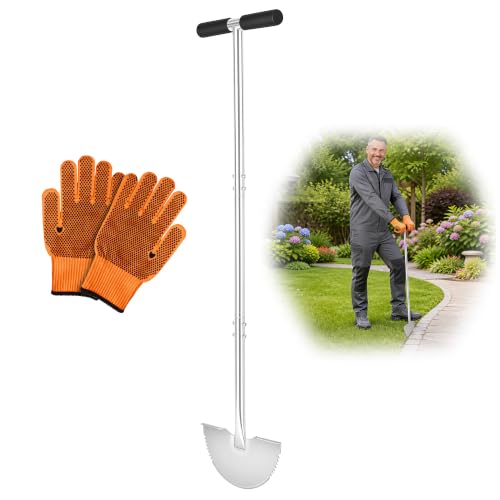
KYEEN-TOOLS Serrated Half Moon Edger with T-Handle (38″)

Walensee Wheel Rotary Edger 69.7″ Adjustable Handle

HANGMAICOME Half Moon Edger 38″-49″ Adjustable T-Grip

BlumeTrec Manual Edger 38″-42″ Manganese Blade

EUIJOIP Heavy Duty Edger 34-49″ Carbon Steel
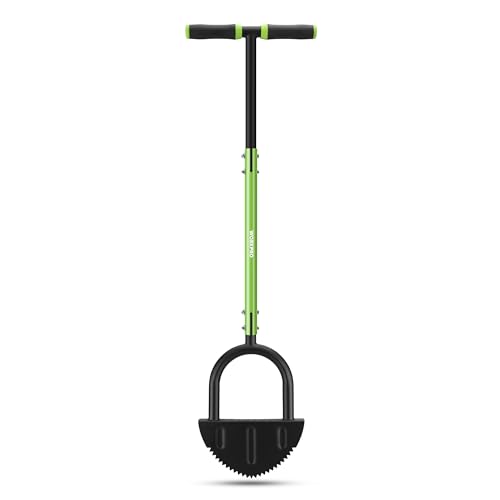
WORKPRO 40-Inch Edger Lawn Tool Half Moon Saw Tooth

BlumeTrec 75″ Wheel Rotary Edger with Extra-Wide Wheel
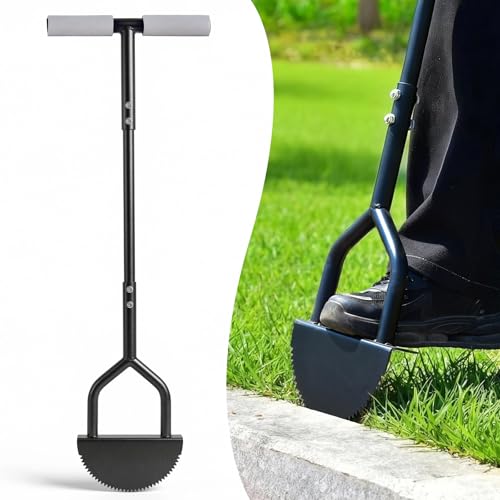
Orcela Half Moon Edger Lawn Tool T-Grip 37″

DIIG Manual Lawn Edger Long Handle 8.5″ Steel Blade
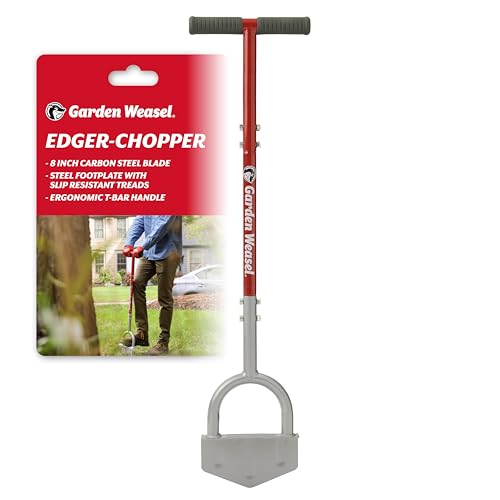
Garden Weasel Edger Chopper for Beds, Sidewalks, Patios
More On The Choices That Made The List
Most half-moon edgers force a tough choice: stand up straight with a slippery grip, or kneel and feel every rock. The KYEEN-TOOLS model solves that tension with a softer T-handle that actually cushions your palms during a full afternoon of edging. At 38 inches, the shaft suits average-height users who want to step, lean, and slice without crouching into the soil.
The serrated cutting edge helps it bite into sod where a flat blade skids, and the wide footplate gives your boot a stable target when soil turns stubborn. Compared to the wheeled Walensee below, this one trades speed for precision: you work one cut at a time, which is exactly what gardeners shaping a curved bed tend to prefer. Cable burial along a fence line is a realistic use case, since narrow trenches matter more than pace there.
What Stands Out
- The softer T-handle takes pressure off the heel of your hand during long sessions
- 38-inch length suits most users without forcing a stoop
- Serrated steel edge slices through thatch and shallow roots more reliably than a flat blade
- Wide footrest gives your boot real surface area for hard-packed ground
Points To Note
- Fixed 38-inch shaft won’t accommodate very tall users
- No wheel assist, so longer driveways feel slow
- Steel can show surface oxidation if stored wet between uses
Right Fit For
Homeowners shaping curved beds, running cable along a fence, or edging short sidewalk stretches on a Saturday morning.
Look Elsewhere When
Tall users working long straight driveways will find the Walensee Wheel Rotary Edger a more comfortable alternative.
Where the KYEEN-TOOLS tool asks you to step and chop, the Walensee hands the heavy lifting to a wheel. At roughly 70 inches tall with an adjustable stainless steel shaft, it lets you walk an entire driveway in one pass while the rotary blades trim the boundary. The cushion grip absorbs vibration, which matters when the work stretches past an hour.
It earns its place here because it changes the experience of edging, not just the result. For older gardeners or anyone managing joint pain, the rolling motion is far easier than repeatedly driving a half-moon into turf. You trade some precision along tight curves, since the wheel wants a path, but flat driveways and sidewalk runs are where it genuinely sings.
The Value In It
- Rolling action removes most of the downward force you’d otherwise need
- Adjustable stainless handle suits a range of user heights
- Cushion grip keeps hands comfortable during long runs
- One tool covers driveways, sidewalks, and patio edges
Worth Noting
- Less control around tight curves or narrow bed borders
- Longer total length makes storage in a small shed awkward
Feature Snapshot
Best Suited To
Homeowners with long, straight driveway or sidewalk edges who want to finish the job while walking rather than stomping.
Skip It When
Curved flower bed work calls for the KYEEN-TOOLS Serrated Half Moon Edger, which handles tight arcs more naturally.
Some yards have soil that laughs at standard edgers, the kind that hasn’t been turned in years and packs tight against the walk. HANGMAICOME built this one for that exact situation. The reinforced, rust-resistant stainless blade and wide footplate are designed to take real body weight, and the saw-tooth edge chews through compacted dirt where a flat blade would simply skate.
You also get a 38-to-49-inch adjustable T-handle, which is a meaningful upgrade over fixed-length models when two people share a tool. The honest read is that this is a heavier unit than the KYEEN-TOOLS above, so it rewards a deliberate stance rather than fast stepping. For deeply rooted Bermuda or neglected bed edges, that weight becomes a feature.
Where It Helps
- Reinforced blade handles compacted soil without flexing
- Wide footplate lets you drive the cut with full body weight
- Adjustable length accommodates two users sharing one tool
- Saw-tooth edge bites through shallow roots and thatch
Honest Caveats
- Heavier than most half-moon edgers, so wrist fatigue shows up faster
- Locking collar may need occasional re-tightening after heavy use
Who Will Love This
Gardeners with compacted clay, neglected bed edges, or stubborn root systems who want a tool that won’t flinch.
Not Your Match When
Light weekly touch-ups are easier on the wallet and your shoulders with the DIIG Manual Lawn Edger further down the list.
Manganese steel earns its keep in cutting edges because it holds an edge longer than mild carbon, and BlumeTrec uses it for the half-moon on this mid-length edger. The 38-to-42-inch range is narrower than the HANGMAICOME above, but that’s actually a feature for users who already know their preferred working height and don’t need a big swing range.
The saw-tooth border style and wide footplate mirror the recipe that works in most flower bed scenarios. A modest, focused tool. For homeowners edging along established perennial borders where the soil is decent but the grass keeps creeping in, this lands in a useful middle ground between the lighter DIIG model and the heavier HANGMAICOME build.
Useful Highlights
- Manganese steel blade holds sharpness through repeated cuts
- Wide footplate gives stable foot placement on soft ground
- Modest adjust range is friendlier for shorter users
- Reaches cleanly into established flower bed borders
Trade Offs
- Not built for the heaviest compacted clay or thick root mats
- Footplate can collect soil that needs brushing off between uses
Made For
Homeowners with established flower beds and decent soil who want a focused, mid-length tool without extra weight.
Where A Sibling Pick Shines
Taller users needing more reach will prefer the EUIJOIP Heavy Duty Edger further down, with its wider length range.
Shared tool sheds need a tool that doesn’t fight the shorter or taller user, and EUIJOIP’s 34-to-49-inch range covers more height variation than most of the picks on this list. The high-carbon stainless blade, paired with a comfort-grip rubber handle, is built for the homeowner who wants one edger for the whole household rather than two personalized ones.
The metal-handle construction with anti-slip grip is a thoughtful touch, since bare metal can twist in a sweaty palm mid-cut. Against the Orcela further down, this one trades the rubber T-grip for a straight-handle style, which some users find more natural for push-style cuts. The trade-off is real, and personal preference settles it.
The Good Stuff
- 34-to-49-inch range fits both short and tall users from one tool
- Comfort-grip rubber handle reduces slip in damp conditions
- High-carbon stainless blade targets tough soil and root mats
- Useful for a range of yard tasks beyond straight edging
Less Ideal Details
- Heavier than fixed-length options due to adjustable collar
- Straight handle style is less wrist-friendly for some users
Who Should Grab It
Households sharing one edger among several users, especially when height varies a lot between them.
Swap It Out When
Users who prefer a T-grip twist control should step up to the Orcela Half Moon Edger with its rubber T-handle.
WORKPRO leans into versatility with a 40-inch fixed shaft and a 23-tooth saw blade, a tooth count that goes well past the half-moon basics. The 40-inch length sits in a comfortable middle ground: long enough for average users to stand upright, short enough to manage in tighter garden corners than the wheeled alternatives allow.
The spray-coated blade resists rust and corrosion, which matters for a tool that lives outdoors between sessions. Against the HANGMAICOME above, this one won’t take quite the same pounding force, but it makes up for that with a true multi-purpose build suited to trenching and transplanting in addition to straight edging. A well-rounded pick for the gardener who keeps finding new uses for the same tool.
A Strong Showing
- 23-tooth saw blade reaches into turf beyond what half-moons handle
- 40-inch fixed length is a comfortable average for most users
- Spray-coated blade fights off rust between sessions
- Handles trenching, transplanting, and edging in one tool
Small Caveats
- Fixed length won’t suit very short or very tall users
- Not the lightest pick on the list, so arm endurance matters
Quick Facts
Right Fit For
Gardeners who want one tool for edging, trenching, and occasional transplanting without buying separate equipment.
A Better Fit Elsewhere
Users after a longer reach and adjustable height should consider the EUIJOIP Heavy Duty Edger instead.
The extra-wide wheel is the headline here, and it earns the feature honestly. A wider wheel base means better stability over uneven ground and softer pressure on sod that would otherwise compress under a narrow rim. At 75 inches overall, this is also the tallest rotary option in the lineup, and that height pays off for anyone who’s used to stooping through edging tasks.
You trade the half-moon’s surgical accuracy for speed and ease, but the scissor-and-serrated blade action keeps the cut reasonably clean along standard sidewalk edges. The honest read: the extra width makes this noticeably more stable than the Walensee, but bulkier to store in a closet or small shed.
What Helps Most
- Extra-wide wheel improves stability over uneven ground
- 75-inch length accommodates tall users without a forward lean
- Adjustable handle keeps the geometry comfortable for different users
- Rolling motion saves shoulders during multi-hour sessions
Points To Keep In Mind
- Larger footprint takes up more shed or garage space than narrower picks
- Less precise around tight curves and bed corners
Key Product Details
Made For
Tall users and anyone with back or shoulder sensitivity who wants the easiest possible rolling edger for a long border.
Where Another Pick Suits Better
Gardeners with limited storage or curved flower beds will prefer the slimmer KYEEN-TOOLS Half Moon Edger reviewed first.
Orcela trims the package down to the essentials: a 37-inch shaft, rubber T-grip, and a heavy-duty manganese steel blade with serrated edges. That shorter length suits gardeners who prefer a closer, more controlled stance rather than a fully upright posture, and the powder-coated finish slows rust in damp shed corners.
Where the KYEEN-TOOLS model uses a softer T-handle, this one leans on rubber overmold for grip, which is a different feel under load. You may find the slightly shorter reach easier to manage around small yards with tight plant groupings. For pet households worried about stored tools, the compact size also stows out of the way more easily than full-length rotary options.
Practical Advantages
- 37-inch length gives a closer, more controlled stance
- Rubber T-grip holds firm even when hands are damp
- Manganese steel blade resists dulling through repeated use
- Powder-coated finish slows surface rust in storage
Trade-Offs To Consider
- Fixed shorter length isn’t ideal for users above average height
- No wheel assist, so longer edges take real effort
Right Fit For
Pet households and gardeners with smaller yards who want a compact, easy-to-store tool that still feels solid in the hand.
Consider Something Else When
Tall users working longer borders will appreciate the EUIJOIP Heavy Duty Edger’s adjustable reach more.
DIIG keeps the recipe simple: a thickened 8.5-inch steel blade, a 39-inch handle, and a wide foot plate, nothing more, nothing less. That straightforward build is exactly what beginners need, since there’s no adjustable collar to fiddle with and no special motion to learn. You step, press, and pull back, the same way you’d use any half-moon edger.
The V-shaped cutting edge is worth noting: it helps the blade self-align along the soil as you work, which is genuinely helpful when your line isn’t perfectly straight. Against the KYEEN-TOOLS first pick, this one trades a softer T-grip for a more basic handle, so heavy users may want gloves for long sessions. For weekly maintenance on a familiar yard, that trade is usually worth taking.
Points In Its Favor
- 39-inch handle is friendly for first-time edger users
- V-shaped blade helps self-align along the soil line
- Wide foot plate gives a stable target for each step
- No adjustable parts to loosen or wear over time
Worth Bearing In Mind
- No cushioned grip, so gloves help on longer runs
- Standard steel, not manganese, so sharpening comes sooner than premium picks
Best Suited To
Beginners and homeowners who do light weekly touch-ups and want a tool that doesn’t require any setup or adjustment.
Not Your Match When
Users with compacted clay or tough root systems will get more bite from the HANGMAICOME Heavy Duty Edger further up the list.
Garden Weasel’s Edger Chopper is built around a step-and-chop motion, and the 8-inch tempered blade does the cutting as you drive your weight down. It’s a refreshingly mechanical tool: no adjustable length, no wheel, no fancy coating, just a sharp blade on a stable base. For quick touch-ups around established beds, that’s often all you need.
The trade-off shows up when you compare it to the half-moon picks above, since the chopper doesn’t reach down quite as deep as a 38-inch half-moon in soft soil. But for shallow sod cuts and bed maintenance on decent ground, it works quickly and stores flat. A solid last pick for gardeners who mostly redo edges rather than cut them fresh.
The Upside
- Step-and-chop motion requires less hand strength than slicing
- Tempered 8-inch blade stays serviceable through regular use
- Compact form factor stores flat in tight shed spaces
- Reaches into bed corners where longer tools get in the way
Soft Spots
- Doesn’t cut as deep as full-length half-moon edgers in soft soil
- Best for maintenance, not for establishing new deep edges
Whose Shelf It Belongs On
Gardeners who maintain established edges regularly and want a quick, compact tool for weekly touch-ups.
Reach For A Different Pick When
Establishing a fresh deep edge for the first time calls for the HANGMAICOME Heavy Duty Edger’s reinforced cutting depth.
What To Weigh Before Choosing A Manual Edger
Handle Length And User Height
A 38-inch shaft works for many average-height users, but a tool that’s too short will have you bending at the waist, and a tool that’s too long makes the cut feel awkward. Adjustable models like the HANGMAICOME and EUIJOIP cover more ground when a single tool serves multiple users.
Blade Material And Soil Type
Manganese steel holds an edge longer than standard carbon steel, which matters in compacted or root-heavy soil. Standard steel on lighter picks like the DIIG still works for soft, well-tended lawns, but you’ll find yourself sharpening sooner.
Foot Plate Width And Footing
A wider foot plate gives your boot a stable target, which is exactly what you need when driving the cut into hard ground. Narrower foot plates are lighter to carry, but they shift under heavy pressure, and that translates to a less straight cut.
Wheeled Versus Half Moon
Wheeled rotary edgers cover ground quickly and spare your shoulders on long runs, but they struggle on tight curves. Half-moon edgers give precise cuts in tight spaces at the cost of more effort per foot. Most homeowners benefit from choosing based on the longest edge they maintain.
What The Higher Tier Buys In Manual Edgers
Common Shopping Slip Ups
Buying an edger without checking soil depth often ends in frustration, since shallow blades skate on hard ground. Skipping handle length comparison is another common miss, because the same “40-inch tool” can feel very different depending on your height. Finally, ignoring the foot plate width is a trap that shows up the first time you lean hard on the tool, and the blade drifts off-line.
The Case For Spending Up
Higher-tier picks add manganese steel, adjustable shafts, and powder-coated blades that resist rust for years. For a household that edges monthly, those upgrades translate to a tool that holds an edge longer, fits more users, and survives damp storage without surface oxidation. The cost difference is usually modest when measured against the lifespan of the tool.
Frequently Asked Questions
How Often Should You Edge A Lawn With A Manual Tool?
Most homeowners get clean results edging every two to four weeks during the growing season. Edges blur fastest in spring when grass pushes outward, so weekly touch-ups may be needed then.
Can A Half-Moon Edger Cut Through Tree Roots?
Light surface roots are manageable with saw-tooth blades like the WORKPRO 23-tooth or HANGMAICOME models. Established tree roots usually require a different tool, since manual edgers aren’t designed for that scale.
Do Manual Edgers Work On Wet Soil?
Wet soil compacts under a foot plate rather than slicing cleanly, so dry or slightly damp ground produces the best results. Working after a day of drying usually makes edging noticeably easier.
How Do You Keep A Manual Edger From Rusting?
Wiping the blade dry after use and storing the tool indoors goes a long way. Powder-coated and spray-coated blades resist surface oxidation better than bare steel, but all steel benefits from a light oil coat before long-term storage.
Are Wheeled Rotary Edgers Harder To Store?
They do take more space than a half-moon because of the longer handle and wheel assembly. Users with small sheds often prefer a fixed-length half-moon for that reason, even if the wheeled option is easier to operate.
Closing Remarks
The right edger comes down to your soil, your height, and the curves in your yard. Half-moon picks handle tight bed work with surgical accuracy, while wheeled rotary models turn long driveways into a quick walk. Pick the tool that matches the edge you’ll cut most, and the rest of the yard tends to fall into place.
