

A messy yard has a way of multiplying your weekend work. Tall grass creeps over the walkway, hedges grow past their tidy line, and small branches block the mower path, leaving you juggling three or four tools just to keep things presentable. The right garden trimmers cut that chaos down to size, whether you need a cordless string model for a small yard, a sharp pair of bypass pruners for roses, or long-reach hedge shears for the wall of green by the fence. This list covers the full range, from battery-powered cutters to forged steel hand tools, so you can match the tool to the job and stop borrowing the neighbor’s gear.
A Snapshot Of The Selections

KOMASTY 20V Cordless Electric Weed Wacker 12-Inch

MtiolHig Electric Pruning Shears for DeWALT 20V

sunchers 2-in-1 Cordless Hedge Trimmer 7.2V

Fiskars Forged Steel Bypass Pruning Shears 1-Inch Cut

Fiskars SoftGrip Bypass Pruning Shears 5/8-Inch Cut
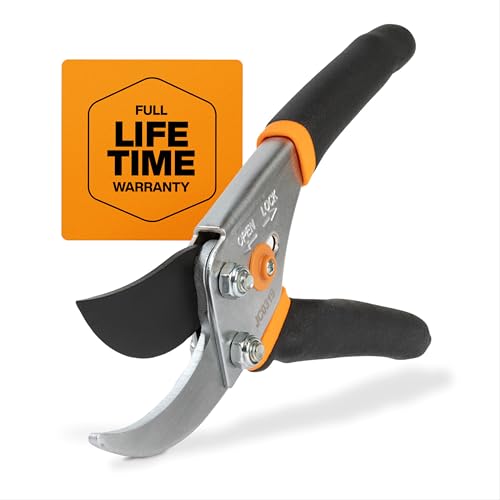
Fiskars Bypass Pruning Shears 5/8-Inch Cut

Fiskars Power-Lever Extendable Hedge Shears 10-Inch Blades

DECERK 8.5-Inch Professional Pruning Shears

Fiskars 28-Inch Garden Bypass Loppers 1.5-Inch Cut
A Breakdown Of The Leading Choices
Small-yard work calls for something that disappears into a closet when you’re done, and the KOMASTY 20V cordless trimmer aims squarely at that niche. The 12-inch cutting swath suits tight paths and narrow flower beds, while the 20V battery platform gives you enough run time for routine edging without dragging a cord across the lawn.
For most townhomes and patios, this lands as a sensible starter. It’s a step up from manual shears for grass control but won’t overwhelm a small patch of green. If you want battery power without committing to a full-size kit, the KOMASTY is built to slot right in.
Strong Points
- Folding shaft design saves closet and garage space, ideal for apartment storage.
- Lightweight 12-inch string head is approachable for first-time users.
- Auto line feed trims downtime spent bumping the head manually.
- Two included 2.0Ah batteries keep you cutting while one charges.
Things To Consider
- The 12-inch reach may feel short for anyone managing a larger suburban lot.
- String heads need regular line refills, which adds an ongoing ownership cost.
Made For
Small-yard homeowners and apartment dwellers who need light edging without the bulk of a full-size trimmer.
Consider Something Else When
You’d rather use a single battery across tools, in which case the MtiolHig Electric Pruning Shears (item 2) might fit a DeWALT 20V collection you already own.
Anyone already invested in DeWALT 20V batteries knows the pain of buying a specialty tool that demands its own charger and power pack. The MtiolHig electric pruning shears sidestep that by sliding into your existing battery family, which is the whole reason this pick earns its place on the list.
Powered at 26,000 RPM with an SK7 high-carbon steel blade, the shears handle branches from roughly 0.8 to 2 inches across, well past what hand pruners can manage comfortably. The onboard LCD display shows battery status and cut counts, a small but useful touch for orchard work and longer sessions.
What Helps Most
- Battery compatibility means no extra charger clutter on the workbench.
- SK7 blade holds up under repeated cuts through woody growth.
- LCD feedback is genuinely useful when you’re pruning a row of trees.
- Dramatically reduces hand fatigue versus manual shears on thick stems.
Honest Caveats
- Tool-only listing means you need to own compatible batteries already.
- Electric pruners need blade cleaning and occasional lubrication to stay smooth.
Feature Snapshot
Best Suited To
Shed owners and orchardists who already run DeWALT 20V batteries and want serious pruning power without a second battery system.
Skip It When
You don’t own DeWALT batteries, in which case the Fiskars Forged Steel Bypass Pruning Shears (item 4) is a stronger manual alternative.
For tight work around flower beds and small ornamental shrubs, dragging out a full-size hedge trimmer feels like overkill. The sunchers 2-in-1 cordless trimmer solves that by switching between a grass shear blade and a hedge blade in seconds, all powered by a 7.2V battery that recharges over USB-C.
Light enough to use one-handed and simple enough for a first-time gardener, this pick covers detail tasks that bigger tools miss. Compared to the KOMASTY string trimmer reviewed earlier, this one trades raw power for precision and convenience in confined spaces.
The Good Stuff
- Two blades in one body cover hedges and grass without swapping tools.
- USB-C charging means you can top up from a laptop or power bank.
- Lightweight build suits extended detail work without wrist strain.
Trade Offs
- 7.2V output won’t push through woody growth, so stick to green material.
- Smaller battery means more frequent recharges for bigger yards.
Whose Shelf It Belongs On
Gift-givers and casual gardeners who want a tidy, low-maintenance tool for small shrubs and edging along walkways.
Another Choice May Suit
You need to reach the top of a tall hedge, in which case the Fiskars Power-Lever Extendable Hedge Shears (item 7) offer a manual solution with more reach.
When you’re facing older rose canes, mature hydrangea wood, or fruit tree suckers, a 5/8-inch hand pruner starts to feel underbuilt. The Fiskars Forged Steel Bypass Pruning Shears step in with a 1-inch cut capacity, which is enough to handle most stems you’ll meet in a home garden without dragging out a lopper.
Where the Fiskars SoftGrip model (item 5) leans toward comfort, this forged version trades a little ergonomics for raw cutting muscle. The forged steel handles deliver serious strength for repetitive work, and the hardened blade is built to stay sharp through thick growth.
A Strong Showing
- Forged steel body handles tough cuts where standard pruners stall.
- 1-inch capacity covers most home garden stems without a backup tool.
- Low-friction blade coating helps the cut glide through cleanly.
Points To Note
- Heavier than softer-grip alternatives, so fatigue shows up on long sessions.
- Annual sharpening and a light oiling keep the blade performing at its best.
Who It Suits Best
Experienced gardeners and orchard owners who tackle thicker, woody growth regularly and want a no-nonsense pruner that lasts.
Look Elsewhere When
Joint sensitivity or smaller hands make grip comfort a priority, in which case the Fiskars SoftGrip Bypass Pruning Shears (item 5) will treat you better.
Saturdays spent deadheading roses and trimming perennial beds add up, and a hard-handled pruner turns that into a hand-cramping chore by the second hour. The Fiskars SoftGrip Bypass Pruning Shears address exactly that with cushioned grips and a self-cleaning sap groove that keeps the blade from gumming up mid-job.
The 5/8-inch cut capacity suits live green stems rather than old wood, making this a strong match for the kind of pruning most home gardeners actually do. Versus the DECERK 8.5-inch shears (item 8), this pick trades a slightly larger cut for proven comfort over long sessions.
Useful Highlights
- Cushioned grip reduces hand fatigue across extended pruning sessions.
- Sap groove keeps the blade from sticking, so cuts stay clean.
- Lightweight build suits gardeners with smaller hands or grip issues.
Softer Spots
- 5/8-inch capacity won’t reach into thicker mature branches.
- Coating can wear with heavy use, so a wipe-down after each session helps.
Right Fit For
Casual gardeners and anyone with joint sensitivity who wants a comfortable pruner for routine flower bed maintenance.
A Better Fit Elsewhere
You regularly tackle 1-inch branches, where the Fiskars Forged Steel Bypass Pruning Shears (item 4) bring the extra cutting power you need.
Sometimes the right tool is the one that just works, year after year, without thinking about it. The standard Fiskars Bypass Pruning Shears have that reputation for a reason. The 5/8-inch cut covers the stems most gardeners actually face, and the bypass action is right for live green growth where a clean cut matters.
This sits between the SoftGrip (item 5) and the Forged Steel (item 4) in Fiskars’ lineup, hitting a middle ground on comfort and cutting muscle. For most home gardeners, it’s the pruner that ends up in the back pocket and stays there.
Advantages To Know
- Reliable standard for general garden pruning on live plants.
- Replaceable blade design extends the working life of the tool.
- Modest weight makes it approachable for first-time gardeners.
A Few Limitations
- No padded grip layer, so longer sessions may bother sensitive hands.
- 5/8-inch capacity means reaching for a lopper on thicker growth.
Perfect Match For
Everyday gardeners who want a dependable, no-frills pruner for routine flower and shrub work.
Not Your Match When
You’re regularly cutting branches over 5/8 inch, in which case the Fiskars 28-Inch Garden Bypass Loppers (item 9) are a better fit.
Tall hedges and wide borders share the same problem: your standard hedge clipper can’t reach without a ladder, and your hands tire halfway through. The Fiskars Power-Lever Extendable Hedge Shears address that with a telescoping handle that adjusts from 25 to 33 inches, so the top of a privet hedge stops being an acrobatic event.
The Power-Lever mechanism multiplies your hand force, which matters more than it sounds when you’re shearing through older, woody growth. The 10-inch serrated blades grip stems cleanly rather than pushing them aside mid-cut.
What Stands Out
- Telescoping handle reaches high or wide without stretching or ladders.
- Power-Lever boost reduces the effort per cut noticeably.
- Serrated 10-inch blades hold stems in place during the cut.
Points To Keep In Mind
- Manual shears demand more time on large hedge surfaces than powered options.
- Tight-lock mechanism can loosen over years, so a periodic check helps.
Feature Rundown
Who Should Grab It
Homeowners with tall hedges or wide privacy borders who want a quiet, manual solution that doesn’t need charging or fuel.
Reach For A Different Pick When
Your hedge is low and wide, where the sunchers 2-in-1 cordless trimmer (item 3) offers more comfortable one-handed use.
There’s a reason bonsai enthusiasts and floral designers reach for precision pruners over generic hardware-store models, and the DECERK 8.5-inch shears sit firmly in that camp. The Japanese SK5 bypass blade carries a titanium coating aimed at holding an edge through repeated use, with anodized aluminum handles that keep the tool light without feeling flimsy.
Where standard pruners aim at volume, this pick is built for detail. It handles branches up to roughly 3/4 inch with control that heavier models can’t match, and the 8.5-inch length tucks easily into a back pocket or tool pouch.
Benefits That Matter
- SK5 steel with titanium coating resists wear and corrosion over time.
- Lightweight aluminum handles reduce fatigue on detailed work.
- Compact 8.5-inch body fits into tighter spaces than full-size pruners.
Honest Caveats
- 3/4-inch capacity is narrower than the Fiskars Forged model above.
- Premium construction means careful cleaning matters more than with basic pruners.
Built With In Mind
Floral designers, bonsai hobbyists, and detail-focused gardeners who want precise cuts on delicate stems.
Where A Sibling Pick Shines
You need a heavier-duty workhorse, where the Fiskars Forged Steel Bypass Pruning Shears (item 4) bring greater cutting muscle.
Past a certain branch thickness, hand pruners stop being useful and you’re left wrestling with the hedge clippers or worse, the pruning saw. The Fiskars 28-Inch Garden Bypass Loppers fill that gap, taking branches up to 1.5 inches across with the leverage that only long handles can provide.
For storm cleanup, fruit tree maintenance, or any yard with established woody growth, loppers like these are the unsung hero. Compared to the 1-inch forged pruners (item 4), the trade is weight and storage size for raw cutting power on limbs that would otherwise demand a saw.
The Helpful Details
- 1.5-inch capacity handles branches that defeat standard pruners.
- 28-inch handles provide real leverage for cleaner, easier cuts.
A Few Limitations
- Long handles can be awkward in tight spaces between shrubs.
- Heavier than hand pruners, so over-the-shoulder carry gets tiring.
Quick Facts
The Right Fit
Homeowners with mature shrubs, ornamental trees, or seasonal storm cleanup where thick branches need tackling.
Swap It Out When
Your work stays light and stem-level, where the Fiskars Bypass Pruning Shears (item 6) will feel less like overkill.
Matching Garden Trimmers To The Job You Actually Do
A trimmer is only as good as the match between tool and task, so the real question is what you’re cutting and how often. Start with the material. String trimmers and grass shears handle soft, green growth. Bypass pruners, where two blades pass each other like scissors, are designed for live stems where a clean cut helps the plant heal. Anvil pruners, which close onto a flat surface, suit dead wood but can crush live stems, so most home gardeners lean toward bypass designs.
Next, think about reach and posture. Hedge shears with telescoping handles, like the Fiskars Power-Lever model, save your shoulders when working on tall borders, while long-handled loppers give you the leverage to chew through branches your hand pruners can’t. Battery voltage and runtime matter less for occasional edging than for someone pruning a full orchard, so power-hungry tools earn their keep only when the workload justifies the weight.
Finally, consider your existing setup. Anyone already running a DeWALT 20V system gets a meaningful head start with a compatible pruner, while a single small yard rarely needs more than a folding cordless trimmer and a reliable pair of bypass shears. Match the tool to the scale of the work, and the gear disappears into the routine rather than becoming the routine.
Key Considerations Across These Picks
Pitfalls Shoppers Hit
The most common slip is buying a tool sized for someone else’s yard. A heavy-duty lopper makes little sense for a balcony herb garden, and a tiny grass shear can’t keep up with a quarter-acre lawn. Match the tool to the actual scale of your space, not the size of your ambitions.
Another trap is overlooking battery ecosystems. Battery-powered tools feel similar on paper, but owning three different platforms means three chargers and three sets of spare batteries. Staying within one system, where possible, simplifies storage and ongoing costs.
The Case For Spending Up
Higher-tier garden trimmers earn their keep through better materials and longer reach. Forged steel handles outlast stamped aluminum, titanium-coated blades hold an edge far longer than standard steel, and telescoping handles add reach that a budget tool simply can’t match.
The upgrade pays off most for anyone gardening regularly. A weekend-only user may never notice the difference, but for daily yard work, sharper blades, lighter builds, and stronger materials translate to less fatigue and fewer replacements over the years.
Frequently Asked Questions
What is the difference between a string trimmer and a hedge trimmer? A string trimmer uses a spinning nylon line to cut grass and light weeds, while a hedge trimmer uses reciprocating blades for shaping shrubs and bushes. They serve different jobs and aren’t interchangeable in most gardens.
How often should pruning shears be sharpened? For most home gardeners, sharpening once or twice per season keeps bypass pruners cutting cleanly. Heavy users may need a touch-up monthly during peak growing periods.
Can cordless garden trimmers handle thick branches? Standard cordless trimmers are built for grass and light growth. Thick branches call for pruners or loppers, with electric pruners reaching up to 2 inches on some models.
Are bypass pruners better than anvil pruners? Bypass pruners, with two curved blades passing each other, generally make cleaner cuts on live stems and are the preferred choice for most flowering and fruiting plants. Anvil pruners work well on dead wood.
How do I maintain garden trimmer blades? Wipe blades clean after each use, dry them to prevent rust, and apply a thin layer of light oil periodically. Sharpening with a whetstone or diamond file extends the working life of the cutting edge.
The Takeaway
The right garden trimmers come down to what your yard throws at you. Small lawns and tight beds favor compact cordless options, while mature shrubs and tree work call for forged bypass pruners and loppers with real reach. Pick the tool that matches your actual workload, and the rest of the season gets noticeably easier.
