

Walk any suburban block after the spring feeding rush and you’ll see the same problem: a spreader that clogs at the second pass, dumps seed in a single stripe, or simply rots out by the second winter. Picking the right handheld broadcast spreader saves you that cycle, and the right match depends on how much ground you cover and what you’re throwing down. From shoulder-slung canvas bags for tight side yards to tow-behind hoppers that handle a quarter acre per fill, this list covers the spreaders that actually earn their keep through repeated seasons.
How The Shortlist Stacks Up

Yard Tuff 25 lb Shoulder Seeder & Grass Seed Spreader

Earthway 2750 Hand-Operated Bag Spreader/Seeder

Agri-Fab 85 lb Tow Behind Broadcast Spreader

Solo 421 9 kg Manual Spreader with Crank

FLORA GUARD 30 oz Hand Seed Spreader
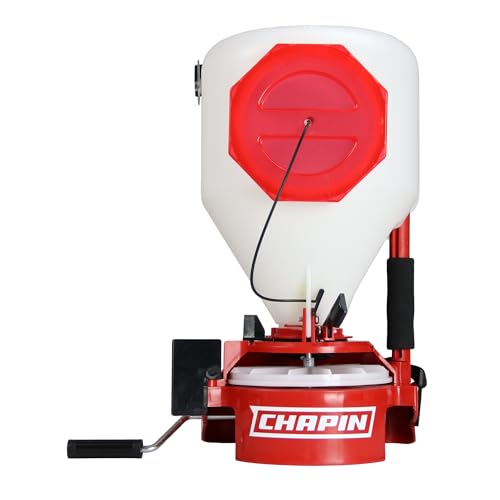
Chapin 8700A 35 lb Chest Mounted Spreader

Handheld Spreader for Lawns and Gardens

Yard Commander 80 lb ATV/UTV Spreader

BioLogic 6324 Chapin Outfitters Handheld Spreader
More On The Choices That Made The List
The Yard Tuff shoulder seeder trades bulk for agility, and that trade works well for a small patch of grass or a tight side yard. At roughly 3 pounds before filling, the unit hangs from an adjustable strap instead of forcing a hand-cranking motion. A 25-pound capacity hits a sweet spot for a single overseeding pass without dragging you off balance.
Calibrated flow control means you can dial down for fine grass seed and back up for compost or pelletized lime. The canvas bag takes a beating, but it is not waterproof, so store it dry between uses to avoid mildew at the seams.
Key Advantages
- All-metal gears hold up through repeated seasons better than plastic internals
- Adjustable shoulder strap distributes weight across the back instead of one arm
- Calibrated flow gate handles everything from fine seed to chunkier granular fertilizer
- Light enough at 3 pounds to keep working without shoulder fatigue
Things To Consider
- Canvas bag is tough, not waterproof, so wet conditions call for a quick dry-off
- Hand-crank style gets tiring on a full half-acre in one session
Feature Snapshot
Best Suited To
Homeowners with a modest lawn under 5,000 square feet who want the simplest hand-carry option without electric parts.
Where Another Pick Suits Better
Reach for the Earthway 2750 if you want a faster, gear-driven spread and a higher-RPM spinner that lays down a wider feathered edge.
Earthway built its name on consistent spread patterns, and the 2750 keeps that reputation in a shoulder-strap format. A high-RPM gearbox spins the impeller faster than a basic crank, which translates into a smoother broadcast and fewer bald stripes when you’re feeding or overseeding. The 20-pound hopper is smaller than the Yard Tuff, but the rocking agitator inside keeps the seed flowing instead of bridging up.
Unlike the Yard Tuff’s straight flow gate, the spring-loaded shut-off plate here oscillates to break up clumps before they hit the impeller. For overseeding a sun-damaged patch or filling in a slope, that extra mechanical thought shows up in the result.
What Stands Out
- High-RPM gearbox produces a wider, more even feathered edge than entry-level cranks
- Rocking agitator prevents the common “I emptied half the bag in one stripe” problem
- Spring-loaded shut-off stops flow cleanly when you pause for an obstacle
- Contoured molded base keeps the bag stable against your hip during long sessions
Worth Noting
- Rustproof nylon is durable but tends to hold a faint grass-seed smell between uses
- Hand crank still requires a brisk pace to maintain the rated spread width
Who It Suits Best
Homeowners overseeding a mid-size lawn who want fewer passes and a noticeably cleaner broadcast pattern than the cheapest shoulder bags can deliver.
A Better Fit Elsewhere
Step up to the Agri-Fab 85 lb Tow Behind Broadcast Spreader if you’re feeding more than a half-acre and own a riding mower.
The Agri-Fab 85 sits in a different category than the shoulder bags, and the difference is welcome once your lawn crosses a quarter acre. You hitch it to a riding mower or garden tractor, fill the poly hopper, and let the cable-controlled flow gate do the work while you steer. Coverage per fill covers roughly a quarter acre, which means fewer stops on a long feeding day.
It’s a tow-behind rather than a handheld, but it earned its spot because anyone shopping “handheld broadcast spreaders” eventually realizes they need both a walk-around tool and a real workhorse. The 85 lb hopper hits a manageable balance: heavy enough to skip refills, light enough to dump and rinse without straining your back.
What Makes Sense
- Poly hopper resists rust and handles fertilizer salts better than bare steel
- Cable flow control lets you adjust the gate from the driver’s seat
- Hitch setup fits most standard riding mowers and lawn tractors
- Covers around 14,000 square feet per fill, so you finish feeding in fewer laps
Trade Offs
- Requires a riding mower or ATV to use, so it’s not a walking-yard tool
- Larger footprint calls for garage or shed storage space
Right Fit For
Owners of a riding mower with a half-acre or more of open lawn who want broadcast coverage without the slow hand-cranking routine.
Look Elsewhere When
The Yard Commander ATV/UTV Spreader is the better match for rough, off-lawn terrain like long gravel driveways where a tow-behind mower hitch isn’t practical.
Solo positions the 421 as a year-round tool, and the design reflects that. A large screw top keeps dust and fine particles sealed inside, which matters when you’re pouring fertilizer or pelletized lime in a breeze. The 9 kg (roughly 20 lb) capacity is similar to other shoulder units, but the carrying strap and chest-positioned crank feel balanced for long sessions.
An agitator inside drops material evenly onto the impeller, which improves uniformity across the spread pattern. For homeowners who switch between spring overseeding, summer fertilizer, and winter grit, this is the most adaptable handheld in the lineup.
Standout Benefits
- Large screw-top cap seals out moisture and reduces dust exposure during fill-ups
- Internal agitator keeps clumpy material flowing onto the impeller evenly
- Strap-mounted carry position leaves the crank hand free to adjust flow
- Handles everything from grass seed to gritting salt to pelletized lime
Points To Note
- Red plastic hopper can fade with prolonged UV exposure in direct sun
- Manual crank speed still dictates the effective spread width
Made For
Property owners who want one spreader for lawn care in summer and walkways or grit applications in winter without swapping tools.
Consider Something Else When
The Chapin 8700A chest-mount is easier on the shoulders if you have back or joint issues that make a one-shoulder strap uncomfortable.

The Amazon Basics spreader leans toward the push-behind end of the category rather than shoulder-strap, but it earns a place on this list because many shoppers searching for “handheld broadcast spreaders” actually need a small walk-behind for an average suburban lot. The 33 lb hopper covers around 5,000 square feet per load, which is roughly the median residential lawn size.
A multi-gear drivetrain gives you control over the impeller speed so you can match the throw distance to the product. The release cable for the gate is pre-installed, cutting assembly time to a handful of bolts. You may find the plastic bin thin next to commercial units, but for seasonal use it holds up fine.
Everyday Advantages
- Steel frame adds rigidity over all-plastic walk-behind spreaders
- Multi-gear system lets you tune impeller speed to the material
- Covers up to 5,000 square feet per fill for typical residential lots
- Pre-installed cable cuts down on the assembly frustration common to new spreaders
Room For Improvement
- Hopper plastic can warp if stored in direct summer sun while loaded
- Wheels are adequate for flat lawns but struggle on soft, damp ground
Who Will Love This
Homeowners with a standard quarter-lot who want a no-fuss walk-behind for fertilizer, seed, and ice melt without paying for pro-grade components.
Not Your Match When
The Agri-Fab 85 lb Tow Behind is the smarter move for anyone already mowing with a rider, since you can spread while you cut.
Shrink the spreader down to a 30 oz handheld and the use case changes completely. The FLORA GUARD lives in the garage next to the snow shovel rather than the riding mower, and you grab it for small spot jobs: patching a dog-damaged corner, throwing seed into a thin strip, or scattering ice melt on a front step. Four adjustable opening sizes let you dial between fine seed and chunkier rock salt without swapping tools.
It’s not a quarter-acre machine, and it doesn’t pretend to be. For most walkways and tight beds, that 30 oz capacity is exactly enough to finish the job in one fill without slowing you down.
Practical Advantages
- Twist-lid opening has four discrete sizes for different granular materials
- Compact enough to store in a closet, a car trunk, or a small entryway bench
- Works for grass seed in summer and salt or ice melt in winter
- One-hand operation leaves your other hand free to open gates or hold a bag
Minor Gripes
- 30 oz capacity means frequent refills on anything larger than a small patch
- Plastic lid threads can cross-thread if you rush the closure
Perfect Match For
Apartment dwellers and townhouse owners who only need a spreader for balcony containers, a small patch of grass, or icy stairs.
Swap It Out When
The Earthway 2750 is a better call once you’re maintaining anything bigger than a postage-stamp yard and need a wider broadcast.
The 8700A solves a problem most shoulder bags don’t address: uneven weight across your body. By strapping the hopper across your chest, Chapin redistributes the load through your torso, which means less shoulder strain and better balance on hills or food plots. The 680 cubic-inch translucent poly hopper is fully enclosed, so weather stays out and your material stays dry.
Five settings on the EZ gate control give you a reasonable range of flow rates, and the enclosed design makes it a clean choice for spreading near driveways or pavement where spillage matters. The chest mount is unusual enough that it can take a pass or two to get used to, but the comfort payoff on a long job is real.
Advantages To Know
- Chest strap distributes weight across the torso instead of one shoulder
- Enclosed poly hopper keeps material dry through a light drizzle
- Five gate settings cover a useful range of seed and granule sizes
- Translucent hopper lets you check fill level at a glance
Honest Caveats
- Chest harness can feel warm on hot, humid days
- Crank reach is slightly awkward for shorter users without strap adjustment
Technical Highlights
Built With In Mind
Property owners working slopes, food plots, or uneven terrain who find shoulder straps uncomfortable after the first refill.
Reach For A Different Pick When
The Yard Tuff shoulder seeder is lighter and simpler for flat, small lawns where chest mounting is overkill.
The generic handheld spreader covers the basics without much in the way of branding fluff. You turn the crank, the impeller spins, and the gate delivers a controlled stream of seed or fertilizer. For first-time spreader owners who want to learn the feel of broadcast patterns without spending much, this is a low-risk entry.
The design aims at consistent flow rather than precision, so it’s well suited to vegetable garden prep, overseeding a thin area, or scattering cover crop seed across a small plot. The plastic construction won’t take the abuse of commercial use, but that’s the trade you make for the lighter commitment.
A Strong Showing
- Adjustable gate control supports multiple material types without swapping parts
- Light handheld form factor reduces fatigue compared to shoulder bags
- Low cost makes it approachable for first-time lawn care owners
Where It Is Less Suited
- Plastic housing and gears are more likely to wear out over multiple seasons
- Smaller hopper means frequent stops on anything beyond a small garden
- Spare parts are harder to source than for name-brand alternatives
Whose Shelf It Belongs On
New gardeners and casual homeowners with a small yard who want an inexpensive tool to learn broadcast spreading before stepping up.
Skip It When
The BioLogic Chapin Outfitters handheld is the better long-term value if you want a commercial-grade build under a similar handheld footprint.
Yard Commander’s 80 lb spreader isn’t handheld in the traditional sense, but it fills a gap for anyone managing long gravel driveways, food plots, or rural acreage. The 12-volt motor hooks up to an ATV or UTV battery, and the on/off switch mounts to the handlebars so you control the spread from the seat. An 80 lb hopper hits a meaningful capacity without making the rig unstable on hills.
The included rain cover is a thoughtful touch: salt and fertilizer clump fast in damp weather, and a quick-deploy cover keeps the hopper usable between showers. Powder-coated steel handles fertilizer salts better than bare metal, and a vinyl-coated motor shrugs off the road spray that comes with winter use.
Everyday Perks
- 12V motor runs off the ATV/UTV battery without a separate power source
- Hopper cover prevents clumping during light rain or overnight storage
- Powder-coated steel frame resists corrosion from salt and fertilizer
- Up to 12-foot spread radius covers wide lanes in fewer passes
Factors To Consider
- Requires an ATV or UTV with a utility rack to mount
- Hopper capacity depends heavily on material density, so heavier salts fill it faster than seed
Who Should Grab It
Rural property owners and hobby farmers with long driveways or food plots who already own a four-wheeler.
Another Choice May Suit
The Agri-Fab 85 lb Tow Behind is a more sensible match for a smooth suburban lawn where a tow-behind mower makes more sense than an ATV.
BioLogic teams up with Chapin to deliver a Mossy Oak-camouflaged bag that holds up to real outdoor abuse. The water-resistant fabric is the standout feature: most canvas bags soak through in a drizzle, but this one keeps the contents dry long enough to finish a plot. At 25 lb capacity, it’s right in line with the Yard Tuff but with a noticeably tougher exterior.
Commercial-grade hardware and a calibrated flow adjuster give you repeatable rates season after season. For food plot prep, hunting lease maintenance, or any job where you need a camo bag that won’t look out of place, the BioLogic hits a narrow but useful target.
The Upside
- Water-resistant Mossy Oak bag handles damp morning conditions without soaking through
- Commercial-grade construction supports repeated heavy use across seasons
- Calibrated flow adjuster dials in the right rate for different seed blends
- Adjustable shoulder strap fits a wide range of body sizes
Potential Drawbacks
- Camo pattern shows wear and dirt more visibly than solid colors
- Premium build is overkill for a typical suburban lawn
Feature Card
The Right Fit
Hunters, lease managers, and rural homeowners who need a rugged handheld that handles damp conditions and rougher use than suburban models.
Where A Sibling Pick Shines
The Yard Tuff 25 lb shoulder seeder is the better everyday value if camo and water resistance aren’t priorities for a small home lawn.
Choosing A Spreader That Fits Your Yard
Picking the right handheld broadcast spreader starts with honest math about your lawn. Measure the area you actually maintain, not the area you wish you maintained, and you can skip half the options on the shelf. Spreaders in the 20 to 35 lb capacity range handle most residential lots under a half-acre, while tow-behind and ATV-mounted units earn their keep once you cross a full acre or deal with long gravel drives.
Capacity matters, but so does hopper design. A fully enclosed poly hopper, like the one on the Chapin 8700A, keeps fertilizer dry through a light drizzle, while an open canvas bag, like the Yard Tuff, is lighter but calls for dry storage. Sealed lids with screw tops, found on the Solo 421, reduce dust exposure during fill-ups, which matters more than people expect when handling fine lime or coated seed.
Matching Spreader To Material
Different granules behave differently. Coarse rock salt flows freely but punishes plastic gears, while fine grass seed bridges up in hoppers without an agitator. Earthway’s rocking agitator and Solo’s internal agitator both solve the bridging problem, while basic hand cranks without agitators tend to dump half the load in the first ten feet.
The flow gate is the part you’ll adjust most often. Calibrated dials with discrete settings, like the five-step EZ gate on the Chapin 8700A, are easier to repeat run-to-run than continuously variable gates. For winter salt or pelletized lime, a wider opening and heavier-duty gears pay off; for fine seed, you want the opposite.
Walking Distance And Storage
A shoulder strap, chest mount, push handle, or tow hitch each changes how the spreader feels after thirty minutes. Chest-mounted and shoulder-slung units keep you nimble, but the weight still adds up. Push-behind spreaders like the Amazon Basics 33 lb reduce arm fatigue entirely but need a smooth, even surface to roll cleanly. ATV-mounted units are the only choice for rutted driveways, but they also need a garage stall or shed bay to live in.
Adjustability And Long-Term Use
Look for spreaders with replaceable parts and accessible hardware. Commercial-grade gear sets, like those on the BioLogic Chapin Outfitters, tend to outlast the all-plastic internals found on entry-level handhelds. Calibrated flow adjusters and standard hardware mean a worn part can be swapped without retiring the whole unit. Multipurpose capability, like the Solo 421 switching between seed, salt, and lime, stretches one tool across more of the year, which is where the real value shows up.
Key Considerations Across These Picks
Where Shoppers Go Wrong
A common slip is buying by capacity alone and ending up with a 35 lb hopper that’s overkill for a 1,500 square foot patch. Bigger hoppers are heavier empty, and a half-filled 80 lb ATV unit on a small lawn is more trouble than it saves. Match capacity to the square footage you’ll actually cover, and remember that refill stops are a built-in break, not a punishment.
Another trap is ignoring material type. A spreader that works beautifully for pelletized fertilizer can clog on fine grass seed, and a salt-friendly unit can grind coated seed into dust. Check that the unit you choose handles the specific granules you plan to use, and look for agitators if you’re switching between coarse and fine material.
Where The Extra Money Goes
Premium spreaders, like the BioLogic Chapin Outfitters, cost more because the bag, gears, and seals are built to last multiple seasons of hard use. Water-resistant fabric, commercial-grade hardware, and calibrated gate assemblies all add up. For a homeowner who spreads four times a year, mid-tier is usually enough. For anyone managing food plots, long driveways, or frequent salting, the upgrade pays for itself in fewer replacements and less downtime from a corroded motor or rotted bag.
Frequently Asked Questions
What size spreader do I need for a small lawn?
For a yard under 5,000 square feet, a 20 to 25 lb shoulder or chest-mounted spreader covers most jobs without frequent refills. Anything larger is more spreader than the lawn needs.
Can a handheld spreader handle rock salt and ice melt?
Yes, but choose a unit with durable gears and a wide gate opening. The Solo 421 and Yard Commander are both rated for salt, while fine-tuned seed spreaders can clog on chunky ice melt.
How do I prevent seed from clumping in the spreader?
Look for a model with an internal agitator, like the Earthway 2750 or Solo 421. Keep your seed dry in storage, and avoid filling the hopper in humid conditions right before use.
Should I clean my spreader after each use?
Rinsing the hopper and wiping the gate dry after every session extends the life of metal parts and prevents fertilizer salt corrosion. A quick dry before storage is the minimum maintenance routine.
Are tow-behind spreaders better than handheld?
For lots over a half-acre, tow-behind models save time and energy, but they require a riding mower or ATV. Handheld and chest-mounted units are more practical for tight, irregular, or smaller spaces.
The Takeaway
The best handheld broadcast spreader is the one matched to the ground you actually maintain. Small lawns and tight beds favor compact, lightweight tools like the FLORA GUARD 30 oz or Yard Tuff shoulder seeder, while larger yards and food plots benefit from the durability of the Earthway 2750 or BioLogic Chapin Outfitters. Take an honest look at your lawn size, your typical material, and your storage space, and one of these ten will fit the bill without overbuying.
