

You drag the hose out, aim it at the same patch of lawn you’ve watered for years, and somehow half your yard still goes brown by August. A good hose sprinkler fixes that without turning your weekends into a plumbing project. The eight options below cover everything from compact flower beds to wide-open lawns, with designs suited for casual waterers and DIY irrigation builders alike.
How The Shortlist Stacks Up
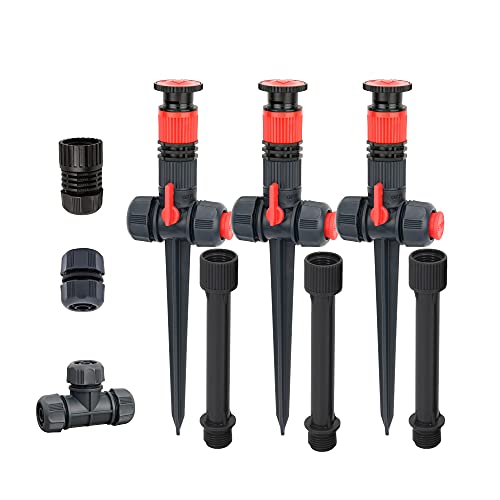
Eden 96093 Multi-Adjustable Flex Design Garden Sprinkler with Extension Set

Hourleey 2 Pack Impact Lawn Sprinklers with Aluminum Alloy Spike Base

Andrews 30-Foot 2 Tube Sprinkler Hose 10-12346

RESTMO Gear Drive Sprinkler with Metal T-Spike Base

Thiswing 360° Adjustable Drip Irrigation System with 16 Nozzles

Biswing 2 Pack Impact Sprinkler Head on Metal Step Spike

Secbulk 2026 Flat Soaker Hose 100 ft with Stakes

FANHAO Metal Lawn Sprinkler with Adjustable Brass Nozzle
The Details Behind The Selections
The Eden 96093 trades the rigid metal risers you see on classic impact sprinklers for a soft, articulated neck you can bend around shrubs, vegetable beds, and tight corners. Each sprinkler head swivels on its own without you having to pull the spike out of the ground, which means less kneeling and fewer repositioning sessions on a hot afternoon.
Compared to the simpler single-head units higher on this list, the modular extension lets you daisy-chain several heads together to cover a long, oddly shaped garden. For a DIYer planting raised beds and borders in awkward spots, that flexibility tends to matter more than raw spray distance.
Reasons It Performs
- Adjustable heads let you redirect spray without pulling up the spike, saving time on every watering pass.
- Modular extensions reach across oddly shaped beds where a single rigid sprinkler would leave dry corners.
- Soft-sided design reduces the chance of cracked plastic if a kid or a wheelbarrow bumps into it.
- Setup stays simple: connect to a standard garden hose and you’re watering in minutes.
Things To Consider
- The flex neck means a shorter spray throw than heavy metal impact heads like the Hourleey or Biswing models.
- Multiple linked heads may reduce water pressure at the far end on homes with low-flow outdoor spigots.
Right Fit For
DIY gardeners with raised beds, flower borders, and irregular layouts who want adjustability over long throw distance.
Swap It Out When
Hourleey 2 Pack Impact Lawn Sprinklers suit you better if you need wide-open coverage across a flat, unobstructed lawn.
An impact sprinkler uses the force of water to drive a weighted arm that smacks against the spray jet, rotating the head with each hit for that classic tick-tick-tick sound across the lawn. The Hourleey 2 Pack brings that tried-and-true design home in a zinc alloy head with an aluminum spike base.
Two heads in the box let you stage coverage at either end of a larger yard without buying a second unit. Each sprinkler measures roughly 4.7 inches long by 4.3 inches tall, and the spike base adds about 7.9 inches of ground anchor, so total assembled height lands near 11.5 inches.
Real-World Strengths
- Pair of sprinklers covers wide lawns from two anchor points instead of one centralized spray.
- Zinc alloy head and aluminum spike stand up to seasonal sun, hose drags, and accidental kicks better than basic plastic.
- Adjustable pulsating pattern reaches a much larger radius than the gentler Eden flex design.
Worth Noting
- The loud impact cycle may bother you (or the neighbors) during early-morning watering sessions.
- Aluminum spike base can bend in rocky or heavily compacted clay soil, so pre-soaking the spot helps.
Key Product Details
Made For
Homeowners with medium to large open lawns who want the long-throw, classic impact cycle and don’t mind the rhythmic clicking sound.
A Better Fit Elsewhere
The Andrews 30-Foot 2 Tube Sprinkler Hose suits you better if you want a quiet, lay-flat option for a narrow lawn strip rather than a spinning impact head.
A sprinkler hose splits the difference between a regular hose and a stationary sprinkler: it lays on the ground like a hose but sprays a gentle fan of water through perforations along its length. The Andrews 30-foot 2 Tube model is the simplest version of that idea, with a soft vinyl body you uncoil, hook up, and forget about.
Unlike the rigid heads above, this one won’t tip over, won’t tick loudly, and won’t send water into your neighbor’s yard. For a 1-inch-diameter, 30-foot run alongside a driveway, a thin lawn strip, or a row of new plantings, it does the job with zero setup.
Benefits That Matter
- Lay-flat vinyl stays put on level ground without flipping or rolling mid-cycle.
- 30-foot length covers narrow strips that a single rotating head would overshoot.
- Lightweight enough for easy coiling, storage, and repositioning between sessions.
Honest Caveats
- Vinyl construction can kink if you store it tightly wound for long stretches.
- Coverage stays limited to wherever the hose physically lies, so it’s not a whole-yard solution.
Who It Suits Best
Owners of narrow lawn strips, side yards, or seedling rows who want quiet, low-effort watering without mechanical moving parts.
Look Elsewhere When
The FANHAO Metal Lawn Sprinkler fits your needs better when you want adjustable spray reach for a broader patch of grass.
A gear drive sprinkler uses an internal turbine (a small water-powered rotor) to slowly rotate the spray head, producing a quieter, smoother sweep than the older impact design. The RESTMO unit pairs that quiet drive with a metal T-spike base and a multi-pattern nozzle.
Five spray patterns (jet, flat, cone, full, and vertical) cover everything from a tall shrub canopy to a low lawn throw. The T-spike base, where the footpeg forms a T at the top of the spike, gives you a larger step surface so you can push it into harder ground with your heel rather than just your palm.
Real Benefits
- Five nozzle patterns let one sprinkler serve lawns, flower beds, and taller plants without swapping equipment.
- Quieter gear-driven rotation makes early-morning watering less likely to wake the household.
- T-spike base pushes into firm soil more reliably than a straight round spike.
Points To Keep In Mind
- Internal gears can occasionally snag on debris, so flushing the line before connecting helps extend service life.
- More moving parts inside mean a bit more to go wrong over the years compared to a simple hose-style option like the Andrews.
Best Suited To
Yard owners who water multiple zones (lawn plus beds) with one tool and prefer a quieter rotation than the classic impact tick.
Skip It When
The Secbulk 2026 Flat Soaker Hose is a smarter pick for anyone prioritizing deep root-level watering of long garden beds over overhead spray.
A drip irrigation system delivers water through tubing with emitter nozzles that release measured amounts at each plant. The Thiswing kit uses 5/16-inch tubing, which is wider than the common 1/4-inch drip line, so more water reaches the far end of the run without pressure drops.
Sixteen adjustable nozzles along that tubing give you fine control over each plant’s intake, which matters in a vegetable garden where tomatoes want more water than peppers. Unlike the overhead sprinklers earlier in this list, you set it up once and the water lands at the soil where roots actually use it.
Advantages To Know
- Wider 5/16-inch tubing keeps flow steady across the full run, reducing dry spots at the far end.
- Sixteen independently adjustable nozzles let you tune output for each plant’s needs.
- Low-to-ground delivery keeps foliage dry, which helps prevent leaf-level fungal issues in humid climates.
Room For Improvement
- Initial layout takes more planning than a single hose-end sprinkler, especially in irregular beds.
- Emitters can clog over time with hard water, so periodic flushing and occasional cleaning helps maintain flow.
Who Should Grab It
Vegetable gardeners and raised-bed growers who want targeted, low-waste watering and don’t mind the upfront layout work.
Another Choice May Suit
The Eden 96093 Multi-Adjustable Flex Design Garden Sprinkler suits you better for a quicker setup in a mixed ornamental bed where precision per plant matters less.
Where the Hourleey uses a basic straight spike, the Biswing pairs its impact head with a step-style spike base that has a flat plate at the top, so you press down with your foot for a firmer anchor in harder ground. Two heads come in the box, both finished in zinc alloy.
The adjustable nozzle lets you dial coverage from a narrow 20-degree partial arc out to a full 360-degree sweep. That range makes it easier to fit a sprinkler into a corner of the yard where a full-circle head would waste water on a fence or driveway.
Practical Advantages
- Step-spike design sinks into firm or rocky soil with a foot press instead of hand effort.
- 20-to-360-degree arc adjustment fits awkward corners where a fixed full-circle spray overshoots.
- Two-pack value covers a backyard from two anchoring points for redundant coverage.
Trade Offs
- Impact cycle still produces that audible tick-tick-tick if quiet operation is a priority.
- Heavy zinc alloy adds real weight, so moving both heads between zones takes a bit more effort.
Perfect Match For
Yard owners with firmer soil and irregular zone shapes who want durable metal heads and the flexibility to dial arc width down to a narrow corner sweep.
Where A Sibling Pick Shines
The RESTMO Gear Drive Sprinkler with Metal T-Spike Base is a better match when you want a quieter rotation and multiple spray patterns in one head.
A soaker hose sweats water along its entire length through tiny pores, soaking the soil directly underneath rather than spraying the air. The Secbulk 2026 ships as two 50-foot flat hoses you connect end to end for 100 feet of total reach, and rust-resistant end caps let you link multiple sets if your beds run longer.
The flat profile lies flush on the soil or under up to about 3 inches of mulch, hiding the system from view. For long, established perennial beds, that kind of slow root-zone soak tends to outperform overhead spray for water conservation and weed suppression between plantings.
Bright Spots
- Linkable two-pack design scales from 50 to 100 feet or further with extra hoses.
- Flat profile can be buried under mulch for an out-of-sight, tidy installation.
- Sweat-style delivery keeps foliage dry, useful for disease-prone plants like roses and squash.
Small Caveats
- Initial setup takes more time coiling and staking than a single sprinkler head.
- Hard water mineral buildup can gradually reduce the seep rate along the hose length.
Feature Snapshot
Whose Shelf It Belongs On
Long-bed gardeners who want set-it-and-forget-it root-level watering and don’t mind a one-time layout project.
Reach For A Different Pick When
The Thiswing 360° Adjustable Drip Irrigation System with 16 Nozzles suits you better when per-plant tuning matters more than whole-bed soaking.
Most sprinklers in this price range lean on plastic bodies with a metal accent or two. The FANHAO flips that ratio with a precision-machined brass head sitting on a zinc alloy base, giving you full-metal construction from spike to nozzle.
The twist barrel on top shifts the spray from a wide fan to a focused cone to a single stream with a quick rotation of your wrist. Two heads come in the box, so you can stage them across a mid-size lawn without buying a second set.
What Helps Most
- Brass head resists corrosion and wear far longer than typical plastic sprinkler tops.
- Twist barrel lets one sprinkler handle fan, cone, and stream patterns without swapping nozzles.
- All-metal build shrugs off the kind of accidental drops and bumps that crack plastic units.
Factors To Consider
- Brass and zinc add noticeable weight compared to the lighter plastic-and-spike designs.
- Premium materials may be overkill for a tiny side yard that any basic sprinkler would cover.
Who Will Love This
Shoppers who replace sprinklers every few seasons and want metal components that hold up year after year in a busy yard.
Not Your Match When
The Hourleey 2 Pack Impact Lawn Sprinklers are a smarter budget play when you need wide-area coverage without the heavier brass build.
Matching Sprinkler Style To Yard Type
The first decision shapes everything else: do you want overhead spray or ground-level delivery. Overhead impact and gear-drive sprinklers, like the Hourleey, Biswing, RESTMO, and FANHAO picks, throw water through the air, mimicking rainfall. They work well on open, flat lawn where the spray can land unimpeded. For irregular beds or tight corners, the Eden flex design offers more directional control without needing to reposition the spike.
Ground-level systems, including the Andrews sprinkler hose, the Secbulk soaker hose, and the Thiswing drip kit, deliver water at the soil. These reduce evaporation losses and keep leaves dry, which gardeners in humid regions tend to prefer. Drip and soaker setups need more layout time on day one but require almost no adjustment afterward.
For a typical suburban yard with mixed lawn and beds, pairing styles works best. A long-throw impact head covers the central grass while a soaker or drip line handles the borders. Coverage area matters, but throw radius depends heavily on your home’s water pressure, so treat published coverage figures as a ceiling rather than a guarantee.
Throw Distance And Pressure
Long-throw impact sprinklers depend on consistent water pressure to maintain their advertised spray radius. Homes with low municipal pressure or long hose runs may see a noticeably shorter throw, especially when a Y-splitter feeds two heads from one spigot. Testing at one zone first helps you size coverage realistically before buying a second unit.
Material Choices And Longevity
Plastic-bodied sprinklers handle casual seasonal use but tend to crack after a few years of UV exposure and accidental bumps. Metal bodies and metal spike bases, the kind found on the FANHAO, Biswing, and Hourleey sets, typically outlast plastic by several seasons. For renters or anyone planning to move soon, lighter plastic remains the practical choice.
Key Considerations Across These Picks
Pitfalls Shoppers Hit
The most common buying mistake is choosing a sprinkler based on its listed maximum coverage without checking your home’s actual water pressure. A 40-foot throw rating only holds under strong, unrestricted flow, which most residential spigots do not deliver. Measure first, then size down if needed.
Another trap is ignoring layout. Single-head sprinklers cover circular zones, but yards are rarely circular. Pick a model with adjustable arc (like the Biswing) or plan for a two-head setup before committing to one expensive unit.
Where The Extra Money Goes
Premium metal sprinklers like the FANHAO use brass and zinc where budget models use plastic. That difference shows up in longevity and resistance to corrosion, not in spray performance. If you replace sprinklers every few years, budget plastic serves you fine. If you want one set that lasts a decade, the metal upgrade earns its keep.
Frequently Asked Questions
How Long Should I Run A Hose Sprinkler Per Zone?
Most lawns need about 30 minutes per zone to deliver roughly half an inch of water, but the exact time depends on your pressure and the sprinkler type. Place a shallow can in the spray pattern and time how long it takes to collect half an inch to dial in your schedule.
Can I Leave A Sprinkler Running Overnight?
Overnight watering saves water through reduced evaporation but can encourage fungal growth on grass and ornamentals in humid climates. For most yards, early morning watering between 4 and 8 AM strikes a better balance between efficiency and plant health.
Do Soaker Hoses Really Save Water?
Yes. Soaker hoses deliver water directly to the soil at low pressure, which can cut outdoor water use substantially compared to overhead spray. They work best on level ground and benefit from a layer of mulch over the top to slow evaporation further.
How Do I Keep Drip Emitters From Clogging?
Flush the line at full pressure before capping it, install a simple inline filter if your water carries sediment, and check emitters every few weeks during heavy use. Soaking clogged emitters in a vinegar solution usually restores flow without disassembly.
Are Metal Sprinklers Worth The Higher Cost?
Metal sprinklers resist cracking, UV damage, and corrosion better than plastic, so they tend to last noticeably longer under regular use. For casual or short-term setups, plastic remains perfectly serviceable and lighter to move around.
Closing Thoughts
The right hose sprinkler comes down to your yard’s shape, your patience for setup, and how long you want the hardware to last. Match the watering style to your beds, check your real water pressure before sizing up, and you will spend more time enjoying the yard than fussing with the hose.
